
Assemble, Disassemble, Reassemble
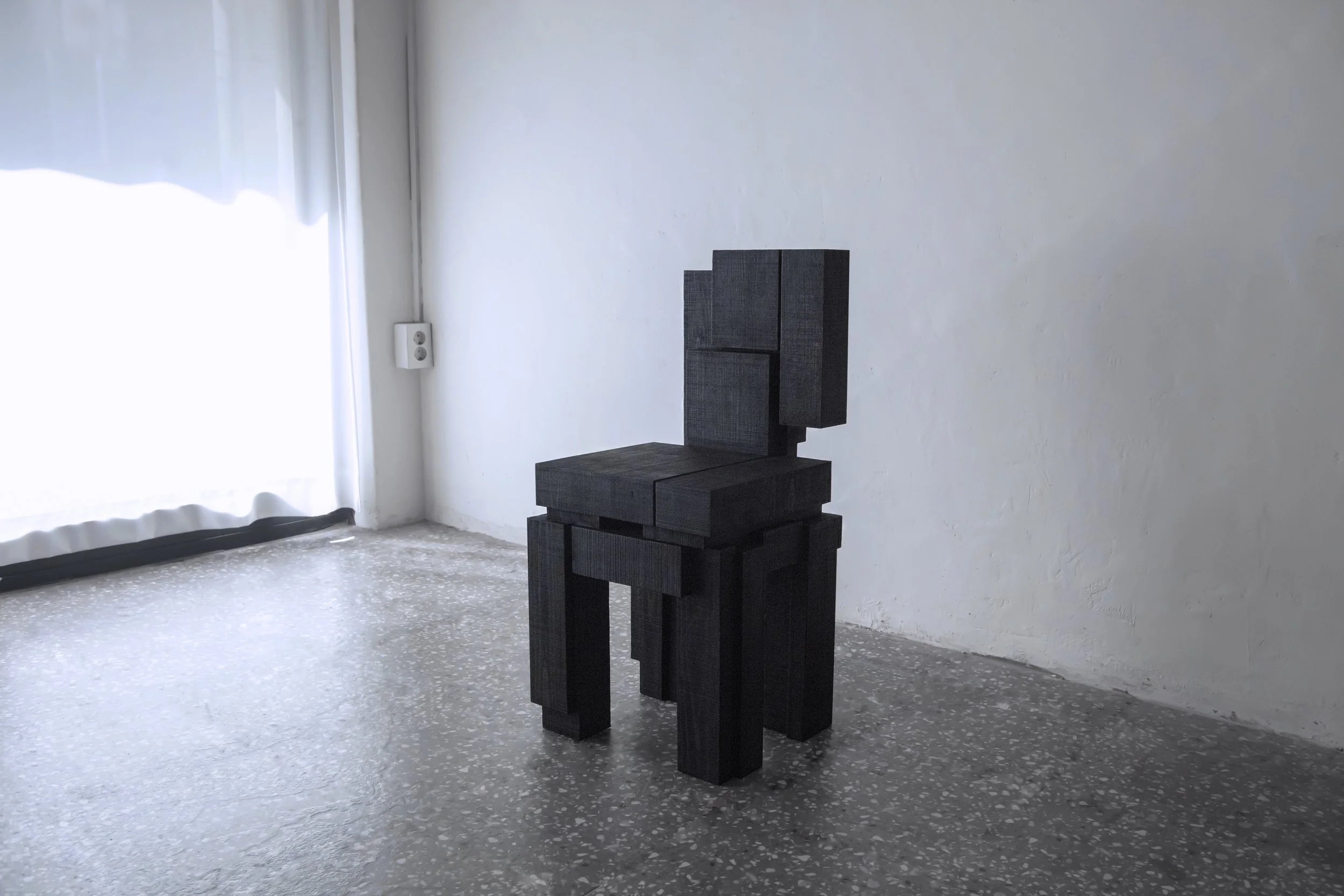
A chair from Joseph Yang’s New Assembly series (image courtesy of Joseph Yang).
Most of us have spent hours building things from blocks as children. We stacked pieces together, pulled them apart, and rebuilt them into something new. A tower became a house, a house became a bridge – the same components taking on entirely different meanings.
Korean designer Joseph Yang approaches furniture in a similar way. “I’m interested in considering how we perceive familiar objects when familiar furniture forms are dismantled and reorganised,” he says. “Their original function becomes less fixed, and new ways of seeing them begin to emerge.” Through this process, Yang creates works that sit somewhere between traditional furniture forms and sculpture, investigating relationships between structure, repetition and objecthood.
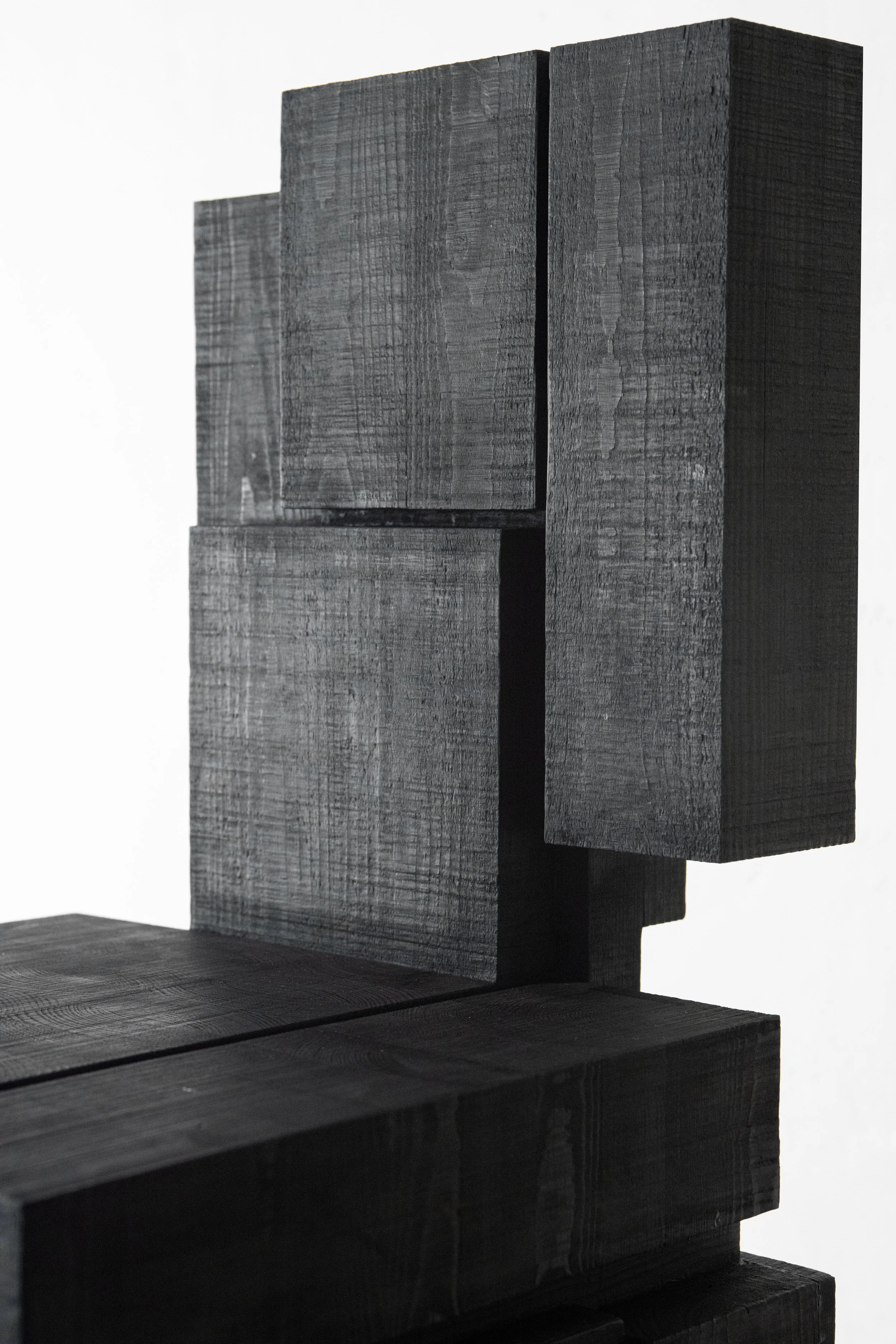
Image courtesy of Joseph Yang.
One foundation of Yang’s practice lies in his research into nong, a form of traditional Korean storage cabinet commonly associated with the Joseon Dynasty. Often constructed in stackable sections, nong were designed to be dismantled and transported when necessary. At a time when furniture was considered a valuable possession, and often passed between generations, people were less likely to replace it than they are today; the ability to move and reassemble furniture was therefore an important practical consideration. Described by Yang as “an important starting point in developing my interest in modular structures and reconfiguration,” nong introduced the designer to furniture forms built around flexibility. Although his work was originally intended to result in practical storage objects, Yang quickly became more interested in construction than function, translating a nong’s structural logic into a contemporary context through ideas of modularity, dismantling and recomposition.
The resultant forms, which Yang recently exhibited at Seoul’s INSA Gallery as part of the exhibition Between Module and Deformation, are made from standardised construction timber – particularly 2×4 and 2×6 lumber commonly used in architecture and construction. The fixed dimensions of these familiar building materials allow the designs to explore how even small structural adjustments can create entirely different outcomes. In his New Assembly series, recognisable furniture forms are conceptually dismantled and recomposed into new configurations, using modular units that could, in principle, be repeatedly rearranged and reconfigured. While these works often resemble architectural structures, Yang’s interest lies in their architectural logic rather than their appearance. His designs focus on modular systems, structural relationships, and the ways that individual elements come together to create a larger form.
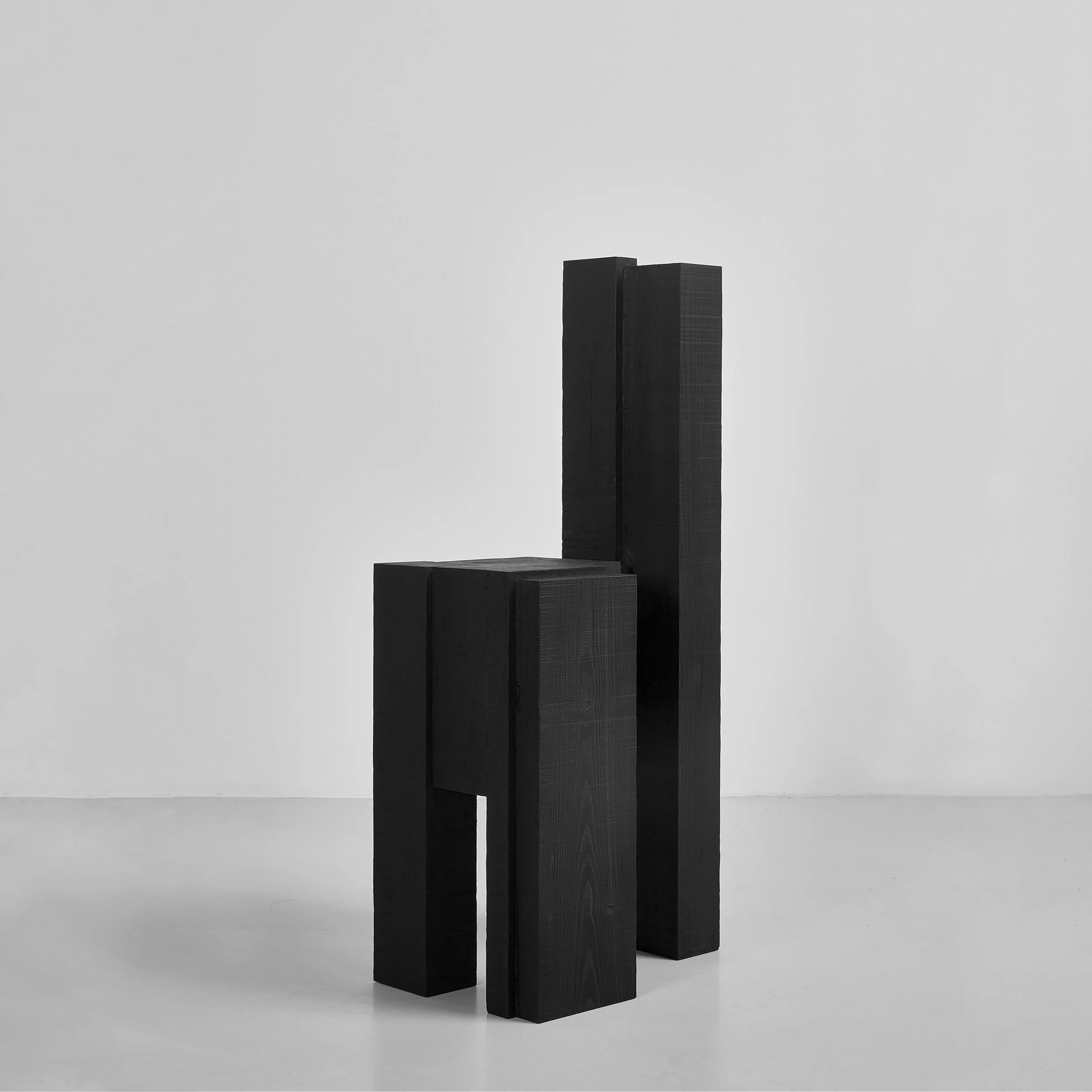
A chair in the New Assembly body of work (image courtesy of Joseph Yang).
For Yang, however, structure is never fixed. “I use decomposition as a way to question fixed categories and explore new formal and conceptual possibilities,” he explains. Rather than presenting objects as finished forms, Yang embraces the possibility of change. Through their display of repeated rearrangement, his works resist simple definitions, raising broader questions about what an object is and how its identity is determined. This becomes clear, for instance, in MMS_ARMCHAIR. Described by Yang as “one of the most familiar furniture forms in my life”, the armchair became a starting point for exploring how perception changes when a recognisable object is dismantled and recomposed. By breaking apart and reconfiguring this familiar object, however, Yang investigates how it can be understood differently when removed from its expected function.
“I’m interested in how relationships between elements generate structure and form,” Yang says.“Balance is important in my work, not only physically or visually, but conceptually.” Rather than settling into a single category, his designs remain in a constant state of transformation, challenging fixed definitions and encouraging new ways of understanding objects. “Yesterday, I think it’s furniture,” he says, “but today it’s sculpture.”
Words Smyra Arora