
Mending Lands
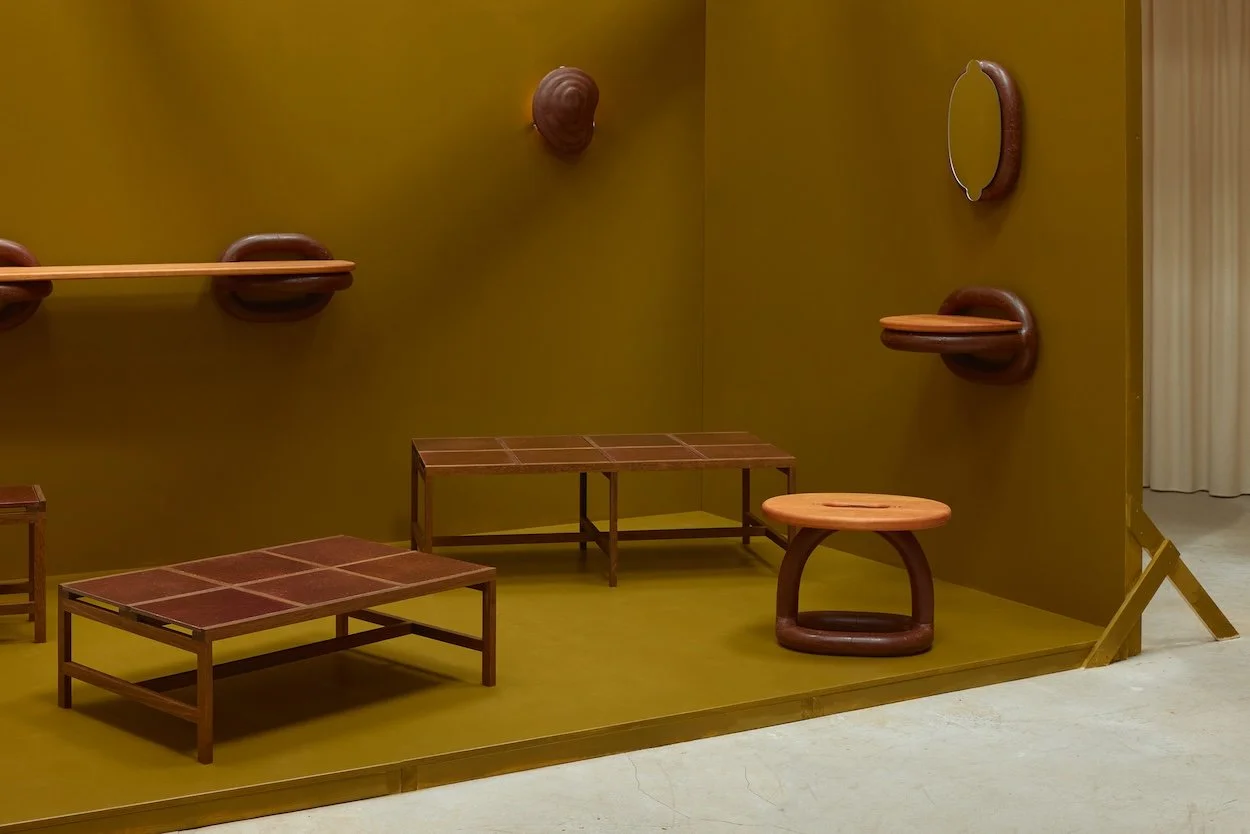
Marte Mei van Haaster’s new collection presents a method of designing furniture out of plants used to remove PFAS chemicals from the land (image: Alexander Popelier).
Designer Marte Mei van Haaster’s exhibition, Mending Lands, at Antwerp’s St Vincents gallery, features rosewood shelves mounted on brackets that resemble rammed earth. The same material appears in mottled burgundy tiles topping a smoked oak table, and in the branch-like legs of a circular stool. The collection’s rounded forms and earthy colours are reminiscent of land art – the designer cites artist Andy Goldsworthy as an inspiration – but their natural aesthetic belies the true purpose of the project. Each piece, in fact, represents a method of designing furniture out of plants used to remove toxic chemicals from the land.
The exhibition is accompanied by van Haaster’s documentary, PFASLANDS, which traces the project from its origins in polluted fields in the Netherlands to the finished objects on display. Developed during an artist residency with NESSE in Zeeland, where industrial pollution from Dutch and Belgian companies has contaminated the land with high levels of PFAS chemicals, the furniture embodies the designer’s research into phytoremediation. “Typically, soil contaminated with PFAS is excavated and put into landfill, chemically washed, or burned at a high temperature in very specific facilities – the Netherlands doesn’t even have one,” she says. “That is both costly in resources, and in the CO2 that is being emitted back into the air.” Phytoremediation is a gentler and cheaper alternative, where plants are used to absorb pollutants from the soil. However, since these plants are usually cut and burned after accumulating pollutants in their tissues, van Haaster wanted to explore the possibility of sealing them into products to extend their lifespan. “I’m really interested in landscape regeneration, and what we can do to aid healing in a natural way,” she says.
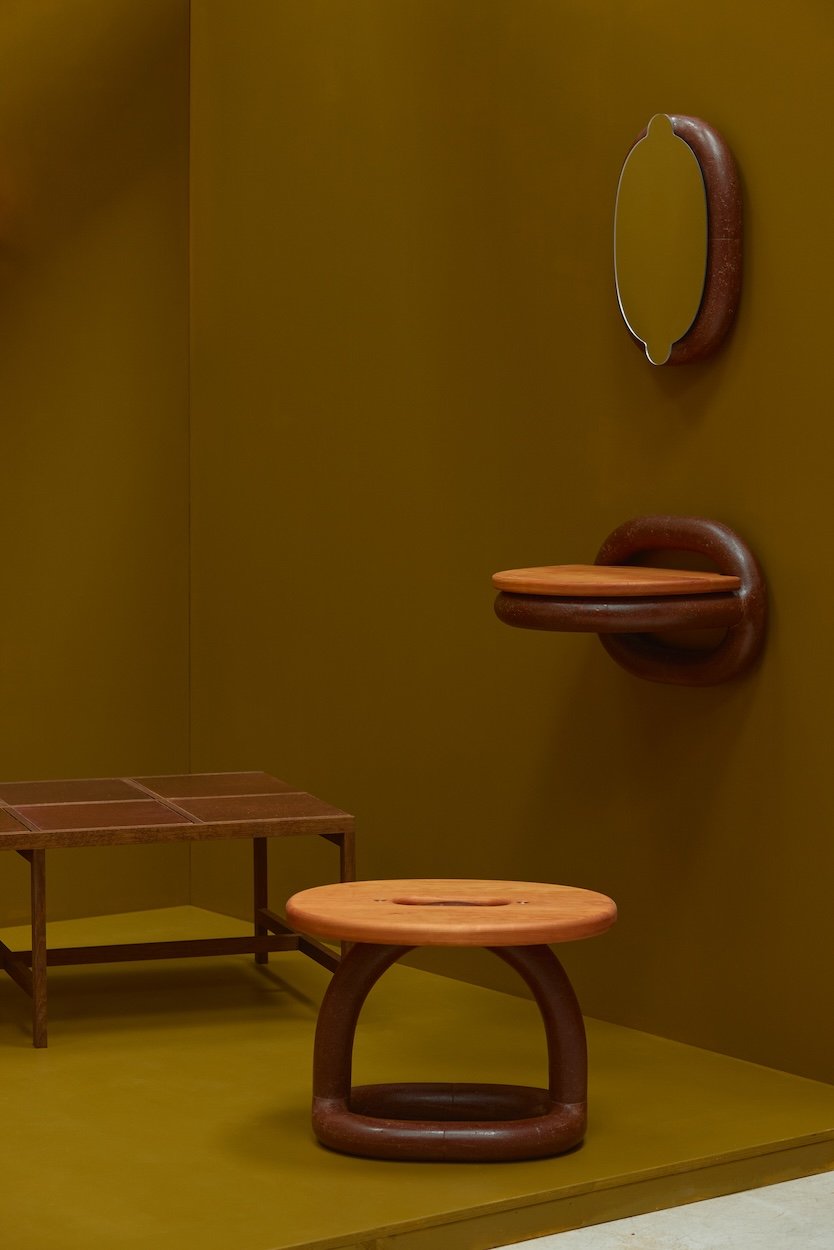
Image: Alexander Popelier.
Widespread use of PFAS began in 1938 with the invention of Teflon, and the chemicals have since become ubiquitous, appearing in thousands of consumer and industrial products designed to resist water, stains, grease and heat. “In the beginning, PFAS weren’t deemed scary,” van Haaster says. “The Dutch government gave permits to get rid of [them] in the river system, so it wasn't even like a sneaky leak or an illegal dump that caused the pollution, it was mainly permitted exhaust from the factories.” Nicknamed “forever chemicals”, PFAS do not naturally break down in the environment, with some compounds persisting for more than a century. Over time, they accumulate in the bodies of humans, animals and plants, where they can harm both environmental and human health. “People [in Zeeland] were so eager to talk about this, because it's their livelihoods, it’s their gardens,” she says. “They cannot eat the eggs of their chickens anymore because the government is telling them not to, but they don’t understand why.”
With support from C-Biotech, a company which develops bio-based materials and environmental remediation solutions, van Haaster added a soil mix to the contaminated land to aid plants’ water absorption, before planting hemp seeds and leaving them to grow for four months. “Before it goes into bloom, the hemp is cut so that the leaves don't fall off back onto the land,” she explains. After harvesting the hemp, Mei van Haaster worked with Beologic, a sustainable plastics manufacturer, to embed the plants into a bio-based resin. “I didn’t want to finish this project with just a scientific breakthrough,” she says, explaining that she wanted to create finished products rather than material samples, and to design pieces that would appeal to people who didn’t know about the project’s background. “Sometimes these very cool ecological projects are done, and then the end result is just like a straw chair,” she says. “I wanted to continue my current design language while still using an ecological, innovative material.”
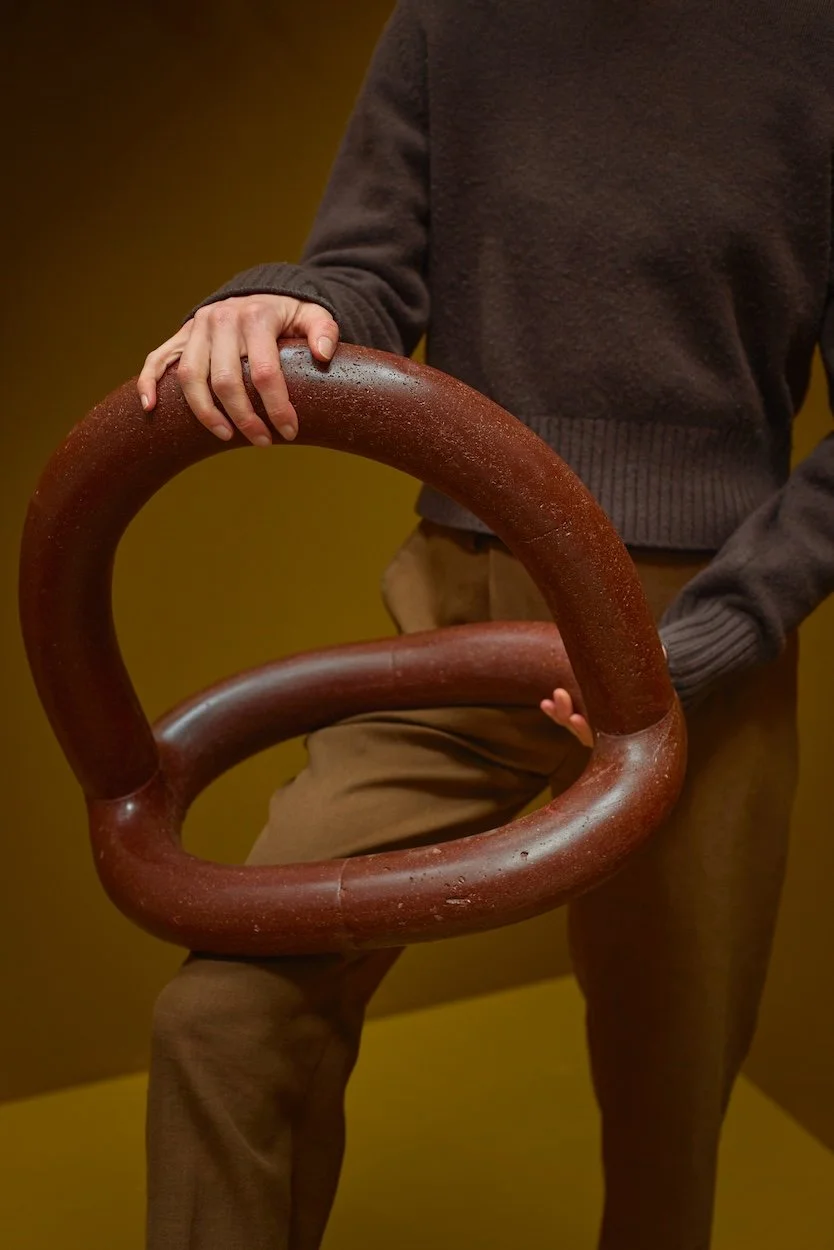
The mould van Haaster designed, which she cut apart to create the shapes of her products (image: Alexander Popelier).
To make the material more visually appealing, she added a natural red pigment, madder, that has traditionally been grown in the sandy clay soils of the Zeeland province. “I grew the madder root in the garden of the residency centre,” she explains, “so that [the project] would literally be rooted in that region.” Taking inspiration the Companion Species Cabinet, a previous project in which she designed modular ceramic components that are stacked to form a structural framework, van Haaster decided to create one mould that could serve as the basis for multiple shapes. “One part of my design process is extremely scientific and rational, with Excel sheets and data and samples, and the other part is super tangible,” she says. “I’m literally cutting cardboard and using clay to sculpt things in my studio in miniatures.” Made out of wood and silicone, the finished mould was made up of an oval topped with a semicircle, which could be cut apart to form different shapes. The entire mould was used to form the base and legs of the circular stool, for example, while it was cut apart to create the oval shape of the mirror’s frame. “The mould was one of the biggest investments,” she says. “So I wanted a design that has a lot of versatility.”
After testing her plants, however, van Haaster discovered that PFAS had only accumulated in the hemp leaves, and the stems had very low traces of the chemicals. “We decided to only use the stems for this limited series, because I don't have enough oversight,” she says. If van Haaster had used the contaminated hemp leaves, customers would have to ensure their products are burned in special facilities at the end of their lives, while the hemp stems offer a material low enough in PFAS that it wouldn’t require a specialised disposal process. The designs, however, still demonstrate the feasibility of creating objects using contaminated hemp leaves, which van Haaster sees as a more suitable option for large-scale projects. “I think this is a more appropriate route for public space furniture, because then it's all managed through one organisation,” she says, adding that she has been discussing the possibility of making traffic pillars out of the material with the Netherlands’ Ministry of Infrastructure. “So if there's an afterlife, it can be well documented and well archived.” Further down the line, the designer would also like to be able to license the method to others. “I don’t think it makes sense to build something like this and keep it all to yourself,” she says.
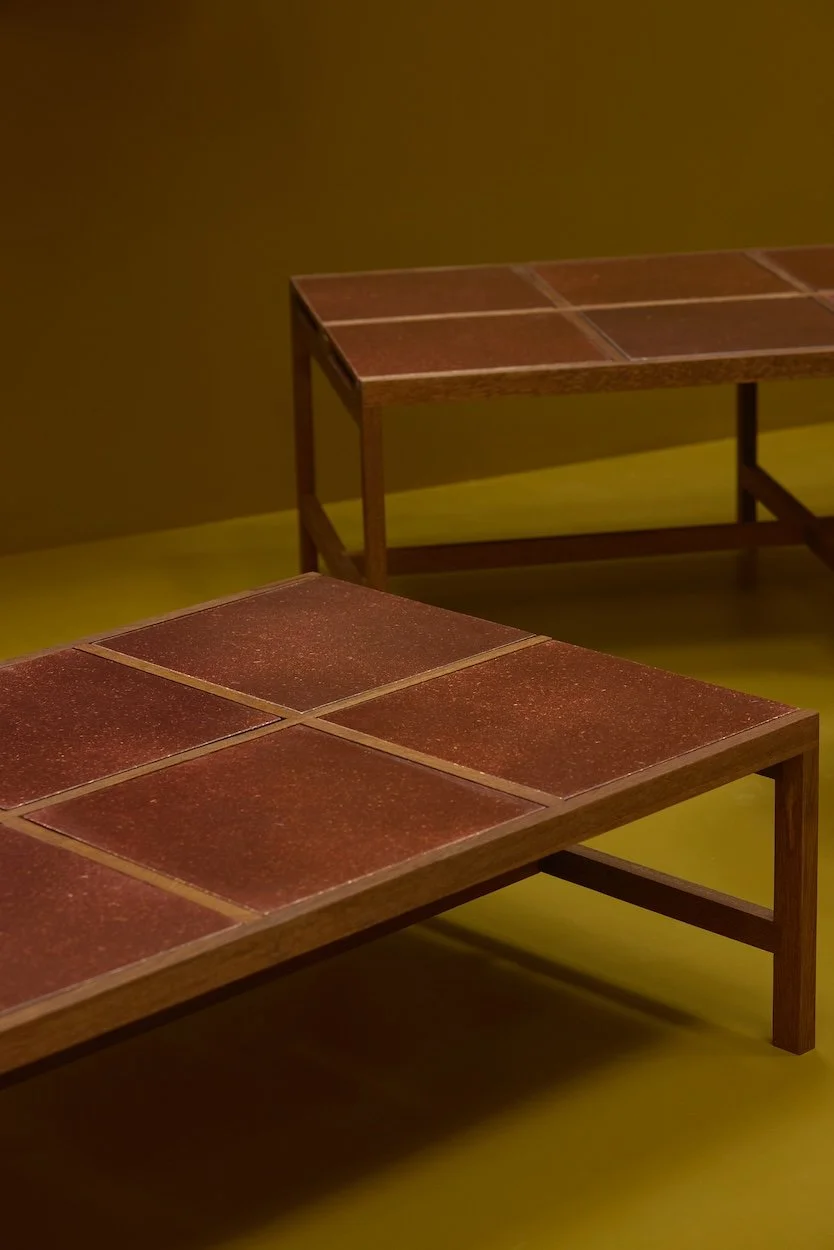
The designer created tiles from hemp and bio resin, which she used on the top of her table, bench and stool (image: Alexander Popelier).
The EU is currently considering phasing out the use of PFAS in all applications that are not deemed essential to society. For the time being, however, there is currently no complete overview of where PFAS pollution exists in the Netherlands. “All of the companies I collaborated with are Belgian, because where I am in the Netherlands the problem is still a bit shushed,” van Haaster says. While the residents of Zeeland appreciated van Haaster’s commitment to highlighting PFAS pollution in the area, they were adamant that the responsibility for addressing it lay elsewhere. “The project became a question about agency and responsibility, and whose role it is to look at these issues,” she says. “You can see that there are a lot of funds and institutions requiring design to be more than just beautiful, which is great. But at the same time, is it really my responsibility as a designer to find this answer?”
Van Haaster’s work is underpinned by the idea that humans can act as collaborative partners with the land. “In the Netherlands, there are two directions for nature management, either stewardship or rewilding,” she explains. “I wanted to create a space where people can actively participate in a natural system and feel like they are a part of it.” The Land Ally Foundation, which van Haaster founded, sets out a methodology for designers, the first step of which is building a relationship with the land by listening to and observing its non-human life. But the designer found this process difficult in Zeeland. “It’s a very vast and windy landscape with a lot of very big factories. I somehow always felt very tired when I was there,” she says. While her previous projects have included interventions such as allowing roaming sheep to carve natural pathways or designing a tool to plant seeds in the mounds created by moles, this project demanded something completely different. “This space needed a more industrialised solution,” she says. “To fit in this industrialised environment.”
Words Helen Gonzalez Brown