
Sleight of Hand
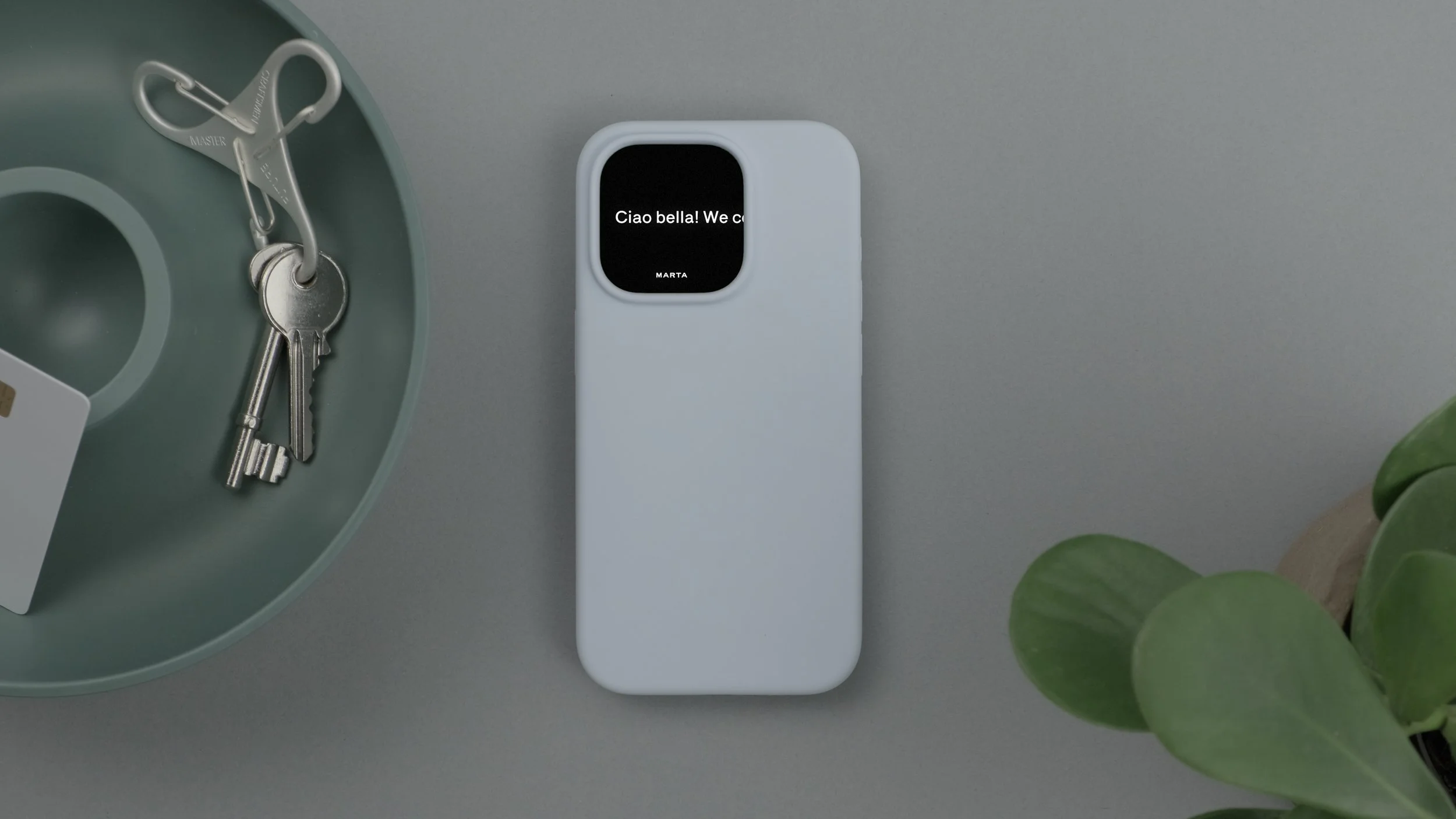
Special Projects’ speculative concept, Aperture, supports digital detox by allowing users to flip their phone case around to reduce their iPhone screens to a small window (image: Special Projects).
Design agency Special Projects has been mulling over the idea of digital detox since before iPhones became ubiquitous. “We started working with Blackberry in 2009 and, back then, there was already a lot of talk about busy business people being able to check their emails at home and never stopping working,” cofounder Adrian Westaway remembers. The now-defunct company patented one of the agency’s ideas – a raised display that could imprint on a person’s finger, allowing them to discreetly check their messages without getting too distracted. “It’s like if you were to squeeze the raised digits of your credit card,” he says, describing a design which, like many of the agency’s other ideas, builds in moments of surprise and delight, inspired by Westaway’s background as a magician. “And then you just rub your fingers and the message disappears.”
Since then, Special Projects has created many more playful projects that aim to ease people away from their devices. There was Paper Phone (2019), where users could choose which elements of their phone they needed in order to get through their day, and produce a printed booklet made up of the necessary contacts, calendars, and maps. “We made it open source, and we got lots of emails from people actually using it, like students who were having trouble focusing,” Westaway says. Envelope (2020), meanwhile, presented a pair of paper envelopes users could slip their phones into, limiting their functions to either making and receiving calls, or taking photos and videos. “When you put your phone into the envelope, it really does feel like you've made a new little product,” Westaway says. “Like you’ve just made a Nokia phone appear.” Both projects were created for Google’s Digital Wellbeing Experiments platform, and offer only a glimpse into the agency’s broader practice, which typically involves primary research and early-stage concept development for tech companies – work that is largely kept confidential. “They were more provocative projects rather than a real working solution,” Westaway says. But it was the agency’s standalone project Aperture (2025), which is currently on display at the Venice Art Biennale, that has caught the most attention as a feasible solution.
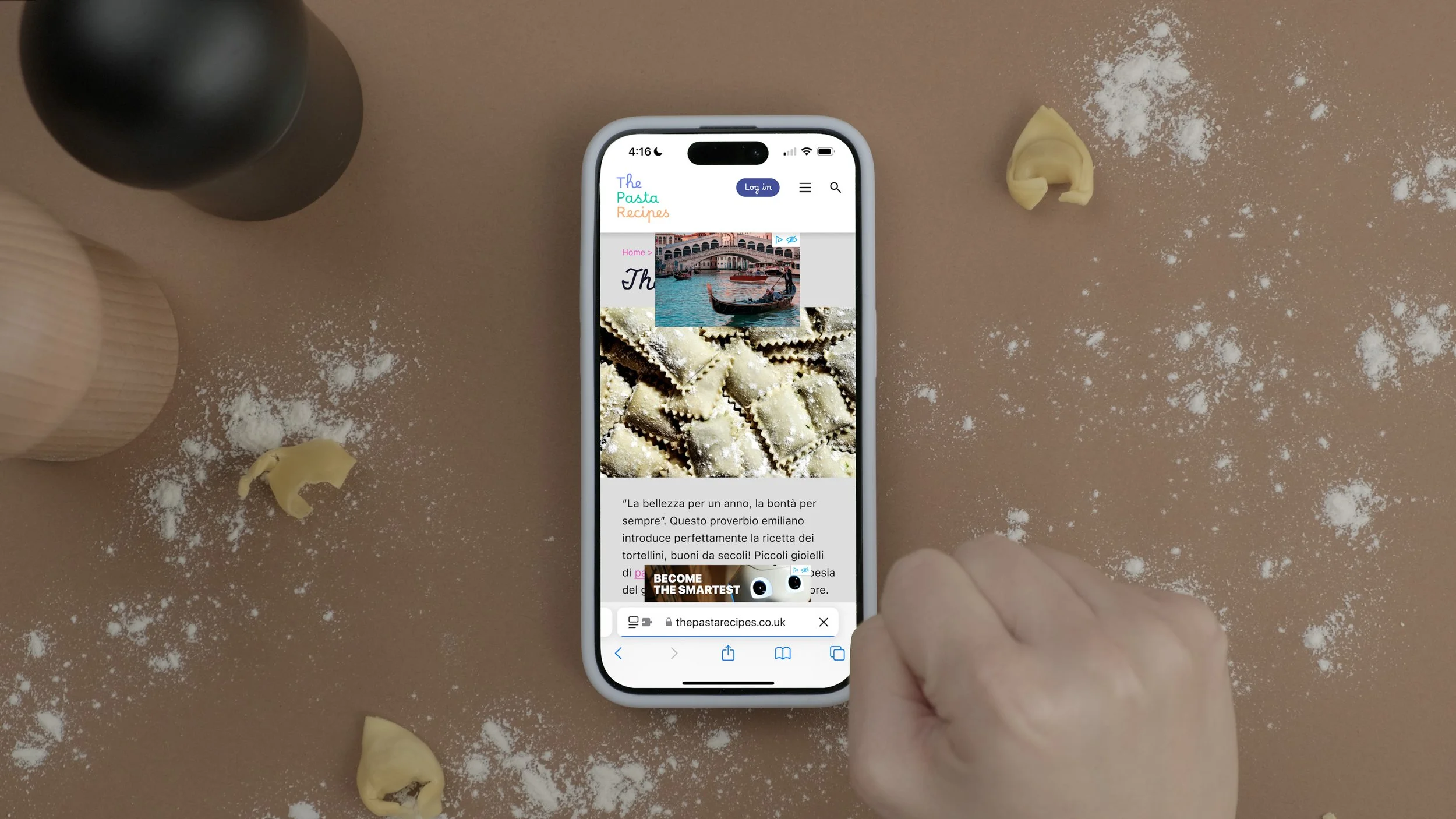
By reducing and simplifying iPhone screens, Aperture makes the devices less attention-grabbing (image: Special Projects).
Solutions for restricting phone use often involve switching to a secondary device, such as a simpler mobile phone designed primarily for calls and text messaging, including models such as the Punkt MP02 designed by Jasper Morrison, the Light Phone, or modernised versions of classic Nokia devices. “It’s such a shame to have to buy two items and two chargers that have been manufactured,” Westaway says. “It also costs a lot of money – the fancy dumb phones are around £300 and they’re beautiful, but not really accessible to everyone.” By contrast, Aperture presents a solution using materials that are already readily to hand: by simply flipping their phone case around, users can reduce the visible area of the iPhone screen to the small window typically reserved for the camera. A speculative app then restricts the phone’s interface to this space, creating a display approximately the size of an Apple Watch screen. “What’s interesting with taking the case off is that it’s kind of a pain. There are worse things in the world, but you do have to struggle to put it back on, and after a while you don’t want to do it all the time,” he says. The idea draws upon Envelope, where users had to rip open their phone’s paper casing to access its full functions. “We thought that, actually, just adding that extra little bit of friction might have quite a big impact,” he explains.
The idea behind Aperture also incorporates personal choice – something that the agency explored through Paper Phone, where users could select which of their phone’s features to print that day. “We were doing some research where we asked that classic question – if you had to run out of a burning house, what three things would you bring with you – but for people’s phones,” Westaway says. “And it was quite varied for different people.” With Aperture, users can summon simplified versions of the websites and apps they would like to use, the small window reducing the hectic page of an online recipe into straightforward instructions that guide users through their cooking step by step.
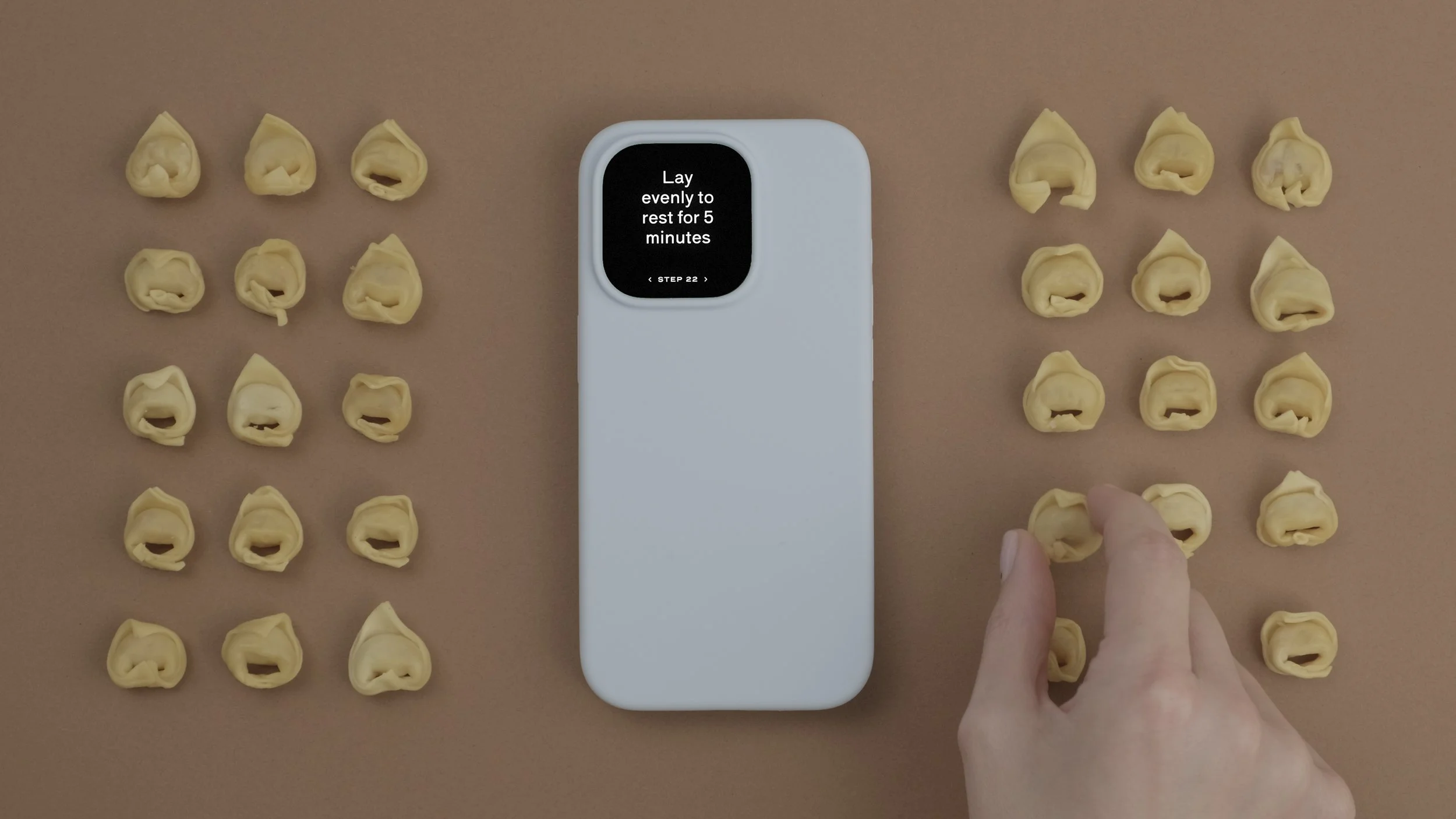
Aperture’s speculative app creates simplified versions of apps and websites (image: Special Projects).
Although Aperture appears to be a low-tech intervention, its speculative app draws on the logic of AI-driven minimalism, using emerging technologies to reduce the amount of information users must process. “You could just say, ‘For the next four and a half hours, I only want to be able to take photos, or I want a Pomodoro timer set into hourly chunks, or I want directions somewhere,’” Westaway says, explaining that the Aperture app could perform these voice- or text-based commands. He also suggests that Aperture could eventually integrate AI in a manner similar to Google Gemini for Android and Nothing's Playground, allowing users to create custom widgets – such as a weekly meal planner or an interactive calculator – simply by describing what they want aloud. “I do think there will be some really interesting things coming out in the next few years around generative interfaces,” he says, adding that the agency has recently completed a research and prototyping project for the UK government’s digital service exploring how AI could be used to support public services. “The challenge with these kind of generative interfaces will be encouraging people to experiment and be more curious and creative,” he says, “which might actually be harder than just learning how to do something.”
After launching Aperture as a concept last year, the studio began to develop it further before reaching a significant stumbling block. “There are so many different phone cases in the world – some work, some don’t,” Westaway says, explaining that some cases inadvertently squeeze a device’s buttons when flipped. “It maybe sounds cheesy, but when the concept was purely digital we thought we could really try and do it,” Westaway says, adding that the team have already developed an app that can render people’s applications to fit the smaller screen that Aperture creates. “But I think if we’re making a case, it’s a lot of material and shipping, and we just want to be really sure that it’s worth doing.” The fact that Aperture adapted a preexisting product, rather than creating a new one was a key part of its allure, but the idea still represents an inexpensive means of limiting phone use that could one day become another option available for people to use. “When you think of any behaviour people want to control, like eating or drinking or smoking, these are things that are really challenging to tackle,” Westaway says. “There’s not a one-size-fits-all solution, and I do think a lot comes down to personal preference.”
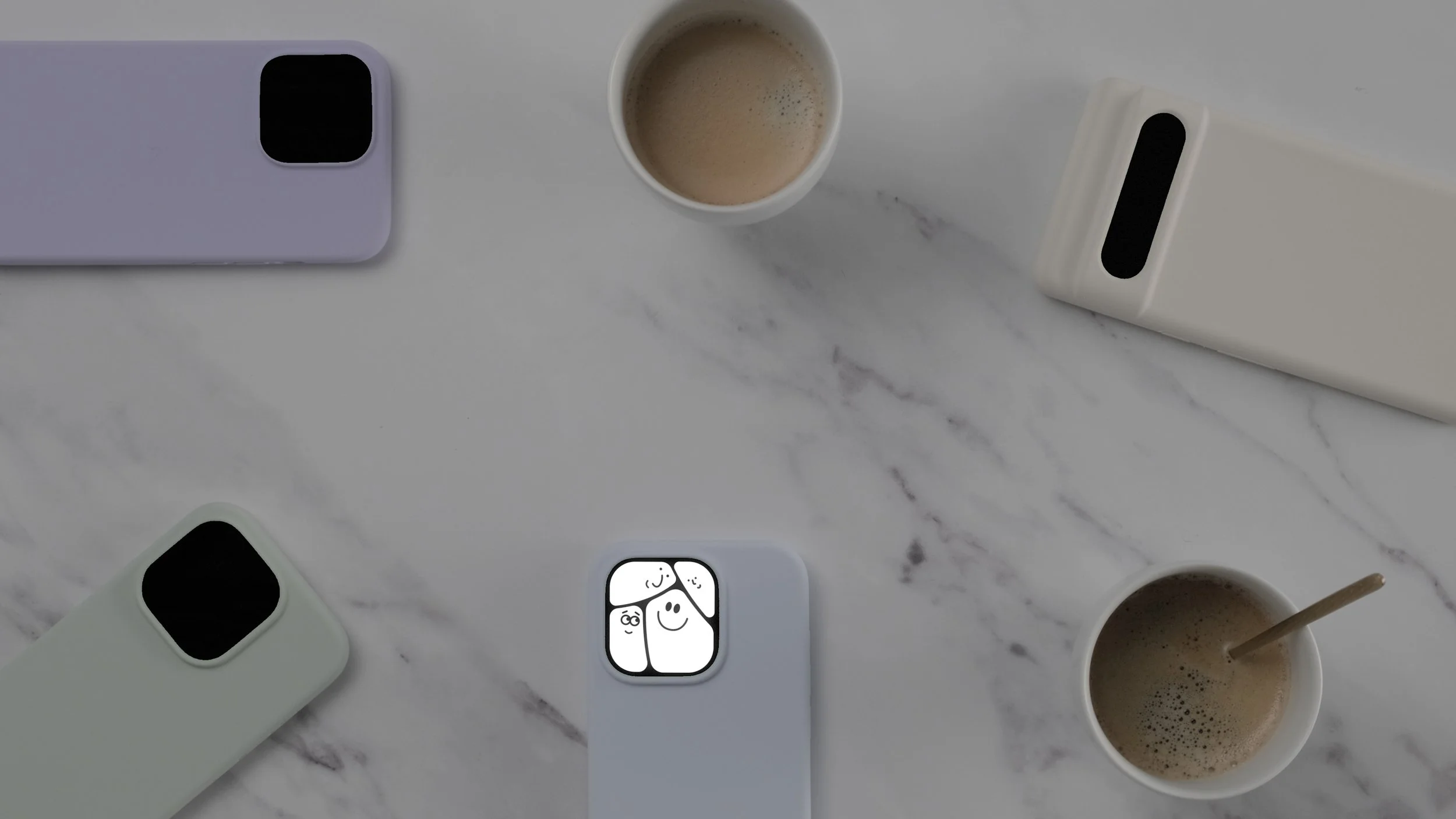
When Aperture users put their phones aside, emojis bounce from one phone to another before disappearing (image: Special Projects).
All of Special Projects’ digital detox initiatives engage with the concept of calm technology – an approach first articulated by computer scientist Mark Weiser in a 1995 white paper for Xerox PARC – which has long served as a source of inspiration for the agency. While most technologies engage the centre of our attention, blocking out the sights and sounds of our surrounding environment, Weiser suggests that calm technologies could provide a soothing sense of connection with our surroundings by encouraging users to engage with the periphery of their attention as well. “It seems contradictory to say, in the face of frequent complaints about information overload, that more information could be encalming,” Weiser writes. “[…] But such designs are crucial. Once we are located in a world, the door is opened to social interactions among shared things in that world.” By simplifying apps and reducing the size of the iPhone screen, Aperture transforms the phone from a gadget that commands a user’s full attention into a device they can glance at briefly without becoming too detached from the physical world around them. The design even rewards users for putting their phones aside and engaging with the people around them: when several Aperture users place their phones together, emojis bounce from each of their tiny windows to congregate in one, huddling together for a communal nap before disappearing like a magic trick.
Words Helen Gonzalez Brown