
The Chair that Wears it Well
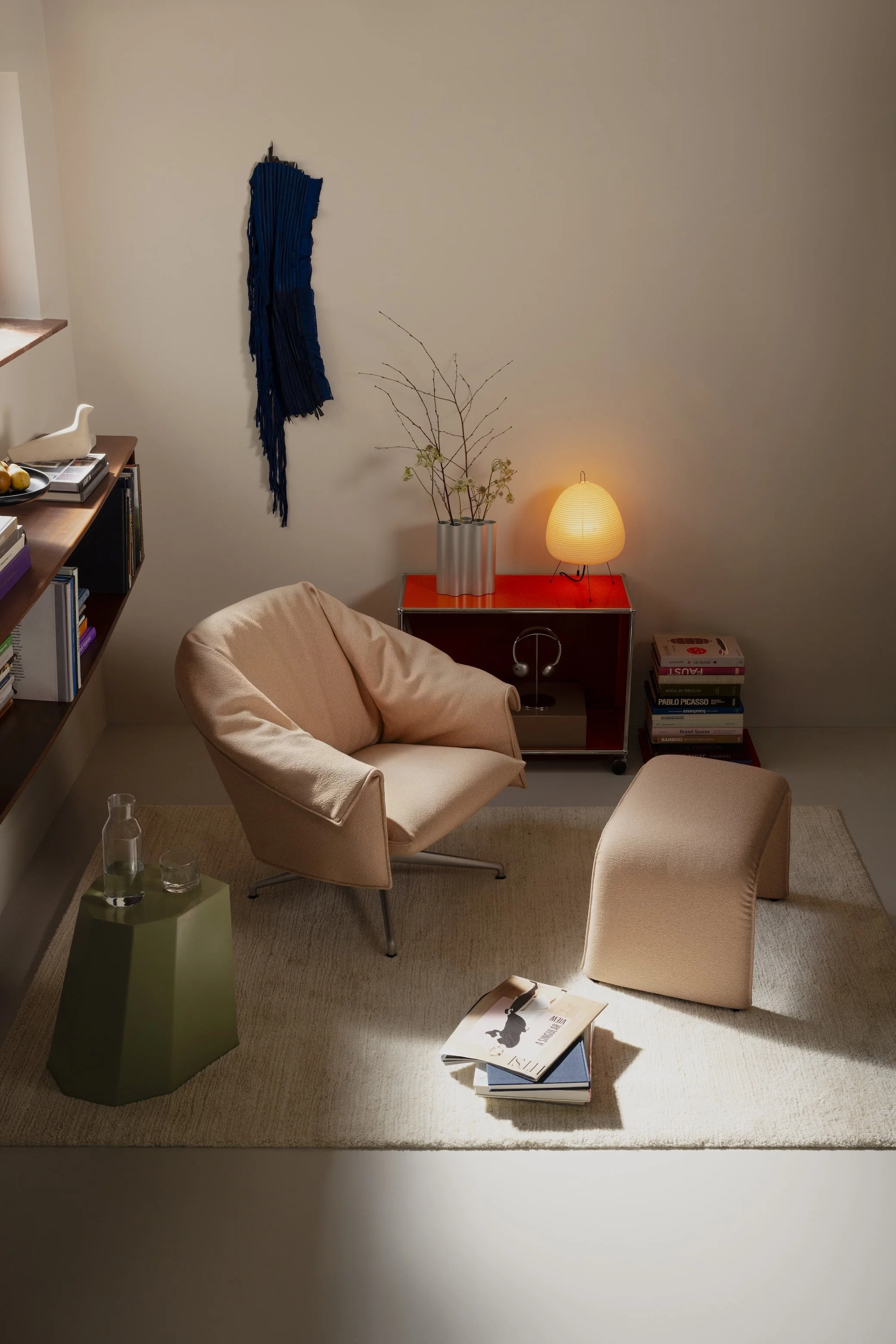
Vitra’s new lounge chair Bascule, designed by Studio Œ, has slouchy, removable upholstery that is tailored to its form like a jacket (image: Vitra).
“Ever since the Eames lounge chair became part of the collection in late 1950s, lounge chairs have been really a core category for us,” explains Christian Grosen, chief design officer for furniture manufacturer Vitra. “So we feel a certain responsibility for developing and challenging the category, and really trying to show what the future could bring.”
Though Vitra has many lounge chairs in its roster, including Verner Panton’s pop art Heart chair and Ronan and Erwan Bouroullec’s slouchy mesh Slow chair, the Eames lounge chair remains one of the company’s bestselling products. The chair’s plush leather upholstery is sheathed in sculptural moulded plywood, and its bulky form cradles the sitter at a permanent tilt, like a baseball mitt poised for a catch. Yet the chair’s cultural significance extends beyond its material and ergonomic qualities, shaped as much by ideas about leisure and status as by its physical design. The chair was conceived as an update to traditional English gentleman’s club chairs, and although the Eameses did not intend to design a specifically “masculine” object, much of the early advertising by its US manufacturer Herman Miller reinforced this link through images of men in suits kicking back to read newspapers. Although the design has since been used in many different contexts, and has been updated by Vitra in a range of colours and finishes – swapping black leather for peach fabric, for example – it has continued to be read as a symbol of masculine luxury, while also defining the features of the quintessential lounge chair: rigid, leathery, and large.
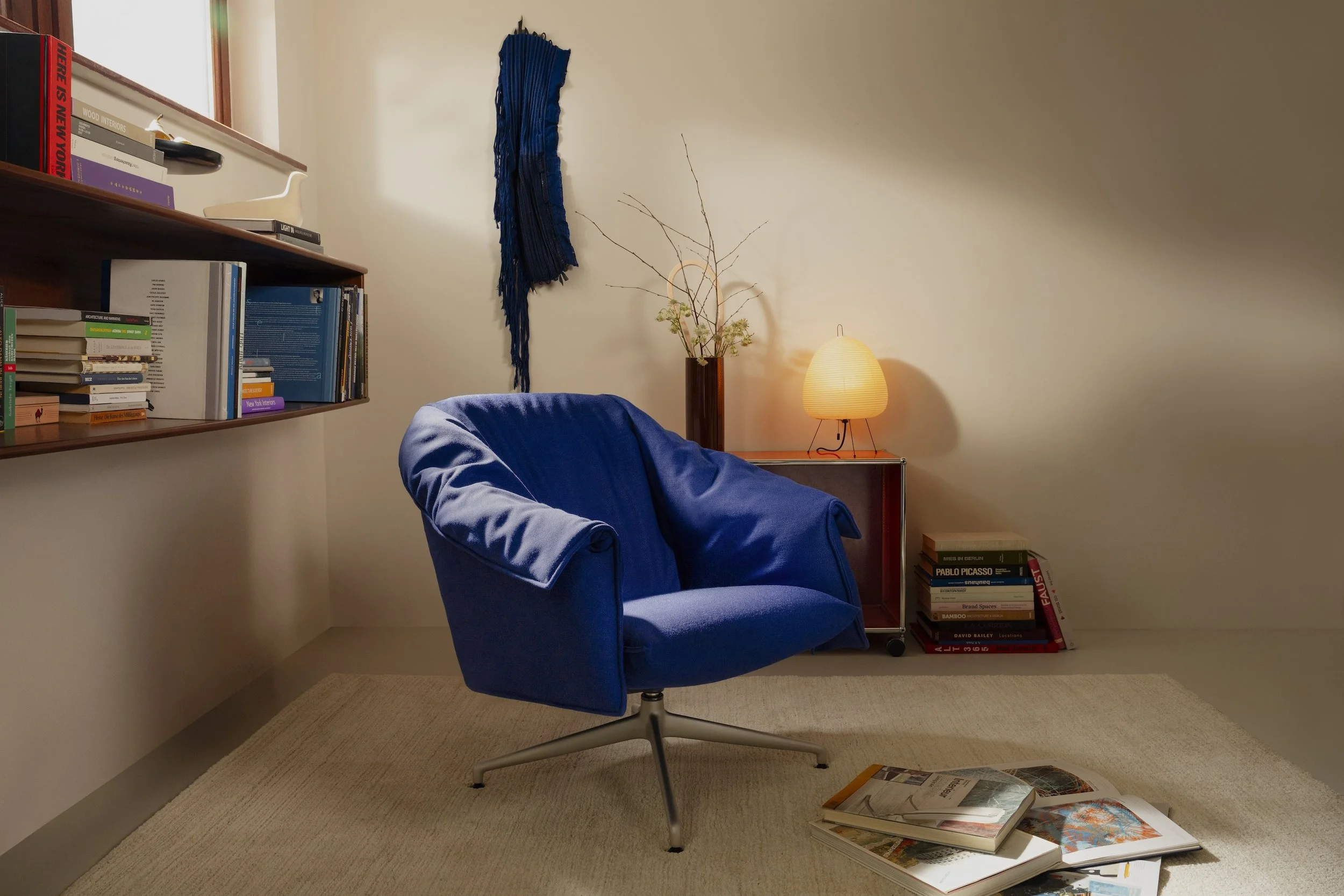
Image: Vitra.
By contrast, Vitra’s new lounge chair, Bascule, which officially launches in September 2026, has the size and posture of an armchair. Its frame is swathed in baggy fabric, while its seat and footrest are sharp-edged and taut, giving the impression of an oversized jacket layered over a miniskirt. The fabric’s draping recalls clothes hung on real human bodies: it flops over the armrests like plump biceps, and forms a slight paunch where the back meets the seat. The slouchy upholstery is filled with V-Foam, a new material that Vitra has developed with chemicals company BASF which has a cost-effective recycling process, while its range of fabrics are made from recycled PET fibres. The most surprising part of Bascule, however, is a new mechanism engineered by Vitra, which allows the chair to recline like a rocking chair using pivot points and body weight alone. Leaning back into the chair becomes an unexpected trust fall – it reclines much farther than expected, its loose fabric tightening as it lies almost completely flat like a bed. “A project can start in many ways,” Grosen says. “You can do a typological innovation, you can identify a gap in the market, you can have a new material, or you can have a new mechanism. And I think Bascule is maybe a little bit of everything.”
The gap in the market that Grosen alludes to is a younger demographic, which Vitra hopes to reach by selling Bascule at a lower price point – something which has been made feasible by the low-tech nature of its mechanism. To appeal to these emerging customers, Vitra worked with Berlin-based Studio Œ to create Bascule’s design. Founded by designers Lisa Ertel and Anne-Sophie Oberkrome in 2021, Studio Œ was established the same year that the Vitra Design Museum, founded by the company in 1989, acquired the Neil chair, a prototype the pair had developed during their studies at Karlsruhe University of Arts and Design. Featured as part of the institution’s Spot on: Women Designers in the Collection exhibition, the acquisition formed part of the museum’s efforts to highlight and rebalance the representation of women in its collections. In a similar vein, although Vitra itself has increasingly collaborated with women designers in recent years, Ray Eames was the only woman credited in the lounge chair section of the company’s website prior to Oberkome and Ertel’s commission. Studio Œ are also the only younger studio that have been invited to reinterpret the lounge chair – a category that has traditionally been reserved for more established practices.
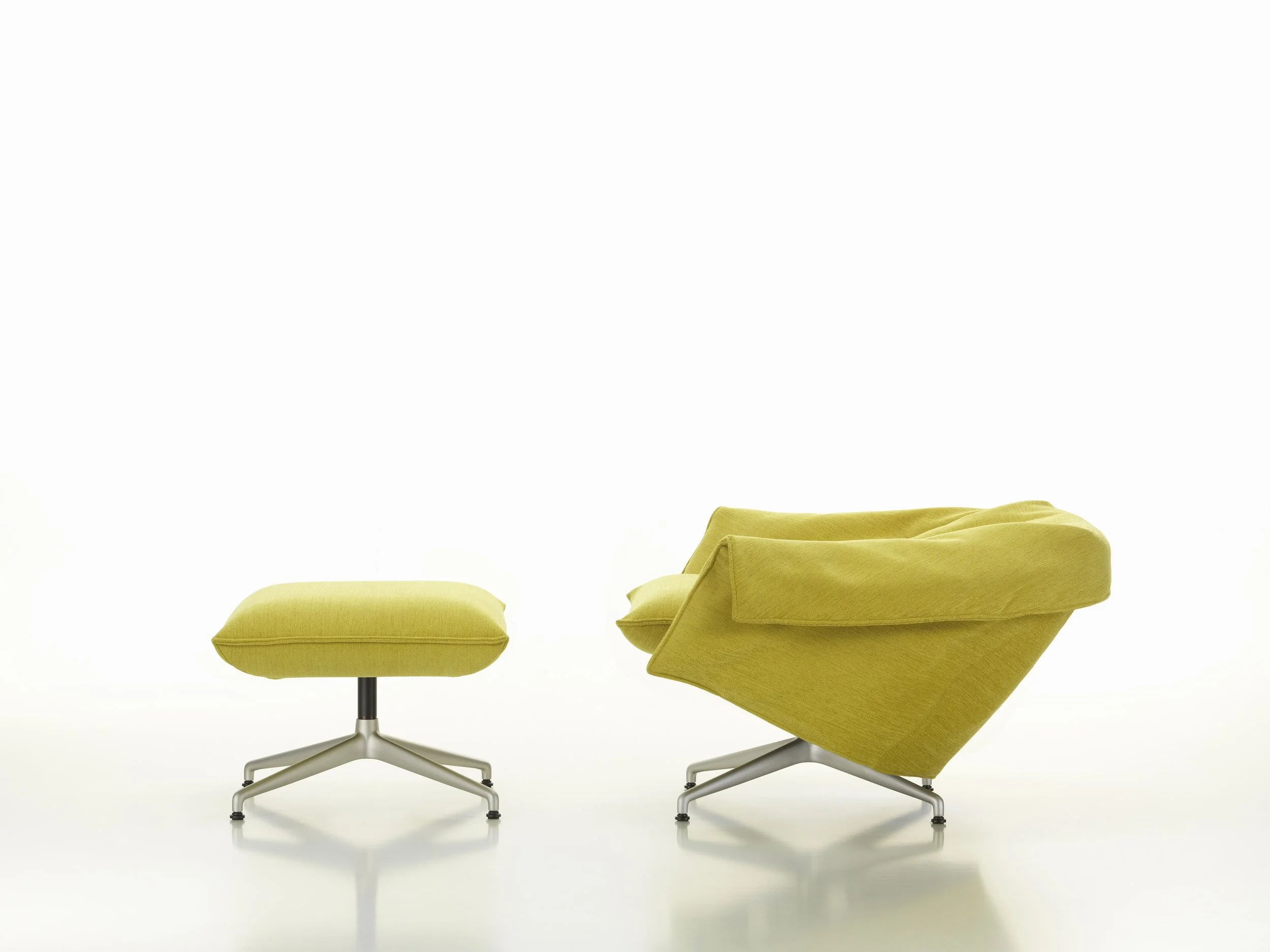
The low-tech mechanism engineered by Vitra uses pivot points and body weight alone to recline almost completely flat (image: Vitra).
While Bascule is the studio’s first commercial upholstery project, the commission came on the heels of Farm, a residency based near Lake Constance where the pair developed the Silo swing, a hammock made from cushions stuffed with leftover husk from the farm’s grain production. “It was a coincidence that both projects had a swing mechanism,” Ertel says, explaining how the name of their chair, Bascule, comes from the French word for seesaw. “But I’m pretty sure that the knowledge we gained about the loose, relaxed way you feel resting in it carried over to the Vitra project.” Developing upholstery for a chair with such a wide range of movement, however, was a challenge for both Vitra and the designers. “Vitra has a team of four upholsterers who help with prototyping and development projects, and they were very challenged,” Grosen says. “Years back, you would just glue things on foam – which is a craftsmanship too, of course – and you could also add a loose cover to a chair. But adding this much movement on top of that, you somehow have to develop a system where the fabric can move independently.”
To adapt to the chair’s movement, the designers had to approach the project like tailors. “We tried to have as few seams as possible, to really let the textile guide the movement,” Ertel says. Two short seams hold the backrest in place, while larger seams on the edge of the upholstery create sharp corners that poke over the armrests like a collar, giving the chair distinct contours while maintaining a slouchy effect overall. “This idea of defined looseness was really important to us,” Ertel says. “It maybe speaks to a younger demographic, because it’s not so stiff.” Like a piece of clothing, the upholstery can be easily removed to be washed or changed, or to allow the chair’s frame to be serviced and repaired. “Having that option really prepares the product for a long life,” Grosen says. Ertel and Oberkrome also hope the possibility for variation will encourage people to create interiors that feel more personal and expressive. “We would be happy if this allows people to be a little bit more bold in their decisions, and try out colours that they would usually maybe avoid,” Ertel says. While Bascule is available with a familiar swivel chair base, it can also be mounted on two wooden legs that resemble the wide stance of a bird. “I'm sure the other one will be more commercial,” Grosen says, “but I think the wood base really wears the jacket well.”
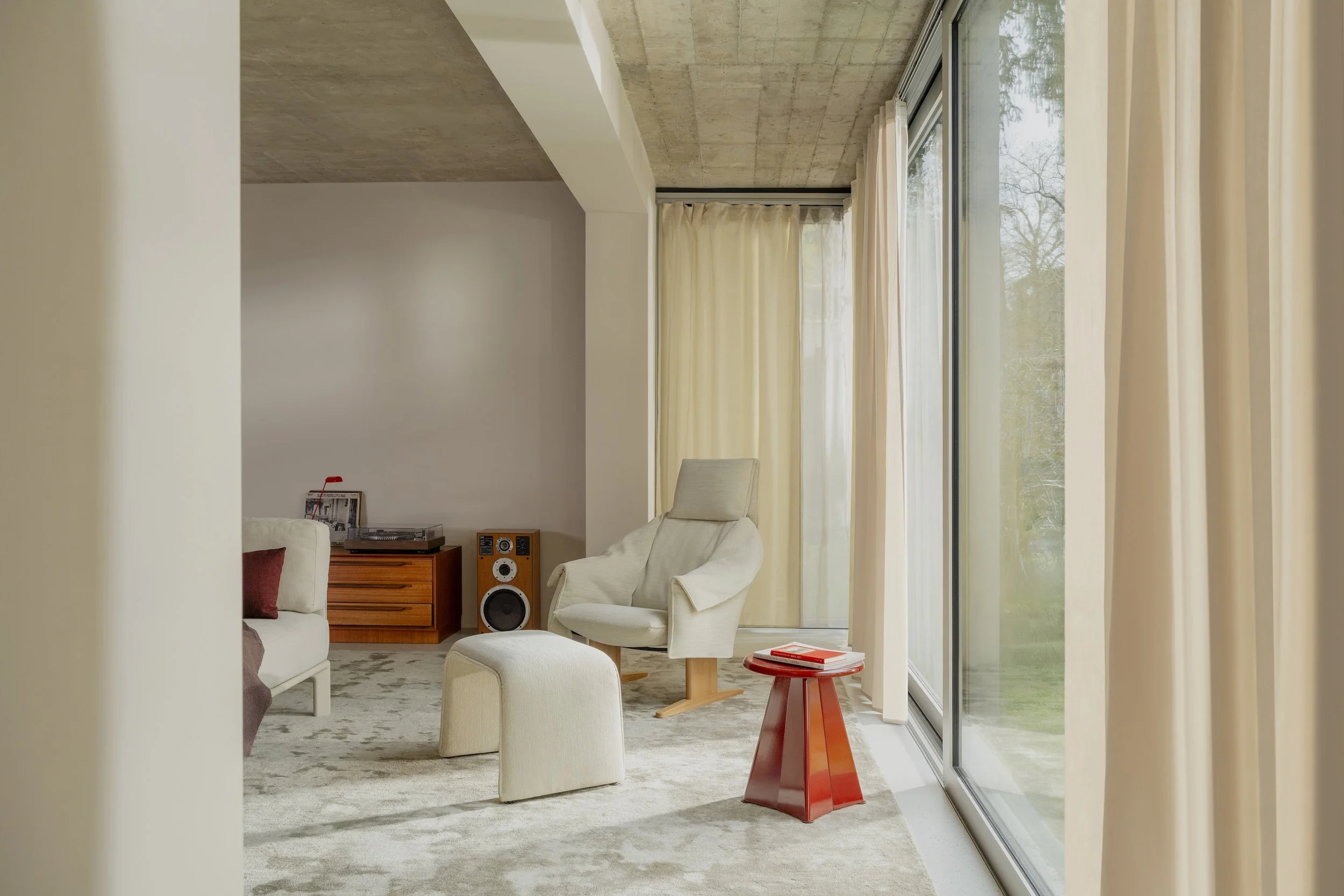
Customers can add an adjustable headrest to Bascule, and choose to have it mounted on either a swivel chair base or wooden legs (image: Vitra).
Every part of Bascule’s design reinforces this desire to adapt to people’s preferences. “[We tested it] with a lot of people at Vitra,” Oberkrome says, explaining that the mechanism automatically adapts to the user’s weight, and customers can also add a height-adjustable headrest. “That was inspired by a very familiar need of adding an extra pillow behind your head,” Ertel explains. The pair describe the chair’s mechanism as similar to an arm bending and stretching, a movement that feels familiar and intuitive. “What I think is really interesting about this mechanism is that it really depends on you,” Grosen says. “So the user and the chair become one, which is beautiful idea.” There is something forgiving about the design: it adapts to the fluctuating desires of the body, allows for fidgeting and changing your mind, and there’s no need to worry about keeping upholstery pristine when it already looks broken in. “It’s extremely comfortable, but it's not this heavy, over-stuffed kind of comfort that you maybe know from other chairs,” Oberkrome summarises. “It really invites you to settle in your own way, the way you would when nobody’s watching.”
Words Helen Gonzalez Brown