
The Kinetics of Control

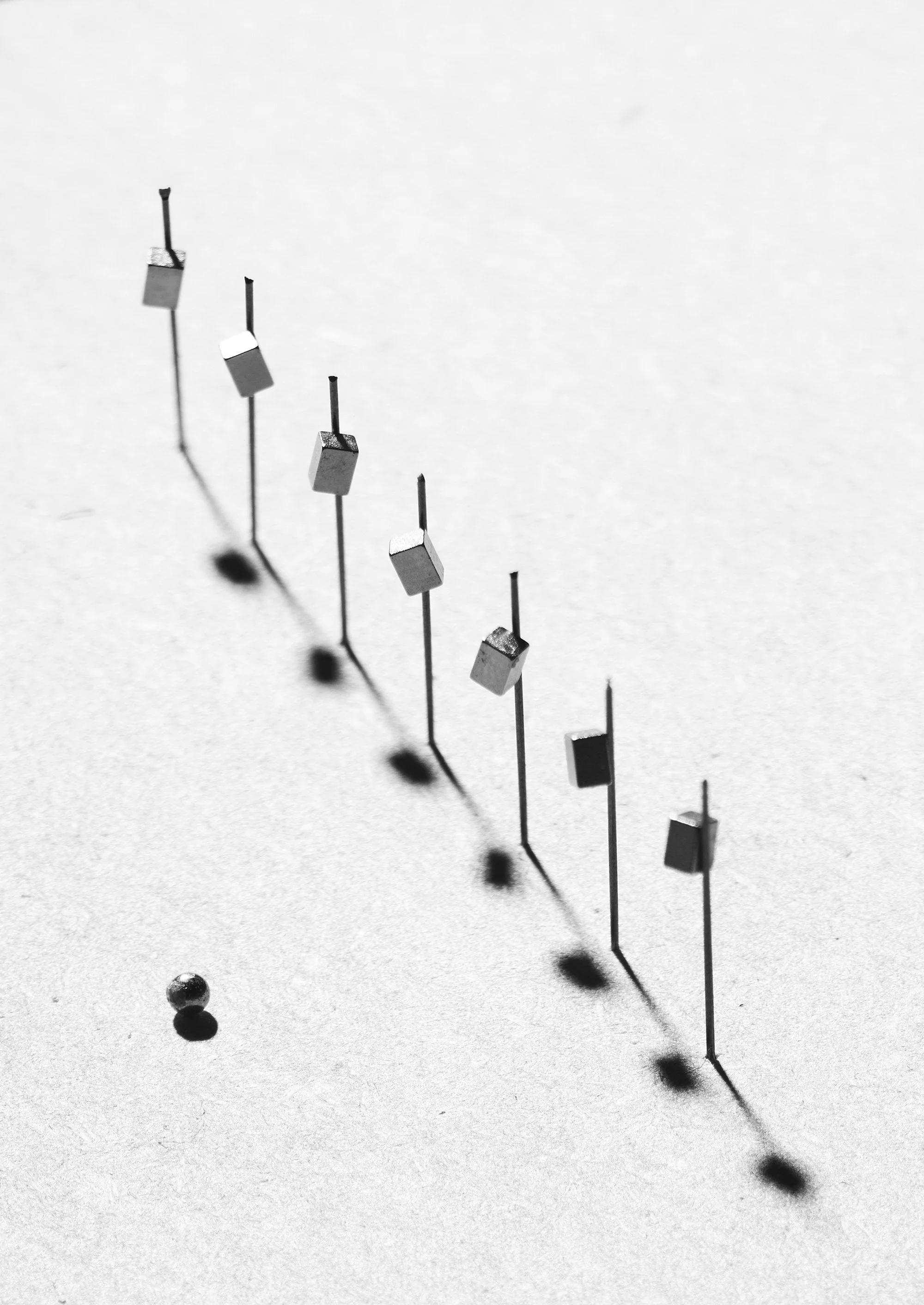

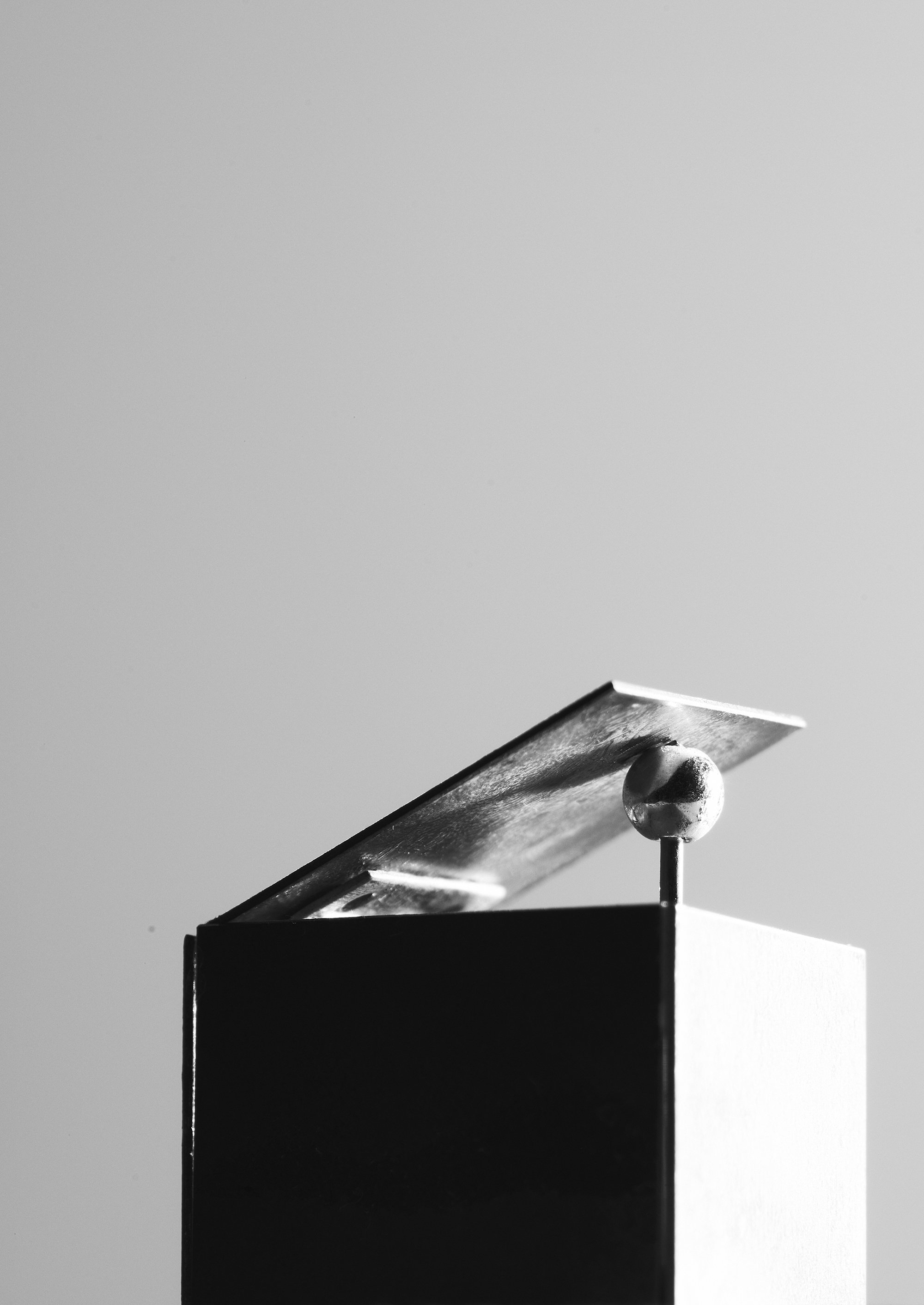
“One day, I was given a turntable as an assignment and asked to ‘express a new kind of beauty’ using it,” explains designer Yoshino Takayama. A student in the Department of Integrated Design at Tama Art University Graduate School in Tokyo. Takayama admits to some initial consternation at the task placed in front of her. “I didn't know what ‘beautiful’ meant, and I couldn’t create anything until the day before the critique,” she says. “I just combined whatever was in front of me, and that's how I came up with a piece called Pippin.”
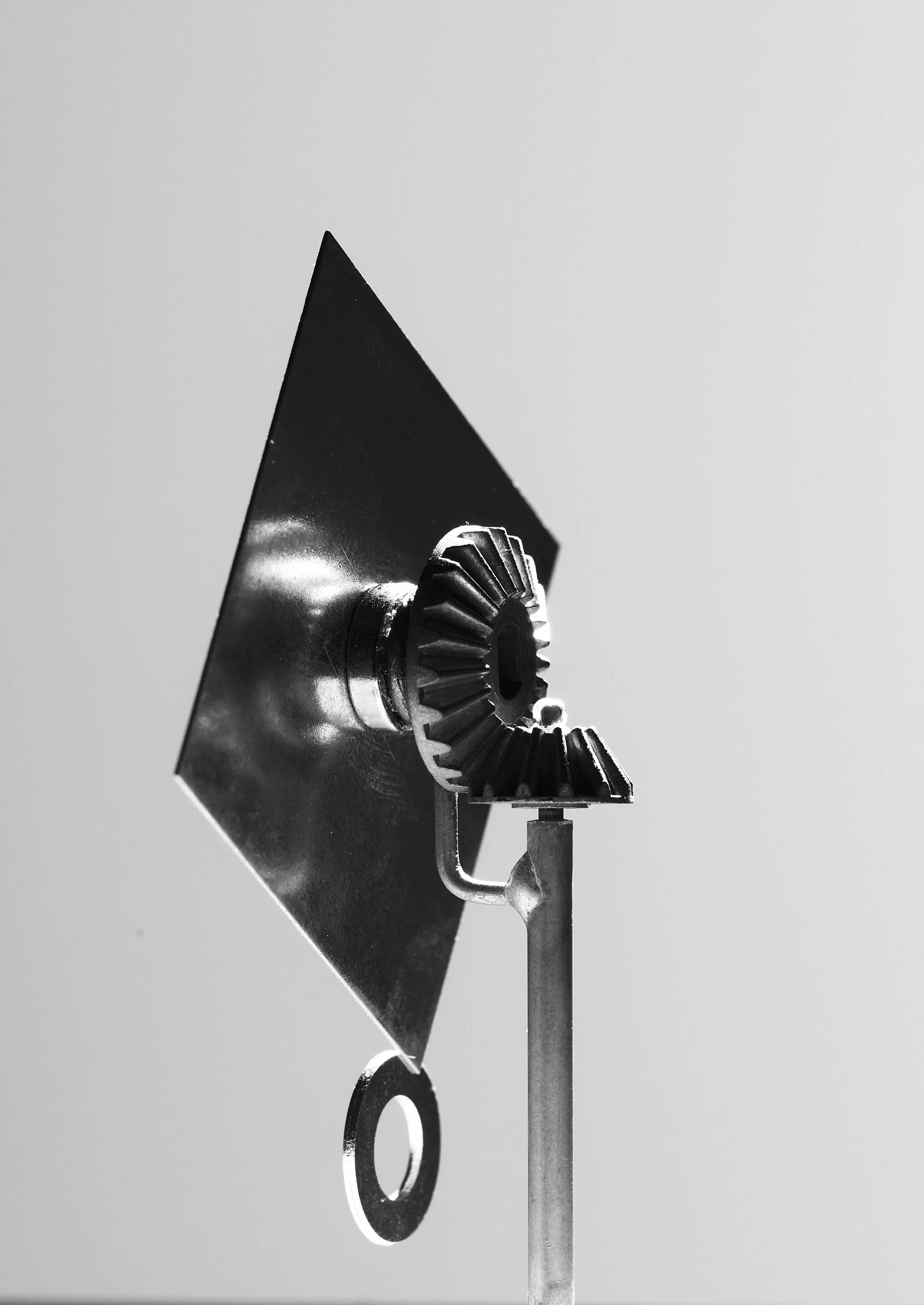
In late 2025, this same Pippin was exhibited as part of Designtide Tokyo, an annual festival hosted in Japan’s capital. Here, in the event’s main group exhibition hosted by festival organisers E&Y in Shibuya, and featuring exhibition design by UM, Pippin began its dance. Positioned on an MDF plinth, Pippin is initially ambiguous, resembling its inspiration only loosely: a metal disk, upon which is balanced a vertical sprig of flexible metal. Its top end is held lightly in an armature, while its tip is pressed gently onto the disc like a needle touching vinyl. Then, a motor attached to the armature begins to rotate. “Some people find a flower in it, while others see a star,” Takayama says. “For some, it may bring an awareness to their own breathing or heartbeat – things that usually remain unconscious. What emerges from that experience is left entirely to the viewer.” As the motor drives, this sprig begins to undulate along its own length, whirling around itself to describe an ellipsoid, with this same motion also pushing the needle tip to slowly loop around the perimeter of its disc. “When I finished creating it, I realised that everything I had created up until then couldn't compare,” Takayama explains. “That’s what sparked my interest in kinetic art.”
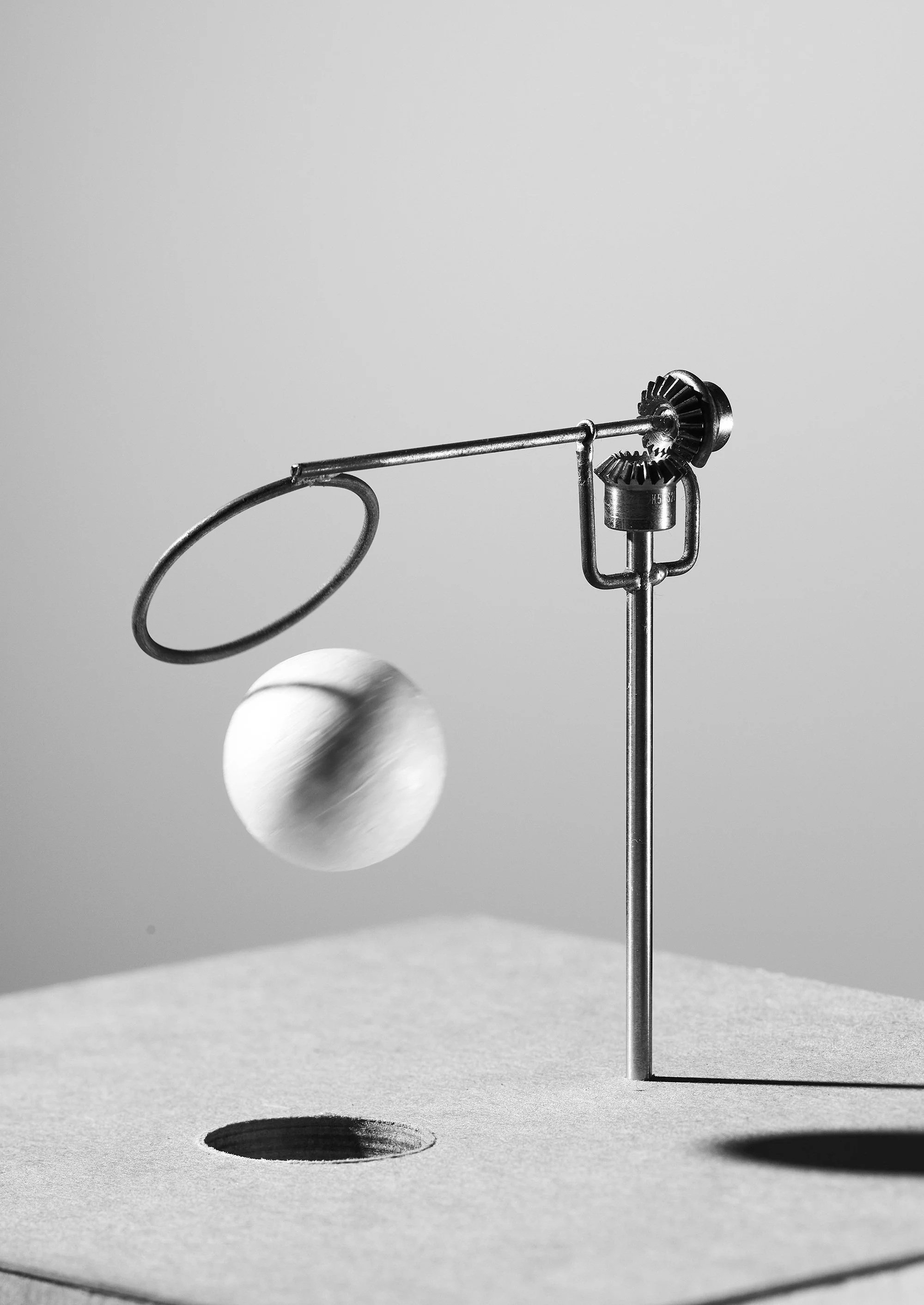
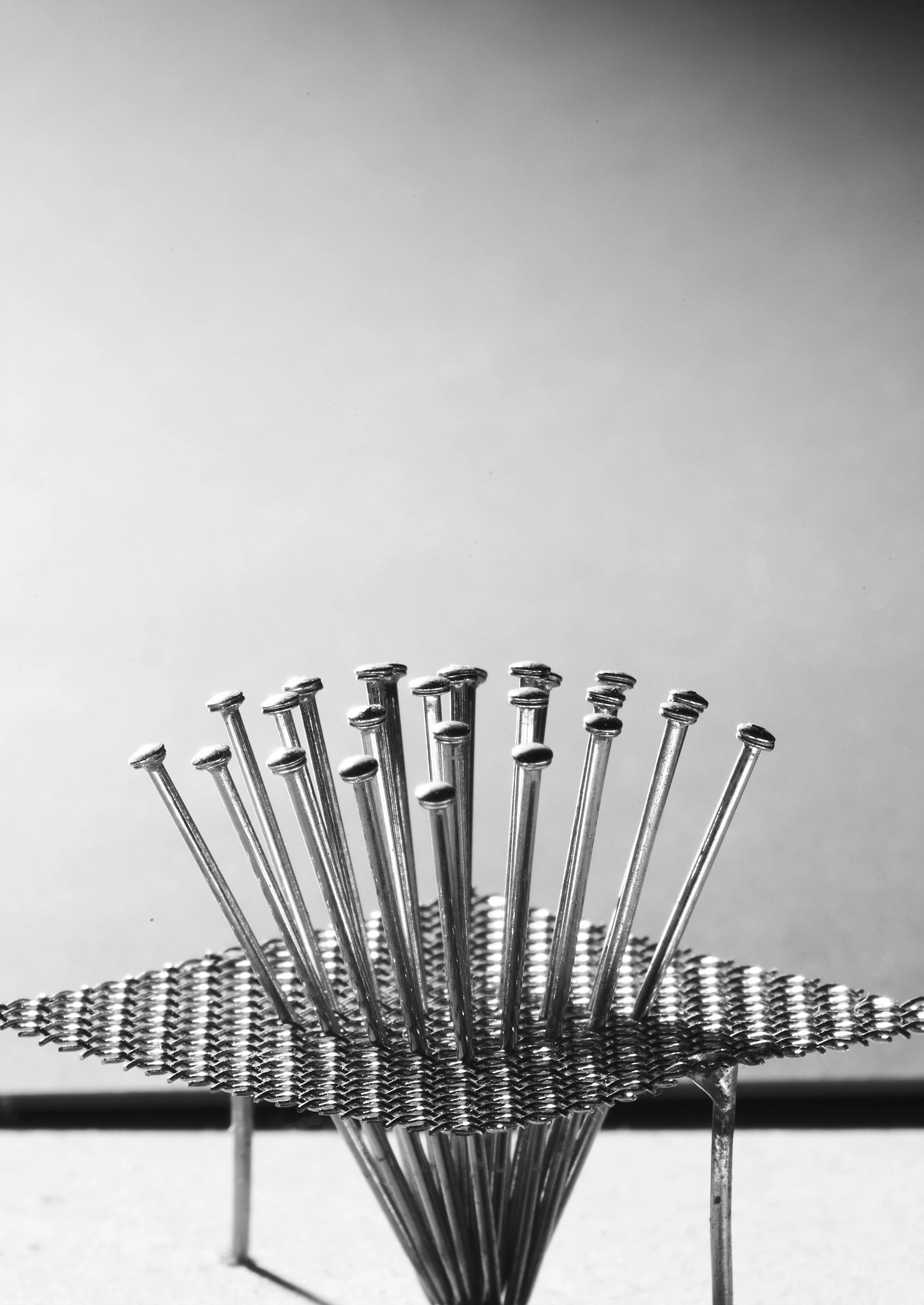
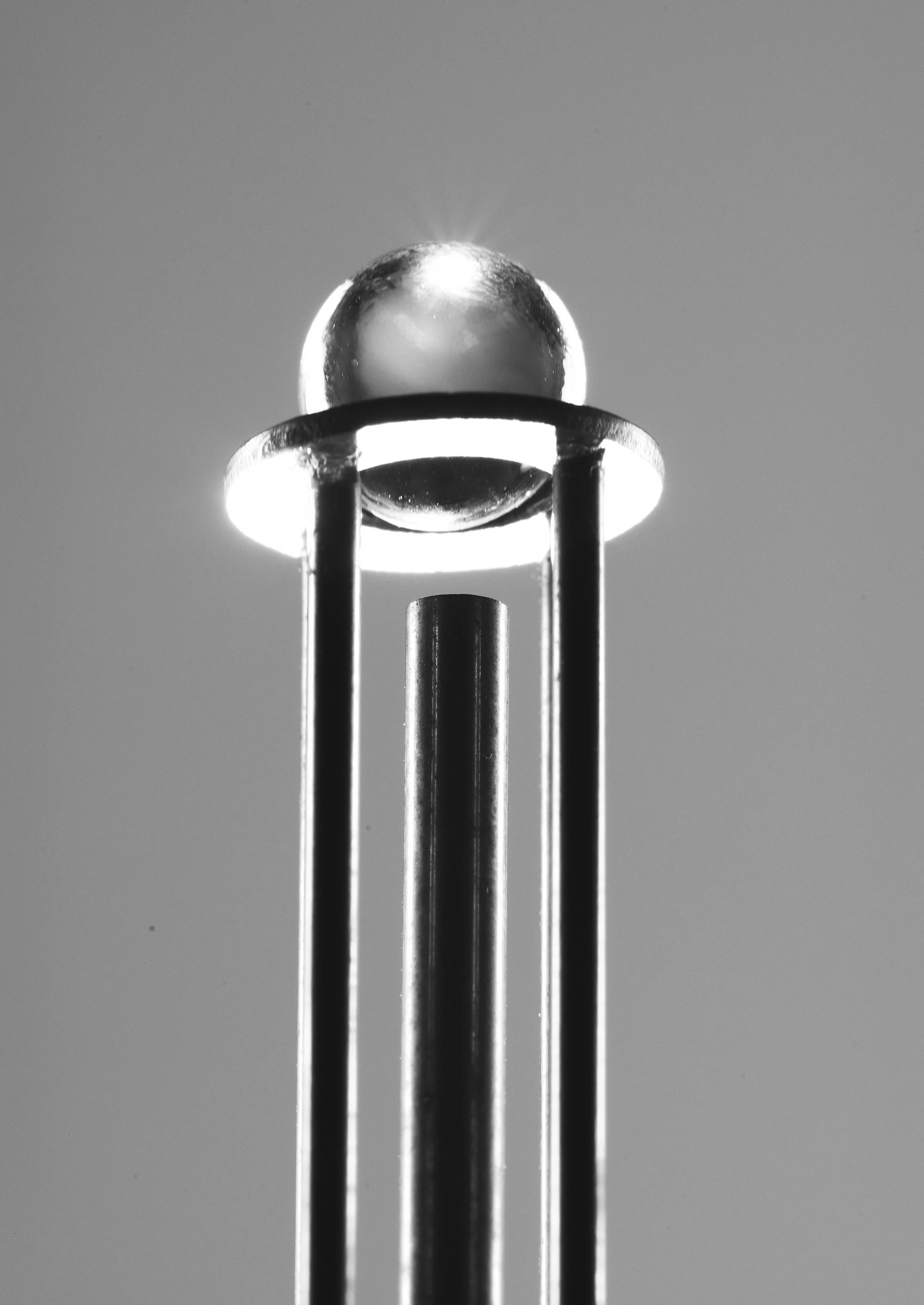
Since her first experiments with Pippin, Takayama has come to specialise in the design of similar kinetic machines: analogue mechanisms in which small objects are driven by motors, with the form of their resultant motion choreographed through a combination of gravity, friction and, in some cases, magnetism. While Pippin plays with the rotation of a turntable, Hoop sees a wind-powered levitating ball pass through a slowly rotating metal ring; Picket works around a ring of pins sunken into a plinth, drawn out one-by-one through the proximity of a rotating magnet; and Fortune gently lowers a scaffold that secures a small glass orb, the framework eventually dropping away entirely to deposit the ball precariously on the tip of a metal rod. “Each mechanism is very simple,” Takayama explains, but the effects that they produce are beguiling. Their simple elements repeat the same movements ad finitum, with small variations and glitches emerging from natural changes in the balance of forces that govern their operation. “The repetition in my works is a condensation of events, stripped of context,” Takayama says. “However, even I, the creator, don't know what it's a condensation of.”
Uncertainty of this kind is part of Takayama’s message. While more complex digital technologies would allow her to exert greater influence over the movement of her designs, this is antithetical to her purposes. Instead, she prefers to allow the machines to be entirely governed by universal physical forces. “I don’t want to forget that this is how I live as well,” she says. “Just like a machine, we too have mass, and we must live each day accepting the laws of the world and various accidents. But I believe that this is also a beautiful thing.” While these thoughts provide the machine’s wider conceptual background, Takayama’s work is also pointedly positioned within the landscape of contemporary design. As an international arts festival, Designtide features both domestic and overseas exhibitors, with the work on display ranging across disciplines: from technology to furniture; industrial design to arts-based practice; conceptual objects through to detailed material studies. “I usually find myself in a very ambiguous position between art, design, and engineering, so it meant a great deal to be able to exhibit within a design context – and to have the work accepted there,” explains Takayama, whose place in the festival was secured when she was declared the winner of Class of 2025, an exhibition of student work hosted by Designtide ahead of its main festival. She has proven herself a worthy winner, exhibiting 10 devices during the festival. While Takayama’s kinetic objects may occupy an uncertain place within contemporary design discourse, they are created with a clear question about some of the prevailing tenets of the field in mind – in particular, ideas of technological solutionism and the rise of ever more complex machinery.
“I think much of the modern design of movement involves establishing a dominant relationship of ‘control’ with objects and physical phenomena,” she explains. “Machines are often seen as the counterpart to humans, but this is a result of humans eliminating errors to make their lives more convenient; machines are actually fluctuating.” In place of the perfection and exactitude often prized by the field, Takayama’s machines are purposefully imperfect, finding meaning in the natural variation that enters into their operation. “Being regular, yet tolerating errors, is far more truly alive than simply recreating a sense of being alive with numbers, as is often the case with robots,” she says. This sense of experimentation and organic imprecision is also part of Takayama’s design process. Her machines are sometimes developed with a particular motion in mind, while at other times they emerge through unguided engagement with materials. “I move back and forth between these approaches, repeating them, in order to encounter as many movements as possible,” she explains. “What matters most to me is being able to delight myself as the first viewer of the work.” As part of this, she is regularly drawn to construct machines around ready-made objects such as sewing pins and crimp terminals, choreographing them in ways that see them rise and fall, flick out rhythmically, or swirl in cascading loops. “I use them in ways that are completely different from their original purpose,” she adds. “When I set aside their identity as tools and look at them purely in terms of colour and form, I find them deeply compelling.”
This, then, is the new kind of beauty that Takayama’s work has come to target. Her machines are mechanical and analogue, bestowing crisp loops of motion on materials and objects that are typically inert and functional. Shown at Designtide, a festival that aspires to exhibit and provoke debate around the role of design in contemporary society, the kinetic machines offer a reminder of the new possibilities available to designers through reconsideration of even small elements of the world around them. “There were many international visitors [at Designtide], and the most striking moment for me was seeing one of them moved to tears while viewing my works,” Takayama recalls. “I realised that being able to stir emotions beyond language barriers could be a major reason for me to continue creating artworks.”