
Hard Work, Soft Spaces
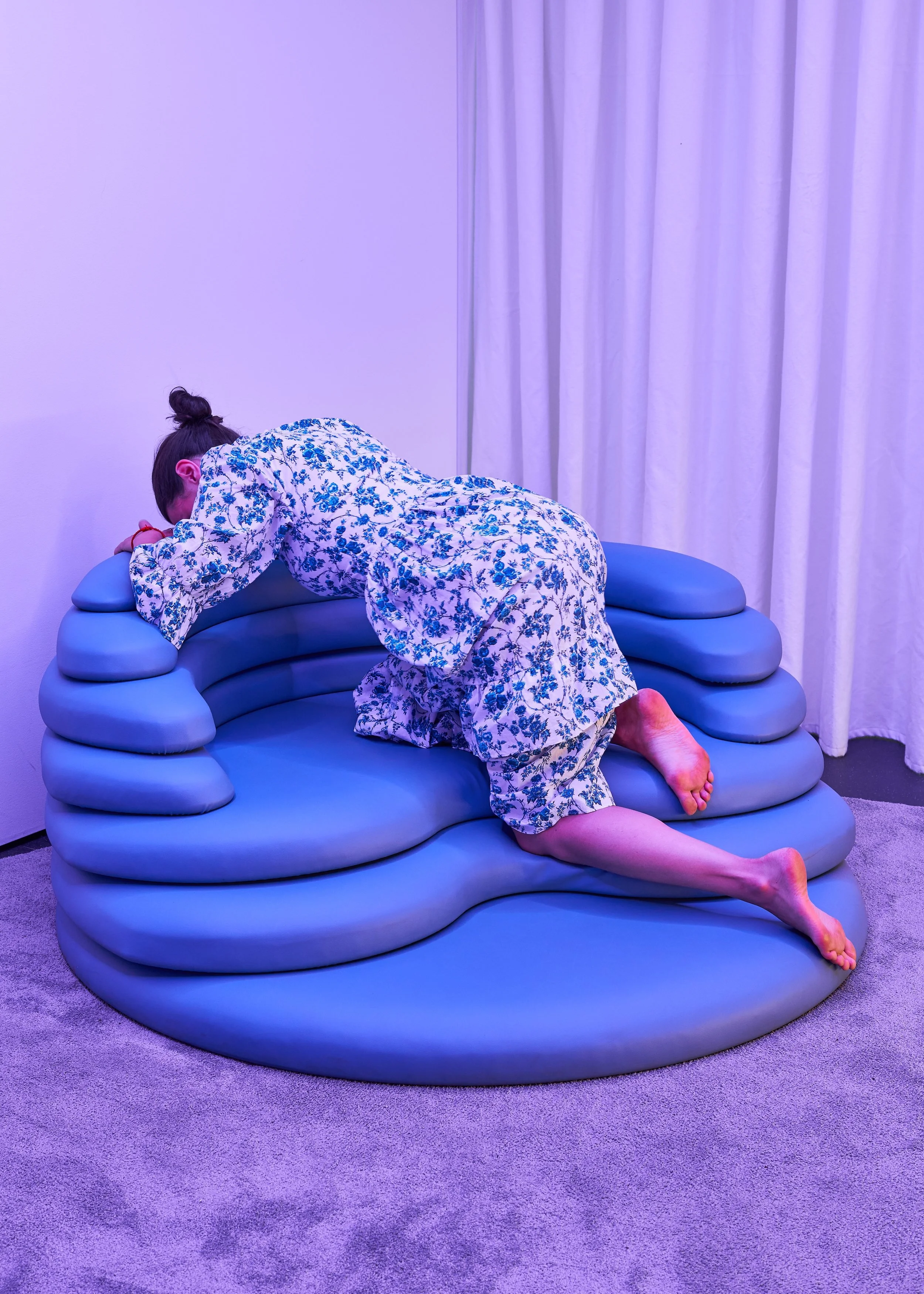
Ultima Thule, an alternative childbirth environment designed by Stiliyana Minkovska (image: Felix Speller).
I have a soft eye mask on, blocking out most of the light. I am wearing my coat, unbuttoned, and my scarf draped high around my neck – chin and jaw buried. A smooth voice with an Australian accent speaks calming phrases through my noise-cancelling earphones. Despite these defences, I can still make out the voice of the cabbie, talking about that time someone gave birth in the back of his parked taxi. My partner and my doula are trying to politely shut him down. Contrary to popular belief, birth is not just what happens at the hospital. Mine started hours earlier, at home, and is continuing now, the cabbie’s grating monologue forever part of my daughter’s birth story, his taxi part of my labour environment.
In labour, survival and comfort are strange bedfellows. A 2020 article from HERD: Health Environments Research & Design Journal, which summarises research done to date on birthing rooms’ impact on emotional and physical outcomes for mothers and babies, confirms that “a birthing woman needs [a …] familiar, calm, safe, and secure environment so her hormonal system can function optimally and facilitate a physiological and healthy labour and birth.” More comfort equals better survival. Sometimes, however, comfort and survival pull in opposite directions and can make opposing demands. Design for survival, when applied automatically, can introduce fear and unfamiliarity, and impede the physiological process of birth.
Birth is an experience that touches all of us at least once, as pointed out by Michelle Millar Fisher and Amber Winick, the authors of Designing Motherhood, a 2021 book about the objects that have defined human reproduction. Yet the environments and material culture of birth remain relatively unexplored within the fields of design and architecture, a gap which the book and its accompanying exhibition and design curriculum address. Millar Fisher and Winick faced a great number of rejections before their first show at Philadelphia’s Mütter Museum in 2021. “It begs the question, who decides what matters?” Millar Fisher said in a 2021 interview with The Guardian. “I have yet to meet a museum director who has ever used a menstrual cup or tampon or breast pump. Those are not the experiences of most people who are in positions of power.”
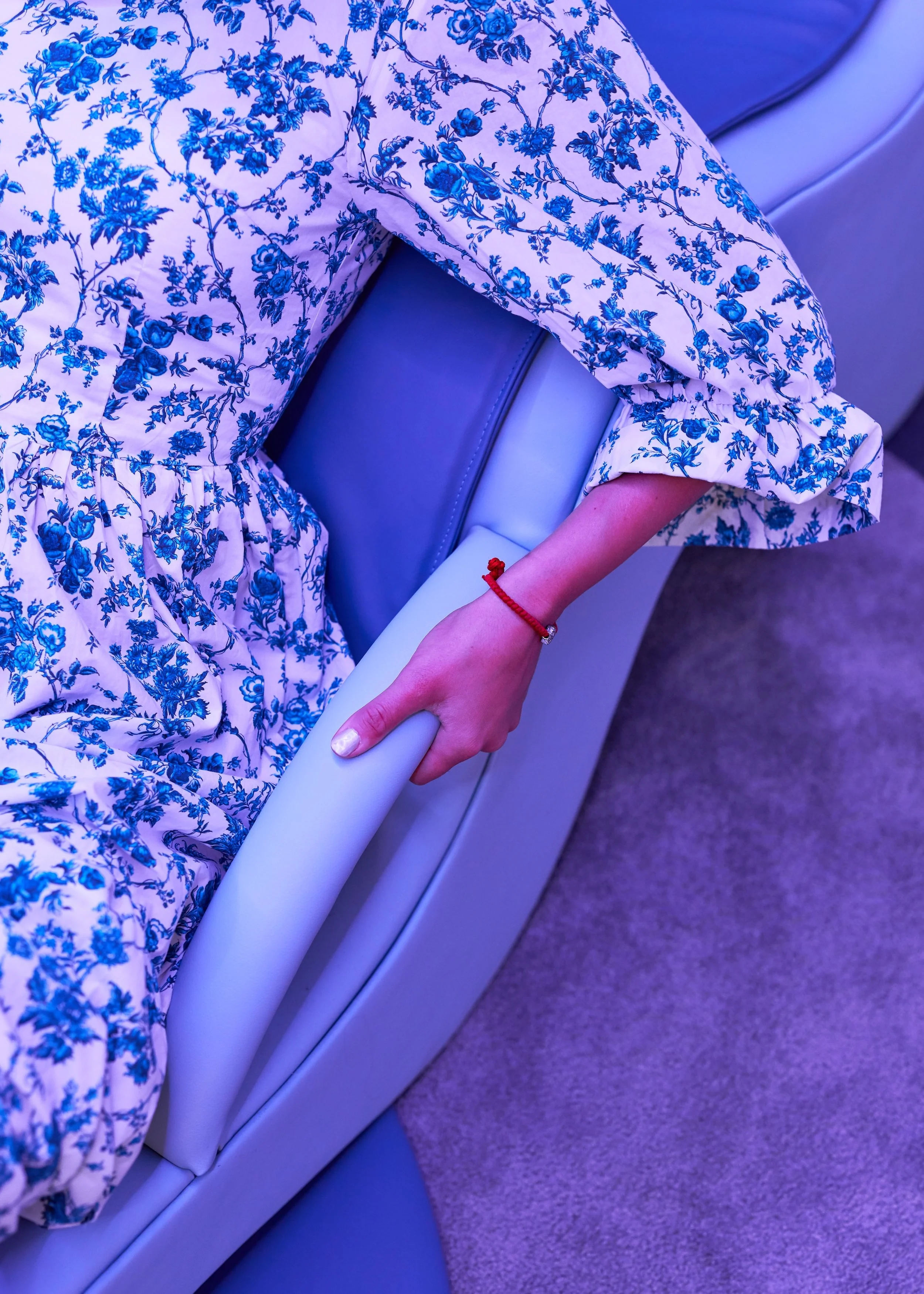
Image: Felix Speller.
But it seems like motherhood is finally beginning to enjoy its cultural moment. The Designing Motherhood exhibition is now touring the US and Europe, while Acts of Creation: On Art and Motherhood, an exhibition curated by critic Hettie Judah, fills a similar niche in art. Rachel Cusk’s frank memoir A Life’s Work, which details the author’s early experiences of motherhood, including the boredom, despair and drudgery, caused an uproar when it was published in 2001. Today, Sophia Hersi Smith and Jennifer Russell’s 2023 translation of Olga Ravn’s novel Mit arbejde (My Work), which largely centres on a young mother’s mental health struggles, has won awards and received critical acclaim.
Despite realistic depictions of motherhood becoming more commonplace in art and culture, many of the material challenges of childbirth have remained or intensified. According to a 2024 MBRRACE-UK report, the rates of maternal death during pregnancy or shortly after birth in the UK have risen by 53 per cent for the period 2020-22 compared to the previous three-year reporting period, reaching the highest rate in almost 20 years. With the report also finding that the risk of maternal death is statistically three times as likely for Black mothers and twice as likely for Asian mothers in the UK, the design of our birth spaces, systems and experiences is as ripe for review as ever. While the data includes a combination of complex factors, the knowledge that more comfort in birth spaces equals better survival should be a prompt for designers and healthcare providers to reconsider the importance of design for labour and the postpartum period.
In surveying some of the spaces, furniture, fluids and textiles surrounding birth, I have found various contemporary and historical examples of helpful, strange and hostile design. While researching this article I spoke to a number of people who have recently given birth about their experiences, and their voices are included in the following paragraphs. No singular narrative emerges in these stories. Despite the modern drive to make birth safer and more regulated (most often in the hospital), notions of comfort, safety and familiarity remain personal and slippery.
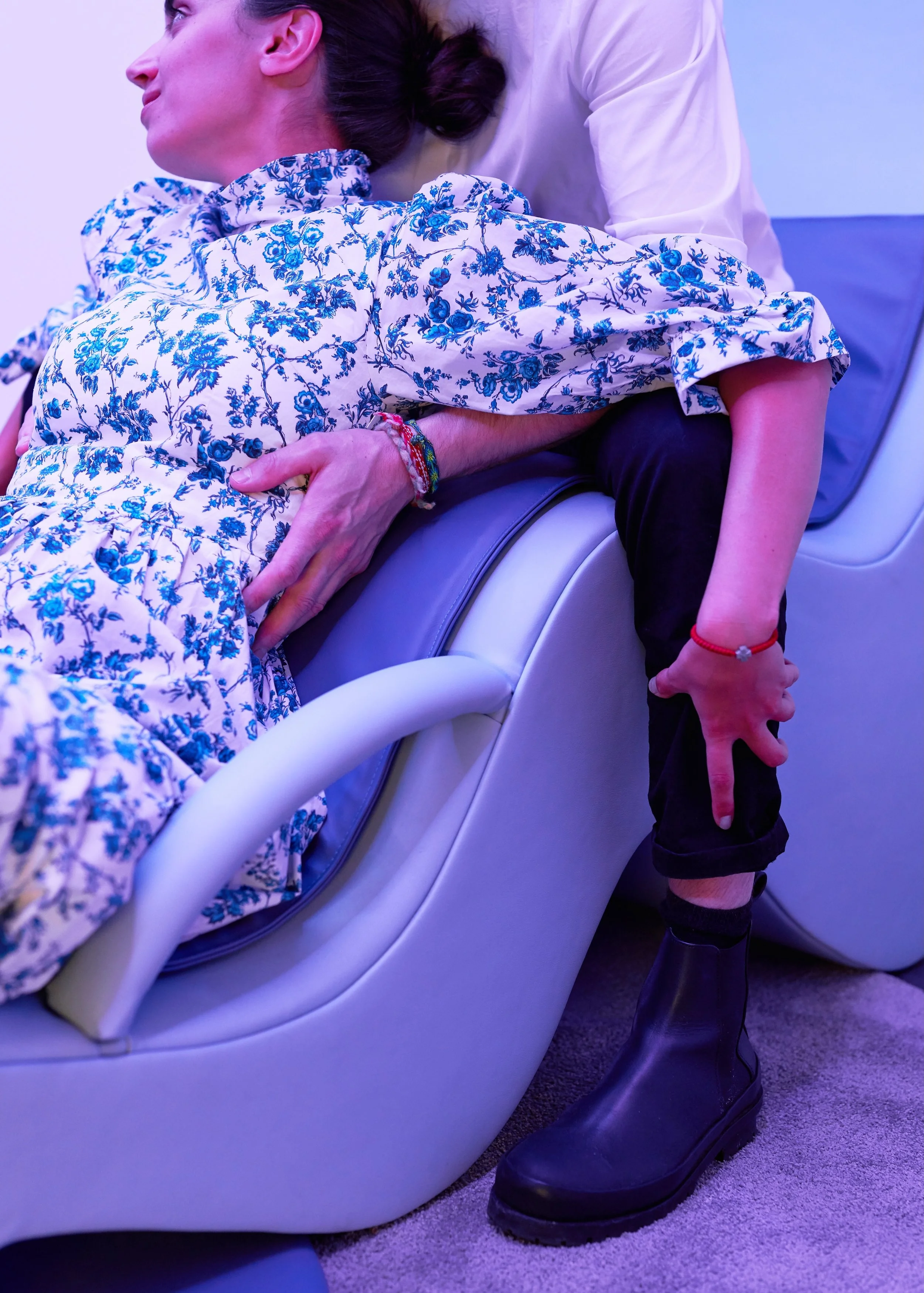
Image: Felix Speller.
The room
The spaces of childbirth, just like the experience of childbirth, are largely inaccessible before you are actually in labour. Throughout pregnancy, I was seeing different midwives in different rooms and attending scans in another facility altogether. Since the Covid-19 pandemic, the hospital where I was due to give birth stopped offering in-person tours of its birthing spaces for expecting parents. Instead, we were directed to a YouTube video. The clip mentioned that the hospital’s midwife-led unit is suitable for those with uncomplicated pregnancies and those wishing to have a “home away from home” experience – if your home features ceiling tiles, photo wallpaper with seaside sunsets and colourful projecting lights, that is.
With this in mind, I have been asking mothers I know about what they remember from the spaces in which they have birthed. Most of the time, the memories are partial and highly sensual: the bright lights, the sound of medical instruments, the music, the feeling of being outnumbered by medical staff. There is a reason most mammals will go to a quiet dark corner to labour: oxytocin, the hormone that causes contractions, requires darkness and the feeling of safety to be released. The bright lights of a hospital room, where the vast majority of births take place in the UK, tend to trigger the production of adrenaline, which can paradoxically slow down labour by inducing the fight or flight response.
Sometimes it is less obvious spaces that are the most comfortable. “I spent a lot of time in the bathroom during the birth (which totalled 10 hours and was my first). One thing afterwards that surprised me was how odd this seemed to my partner,” one friend told me. “He was totally unprepared for the fact that a lot of time birthing a child is actually spent in the bathroom. He thought it was exceptional and it is not.” Looking back, she wished that the bathroom had the LED mood light instead of the birthing room.
The simple relationship between furniture and space can dictate how a room is perceived and used, and how the birth itself will unfold. The bed, for example, asks you to lie down. If the bed takes up most of the space in a room, the scenario is already laid out. For my friend Nour, the huge room with a king-size bed in the midwife-led unit, where she could sleep next to her partner after a shot of pethidine, stood in stark contrast to the hospital room to which she was later transferred. “The birthing suite was set up for comfort, the hospital room was set up for procedure,” she said. “The space was tiny and the bed took up most of it.”
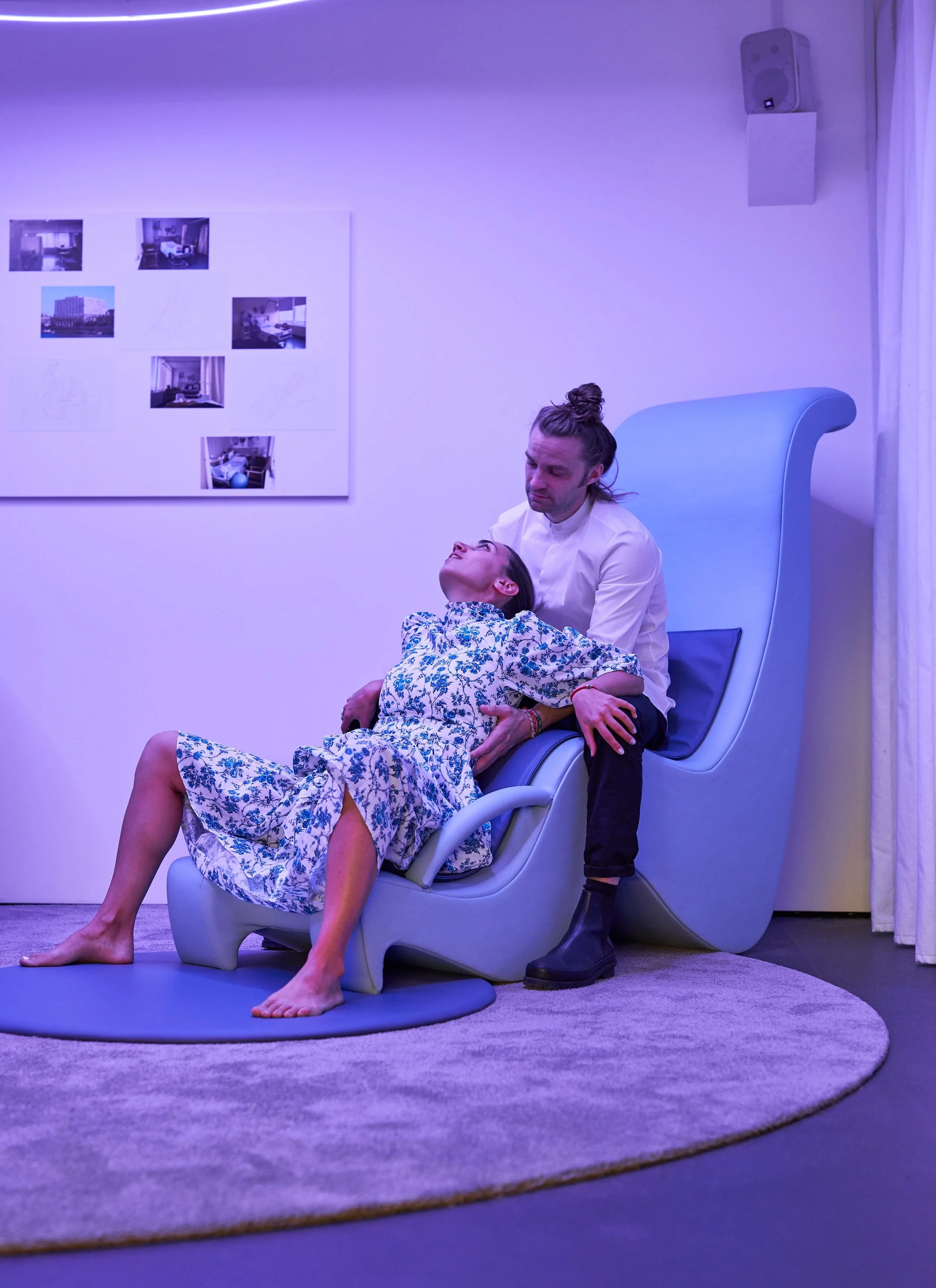
Image: Felix Speller.
The furniture
The hospital bed is the fulcrum, and often the bone of contention, of birthing spaces. It is a prescriptive piece of furniture, the design clearly communicating what it demands from the patient - to lie down. Giving birth, with its intensity, unpredictability and immense inward focus, rarely complies with such straightforward scenarios. Today, many birthing people want more autonomy and freedom during their labour, a demand that is increasingly being met by birthing environments through the introduction of pools, birth balls, stools and other forms of furniture. The need for familiarity during birth is acknowledged by healthcare providers, and customisation of the environment is allowed and sometimes encouraged. The bags people bring with them to the hospital grow bigger and carry various home comforts: clothing, night lights, earplugs, pictures.
“It’s hard to be knocked down when you’re on all fours,” says Jordi, the protagonist’s best friend in Miranda July’s 2024 novel All Fours. Everyone assumes doggy style is the most vulnerable, she explains, but it is actually the most stable position. Using a skeletal model of a pelvis, the midwife in my prenatal classes explained how an upright position is more conducive for vaginal birth than the supine one favoured by hospitals not so long ago. This way, gravity is on your side, she said, plus the upright position enables a forward tilt of the pelvis which gives the baby’s head more clearance by guiding it away from the mother’s spine and tailbone.
Prior to giving birth, I did not understand the urgent need to move that I read about in other women’s birth stories. I now know what it feels like to experience your body calling so intensely – surges like underground, involuntary eruptions – and to not be able to respond. The “soft animal of your body”, as Mary Oliver described in her poem ‘Wild Geese’, wants to turn, twist, move, to comfort itself and ease the pain. In that sense, physiological birth can be a lot like sex: messy, carnal and intuitive.
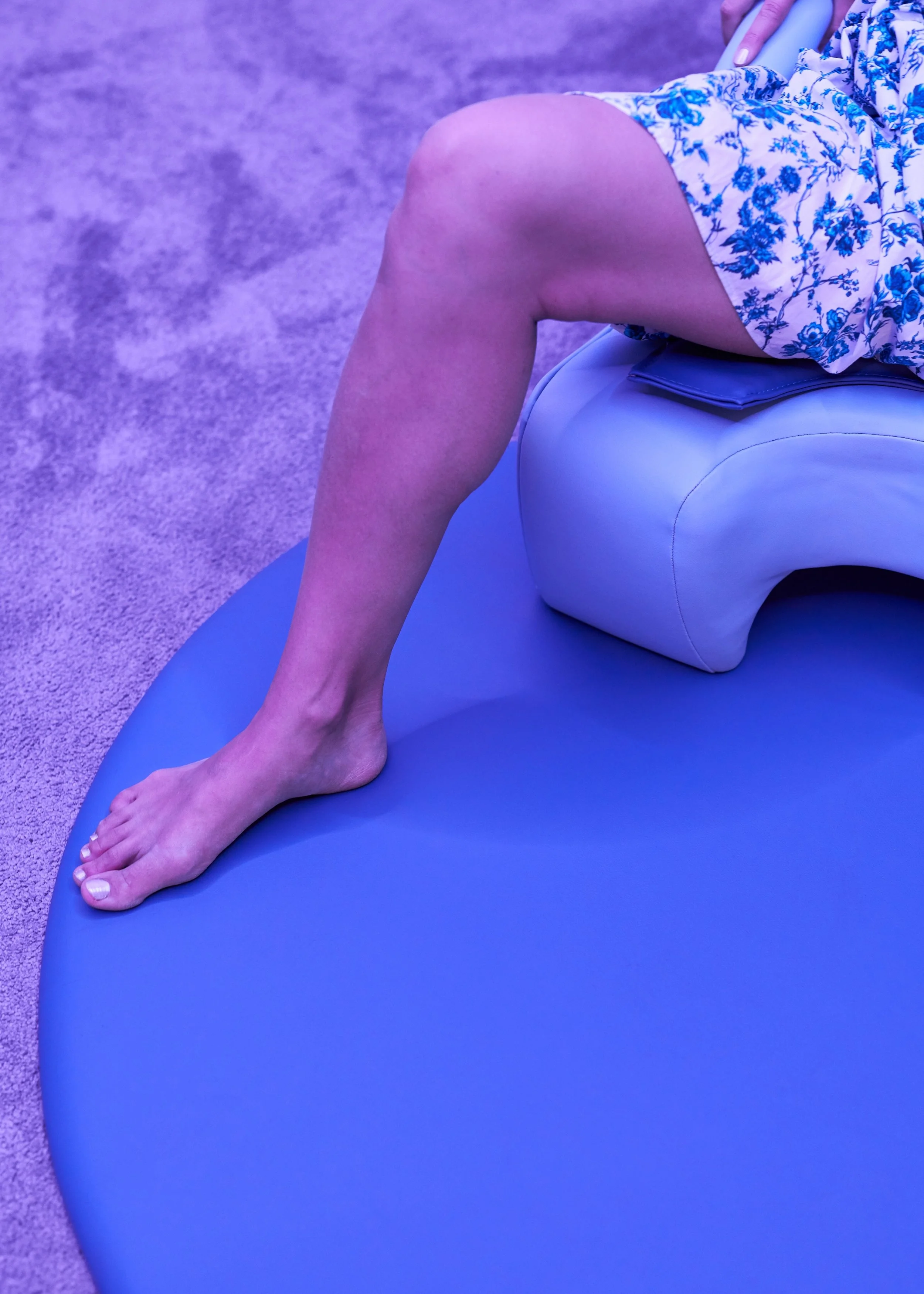
Image: Felix Speller.
I spent long stretches of time on all fours and similar positions during my labour. I remember my knees and elbows becoming painful from pressure as I transitioned from leaning against the bed’s adjustable backrest to kneeling on the floor with my arms on the bed. The freedom to move ended when the doctors entered the room and instructed me to lie on the bed with my legs in stirrups. For my friend Helen, the bed in the prenatal ward became a spatial condition that clearly set up the hierarchy between her and medical staff. “I was lying in a bed, waiting for the hormonal induction to start the birth. It wasn’t working and I wanted a c-section,” she told me. “A group of male doctors entered and, while towering over me, spoke condescendingly, trying to dissuade me. They were referring to my ‘future children’ a lot.”
Designer and architect Stiliyana Minkovska, who specialises in maternal healthcare, is motivated by providing greater comfort and wellbeing to the birthing mother. Her set of birthing furniture, Ultima Thule, encourages a range of positions, providing a greater freedom to seek relief during labour. Minkovska’s pieces remind me a little bit of spongy play equipment – soft, unthreatening, bemusing – and perhaps through those qualities, rather than any clear use or function, they communicate comfort and safety. Minkovska’s furniture is composed of layers of soft material and provides different ledges and levels on which to rest or lean; one of them accommodates a birthing partner in a supportive location behind the birthing person. Devised to aid various active and restorative positions, the furniture, importantly, does not present itself as being medical equipment. For Minkovska, this is part of the wish for birthing spaces to be “a place where birth is guided rather than controlled,” as she explains in an interview with London’s Design Museum, where she developed Ultima Thule while a designer in residence in 2019.
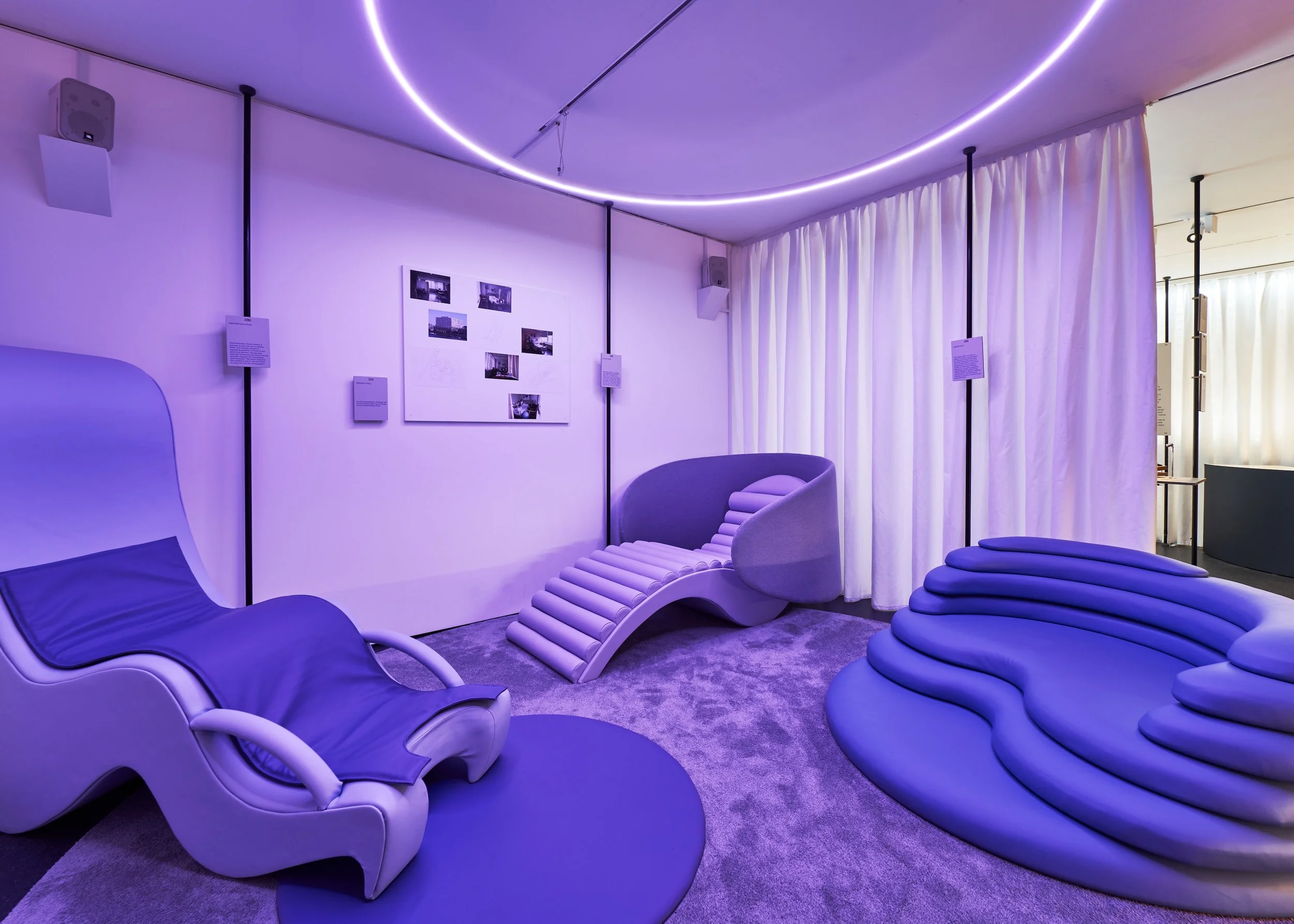
Image: Felix Speller.
Water
“We were set up for a water birth at home. My partner went to pick up the birthing pool from another house. The couple said they never got to use it and they also passed him some towels and rags, ‘in case it floods,’ they said. We never got to use the pool either. So eventually another husband came to pick up the pool and the rags.”
As Millar Fisher and Winick write in Designing Motherhood, water has been used during labour for centuries – whether it was as a hot compress, or birthing by sacred rivers and other bodies of water. A birthing pool as a place of delivery and a method of pain management, however, is a relatively modern invention. The pool was first introduced in the 1970s and initially envisioned for people to spend time in during labour and not as a place to actually push. Since then, however, researchers have found that birthing in water is safe, effective and can also help manage the pain, with some studies indicating a real impact on the length and progression of birth. “The visual image of an uninterrupted flow of liquid can have a powerfully positive psychological effect, and the sense of weightlessness that comes with immersing oneself in water can be used to encourage intuitive movement and postures,” Millar Fisher and Winick write.
In the stories of the mothers I know, water usually features in one form or another – a compress applied to the forehead, a bottle with a straw for drinking without needing to tilt one’s head, a shower head sprinkling warm water on the lower back, and finally the birthing pool. One of those women told me about her birthing secret – a waterproof clitoris massager, to be used in the shower to stimulate the release of oxytocin, the hormone that causes contractions.
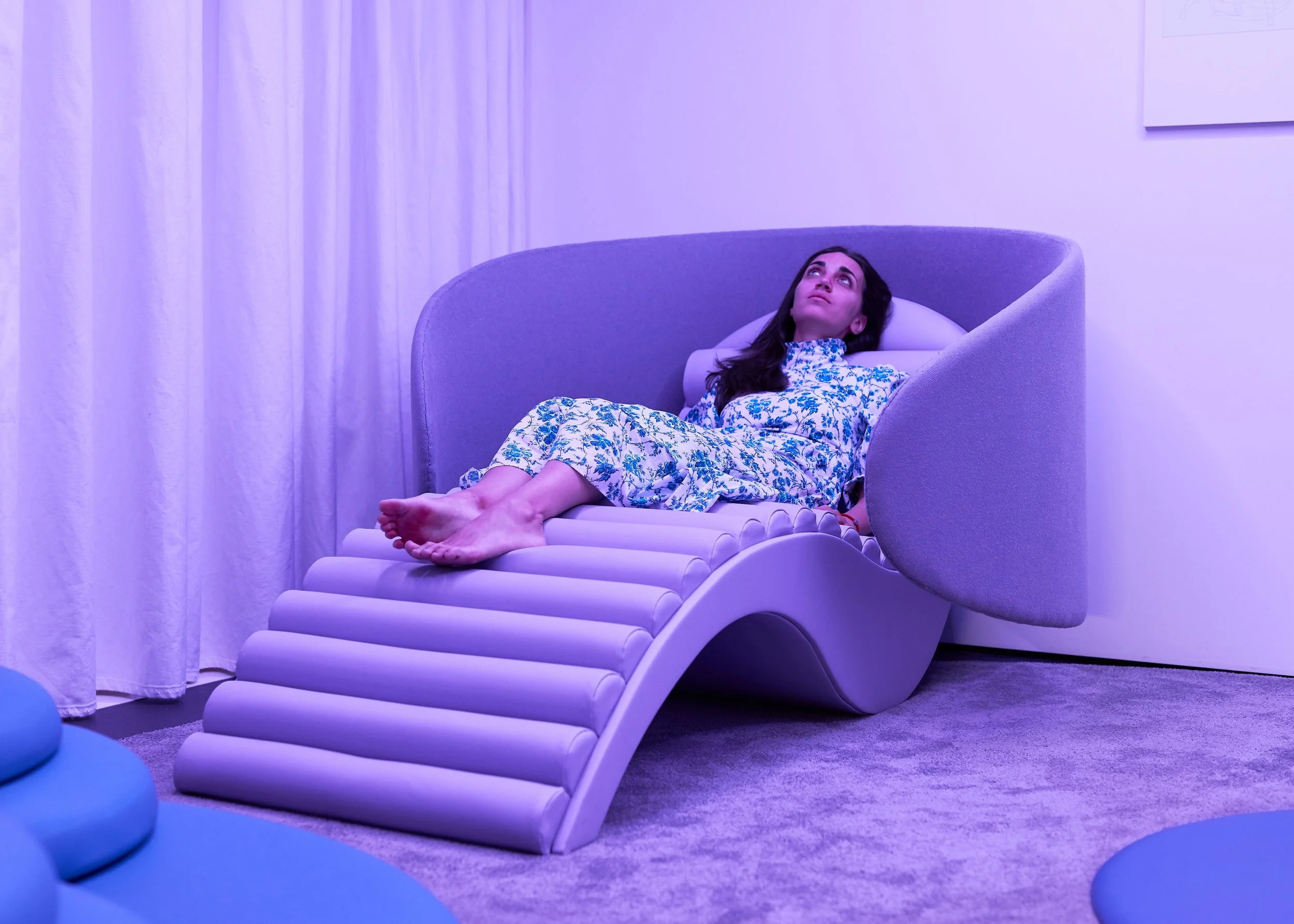
Image: Felix Speller.
Textiles
“Shortly after the birth of our daughter, our life revolved around the bed. I would be stuck in the sheets, nursing in the morning while my partner brought in breakfast on a tray. We quickly learned to put down an additional sheet or towel on the bed before laying our newborn on it. The laundry was mounting faster than we could get to it.”
In My Work, Ravn’s main character Anna speaks about living in a world of textiles, as she meticulously sorts, washes and dries her new baby’s garments. In pre-modern England, the gossip, which was a group of women supporting the birthing mother, began collecting linen for a delivery long before the baby was due. Architectural historian Emma Cheatle writes about the process in her 2023 book Lying in the Dark Room: Architectures of British Maternity. In the 18th century, she notes, nothing could be wasted and it was nearly impossible to get extra fabric during the process, so an extensive quantity was procured in advance. The cloths were used for bedding, to absorb bodily fluids, to bind and aid childbirth during a breach labour, and to swaddle both the mother and the baby after birth.
Today, the soft world of textiles in the postpartum period is overshadowed by contemporary research on SIDS (Sudden Infant Death Syndrome), which identifies them as potentially lethal. The traditional baby blanket – a sentimental mainstay of many hospital bags – has been replaced by a tiny, tight sleeping bag, which cannot accidentally envelop and suffocate the infant. The Lullaby Trust, a charity educating on safer sleep, recommends newborn babies are put to bed on their backs, in an empty cot. Any additional objects, or even the soft flesh of their parents, are deemed to be potentially deadly to the child. Soft padding, so called “crib bumpers”, placed in the cot by parents wanting to provide extra comfort for their babies are also forbidden, as the need for comfort is superseded by the will for survival.
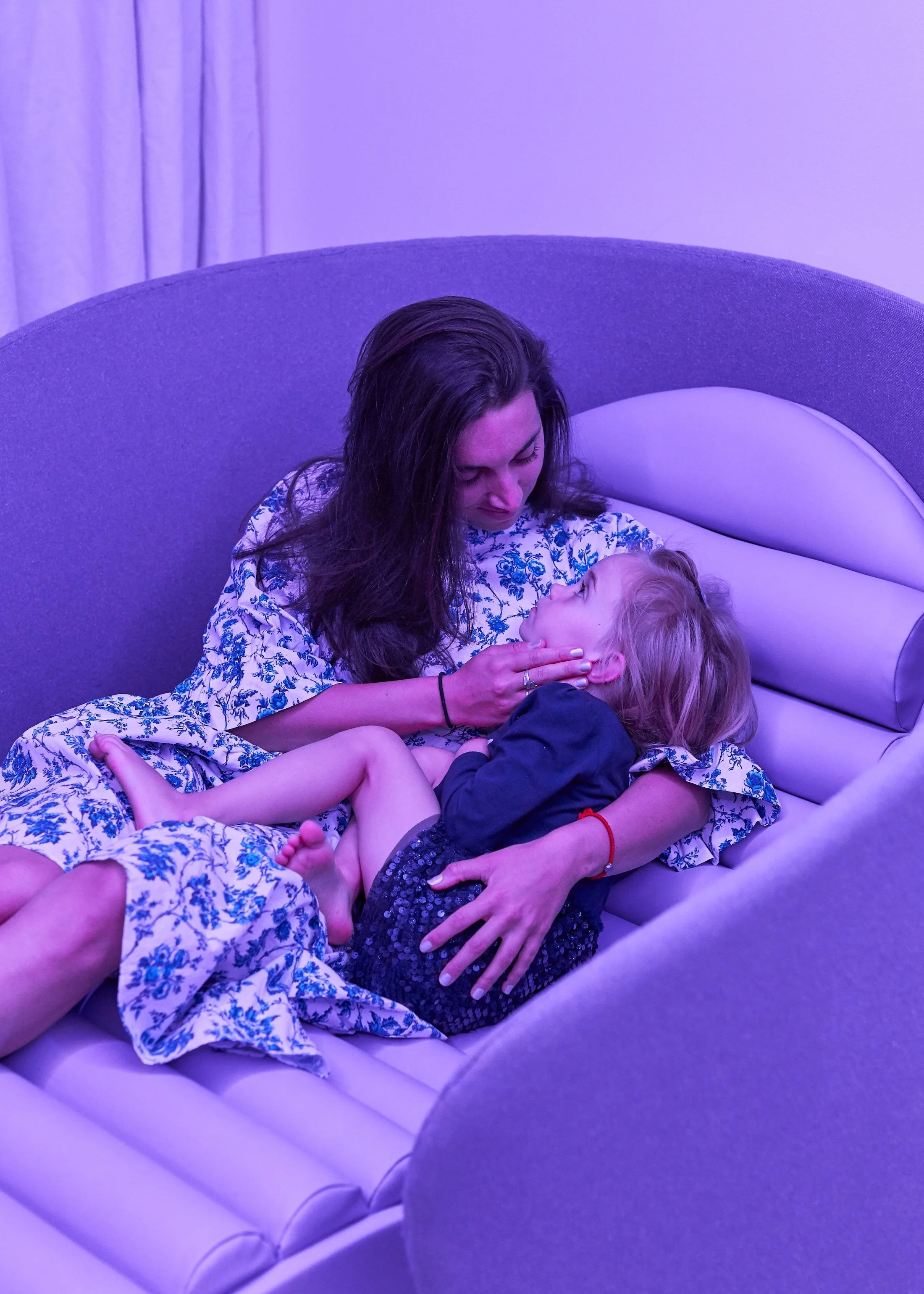
Image: Felix Speller.
We claw back what we can
I never made it to the pool in the midwife-led unit and I did not get the chance to enjoy the sunset wallpaper featured in the YouTube video tour. I gave birth on the labour ward, negotiating the hospital bed, the IV stand and the continuous foetal heart rate monitor, which, despite being wireless, kept disconnecting, prompting the midwife to fiddle with the attachment on my belly every now and again. Still, I was lucky to deliver a healthy baby, and to be discharged after only one night in the postnatal ward, where a paper curtain separated me, my partner and our newborn daughter from five other analogous families.
Increasingly, we claw back more comfort from hospital spaces – birth playlists, strings of fairy lights, soft bath robes, pieces of furniture and, last but not least, birthing partners being dragged back and forth, in a bid to make the birthing environment more comfortable and conducive. The feminine, airless and dark room of the 18th century, as described by Cheatle, is now a much brighter hospital space where male birthing partners are needed and welcome.
The spatial separation of home comforts and the medical care available in the hospital seems difficult to resolve. But if the experiences of birthing people point to anything, it is that birth does not abide by everyday design norms, such as having a separate bathroom. What could it look like for entire birth spaces to not comply to any specific category of rooms we are used to? If they were designed like Minkovska’s idiosyncratic pieces of furniture, maybe they could become cavelike, with pools and water-jets, soft textiles and a range of environments and temperatures. They could be safe, comfortable and fun, without compromises, and provide a worthy and helpful backdrop to one of the hardest, and sweetest, acts of labour.
Words Marianna Janowicz
Images Felix Speller