
All Eyes
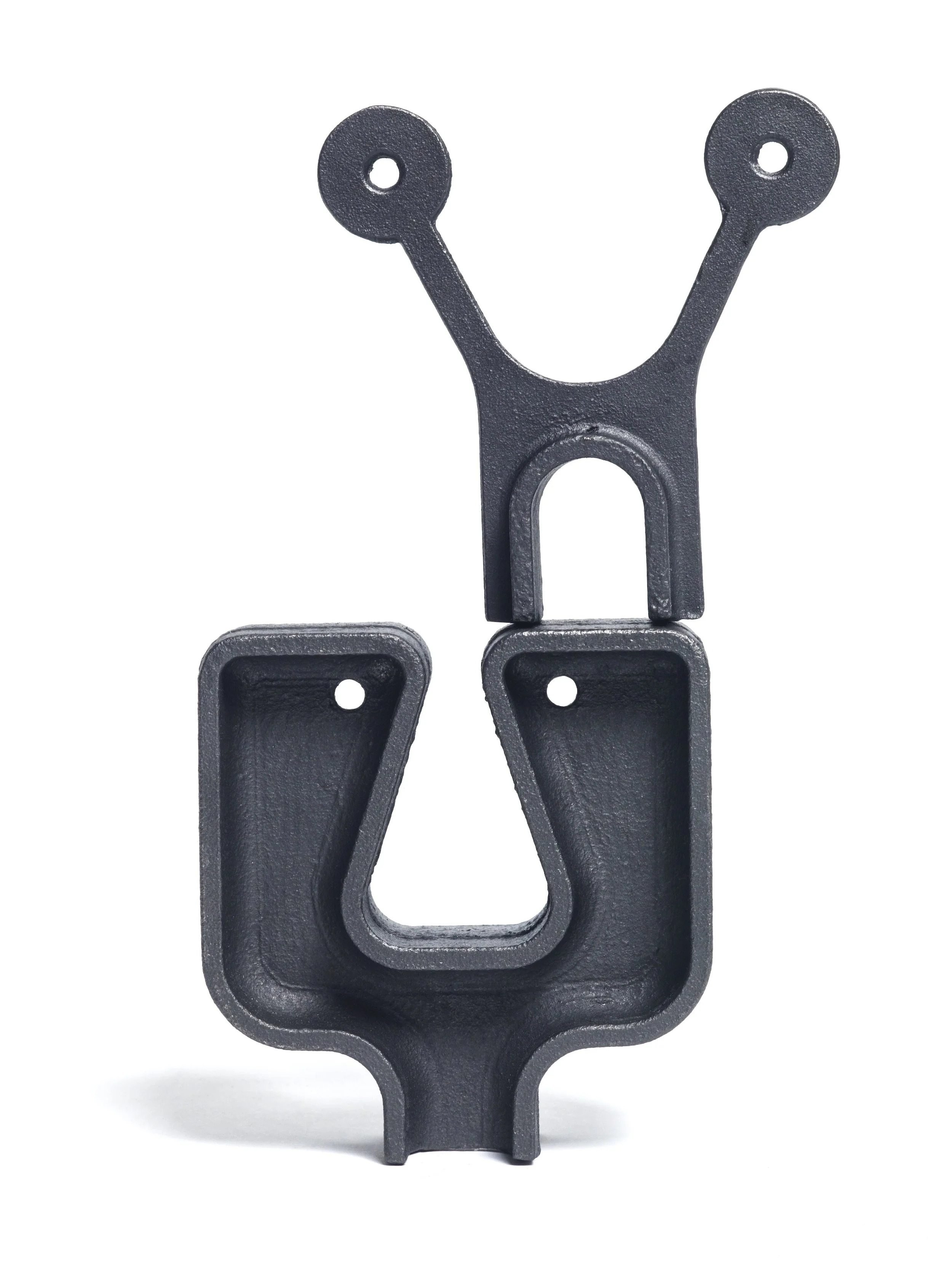
Studiomama’s face castings take advantage of the brain’s tendency to ascribe human-like qualities to the world around us (image: Richard Davies).
Studiomama’s face castings are difficult to describe, apart from the fact that they are staring at me. Each one is formed of fewer than 10 lines, and while some bring to mind a definite form such as a squid, a frog, or someone with a big nose, others are so abstract as to not resemble anything at all. Yet their eyes – two pinholes – possess a kind of alert curiosity. Even Jack Mama, who created the castings along with his partner Nina Tolstrup, still finds himself locking eyes with them as if they were a real person in the room. “They’ve got a fixed gaze,” he says. “I think that’s what propelled us to do quite a few, because it does have an impact when you’ve got a crowd or a family of them.” He’s right: I can’t help but feel like the line of castings I’m looking at have just been corralled together for a school photo.
Though it may sound as if Mama and I have lost our minds, this tendency to perceive specific images in random or ambiguous patterns, otherwise known as pareidolia, is actually common. Faces are the most frequently sighted, with a 2021 study from the University of Sydney finding that humans react to phantom faces in the same way they do to real ones. “You are somehow unable to totally turn off that face response and emotion response and see it as an object,” the study’s lead researcher David Alais told The Guardian. “It remains simultaneously an object and a face.” Some researchers hypothesise that pareidolia derives from a survival technique. “Human survival depends so heavily on others – whether we need their help, or fear their violence – that we need to react quickly and understand their motives,” journalist David Robson wrote for the BBC in 2014. “If we occasionally make a mistake and see a face in tree bark, that’s less serious than failing to spot someone hiding in the bushes.”
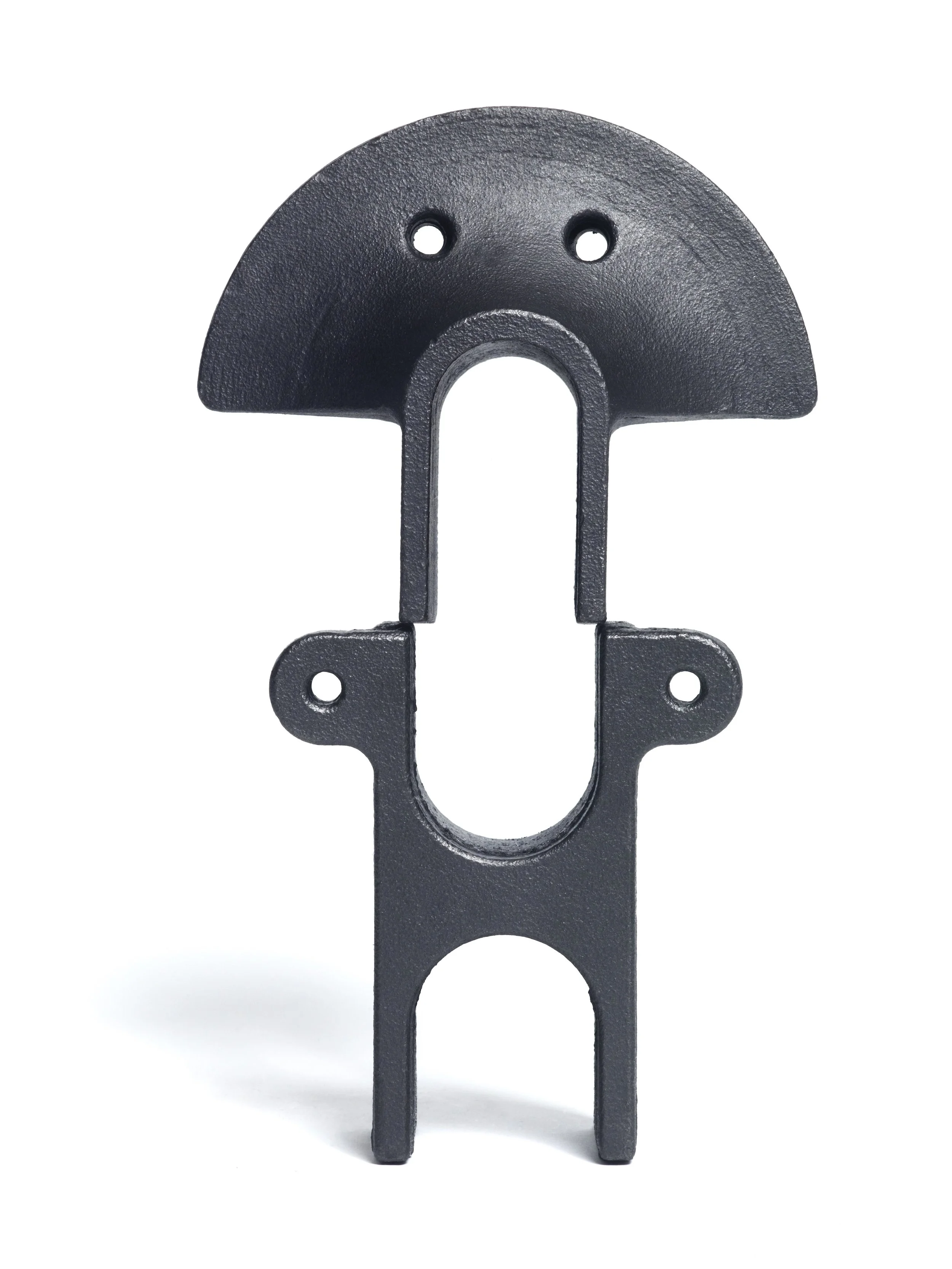
Glass colour samples, developed at Cirva in Marseille (image: Studio Brynjar & Veronika).
Studiomama, however, has repeatedly taken advantage of this evolutionary phenomenon in order to create charming, delightful objects. The face castings are part of a family tree of projects which began with The Off-cuts, a series of creatures made from leftover wood that began in 2010. “One day in the workshop we emptied the bin and started playing, and you could see a nose or an eye,” Mama explains. “It just happened spontaneously.” Many of the pieces resemble animals, with a curved piece of wood repurposed as elephant ears or a long plank made into a giraffe’s neck. Others are more cartoonish, with goggly eyes or a goofy tongue.
“When you have kids, you kind of relive your childhood,” Mama says. “[When Nina and my children were growing up,] we would do a lot of creative things with them, and I mean, maybe I enjoyed it a bit too much.” On a video call, Mama holds up two robot-like figures that his and Tolstrup’s daughter made out of offcuts. (“Mum and dad,” he explains.) But even their children teased Mama and Tolstrup when they were making The Off-cuts. “They would laugh at us, and be like, ‘What are you doing? That’s not work,’” he says.
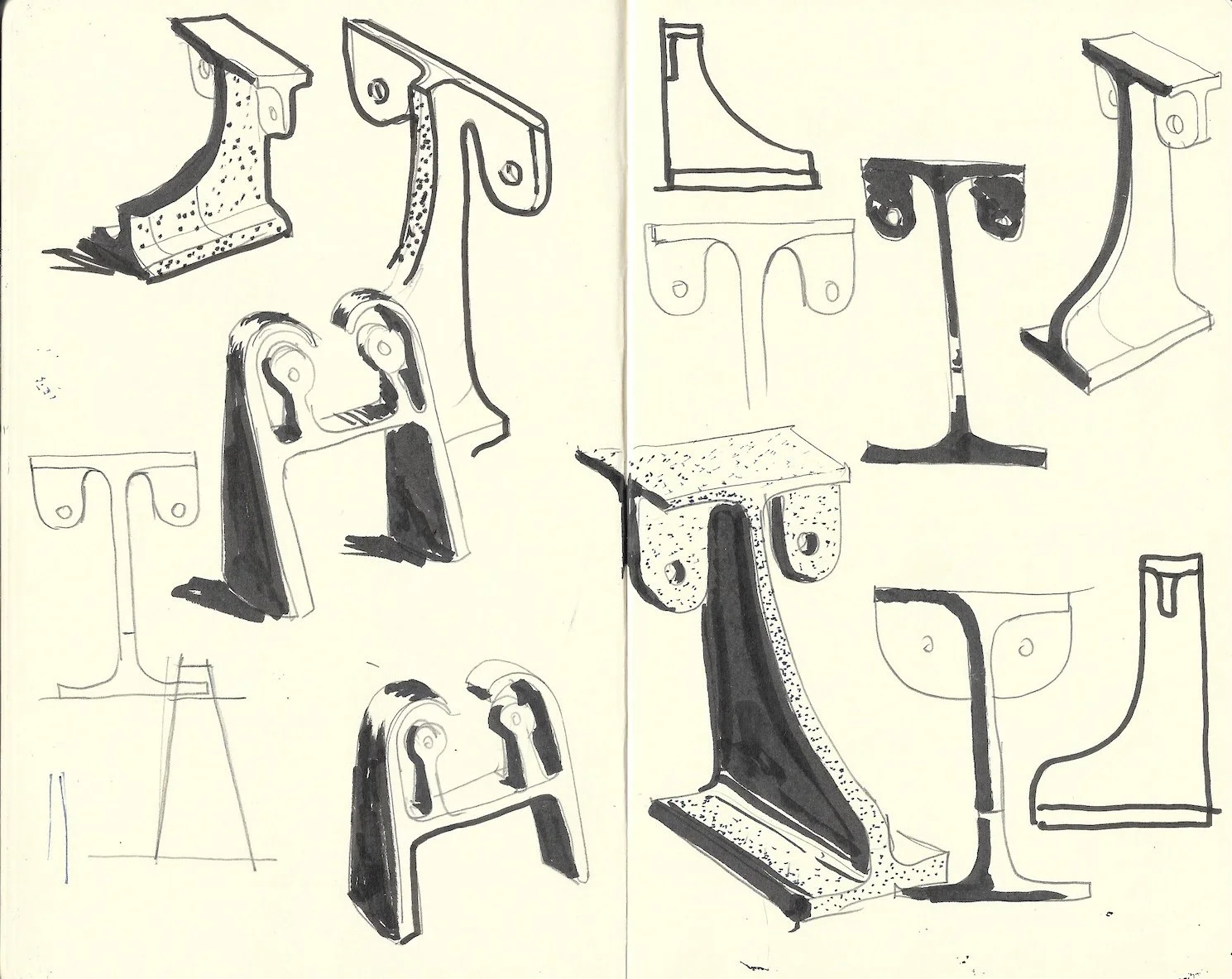
Mama’s sketches that inspired the iron face castings (image: Studiomama).
Yet the project has influenced Studiomama’s more formal design work – Norppa (2022), a rocking toy for Finnish furniture brand Vaarnii, is an abstract seal made of pine wood that has been designed so the wood grain acts as whiskers, while Face Stool (2020) uses wood offcuts to create a winking face on the seat. “‘Research’ is a big word, but these are research for us,” Mama says. The face castings were originally derived from drawings that Mama absentmindedly scrawled during meetings. “With [Off-cuts] it was really physical, literally thinking with your hands,” Mama says. “And I think that same serendipity happens when doodling.” After creating 3D-printed models of his doodles, Mama brought them to James & Hoyle, a family-run iron foundry in east London which uses sand-casting methods passed down the generations since the Victorian era. “There’s these amazing remnants of the industrial period that still reside in London,” Mama says. “Walking into [the foundry] feels like going back hundreds of years.” The technique gives the castings a graphic heft: they look like sculptural gym equipment, or artistic punctuation marks. While the castings could serve a specific purpose, such as a book end or a hook, they equally stand alone as artworks.
The first castings Mama made more closely resemble masks, but the pieces have become progressively more abstract. “I was thinking, would it be good to take as much as you can away, and see what can you do with the very minimum, while still getting the essence to come through?” Mama says. This interest in pushing the boundaries of pareidolia was developed through Stone Animals (2024), a photo book of pebbles which Mama and Tolstrup picked up on walks along the Kent coast that resemble rust-coloured ducklings or sea-worn seals. “There was a lot of joking, because with some of the stones, people would be like, Really? Nobody could see anything there, but I could,” Mama says.
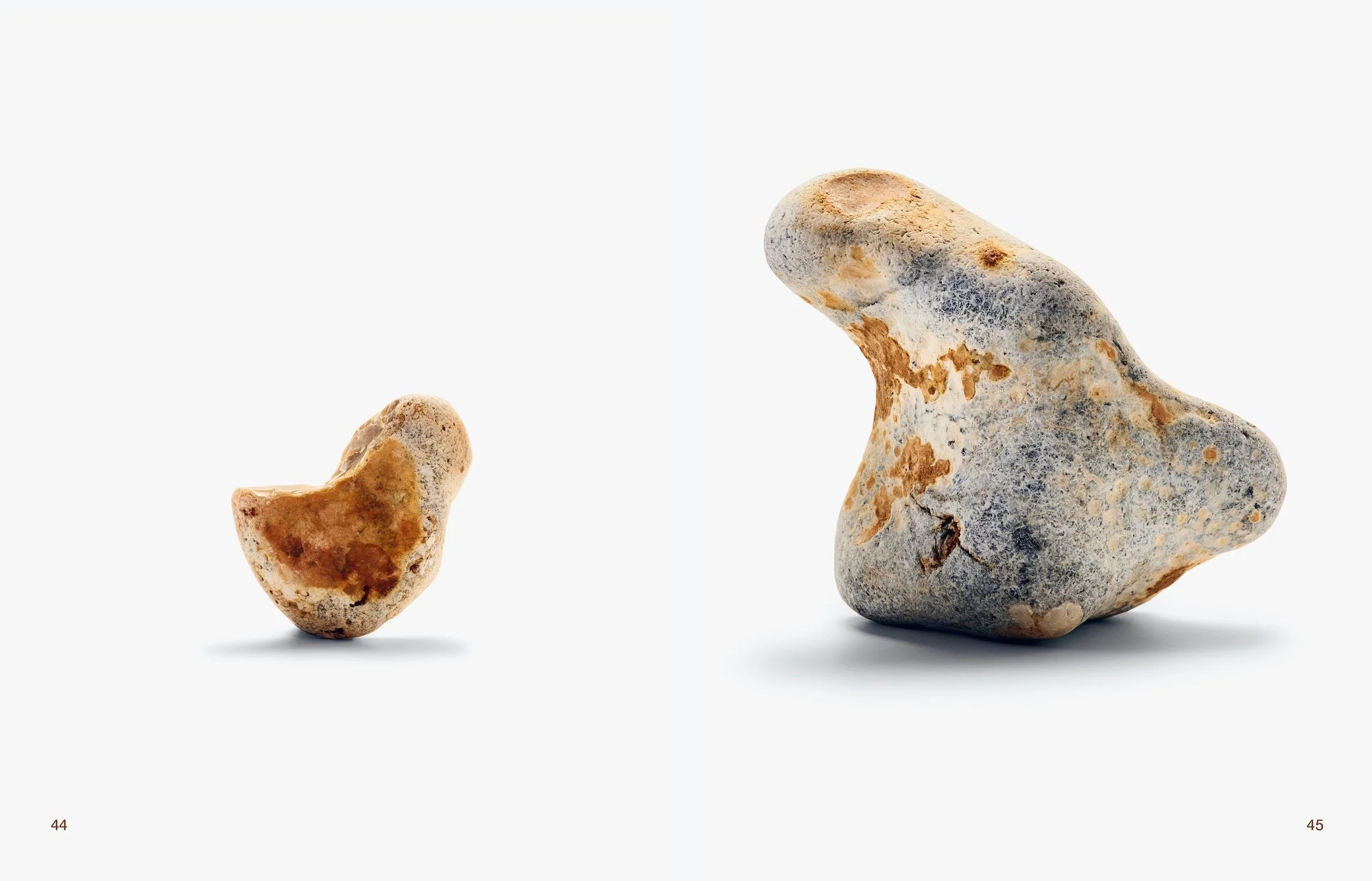
Studiomama’s Stone Animals book featured images of zoomorphic pebbles Mama and Tolstrup picked up along the Kent coast (image: Richard Davies).
All of Studiomama’s projects that toy with pareidolia make me feel nostalgic. They remind me of being a child, a time when I was more likely to be present enough to spot faces in building facades, and close enough to the ground that I would be unable to ignore the animals beneath my feet. “I lived in a Tudor cottage as a child,” artist Cornelia Parker writes in the epigraph for Stone Animals. “Every night to help me go to sleep, I would count the faces in the cracks, familiar features that felt like old friends.” By playing on the brain’s tendency to ascribe human-like qualities to the world around us, the face castings are a reminder of a time when many of us believed in magic. “What I love is that people make their own narrative about them,” Mama says. “With this level of abstraction, you just give a part of something, and then people make up the rest.” Each casting, then, is an invitation to play make-believe.
Words Helen Gonzalez Brown
Images Richard Davies