
Transformative Repair
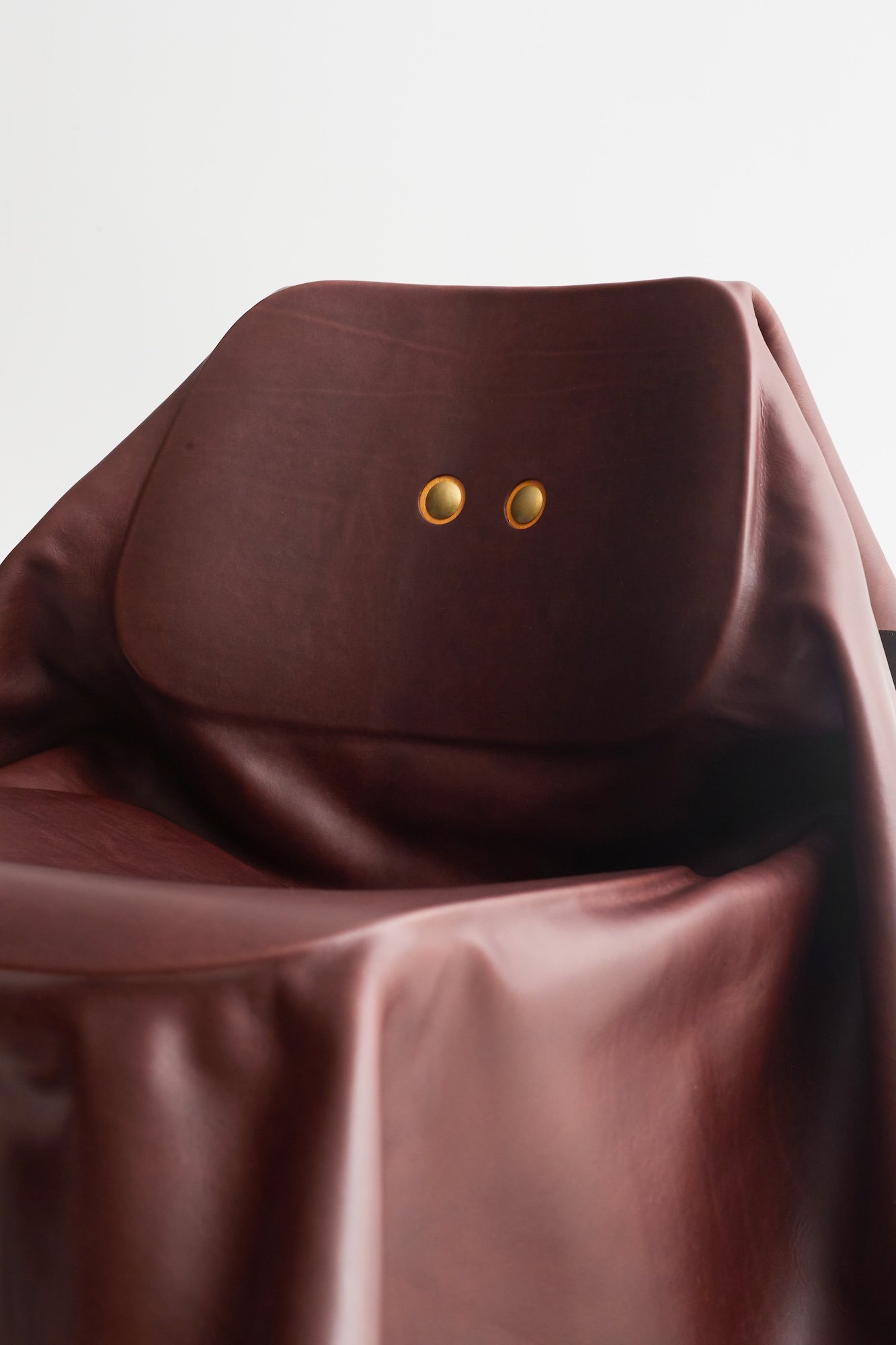
An Eames moulded-plywood lounge chair repaired by Trent Jansen and Johnny Nargoodah (image: Traianos Pakiousfakis).
Familiar objects appear in new guises at Melbourne’s Useful Objects Gallery's latest exhibition, Transformative Repair. Design studio bernabeifreeman has, for instance, reimagined the steel arms of Fritz Hansen’s Coat Tree rack as the base of a mirrored low table, giving it a splayed, octopus-like stance. The Eames plywood lounge chair, meanwhile, has been draped in a brown leather cloak made by designer Trent Jansen and leather craftsman Johnny Nargoodah, which is attached by two golden screws that resemble the eyes of a cartoon ghost.
Designer and researcher Guy Keulemans coined the term “transformative repair” in 2013 to describe using design and craftsmanship to creatively reimagine broken, obsolete objects and waste. “I think design-led repair is something that’s missing [from design education], because designers go through university learning how to make new objects,” Keulemans says. “But we also have a waste crisis, so why not use design skills to repair, restore and reuse things that already exist?” Keulemans has since curated a series of exhibitions exploring the practice of transformative repair, starting with Object Therapy (2016-2019), where designers were given broken objects submitted by members of the public. The project evolved into editions focused on using local craft techniques for repair, exploring the potential of a luxury market for repaired goods, and more. While designers in previous iterations have been assigned broken items or given specific material scraps, for Keulemans’ latest exhibition, co-curated with Jansen, they were allowed to reinterpret broken objects of their choice. “It’s well known that design education hones appreciation for well-designed objects,” Keulemans writes of the exhibition in Transformative Repair, a new book documenting the project’s 10 years of case studies. “It’s also a cliché that designers love chairs.”
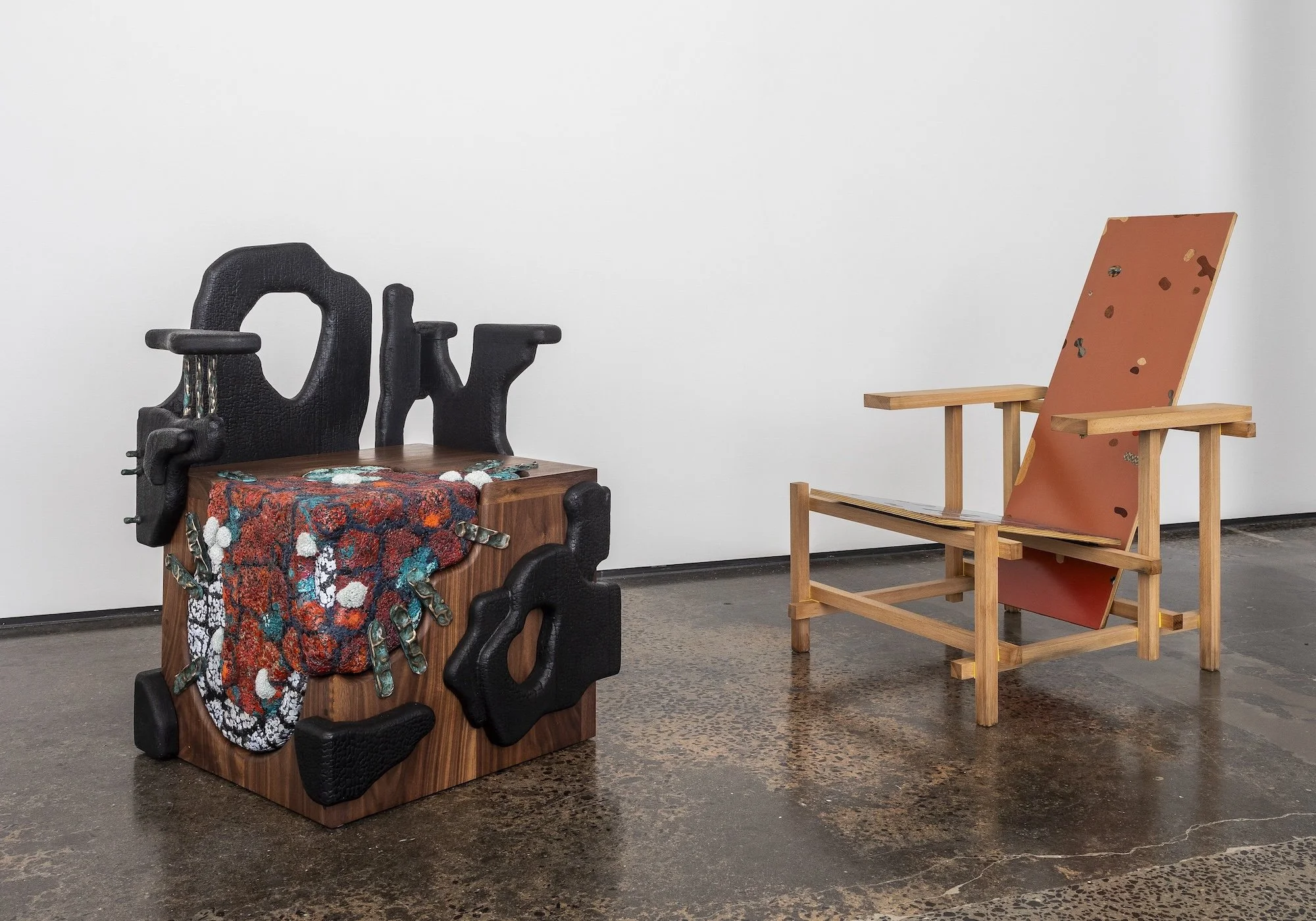
Jack Craig's experimental moulded carpet module, transformed by Mark Dineen, Jack Craig and Dale Hardiman (left) and Gerrit Rietveld’s Red Blue chair repaired by Guy Keulemans, Bolaji Teniola and Melvn Josy (image: Tobias Titz).
Many of the objects chosen were taken directly from designers’ homes and studios, such as Jansen’s Eames chair, whose backrest had detached from the seat of the chair. “The connection of the backrest commonly breaks in this particular Eames chair,” Keulemans says. In order to attach the backrest without metal bolts piercing through the plywood, its designers Charles and Ray Eames glued specialised rubber mounts directly to the inside of the wooden shells. Over time, however, the glue can wear off or the rubber can become brittle and crack. “It’s not planned obsolescence, it’s just a constraint in the original design,” Keulemans summarises. Jansen wanted to reattach the backrest with sturdier metal screws, and teamed up with Nargoodah to create upholstery that would be thick enough to stop the screws from poking into the sitter’s back uncomfortably. While Nargoodah and Jansen have previously collaborated to create furniture made from leather which is pulled taut or embedded with sculptural patterns, for this project the pair decided to let the leather drape freely like a cape. “I’m aware that some people would be like, ‘You shouldn’t change an Eames chair, because that’s a design classic,’” Keulemans says. “I actually think it's a really sneaky way for emerging designers to attach their name to a bigger designer, and do a collab with someone who’s famous and dead.”
Nargoodah spent decades working as a saddler before his craft became endangered by the shift towards vehicles rather than horses in Australia’s remote cattle farms, and he began collaborating with artists and designers to preserve its legacy. Keulemans’s piece for the exhibition, a broken vase by his father-in-law, ceramicist Kiyotaka Hashimoto, also integrated craftsmanship skills at risk of being forgotten. “Riveting was very, very popular right up until the early- to mid-20th century, when it almost completely disappeared,” he explains. “So I had to teach myself how to do it from a book, because I couldn't find anyone to teach me.” After shooting Hashimoto’s vase with a rifle to break it into pieces, Keulemans uses a hand-powered rotational drill to create holes in the ceramic, stitching it back together with metal staples and filling any remaining gaps with plaster. While riveting was often hidden or painted over in traditional repairs, Keulemans leaves the plaster white, creating a constellation of dots which frame the staples, an effect that reads both artisanal and punk.
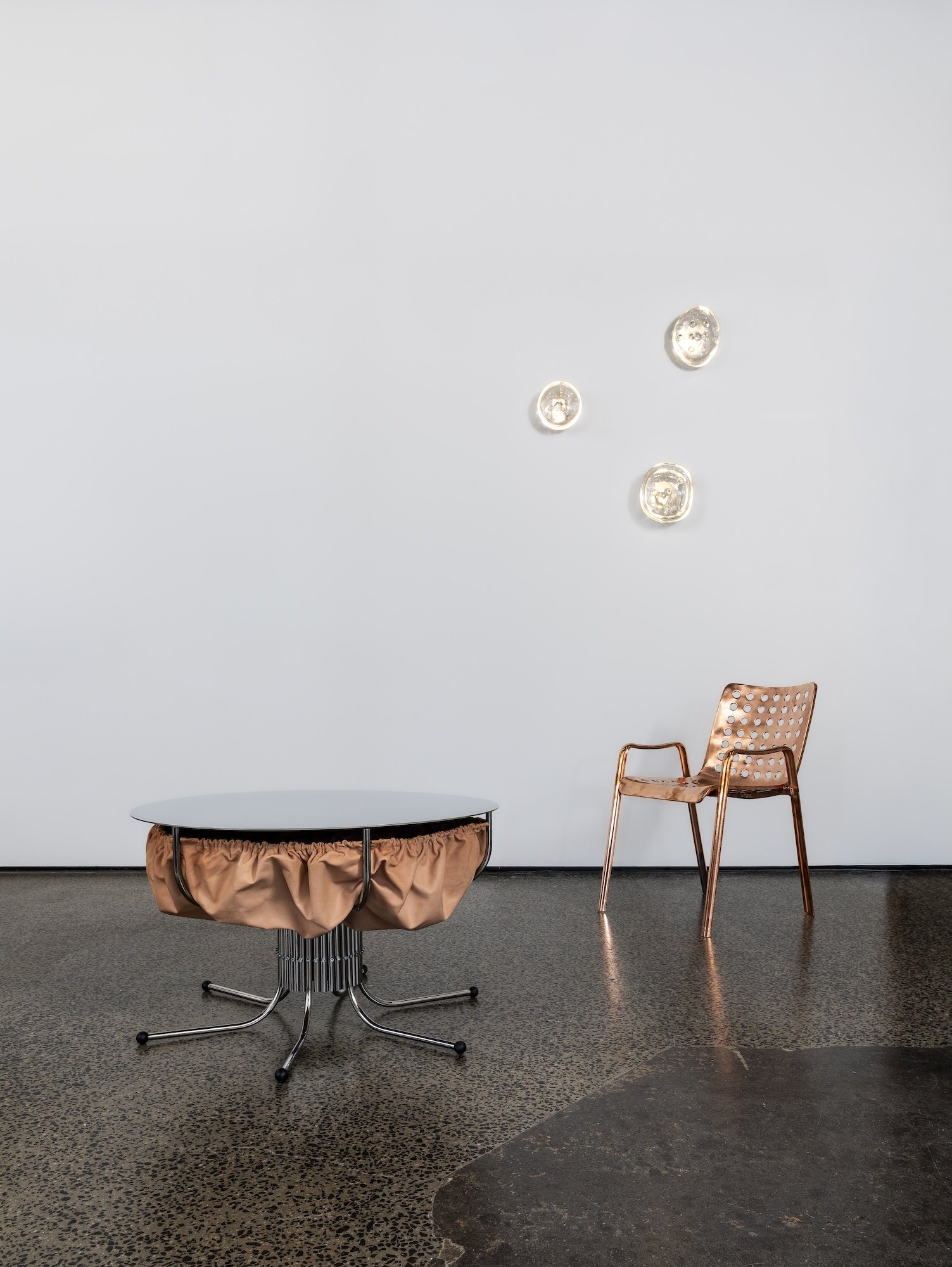
Fritz Hansen Coat Tree coat rack transformed by bernebeifreeman into a low table (left) and Hans Coray chairs transformed by Danielle Brustman and Ed Linacre (image: Tobias Titz).
Both Keulemans and Jansen’s pieces are intended for the luxury design market, which Keulemans sees as a potential avenue for bespoke repair services. “If people are starting to appreciate that it is worth spending some money to buy something, then they should also understand that it might be worth spending a fair bit of money to repair it,” he explains. Alternatively, designers could devise ways of working with material streams from particular companies, a model which is demonstrated through designer Jake Rollins’s piece made from leather waste provided by shoe company R.M Williams’ customer repair service. “They can’t repair everything, and a lot of the shoe waste is often very, very small,” Keulemans says. Inspired by the coiling method used to create clay pots, Rollins rolled these scraps of leather into tubes to create the lampshade and casing for a lamp. “Thinking about what the future of this will be, I think in many cases it’s about bringing those kinds of companies on board,” Keulemans says, “so they understand the value and actually start working with designers who are skilled in this.”
Although many of the pieces on show use craftsmanship techniques, Keulemans is also interested in the potential of technological repair strategies. “There's so much amazing research happening on computational design and computational manufacturing, but not a lot on how we actually apply those techniques to existing secondhand, used, broken objects,” he explains. In order to repair a chair by designer and architect Gerrit Rietveld, Keulemans teamed up with furniture makers Bolaji Teniola and Melvin Josy to scan the chair and map its chips and cracks. After using CNC to mill the imperfections and produce wider indentations, the trio filled them with veneer offcuts from interior design projects, alongside samples from manufacturer Alpi, such as Alessandro Mendini’s multicoloured veneers designed to resemble a pointillist painting, and Ettore Sottsas’s fiery red veneers. The resulting chair recalls terrazzo flooring, with patches of vibrant veneers forming a playful, irregular pattern.
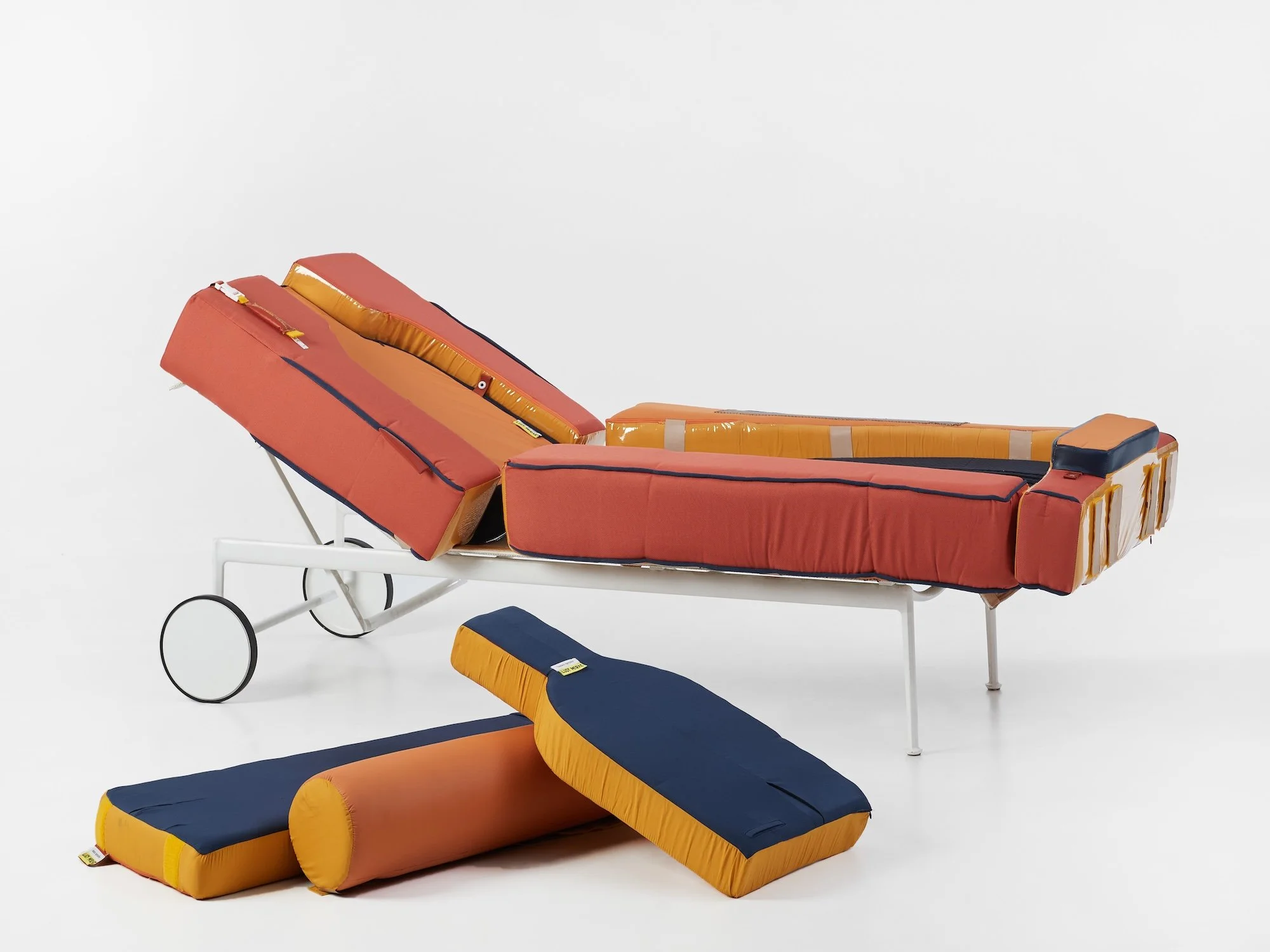
Bianca Spender garments transformed by Lucy McRae (image: Traianos Pakioufakis).
“With a waste crisis, we actually need to be much more comfortable with living with objects that show wear and tear and which look like they have had a life,” Keulemans says. “Visible mending is about showing that history, and showing that an object exists not just in three dimensions, but it also exists in time.” Throughout Keulemans’ 10 years of research, some objects have changed dramatically – one donor was temporarily dumbfounded when Jansen transformed her rusted trolley into clothes pegs, for example – while others provided more of an emotional evolution than a physical one. Inspired by the late jewellery designer Alice Potter’s experience of synesthesia, tapestry artist Kay Lawrence repaired two of Potter’s necklaces by weaving secret words and phrases into bandoliers of colour, using the craft to process her grief over Potter’s passing. “Things are kind of presented to us as if they're unchanging and static, but actually life is not like that, life is continually changing,” he says. “Philosophically speaking, this is an approach that tries to encourage designers to tap into the chaos or the flux of nature.”
Words Helen Gonzalez Brown