
Surviving What?
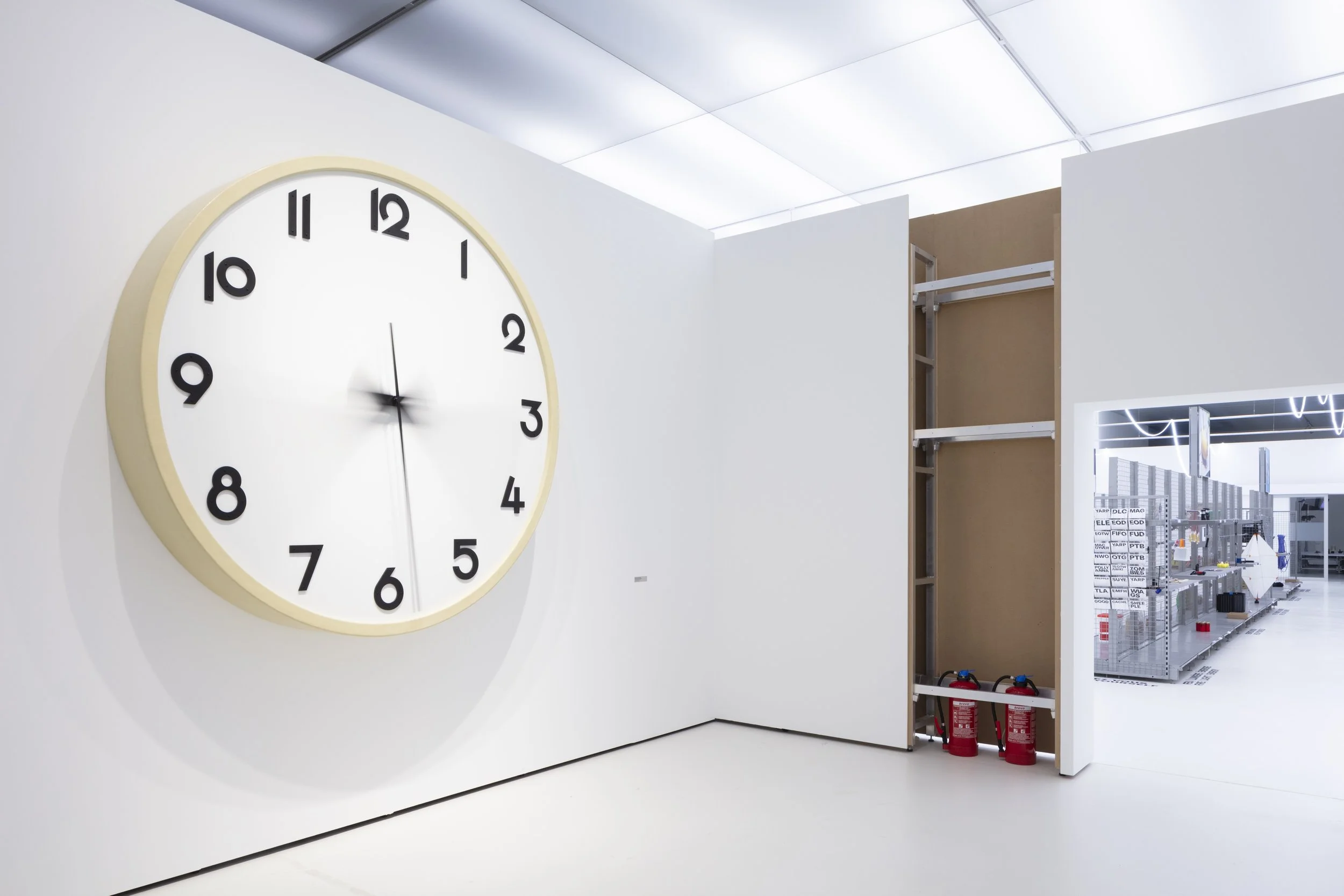
Mudac’s preppers exhibition critiques consumer culture (image: Etienne Malapert).
Fuck’s sake – I have four clock radios.
I don’t know how this happened. At the end of 2024 I learned that my landlords are selling the flat I live in, so ever since I’ve been making an inventory of my possessions in order to prune down what I need to take with me when I move. It’s only by rootling through cupboards that I’ve discovered my surfeit of FM/DAB. As far as I can tell, all these devices have identical functionality, so there was no need to buy at least three of them. The only real differences are stylistic, along with the presence of four proprietary charging ports. I cannot find any of the proprietary cables. Fuck’s sake.
Clock radios are on my mind because I was recently invited to We Will Survive, an exhibition at Lausanne’s Mudac museum, and I’m worried that I, personally, won’t. Curated by Anniina Koivu and Jolanthe Kugler, the exhibition offers a design analysis of the prepper phenomenon, delving into the movement’s disparate communities of survivalists, bush crafters, off-grid activists and retreaters: people who have variously committed to self-sufficiency; living off the land; the renunciation of society, public services and technology; the formation of remote communes; or else the steady accruement of survival equipment and supplies. These groups are distinct (“There are a lot of niches,” Koivu concedes, “so in order not to be too stigmatising, ‘prepper’ is the overall term we use”), but all circle around the idea of preparing for the collapse of society – whatever external event may precipitate said collapse, and whatever form said preparation may take. There are currently some 23 million self-declared preppers in the US alone, with no reliable data available for other regions,[1] and We Will Survive’s ambition is to track the various ideas, making cultures and social contexts that swirl around them. “One premise is common to all survivalism,” writes sociologist Richard G. Mitchell in his 2002 book Dancing at Armageddon, a key text for the exhibition. “[Trouble] is coming, but manageable trouble.” I, by contrast, cannot currently access BBC Radio 5 Live. Despite having spent the best part of £300 on radios.
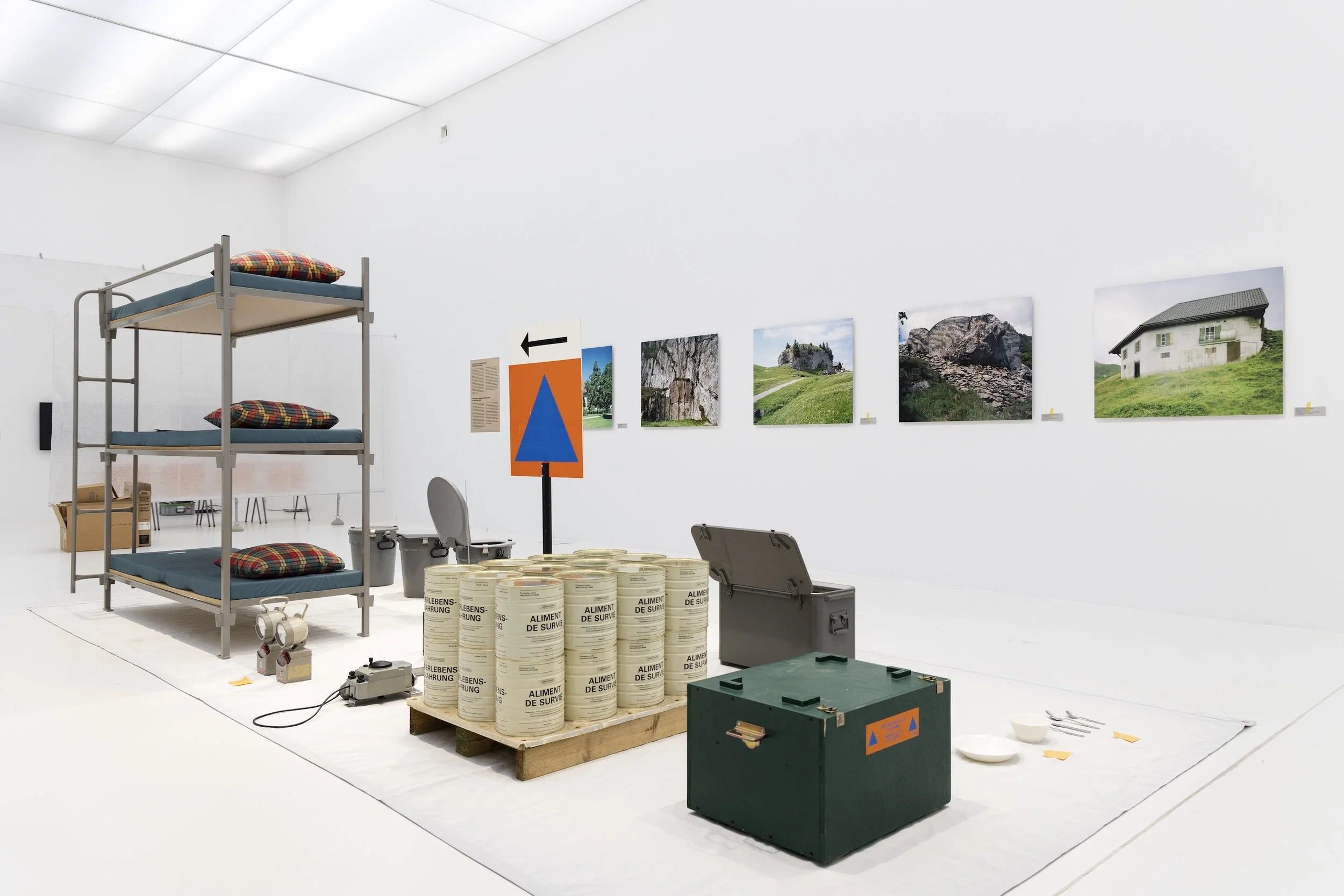
Swiss survival equipment (image: Etienne Malapert).
As I hope that makes clear, I’m not one of life’s survivors. Should shit ever hit the fan, my priority would be going on Amazon to buy a new fan, and ideally one with multiple oscillation rates for maximal comfort. By contrast, preppers are hardy folk. They don’t even need to buy fans, because they can probably make them out of everyday things such as burlap, felled oak and ponds. I concede that, like many, I may be labouring under certain cultural preconceptions about preppers, which is why it’s so welcome that a central pillar of Koivu and Kugler’s project is a desire to assess the movement dispassionately,[2] and to try to understand the sociopolitical impulses that might prompt a person to prepare for societal collapse. “Why do preppers exist?” Koivu asks as she leads me into the exhibition. “It’s a reaction to what’s happening in society and the paranoia, which I think we all feel, that things are going badly.” As we move down the opening corridor – which has been fly-posted with colourful A4 posters, each documenting a different historic catastrophe, prophecy of the apocalypse, or event that holds significance for the prepper movement – Koivu sets out a central tenet of the show. “This paranoia has always existed,” she tells me as we pass a poster documenting purported Assyrian stone tablets from 2800 BCE. “Our earth has degenerated in these late days,” reads their translation, “there are signs that the world is about to end; bribery and corruption are rife: children no longer obey their parents; everyone wants to write a book, and the end of the world is obviously near.” Nevertheless, Koivu argues, the phenomenon has been accelerated by the rise of mass media, distrust of government, and the 20th-century’s development of atomic weaponry and other advanced armaments capable of armageddon. “Do you know the term ‘snafu’?” she asks me. “Its like a hitch or something that messes up a plan,” I suggest. “Actually,” Koivu replies, “it’s a military acronym that means ‘Situation normal: all fucked up’,” an acknowledgment that in war, chaos becomes the new normal. This, she tells me, was the only brief given to XPO, the Swiss design collective who developed the show’s exhibition design, and Frederik Mahler-Andersen, its graphic designer.
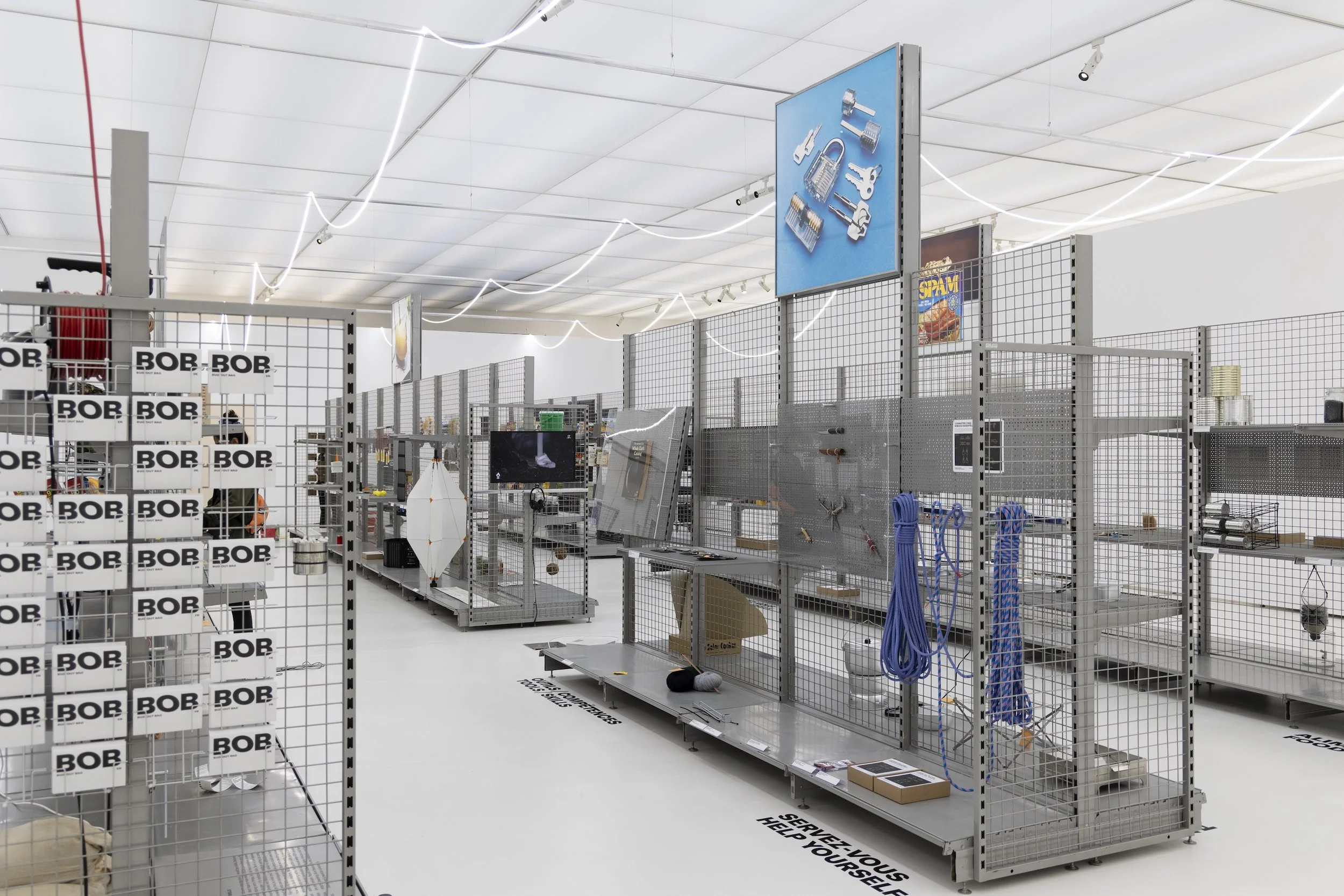
The Prepper Supermarket (image: Etienne Malapert).
On cue, the space’s lights begin flickering as part of a programmed sequence intended to engender paranoia and discomfort in visitors. It’s definitely working (how did the ancient Assyrians know I want to write a book?) and sets the stage for a recurring theme of the exhibition. “Preppers react to a situation,” Koivu tells me, “whatever that situation may be, by not trusting in the system.”
For the record, I don’t think the world is coming to an end – at least not in any way that fits comfortably on an A4 poster. Although the recent global rise of temperatures, tensions and tin-pot dictators has made the future precarious, my money is still on civilisation’s slow death by entropy, rather than one-off catastrophe. In this respect, I don’t believe in disasters, but rather the gradual enshitification of society: death by the slow erosion of public services; the hollowing out of civil liberties; the withering of our environment; the persecution of the vulnerable for the benefit of the powerful; the metastases of inequity, capital and exploitation. This idea, to be clear, is not alien to the preppers themselves – they’re not exclusively worried about extinction-level events. In Dancing at Armageddon, for instance, Mitchell notes that despite appearances, many cases of survivalism may be “neither intentional protest nor practical readiness for coming uncertainties.” Instead, he argues, the movement’s activities and beliefs can be interpreted as a kind of “encompassing game of make-believe”, whose participants are pursuing “a rhetorical means of transforming depersonalized consumer society, rife with mass commodities and mass marketing”. Prepping, the suggestion runs, may be as much about asserting autonomy, and critiquing the existing social system, as it is about, well, actual prepping.
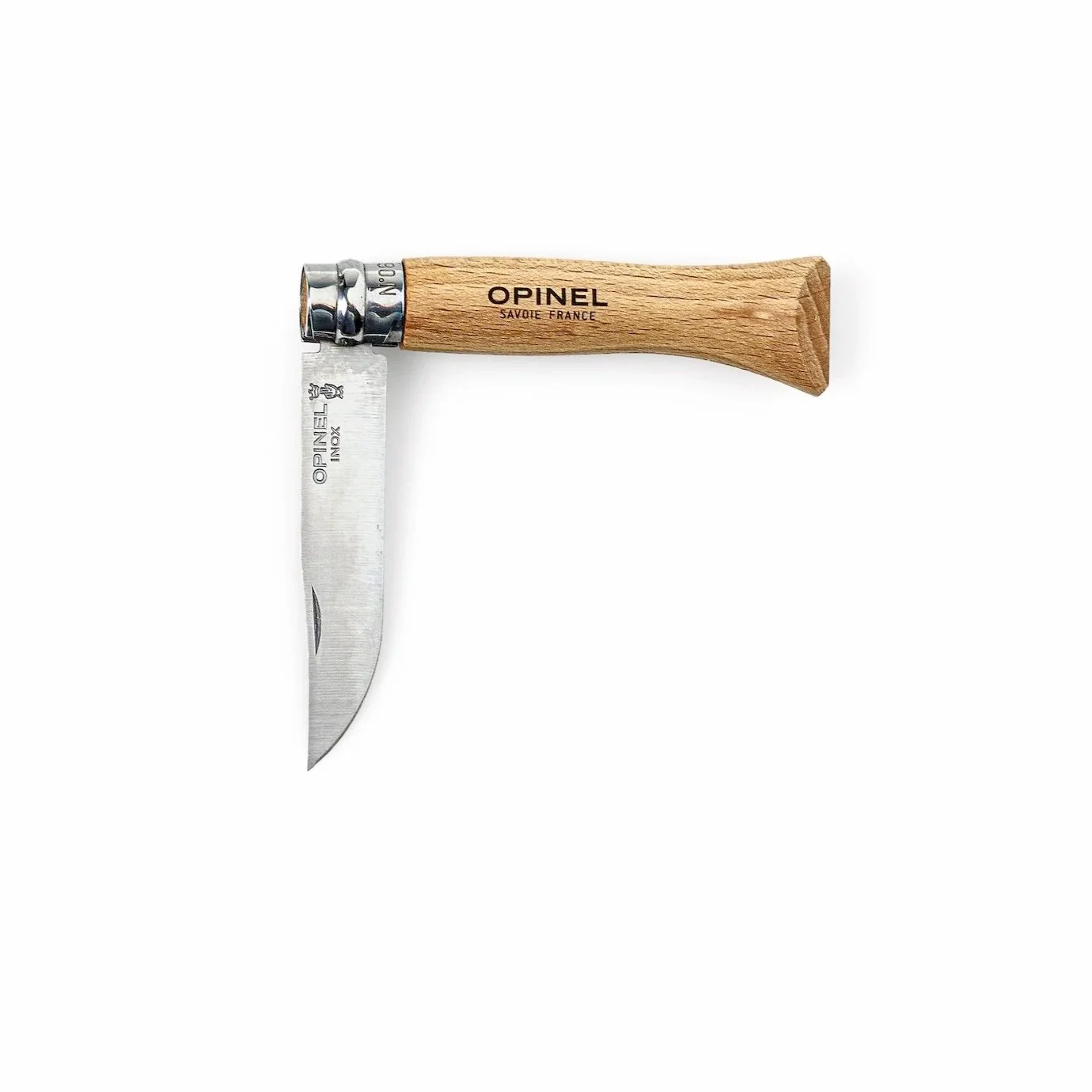
The exhibition’s curators Kugler and Koivu named the knife the “ultimate survival tool” (image: Danielle Caputo).
“Preppers’ fear of the apocalypse can be read as a diagnosis of the present, offering a profound and meaningful critique of contemporary society,” write Koivu and Kugler in We Will Survive – The prepper movement, a book that accompanies their exhibition. “Their actions make visible society’s fears and fault lines.” With this in mind, Koivu and I pass by a Huggable Atomic Mushroom, a plushie polyester atomic blast created by designers Anthony Dunne and Fiona Raby, in collaboration with Michael Anastassiades, as part of their influential 2004/05 project Designs for Fragile Personalities in Anxious Times. It’s a squidgy, squodgy, plastic, catastrophic, atomic collectible, which feels like Dunne and Raby managed to find the ideal metaphor for what’s wrong with our society. Who needs an actual atomic blast, I think, when consumerism and cheap mass manufacture will probably tip us over the edge anyway? In this respect, “snafu” seems apt: we don’t necessarily require an armageddon event to ensure our own eradication – we’re heading there anyway. “That things ‘just go on’ is the catastrophe,” wrote Walter Benjamin in his 1939 ‘Central Park’ series of reflections. “It is not that which is approaching, but that which is.”
To illustrate this idea, Koivu and Kugler’s remit for their exhibition has been laudably broad. There are sections, for instance, that document design projects exploring society’s fears of destruction and collapse, with contributions including Constantin and Laurene Leon Boym’s nickel “souvenir” models of real-world buildings connected to various tragedies and atrocities, positioned next to Reed Kram’s unnerving 24-hour recordings of online security camera feeds. Elsewhere, the show expands its gaze to state-sponsored survivalist schemes,[3] such as Japan’s Disaster Preparedness Tokyo protocol for steering citizens to safety should its capital be hit by earthquakes; Switzerland’s network of emergency shelters that can offer sanctuary to 9 million people; and Helsinki’s vast “second city” of subterranean spaces and infrastructure carved into its bedrock during the Cold War, which have been newly documented for the exhibition by filmmaker Tapio Snellman. The core of the show, however, is its Prepper Supermarket – a central space in which decommissioned shelves from Switzerland’s Migros supermarket chain have been stocked with products designed for, or endorsed by, the prepper community. “What I like about all these objects,” Kugler explains as she joins me and Koivu in the space, “is that it’s surely the first and only [design] exhibition you can make where every object is really, really well made and really, really useful.”
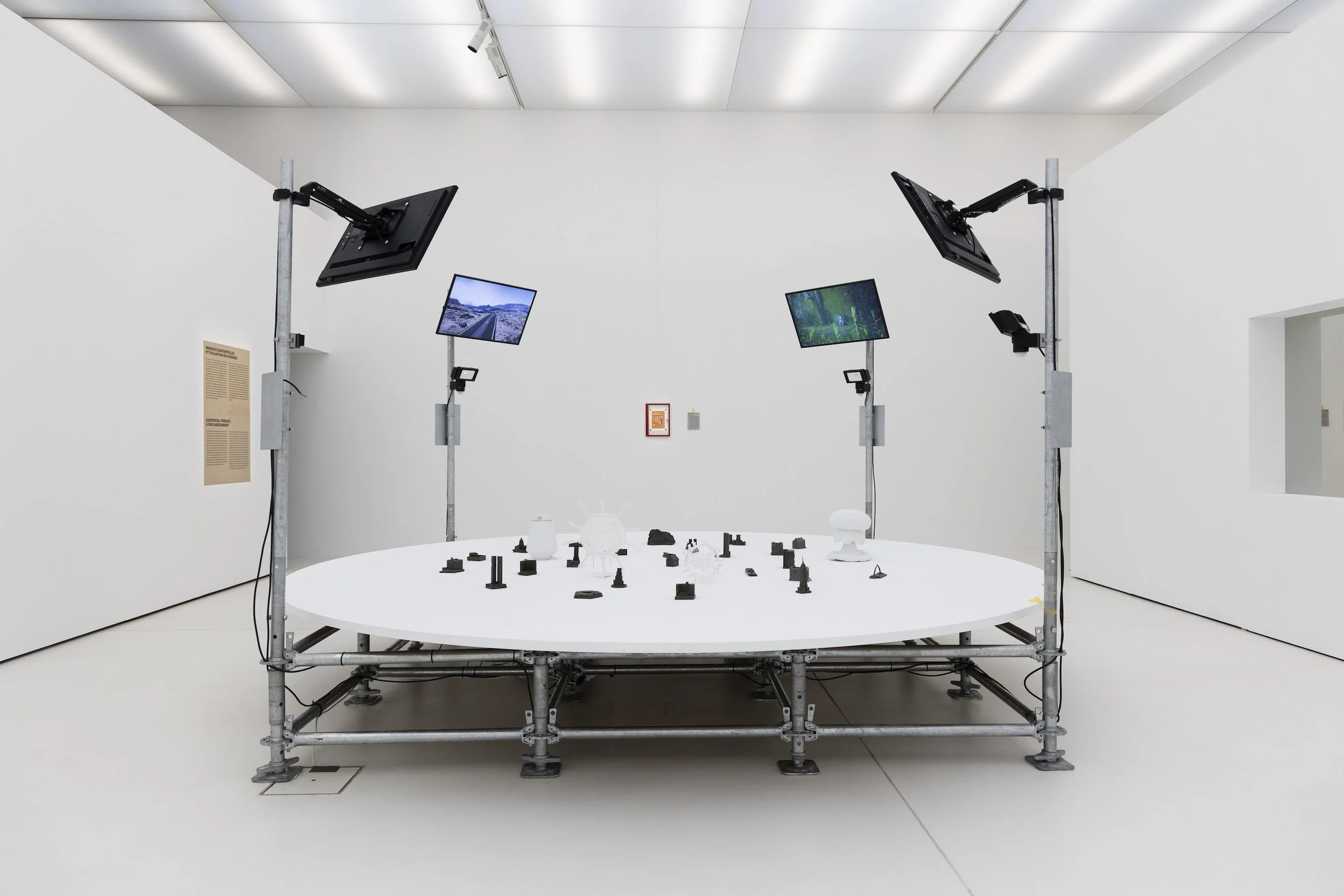
Constantine and Laurene Leon Boym’s Buildings of Disaster souvenirs (image: Calypso Mahieu).
Given that I am in the process of clearing out a flat and am, therefore, très au fait with my own accumulation of pointless shit,[4] the Prepper Supermarket makes for chastening viewing – everything is confrontationally practical. Koivu and Kugler have researched their topic immaculately, trawling YouTube, books and dedicated survivalist blogs such as The Prepared, SurvivalBlog and SHTF Preparedness to bring together some 300 objects that are “super recommended” by preppers, and which might ably serve their users in the advent of societal collapse. There are multipurpose tools ranging from water purifiers to nylon ropes and shovels, as well as a litany of canned goods, medical supplies and thermal blankets. Alongside these everyday objects, the curators have tracked down more troubling specialist products too. The waterBOB, for instance, is a heavyduty plastic bag that converts a bathtub into a water reserve of some 100 gallons, while the Safe Living fire evacuation hood is another plastic bag, this time worn over the head to prevent smoke inhalation in the event of fires – a cheap practical way to avoid asphyxiation, which coincidentally looks like it will definitely asphyxiate you. While Kugler and Koivu have smuggled in a few examples of relevant “high design” – Luisa Kahlfeldt’s Sumo reusable diapers and Martí Guixé’s Seed Safe for Alessi, for instance – the majority of objects are practical products of no determined authorship. These objects may be numerous, but they are also designs capable of customisation, reuse, adaptation, or hacking by their users, and which are purposefully limited in their reliance on technology, external power and data infrastructure. I do, however, spot a clock radio, which was designed by Kazushige Miyake and Kota Kato for Muji in 2017. It is equipped with a hand-cranked electrical generator to allow it to be used if access to the grid is compromised, and is capable of broadcasting AM and FM frequencies. It does not, I observe, offer DAB.
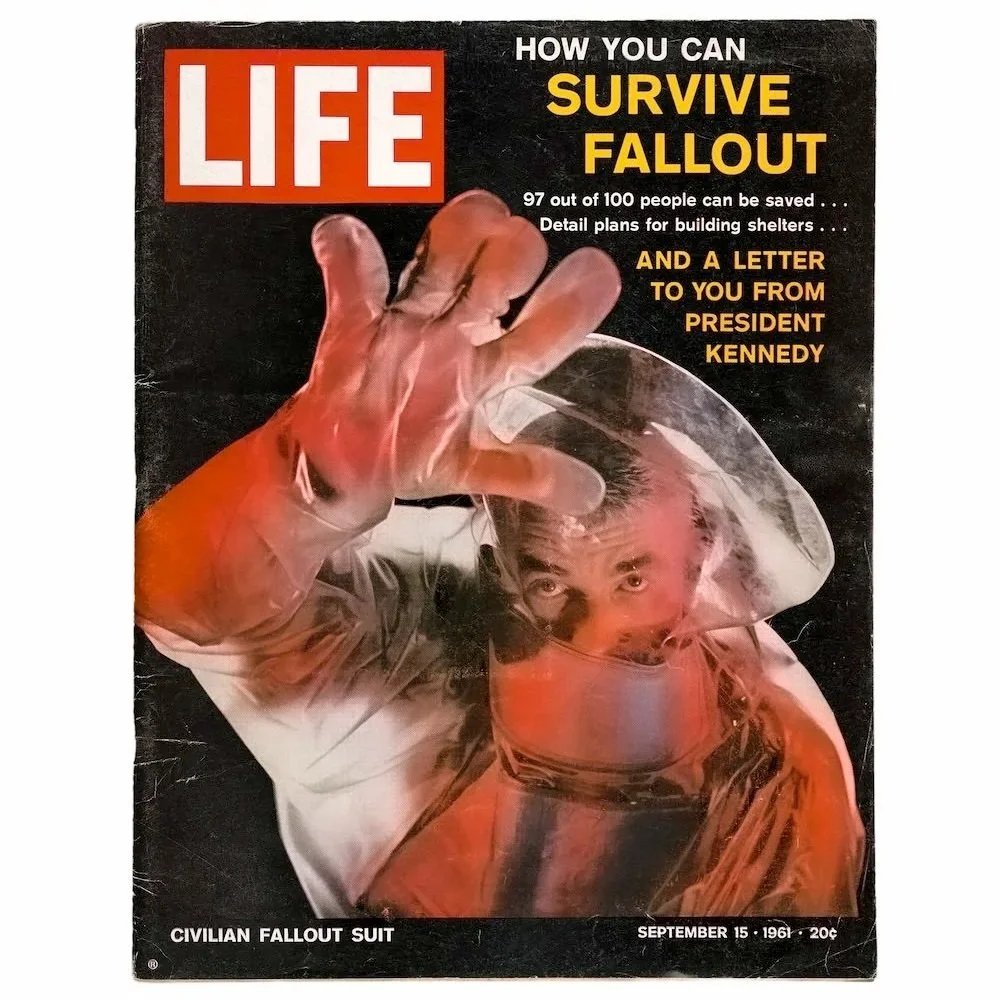
Image: Danielle Caputo.
Miyake and Kato’s radio is amongst the more technological of the show’s exhibits, but still evidences many of the design principles common across the Prepper Supermarket. Writing on his website, Miyake notes that although the radio “certainly comes in handy in times of disaster,” it has been designed “with a view to it being used on a daily basis”. The radio sits upright to facilitate its crank, for instance, but this orientation also allows it to take up a minimal footprint. It has few frills compared to those within my own personal archive of clock radios, but this just means that there are fewer things to go wrong. Its cable, I notice, is not proprietary. These are small design gestures, but impactful ones that play out more grandly elsewhere. Close to Miyake and Kato’s work, for instance, Koivu and Kugler are exhibiting The Repair Manifesto, a 2009 project by Dutch group Platform21 that argues for a number of design principles that the curators believe many preppers would subscribe to. “Things should be designed so that they can be repaired,” reads the manifesto’s second point. “Repairing is a creative challenge” follows, as does “Repairing is about independence”. This sense of creative autonomy, Kugler notes in an essay published in the exhibition’s catalogue, is closely aligned with the ideology of many preppers, who see themselves as escaping the shackles of mainstream consumer culture. “Regardless of which approach they follow,” she notes, “most preppers, according to sociologist Bertrand Vidal, share the belief that ‘the man of today, the western consumer, city dweller, urbanite, [is] a man with a defect, a kind of war cripple or civilisation cripple who has lost his [natural, primitive, wild, etc.] ‘abilities’ because he has distanced himself too far from [his] nature’.”
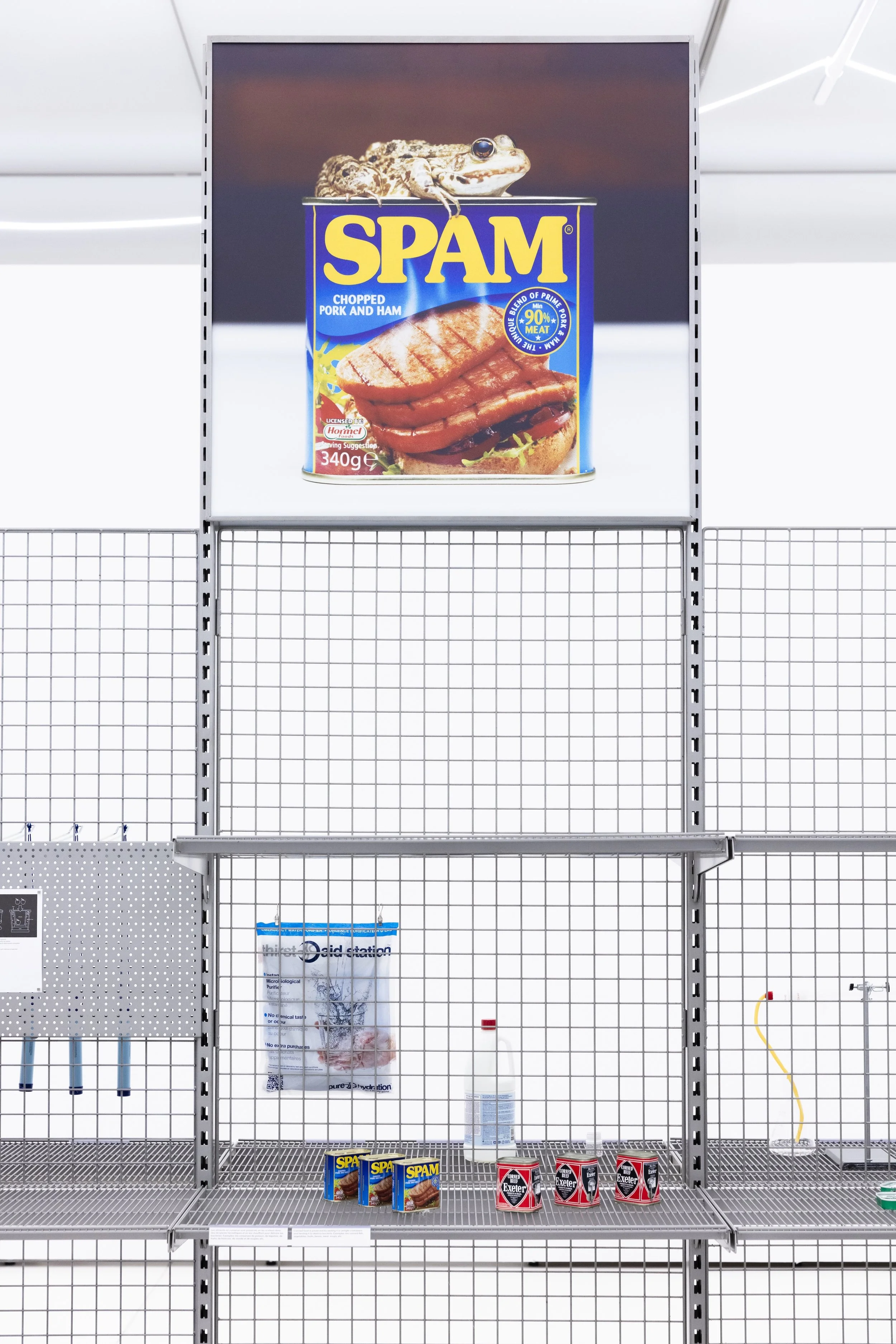
Image: Etienne Malapert.
Although Vidal’s summary of the prepper sentiment is rich in prelapsarian fantasy – as well as being soaked in some nauseatingly ableist language – it does capture something of the infantilising impact of consumerism upon society. With the abundance of products now available in the Global North, commerce has become a panacea for problems that might previously have been resolved through social measures (“Now, when you’re afraid, you go shopping,” shrugs Kugler), as well as generating its own problems to solve through the inculcation of desire in consumers. The result, as historian William Leach notes in his 1993 book Land of Desire, is a society whose cardinal features are “acquisition and consumption as the means of achieving happiness; the cult of the new; the democratisation of desire; and money value as the predominant measure of all value in society.” It’s a trap few of us escape. As I have cleared my flat, for instance, I have found a set of cast iron dumbbells, purchased as part of 2018’s Operation Hot Bod, but which now appear to have been stationary long enough to have doubled their weight in spider’s webs; various air purifiers, mood lights, and other small electrical goods bought to improve the flat’s ambience and general vibe, but which I have since declared to be irretrievably fucked despite their only requiring replacement batteries; and two separate tool boxes, neither of which contain any tools, but which instead house playing cards, a plastic model of a styracosaurus, and a Zippo lighter that I attempted to use to burn away nasal hair. I fully agree with Vidal that I am a man with a defect.
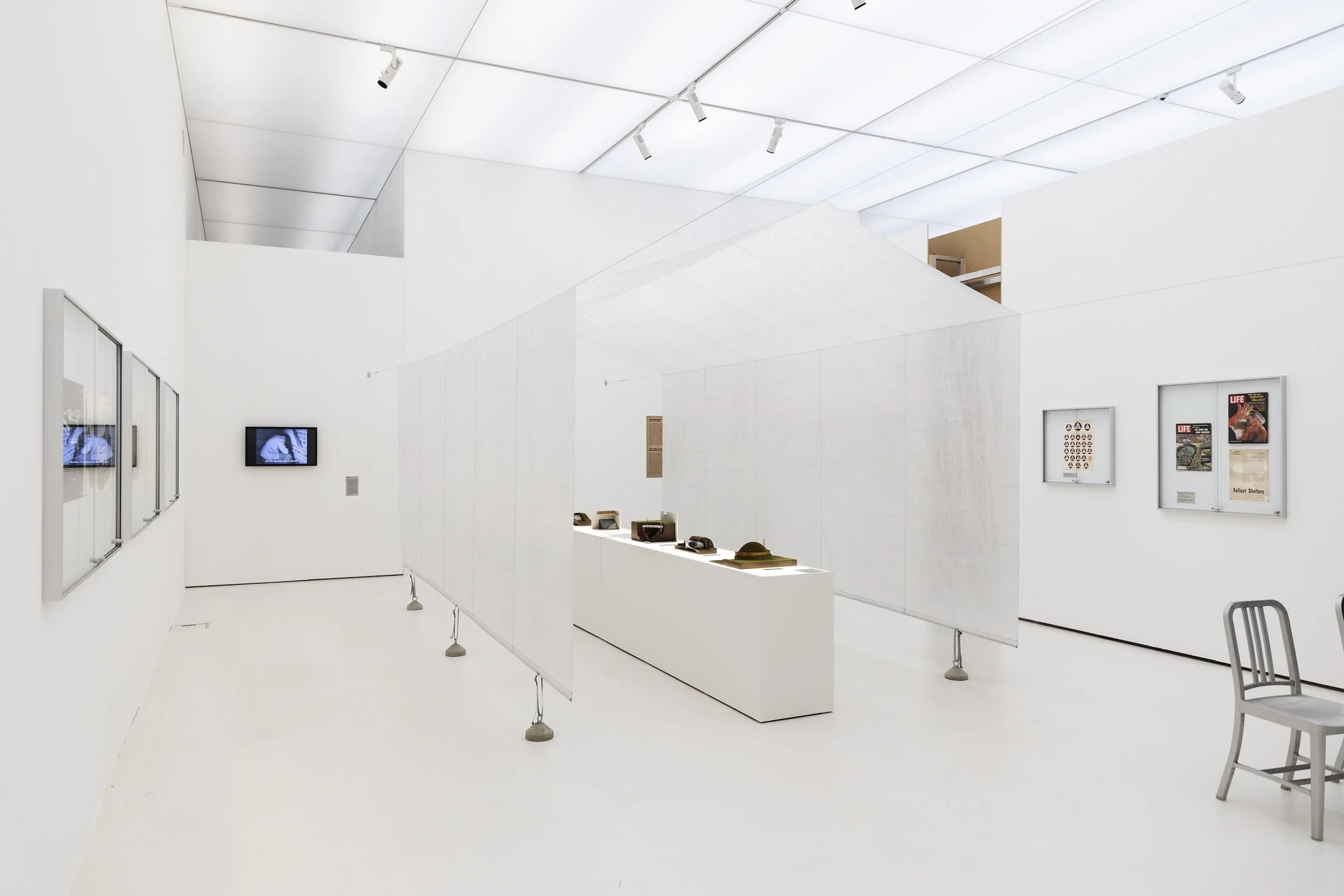
A section of the exhibition devoted to US atomic bunkers and the Cold War (image: Etienne Malapert).
Preppers, of course, are subject to consumerism too. In Dancing at Armageddon, Mitchell notes that “Goods and services abound” in prepper circles, catering to “every taste, in every color, for every budget, bar coded, board certified, shrink-wrapped, use dated, sized, weighed, credentialed, and guaranteed to perform, function, and please, if used as directed.” Indeed, preppers in the US spend around $11bn every year on preparing for potential societal breakdown, which shows that the world of survival is hardly divorced from the allure of designed goods. It is a curious entanglement with mainstream consumer society for a group whose position seems to be defined by their opposition to such systems, “but survivalists [also] want something else,” Mitchell suggests. “They want a part in creating the marketplace, in fashioning economic culture, in crafting rituals of appraisal and exchange, a place in the fundamental mediation of value.” To support this idea, Mitchell visits a survivalist meet-up in Colorado, during which he observes that “everywhere among the participants’ accoutrements were innovations, [...] incremental modifications, improvements”, with participants sharing knowledge, ideas and techniques for adapting, optimising and repairing their products. Consumption is present, but not passively. Instead, it is wrapped up in dialogue, critique, and autonomous action amongst a community. “Contemporary life encourages obscurity, makes messengers of many,” Mitchell writes. “[…] We redirect information, goods, and services. We do not create them. We ladle out the textbook content, bolt on the replacement parts, assemble the units manufactured elsewhere, dispense someone else’s pills, enforce rules not of our own making on peoples not of our choosing. And repeat others’ words. We do not construct culture. At best we maintain it. But it has not always been so.” Preppers, he suggests, seek a more balanced engagement with objects and culture: one in which they also have a creative voice. Throughout the Prepper Supermarket, this voice starts to become clear. “Many of these people believe in collaborating, doing things together, and creating communities where you can do things differently,” Kugler notes as we look over the objects on display – practical, robust designs that largely eschew trend, fashion and status in favour of utility and adaptability. “Perhaps,” she adds, “that could help us avoid the end of the world.”
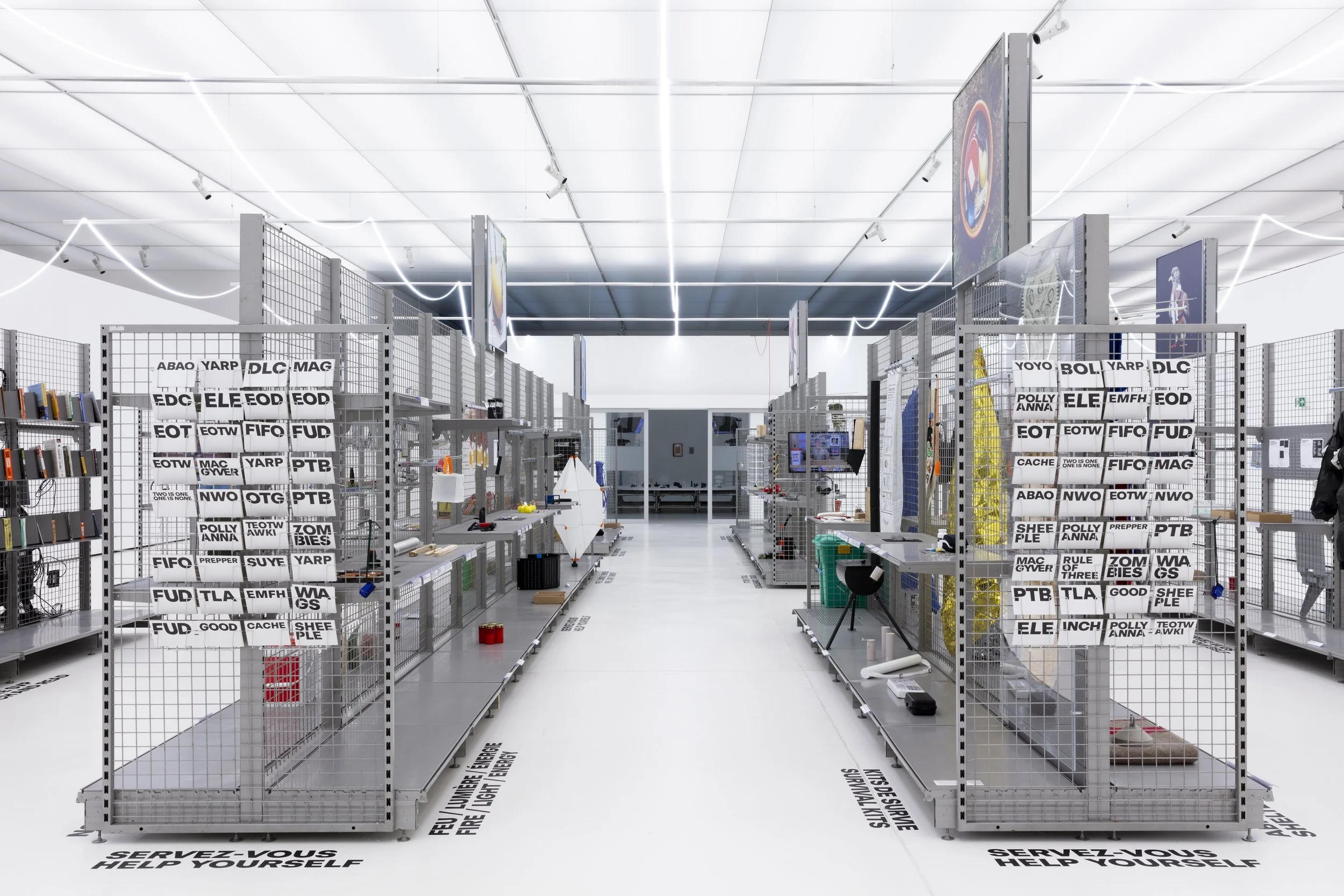
Image: Etienne Malapert.
Like I said, I don’t think the world is about to end, and I don’t think I need to start stockpiling survival objects – that will just create more things to shift when I move later this month. In fact, I wish preppers would spend less time considering various forms of robust plastic bags through which they can circumvent the apocalypse, and instead wholeheartedly apply their ingenuity to the dreadful world as it stands, rather than the dreadful world they fear it may become. Having said that, the movement’s success in crafting a culture of its own, and the manner in which its material culture already resists the way that things “just go on” is admirable. “I can still see the crazy part in it,” admits Kugler when I ask if working on the project has changed her perception of preppers. “But we do need to think about what we can learn from them. We do need to be reminded that we consume too much; we throw away too much; and we have totally forgotten where things come from. The preppers remind us that for survival, until about 50 years ago, it was essential to know these things. It’s only our generation, the supermarket generation, that has forgotten everything.” Although We Will Survive is a space full of commercial objects, it is also one that captures its subjects’ interest in how objects are made and maintained, their provenance and purpose, and how they might be adapted to meet different needs. “Is there one, ultimate universal tool that you shouldn’t do without?” ask Kugler and Koivu in the show’s catalogue. “Yes: the knife. Cutting, digging, chopping, piercing, prying, splitting, crafting, carving, whittling, skinning, opening things: whatever unexpected situation arises, a knife can help.” The text is laid out next to a photograph of an €11 Opinel N°06 Stainless Steel pocket knife, which seems as good a standard bearer for the show’s vision of design and culture as any other: affordable, practical, with an emphasis on varied usage and the opportunity for adapta— fuck’s sake, I’ve found a fifth clock radio.
[1] Prepping, the curators argue, began in North America and has since spread from there, but still largely exists only in the Global North. “It’s connected to Western luxury society,” Kugler suggests. “We have something to lose, so you’re afraid of that, and you prepare for it.” Prepping in less privileged regions, she argues, is simply daily life, whereas in Western countries, “it becomes a lifestyle.”
[2] As such, they have stripped the field of some of its more overtly contentious issues. There are no firearms included as exhibits, for instance, because “that would just take the discussion to a completely different level,” Koivu explains. “We have a different message – and we also believe that maybe we wouldn’t be so close to the end of the world if we didn’t have those weapons.”
[3] An interesting wrinkle is considering whether these state-sponsored projects can be thought of as national extensions of the prepper impulse, given that preppers typically distrust the state and its assorted systems.
[4] At last count, I own 16 table lamps and one table.
Words Oli Stratford
Images Etienne Malapert and Danielle Caputo