
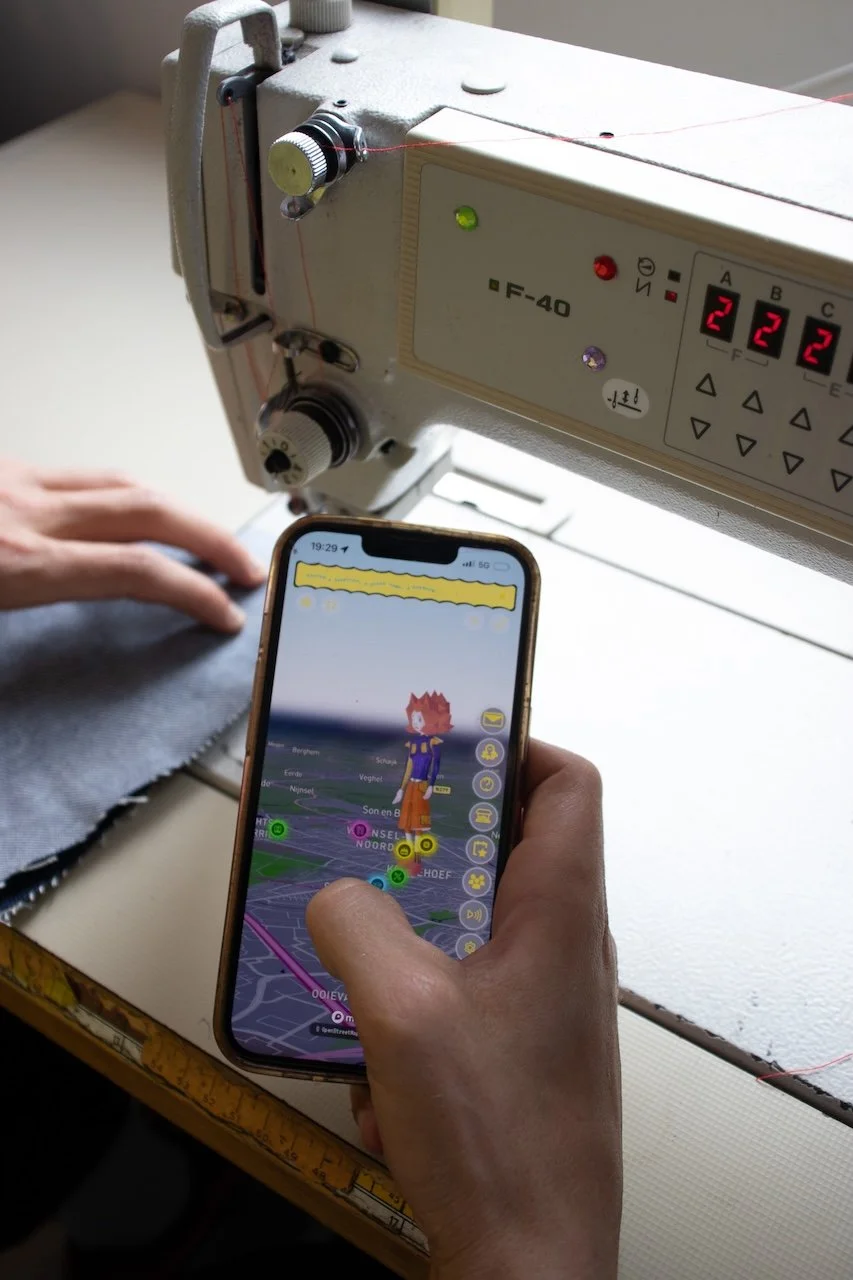
Textile designer Leo Germanangue has created Designrs, a new app which connects a city’s creators (image: Leo Germanangue).
In his 1978 book Myth and Meaning, anthropologist Claude Lévi-Strauss warned that hyper-connectivity threatens creativity by erasing the cultural distance needed for original ideas to form. While his early work framed social exchange as a key mechanism for communities to build alliances and prevent isolation, Lévi-Strauss later feared that mass communication would cause homogenisation. “It is only through difference that progress has been made,” he wrote. “What threatens us right now is probably what we may call over-communication – that is, the tendency to know exactly in one point of the world what is going on in all other parts of the world.”
Although some aspects of Lévi-Strauss’s thought have dated dramatically – most notably his focus on “marriage alliances”, which framed the exchange of female relatives between men as a foundational model of social cohesion – his broader ideas around exchange as a social mechanism remain of interest and have now provided the intellectual framework for Designrs, a new app and social network developed for creators by Eindhoven-based designer Leo Germanangue, who goes by Lele. “It’s about a community exchanging skills and services, using what people can do or what they find,” explains Lele, who previously studied Sociology and Political Science, and has developed Designrs to provide 3D maps that document cities’ creative workshops and events, in order to connect creators of all trades.
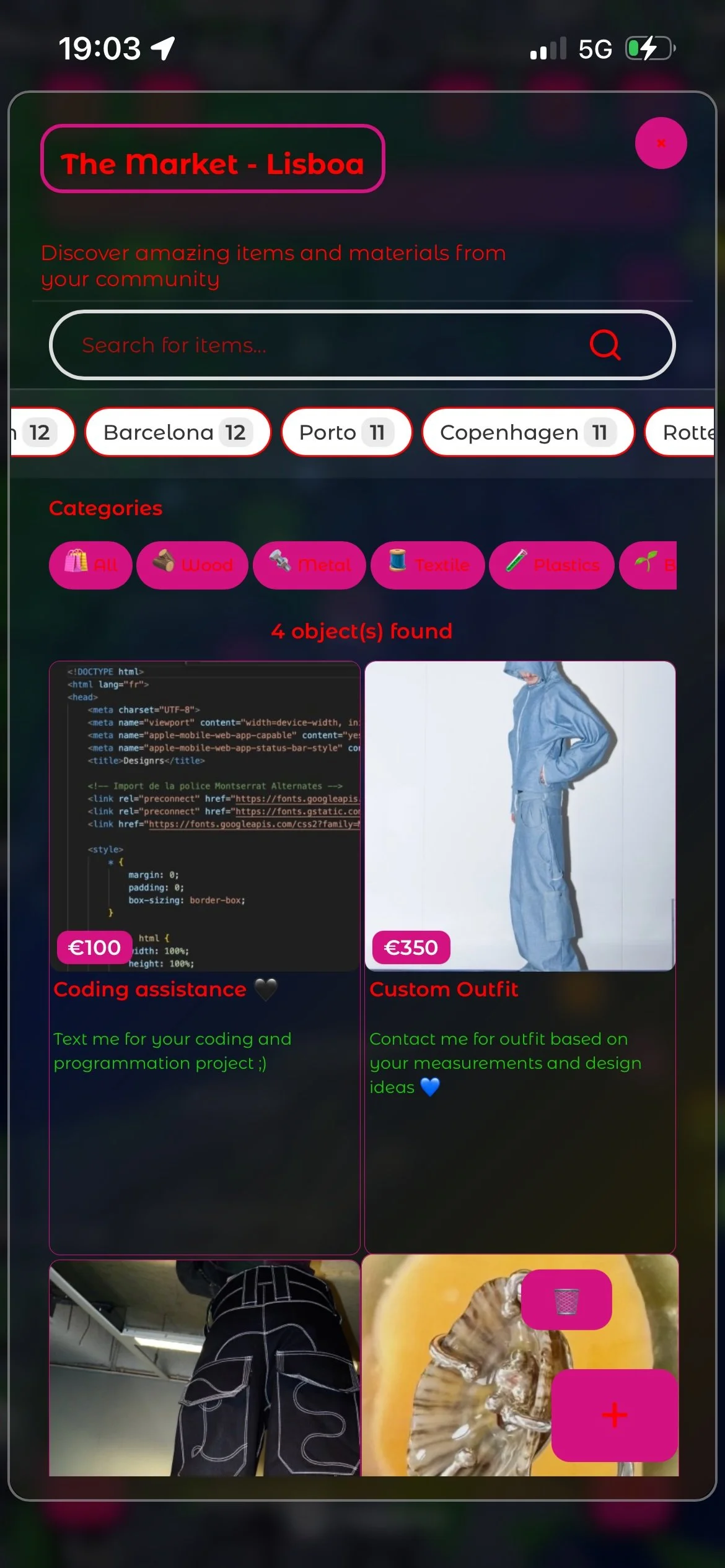
A screenshot of the app’s marketplace of creators selling skills and materials (image: Leo Germanangue).
Entering Designrs, you find yourself immersed in Lele’s world. A textile designer by trade and a former student of Eindhoven’s Design Academy, Lele’s coding is entirely self-taught, and the materiality and colour of his wider practice has seeped into his digital design. The designer himself often dresses in a pink plaid two-piece stitched from offcut materials, paired with yellow plaid socks and bright red hair, and his app is similarly interested in aesthetics that mix bold, strong colour, with saturated magentas, acid greens, and neon yellows. While the app’s aesthetic is, therefore, playful, its functionality has been designed around a variety of services to help navigate the city as a designer: a search bar will find you a city’s makers, organised by trade, and any designer who has created a profile and registered their skill can create and upload events on the map for free. Similarly, a marketplace feature offers the chance to exchange materials, samples or offcuts with other designers for reuse. Represented as illustrated avatars on the map, creators roaming your location can be connected through an encrypted chat server, while a radio feature synchronises music between six users at once to allow for collective listening. The visual density makes for an immersive world that draws you in with its charm and optimism.
Despite its complex visual language, the ethos of the project is simple: providing a service to get users off the app as quickly as possible to explore in real life. “It's designed for basic information that brings people together,” Lele explains. “You get the information, then you go – rather than spending 21 hours on your phone, it’s just a few minutes.” Lele argues that designers currently lack a digital ecosystem that provides functionality and connection, and are instead forced to rely on Instagram as the default platform for creative endeavours. As such, Designrs was born out of Lele’s disaffection with Instagram and its accompanying baggage: the endless, exhausting reels and overstimulating, often unsafe content. “One minute you see dead people and bombings, and the next you see robots that go in water. Everything is super fast and addictive,” he says.
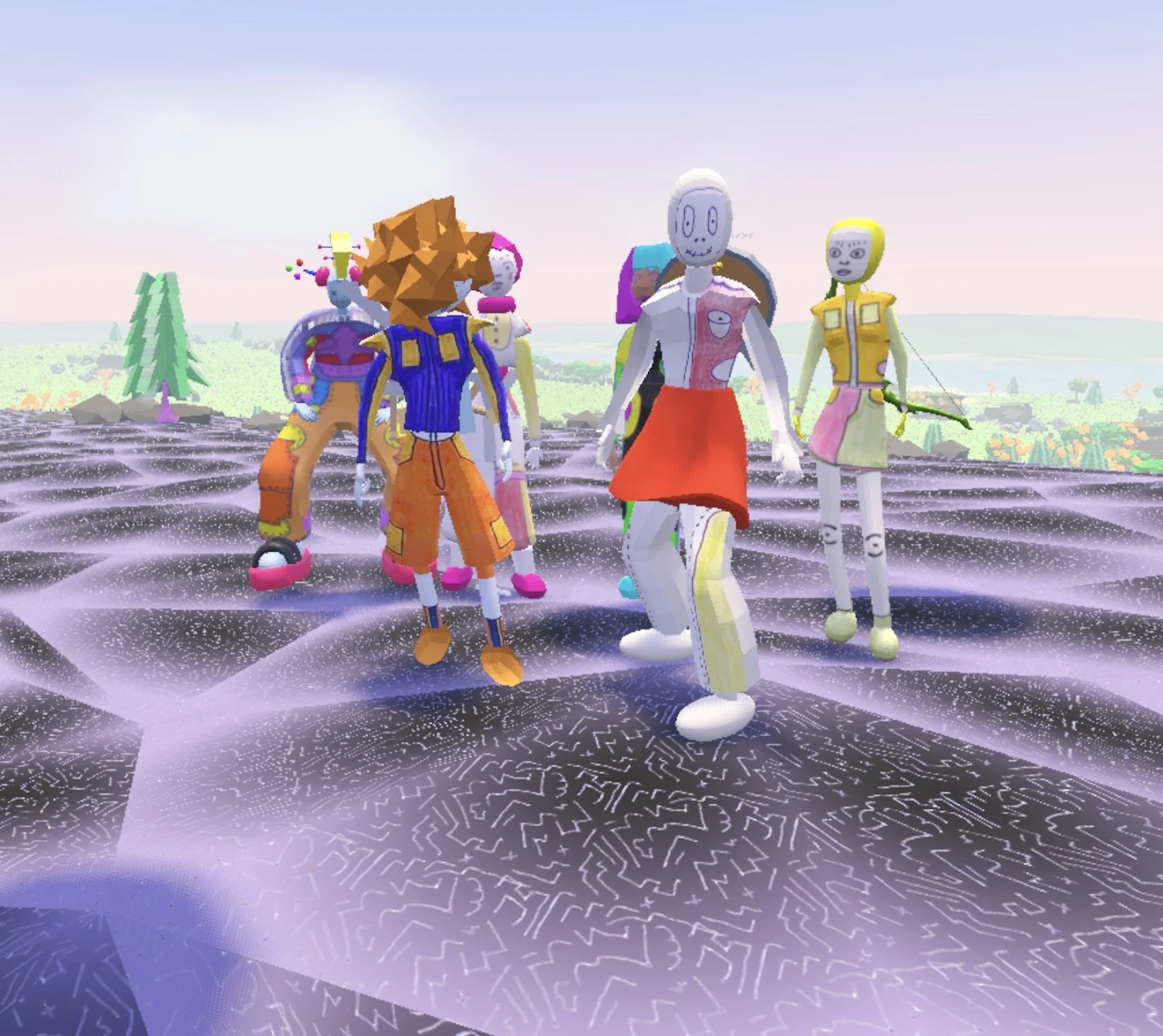
The app’s colourful illustrated avatars (image: Leo Germanangue).
Lele’s approach towards the project, which combines the maximalism of his visual language with his efforts to minimise screen time, has been shaped by his own experience with ADHD and bipolar disorder. “I’m a dopamine seeker, and I have difficulty managing good news,” he says. “My illness means that I am often very enthusiastic, and a bit manic about things.” This quality lends itself to versatility – Lele likes to make “links and bridges” between concepts and disciplines, which is the very premise of the app: what a social platform can be when designed from a textile shop perspective. The platform is purpose-led, functional and human, reflecting the way in which he runs his atelier. Lele explains that he has built this into the design through the philosophy that “randomness is the only algorithm”. Users can view all the designers in the app and search for them by city and skill, with the content you receive being a direct result of these searches. There is no algorithm to promote designers with the most clicks or views, and there is no way of telling how many people a certain user is connecting with. “I want the experience to be equal and open,” says Lele. “This event, person or service is here if you want it – but it’s your choice.”
The building blocks of the app intricately reflect this desire for openness. A love of searching for solutions, Lele explains, led him to build a stripped-back, “old-school” technology through an open-source coding system. “The brain of the app is open to everyone,” he says. “You just need a laptop and basic coding skills.” Lele hopes that this use of open-source code will allow for improvements and adaptations to be made based on user and community feedback, just as the anthropologist Lévi-Strauss might have suggested in his emphasis on exchange. In the same vein, Lele hopes that, further down the line, artists will contribute to the choice of avatars by building their own 3D designs from their drawings.
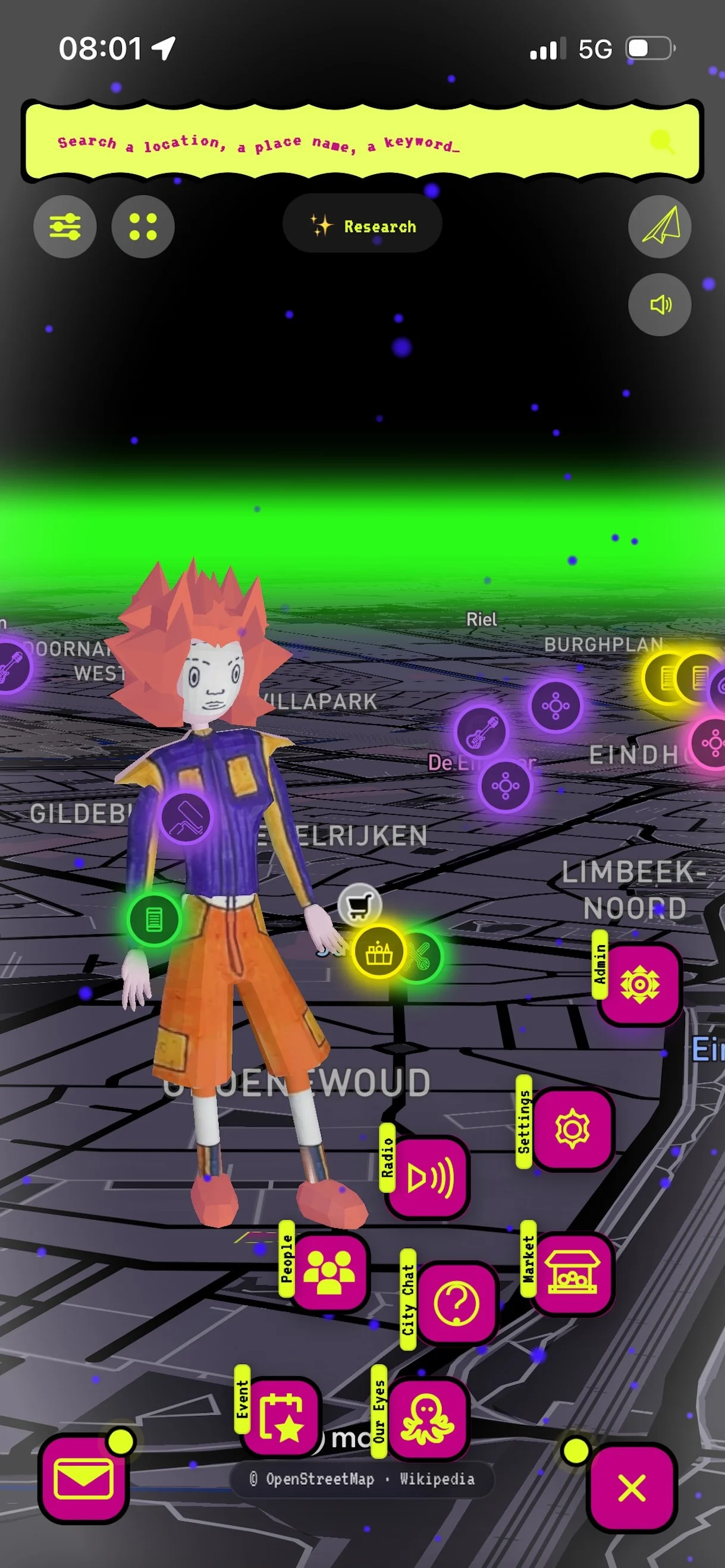
Image: Leo Germanangue.
The deeper intention behind every design feature is to preserve a maker’s creativity and reduce the fatigue one can feel from overstimulation and addictive algorithmic content on the internet. Switching to battery saver mode, for example, turns everything into black and white, and allows you to select which notifications you’d like to receive, for times when you might want to switch off. There is a satisfying symmetry here in preserving your phone battery and performance – but also your own mental energy. Conversely, when users are seeking connection and exploration, the radio feature allows one user at a time to control the music for six others. Theoretically, you could log on and listen to a stranger’s favourite album, with the choice to reach out to them by message, or not. This is an important reminder that you can “share and connect but with fewer elements, fewer distractions and less of your attention stolen”, says Lele. “I hope to convey happiness, trust and hope through the design.”
Lele’s degree in sociology and political science is implicit in the app’s conceptualisation, just as his textile craft is visible in the app’s coding. The two practices feed each other, both demanding patience and careful structure. “If you have weak legs and heavy shoulders, then you create an imbalance in sewing and in coding,” Lele says. “It’s about finding a perfect balance.”
Words Lara Hedge