
Bamboozling Lamp
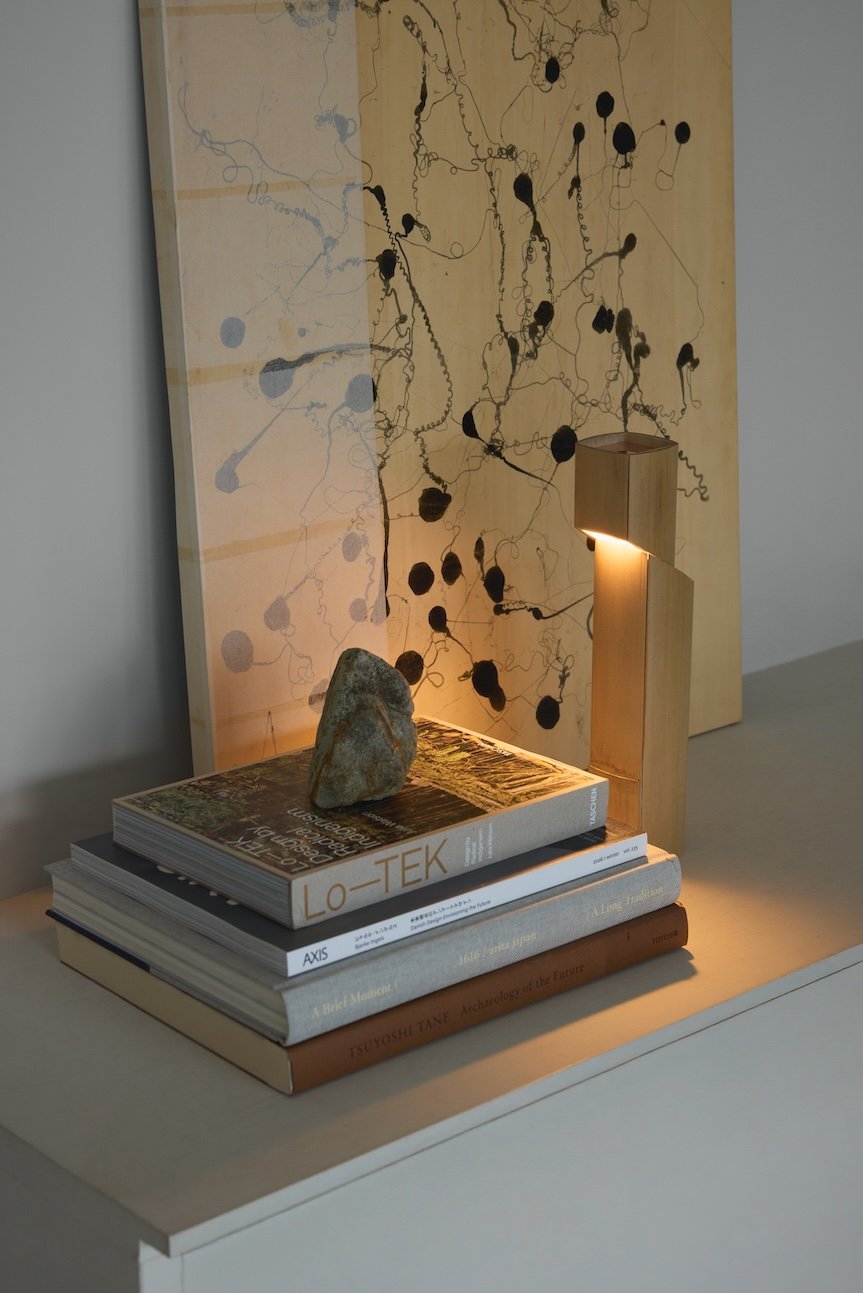
Nosou’s new lamp is designed to resemble a stalk of bamboo (image: Christina Kayser Onsgaard).
0° is intended to look plucked from the Japanese countryside, disguising itself as a stalk of bamboo. On first inspection, the lamp does not have a clear light source and sits rather mutely in interior space, like a cane brought in from outside. For new lighting brand Nosou, this sense of the rural is important.
Japan’s countryside has been in decline for decades. Cities – and, in the case of Tokyo and Osaka, megacities – lure young people in with greater career prospects away from their villages. This urbanisation is twinned with the country’s ageing population. As people leave or die, villages are gutted. Trying to buck this trend, Nosou was launched in early 2026 in a rural area of Japan. Based in Nishiawakura Village, Okayama, the brand manufactures its 0° lamp with a particular making ideology: local materials go through local craftspeople, who work hand-in-hand with Nousou's in-house design studio.
Workshops dot Nishiawakura’s rolling countryside. “Within our design studio, most of our carpentry and our metal work is done with people in the village,” explains Tyler Ike, 0°’s designer. When resources are not available within Nishiawakura, Nosou looks for the next nearest thing: the lamp’s electronics, for example, were sourced from the neighbouring town. This concerted effort is important because “you get the sense of crafts slowly being lost as the population gets smaller and smaller,” Ike says.
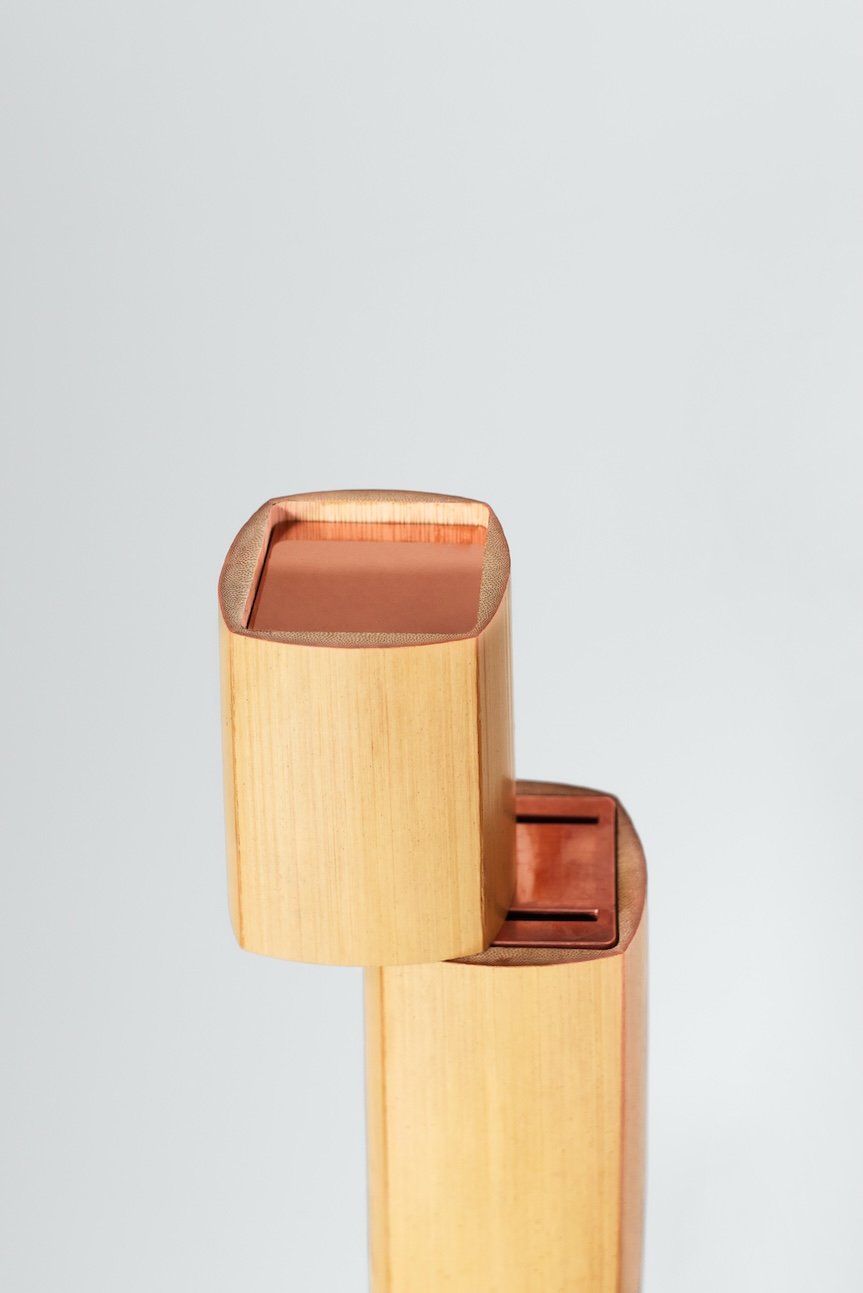
The lamp has a concealed switch, and its brightness can be tweaked by sliding the lid closer or further away from the body of the lamp (image: Christina Kayser Onsgaard).
Mechanical craft, however, lies at the heart of 0°’s design. A crevice in the lamp’s bamboo casing, for instance, conceals its “Slide Switch System”, which the studio has designed its lamp around. Sliding the lamp’s upper block sideways, away from its body, switches on an internal LED downlight. As the block is pulled outwards, the two grooves cut into the metal plate which it sits against are revealed. These tracks guide the block's lateral movement. “It just feels right when you’re moving it,” Ike says. “It’s the first thing you’ll want to do when you’re grabbing the product.” Tweaking brightness becomes a literally hands-on procedure – the lamp is brightest when slid furthest out, and dimmer when shaded by the body of the bamboo. “It feels quite heavy,” Ike explains, “in a sense that when you’re adjusting it you can feel the mechanism.”
Through this materiality, Nosou aims to emphasise its core philosophy: “time makes beauty”. The lamp’s bamboo exterior will purposefully patinate over time. “Freshly cut bamboo looks too good to be real. It seems plasticky – it’s so clean,” Ike explains. “But once it starts ageing, it gets little dark spots like a banana.” It cannot, however, become overripe – the more patination, Ike argues, the more beautiful the lamp becomes. “The beauty of raw materials,” he adds, “[lies in] how they change over time.” This concept of gradual use enriching a design stems from the aesthetic philosophy of wabi-sabi, which centres on the appreciation of imperfection and transience. “When architects see the aged part of a timber beam, that’s the thing they gush at,” Ike says.
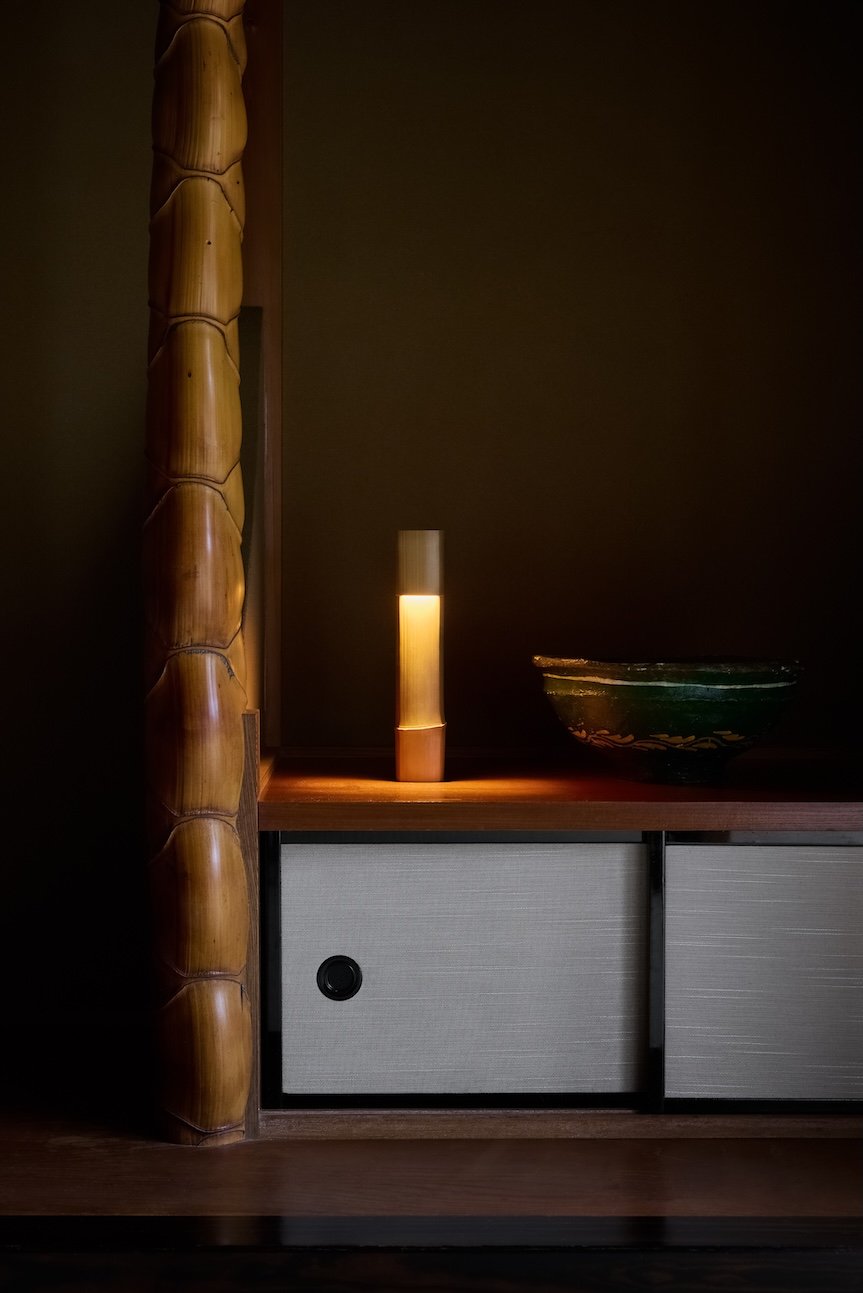
Image: Christina Kayser Onsgaard.
By basing itself in Nishiawakura, Nosou hopes to cement its own longevity. The village has managed to slow depopulation by encouraging entrepreneurship and attracting younger residents through mentorship initiatives. With more than 50 businesses currently operating, 15 per cent of its population now consists of newcomers. “There’s a mindset to look to the city for specialised people, but we know that even within this village there’s plenty of people that are capable,” Ike says. Nosou strives to support these artisans by giving them work. “How can we get these craftsmen to work on more contemporary products?” Ike asks. “For us, that’s a way to make sure the craft doesn’t die – by adapting it.”
Words Isaac Mead