
A Bowl Fit for a Palace
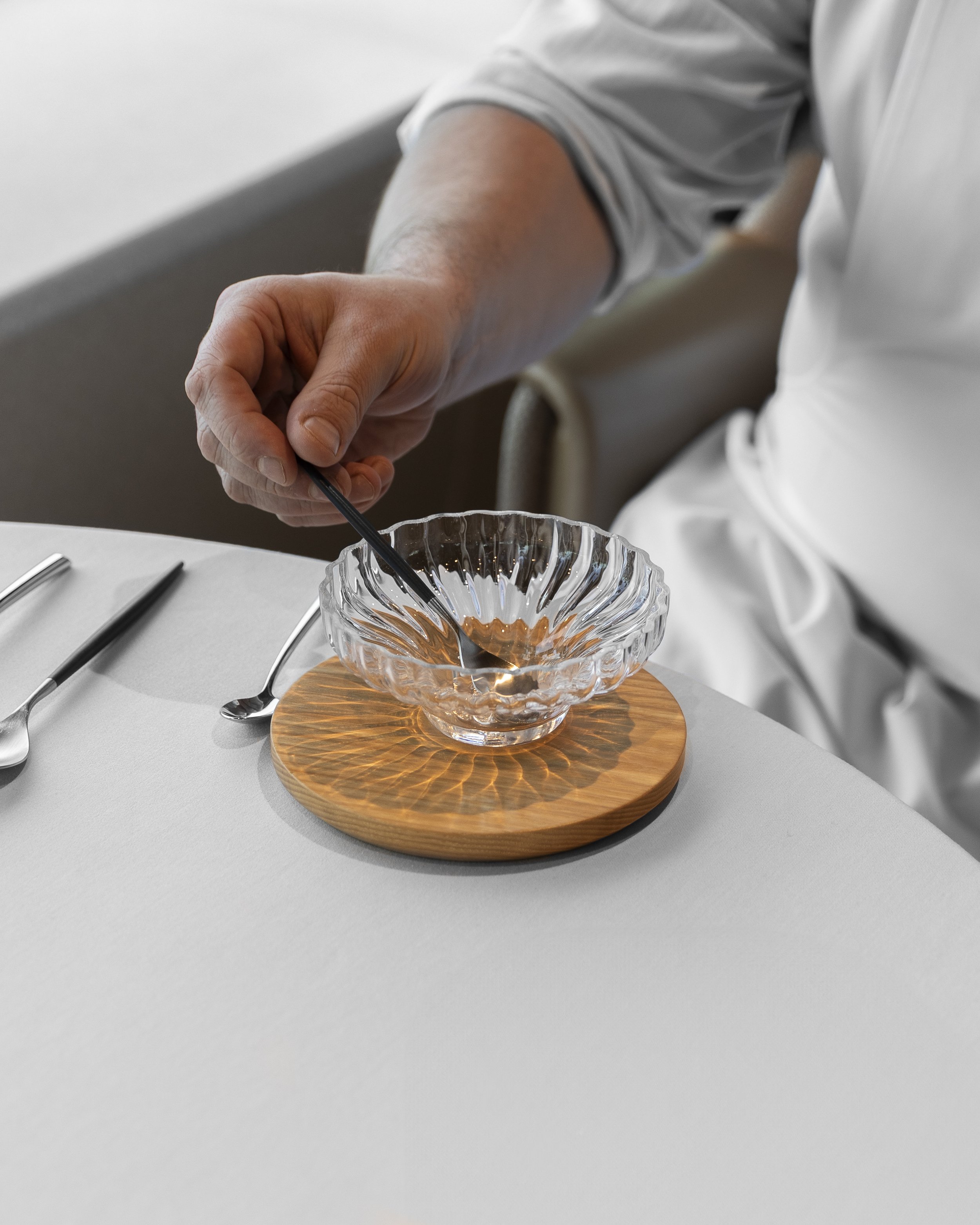
The Palace dessert bowl, designed by Isac Lindberg (image: courtesy of Iisak).
“It's the most iconic restaurant in Finland,” begins designer Isac Lindberg, speaking from his studio in Lauttasaari, an island in the west of Helsinki. “So how do you capture that in a physical form?”
This was the challenge set down to Lindberg when his company Iisak, a Finnish tableware brand, was contacted by chefs at Palace, a waterfront restaurant on Helsinki’s Eteläsatama. Palace has operated almost continually since its establishment in 1952, having originally opened as part of the Palace Hotel, a building constructed to welcome international guests to the 1952 Helsinki Olympic Games. Since then, its reputation has flourished. In 1987, it became the first restaurant in Finland to win a Michelin Star, while today it holds two under its current chef Eero Vottonen, serving a fine dining menu that evolves with the seasons. “And what they really wanted,” Lindberg explains, “was to have their own dessert bowl to be the final piece of that whole dining experience.”
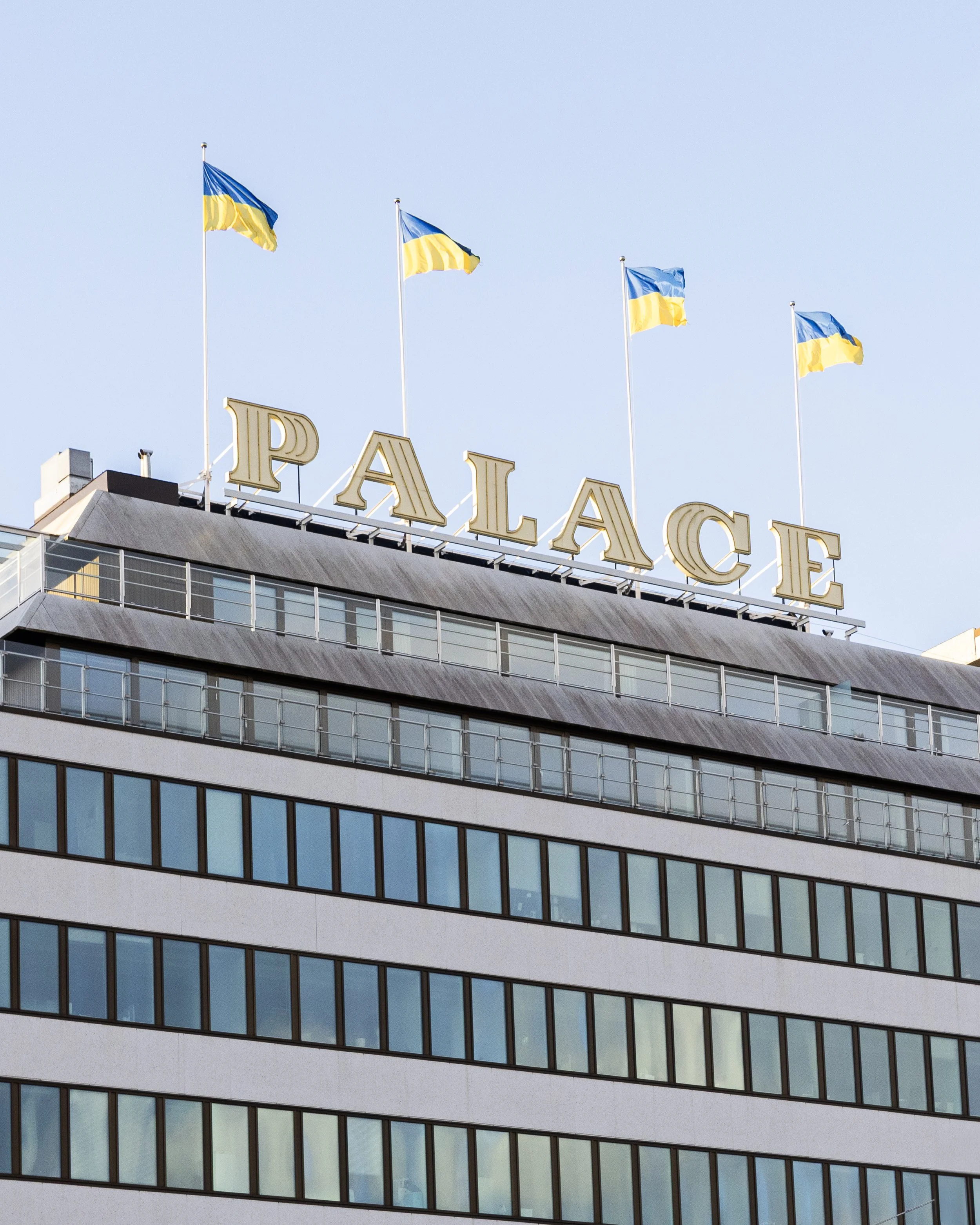
The exterior of the Palace restaurant in Helsinki, housed in a 1952 building designed by Viljo Revell and Keijo Petäjä (image: courtesy of Iisak).
The bowl that Lindberg was commissioned to design was to be reflective of Palace and its identity – no small feat given the restaurant’s near 75 years of existence. “But one of the things that really stands out with Palace is that it’s been in the same building for such a long time,” Lindberg says. This structure was designed by architects Viljo Revell and Keijo Petäjä following an open competition hosted in the late 1940s and today, Lindberg notes, is still regarded as “one of the most iconic buildings in Helsinki.” Revell and Petäjä developed the project as a modernist, ship-like design that would be raised up on pilotis to overlook the Baltic Sea it borders – adopting a functionalist design approach that, in the 1950s, was intended to serve as an embodiment of the rapid modernisation of the country. While the lower storeys were devoted to commercial offices, the hotel and restaurant occupied its upper floors, providing a more outwards-facing element of the building. “I wanted to capture that building, or somehow connect it with the restaurant,” Lindberg explains.
Revell and Petäjä’s building – which today houses the Confederation of Finnish Industries, a conference centre and Palace – is grid-like and modern, arranged around an H-shaped plan with glass banks of windows that run across its facade, yet Lindberg’s design process for the Palace dessert bowl gradually moved towards a less literal representation of its inspiration’s architecture. “Actually visiting the restaurant is a cool experience because you take the elevator up to the 10th floor and, once you get there, you have these huge windows looking towards the Baltic Sea,” he says, “so we really wanted to have something wavy in the silhouette.” The resultant Palace dessert bowl is elegantly organic, blossoming from a small base into a scalloped bowl whose 52 moulded waves correspond to the year of the restaurant’s creation.
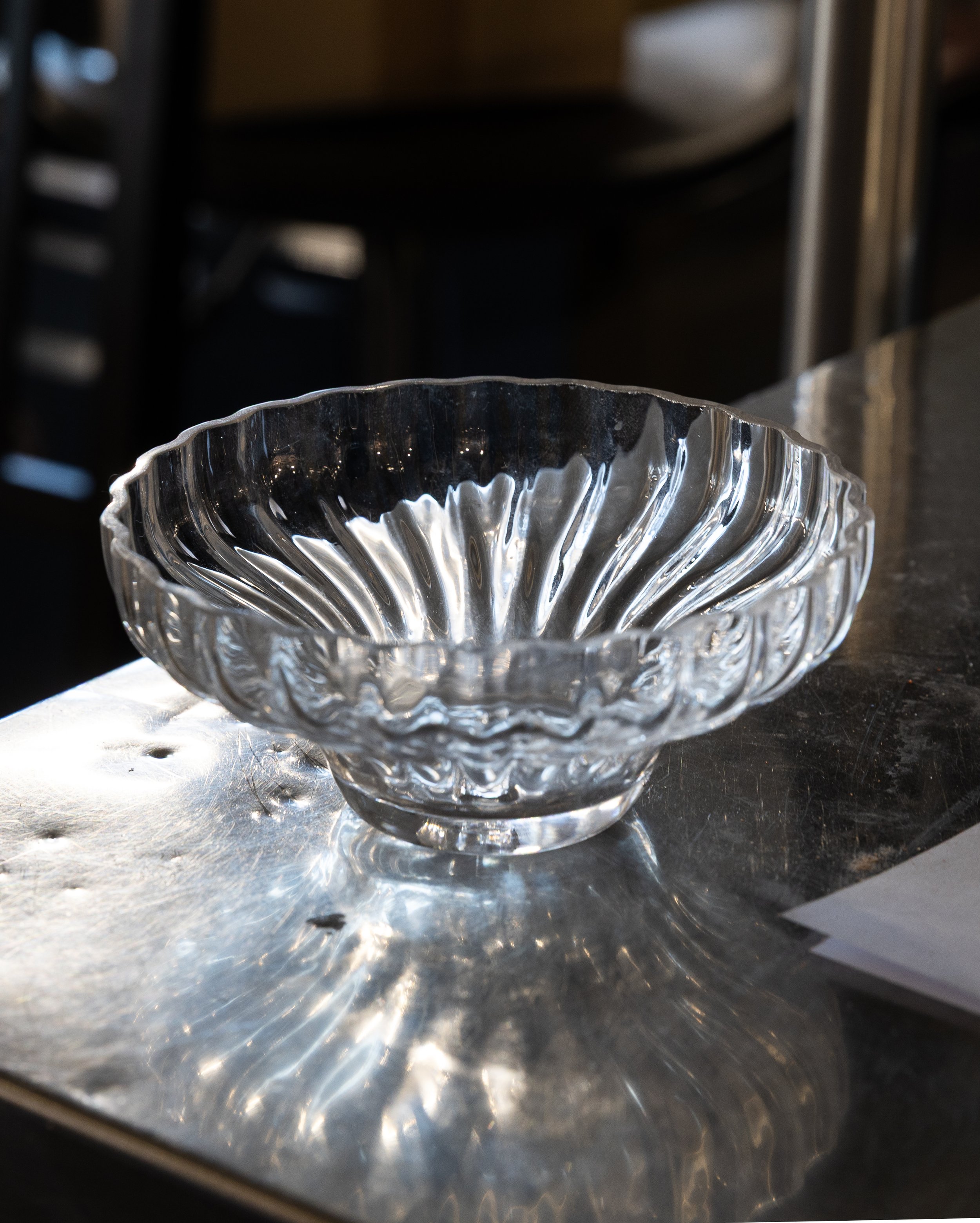
The bowl is designed with 52 ripples to echo the Baltic Sea that the restaurant overlooks and in reference to the building’s year of completion (image: courtesy of Iisak).
While the form’s ripples are clear references to the Baltic, the angle at which they swim out from the bowl also conceals a nod to Revell and Petäjä’s original architecture. Although the bulk of the Palace building is boxy as befits its functionalist approach, the top floors feature gently angled roofs that soften the overall silhouette and which are apparent within the interior of the restaurant itself, framing the dining space. “If you look at the bowl from the side, it actually has that same angle, but in a more organic, inverted form.” This angle is also a detail that makes the most of the sunlight that streams into Palace’s interior from across the Baltic – “A very blue light reflecting from the ice and snow on the sea in the winter, but a very different quality of light in summer,” Lindberg summarises – with the shape of the clear glass splitting both this natural light and the restaurant’s built-in spotlights into ripples and veins of shade that flow across the wooden mats on which the bowls are presented.
The Palace dessert bowl is one of many similar projects for Lindberg and Iisak, a brand that has come to specialise in designing bespoke tableware for high-end restaurants and hotels. This form of work, Lindberg notes, introduces changes into the design process of glassware inasmuch as the designer becomes a conduit between the glass artisan producing the object and the restaurant or hotel who has commissioned it. “You make a lot more prototypes [than if producing your own glassware] because they become a way of communicating with the client,” Lindberg says. “You become a link between the restaurant the craftsperson, with an interesting dialogue where you’re all developing something together.” In the case of the Palace dessert bowl, for instance, the glass is handblown in a one-piece graphite mould by Antti Torstensson, a glassblower based in Sastamala, Finland, before being cut and polished to create the finished piece. The glassblower’s work with a mould of this kind, Lindberg explains, forms the central appeal for him of working with the material. “My starting point with glass is actually the moulds themselves,” he says. “I think the moulds are really beautiful and there’s something interesting in the fact that they are never seen by the end user, but have such an important role.”
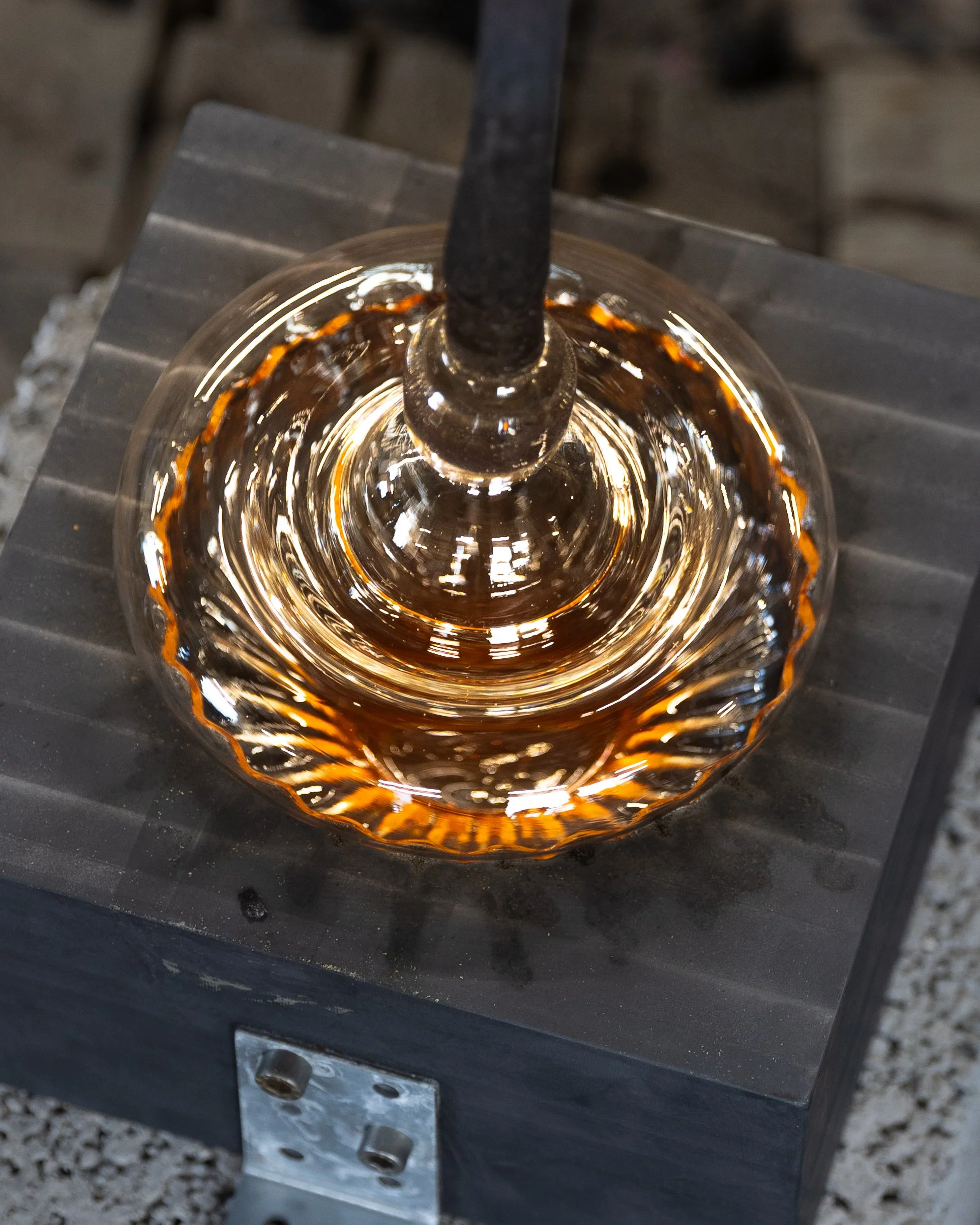
The bowl being produced by glassblower Antti Torstensson (image: Iisak).
In this regard, the unobtrusiveness of the mould also captures something of Lindberg’s wider design approach with the Palace dessert bowl. The bowl he has created is delicate and elegant, but this etherealness conceals the fact that it has also been designed to be durable enough to stand up to the rigours of service and to be capable of stacking to undergo cleaning in industrial washing machines. “Palace gave me a lot of freedom to explore different options, but there are very simple specifications that are still important,” he says. Similarly, the bowl’s visual connection to the restaurant that it was designed for are purposefully subtle and underplayed, operating through suggestion and evocation rather than explicit reference. “The first designs we had were more boxy and rectangular,” Lindberg says. “But I think we were right to go for a more organic look, while still keeping those details that reference the building.” He pauses for a moment, before continuing: “Maybe no one will actually see those things. But we know and the restaurant know.”