
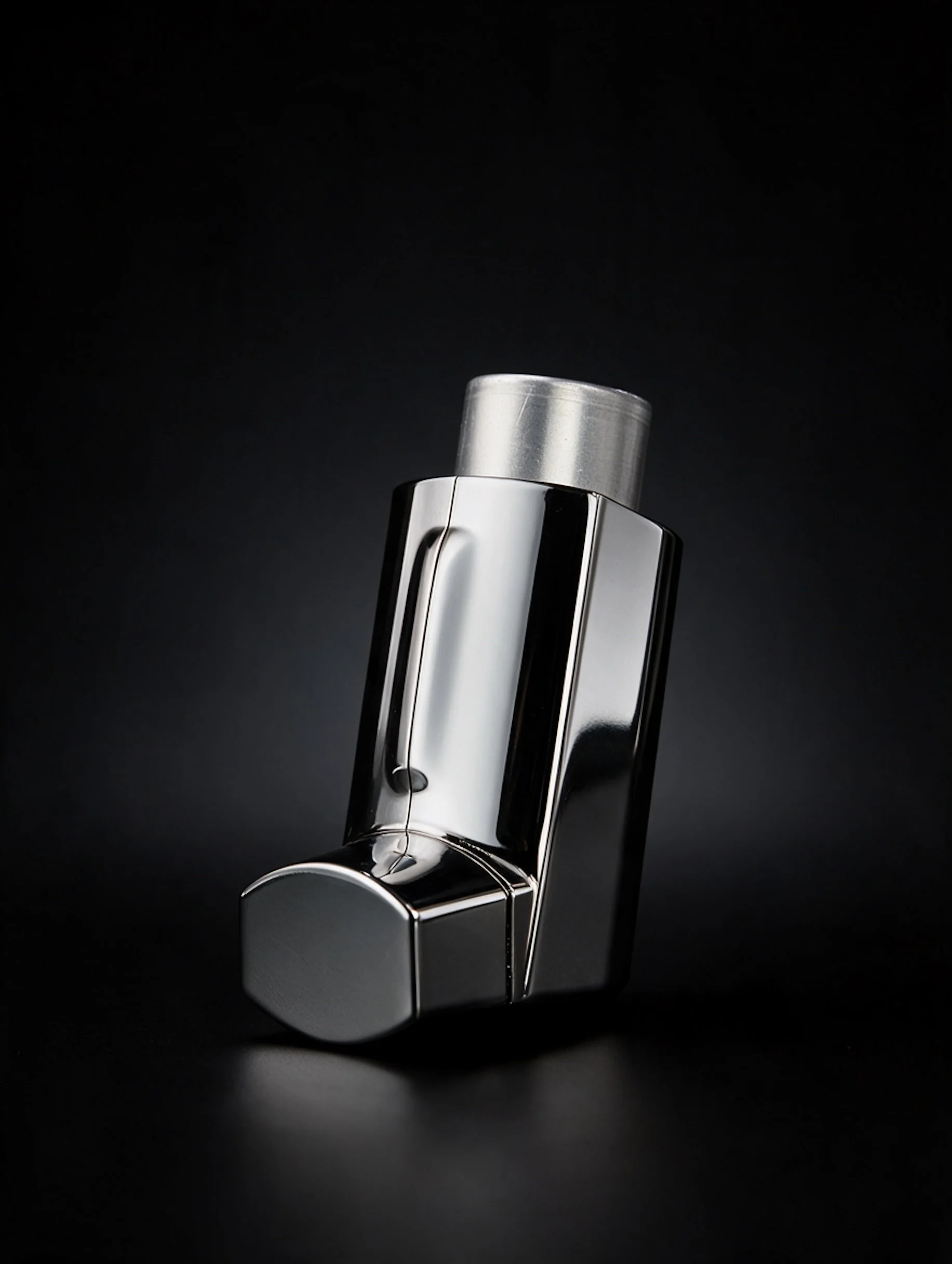
Hale, a new company designing cases for asthma inhalers, took inspiration from a prop used in a James Bond film (image: Hale).
“It’s a very short clip in the film Casino Royale, where the Bond villain Le Chiffre uses a silver inhaler,” says Matt Conlon, the founder of Hale, a new company designing cases for asthma inhalers. “To anyone who isn’t asthmatic, it would just completely pass them by.”
For Conlon, the scene stood out against a wider history of asthmatic characters being stigmatised on screen. A 2012 study by anthropologist Cindy Clark, for instance, found that Hollywood films often use inhalers as a shorthand for weakness, anxiety, or nerdiness. By putting the inhaler in the hands of a Bond villain, however, the device became “possibly the coolest thing,” he says, with the prop becoming a lusted-after object on Reddit forums. The company’s Hale Classic meets the desires of these fans with an angular chrome case that closely resembles the original, its sleek form making a medical necessity into an accessory. “I’ve been an asthmatic since the age of seven,” Conlon says, explaining that he felt embarrassed to use his inhaler when he was growing up, a feeling which prevented him from using the device as advised. “I’ve been in hospitals more times than I care to admit.” While he initially set out to redesign the inhaler itself, Conlon quickly realised the device wasn’t at fault. “It works perfectly – it’s people’s relationship with the inhaler that’s the problem,” he explains, citing the 2014 UK’s 'National Review of Asthma Deaths', which identified potentially preventable factors in two-thirds of the medical cases scrutinised. “It’s kind of scary that a lot of those are down to people not using their inhalers as they should.”
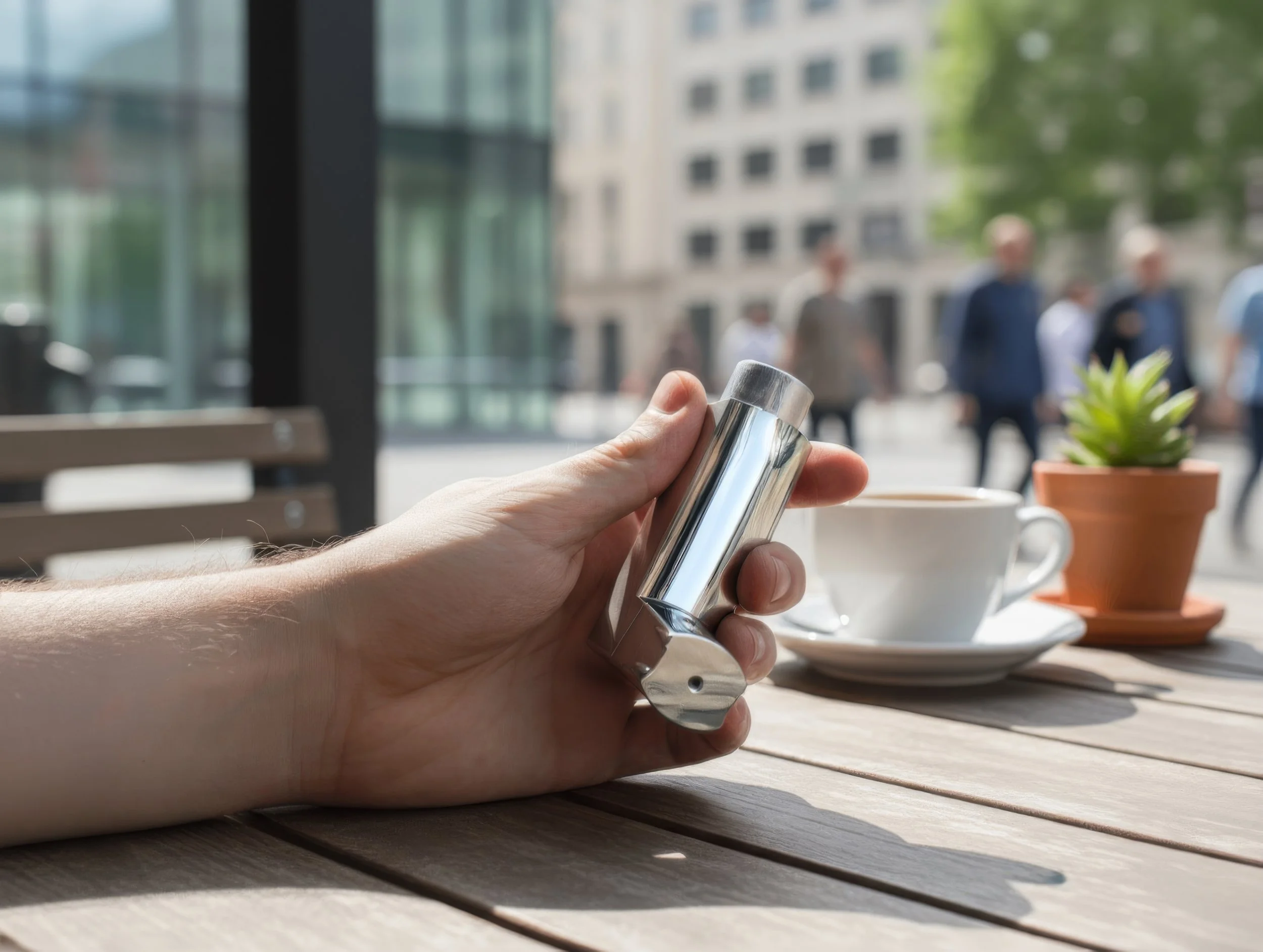
Image: Hale.
The metered-dose inhaler (MDI) was introduced in 1956 by Riker Laboratories, following development work by Dr George Maison and chemists Irving Porush and Charles Thiel, and established the physical design for the world’s most widely used type of inhaler today. While earlier devices featured squeezable rubber bulbs similar to those found on old-fashioned perfume bottles, the MDI’s mechanism was reportedly inspired by Maison’s 13-year-old daughter, Susie, who asked why she couldn’t have her asthma medication delivered in a pressurised spray can “like hairspray”. As well as being easier to use, this design enabled the inhaler to become more compact and portable, and Conlon’s challenge was to create a case that would change the inhaler’s appearance without compromising its functionality. “I wanted it to feel like an actual inhaler, not a bulky accessory that feels tight in your jean pocket,” he explains. While Conlon doesn’t have a formal design background, he drew on his project management skills from working in the civil service to develop his idea. After teaching himself how to sketch initial designs in SolidWorks through YouTube tutorials, he worked with a 3D modeller and CNC manufacturers to create prototypes. The Hale Classic’s aluminium case is just 1mm thick, with custom magnets on each side adding a further 0.5mm to the inhaler’s profile – the slimmest possible addition he could achieve.
While the MDI’s physical design has remained largely unchanged, the medicines it delivers have evolved, alongside informal colour conventions that help distinguish between treatments. Reliever inhalers used to ease sudden symptoms are typically blue, for example, while preventer inhalers that reduce airway inflammation over time are often brown. Conlon’s cases obscure these colour signifiers, but he points out that they are far from universal. “It's very manufacturer coded,” he says, explaining how pharmaceutical companies use their own branding for inhalers, with colours and designs varying between brands and countries. Additionally, Conlon argues that colour-coding is less critical because inhalers are generally carried and administered by patients themselves, rather than medical professionals in an emergency. “It’s incredibly rare that an individual would be in a situation where they are having an asthmatic episode and if they don't have their inhaler within the next 10 seconds they’re going to die, like you would have with an EpiPen,” Conlon explains. “Someone from the medical community isn’t usually going to need to go through someone's bag to find their inhaler.” Typically, only the asthmatic and the people closest to them, such as their parents, need to understand which medicines their inhaler cases carry.
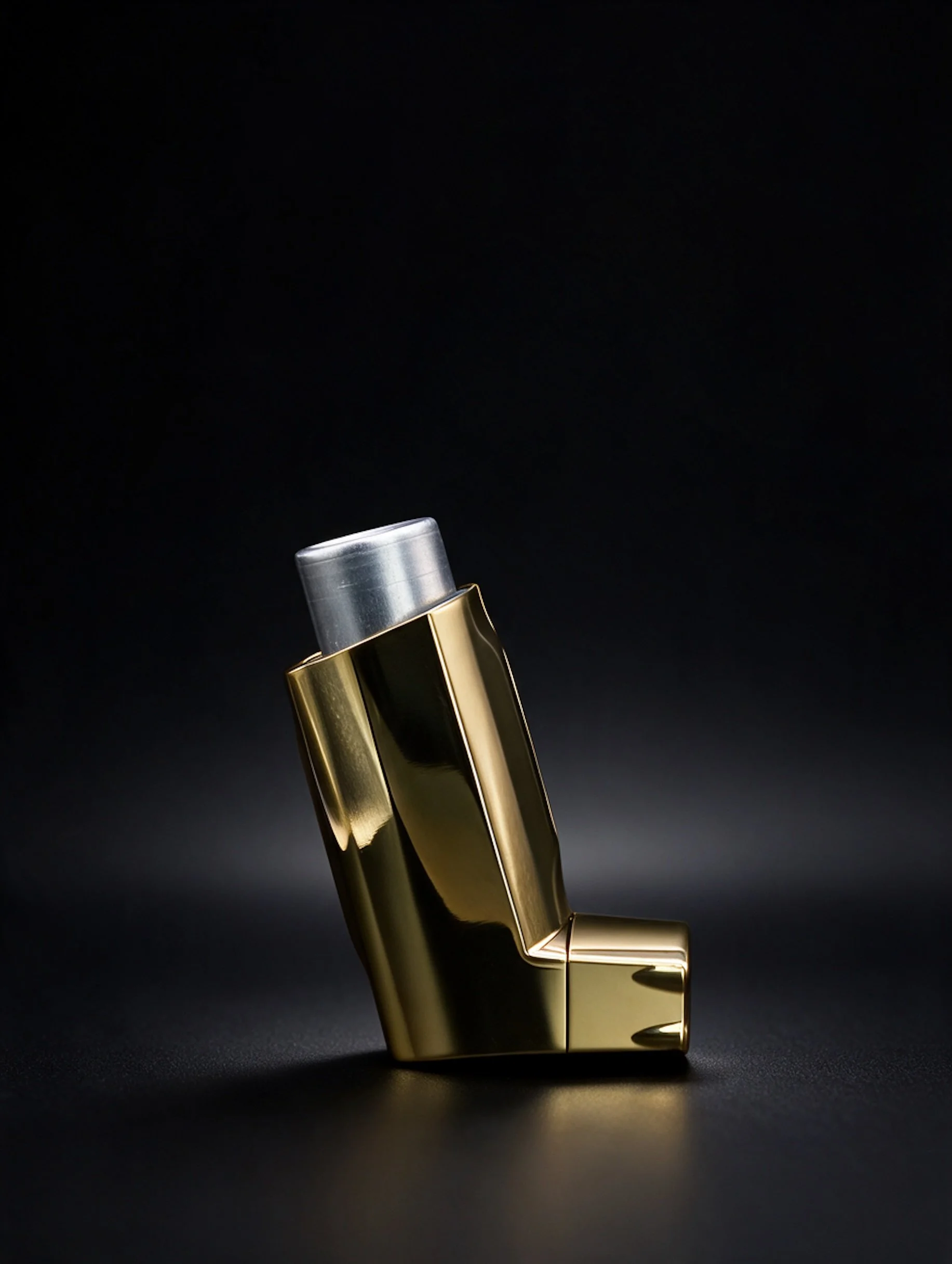
The Hale Classic comes in gold, silver and brushed grey shades (image: Hale).
The risk of masking colour coding also needs to be balanced against the potential of encouraging people to use their inhalers in the first place. The idea that medical devices should be treated with the same thoughtfulness as consumer products has been explored by many design studios, with Heirloom’s show Out of Orifice (2025) at London Design Festival visually illustrating the differences between the two. With a table of insertable objects ranging from blue-toned catheters and sperm injectors to purple and fuchsia menstrual cups and vibrators, the studio demonstrated how commercial products typically incorporate more luxurious materials, ergonomic shapes and joyful tones in order to reduce stigma and improve user satisfaction. Inhalers are a particularly pertinent example: unlike many of the objects in Heirloom’s exhibition, they are used in public, making their appearance all the more significant. Hale’s cases enable the inhaler to become a communication tool, with its metallic, baby pink, yellow or black options allowing people to reflect aspects of their identities. “It almost doesn’t sound believable to say, but Rihanna was our 25th order,” Conlon says. Since then, the case has been snapped up by actress and film producer Priyanka Chopra, and featured in promotional materials for Rare Beauty, the cosmetics brand founded by Selena Gomez. “The colours are similar to jewellery or watches,” he says, referring to the Hale Classic’s gold, silver and brushed grey shades. “It looks quality and mature.”
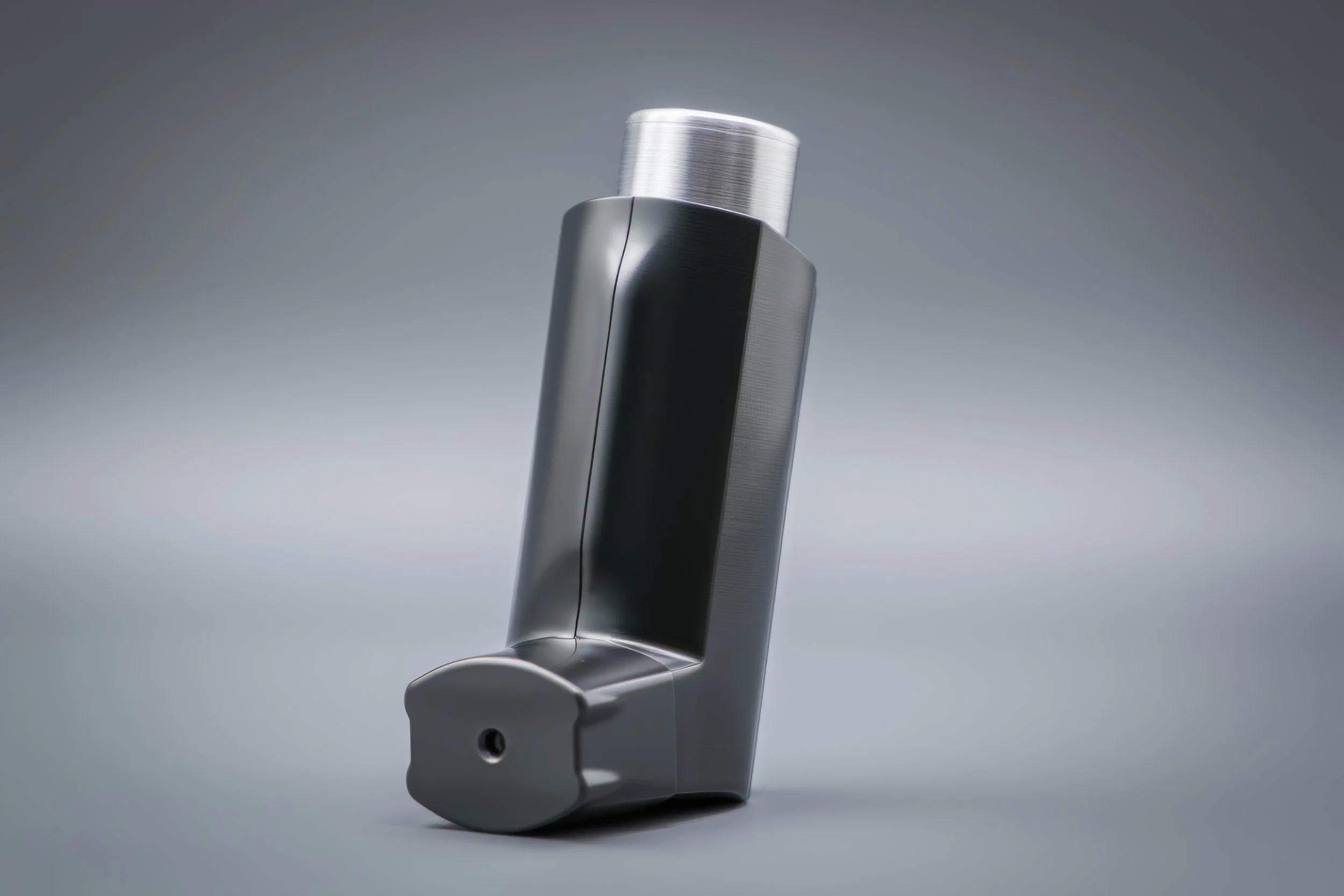
Image: Hale.
Conlon is now keen to develop a device to help users monitor their inhaler usage, providing data that could guide their asthma treatment. “The standard for diabetes management is incredibly inspiring,” he says. “You see individuals with blood glucose monitors they can check on their phone and it’s just incredible, it’s exactly what modern tech should be about: enabling you to live a better life where you’re kept informed and you’re not worrying.” While smart inhalers with built-in electronic devices or clip-on sensors do exist, the designs aren’t widely used since they are often costly and bulky, and are not available worldwide. “It’s very much at the concept stage, but I’m keen for it to be very nimble and light,” Conlon says. With a community of asthmatics as followers, he is now able to consult his customers directly, using their feedback to inform his designs. “I want to bring asthmatics along for the journey, and ask them, ‘What features do we all want here?’” he says, a sentiment that harkens back to the company’s origins on forums discussing the coolest inhaler ever seen on screen. “You know, what’s actually going to be useful?”
Words Helen Gonzalez Brown