
At Sea
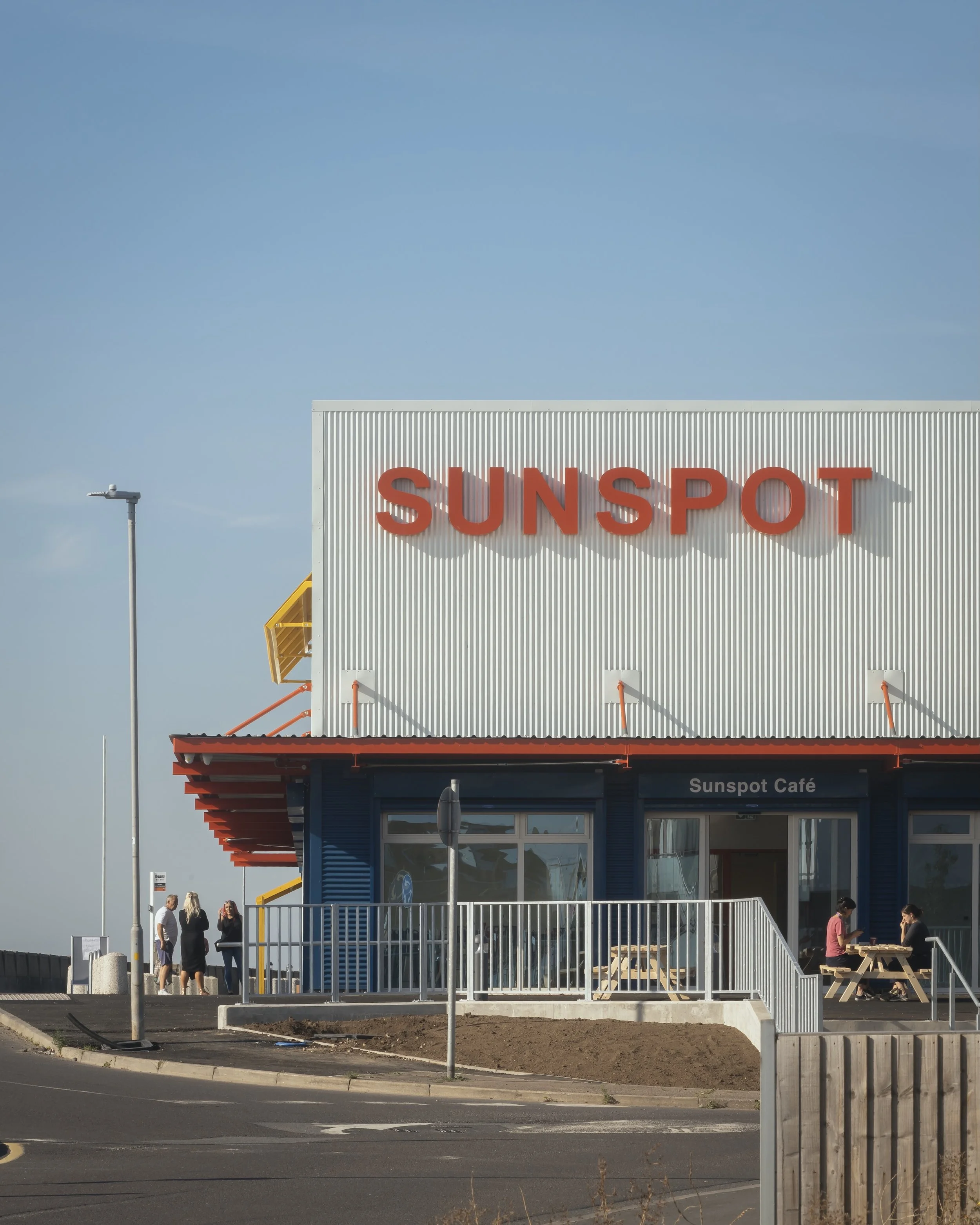
Sunspot, designed by HAT Projects in Jaywick Sands (image: Jim Stephenson).
Places exist in the stories we tell about them. The British seaside is thought, remembered, longed into being, so that a still image of itself emerges, complete and precise. Britain’s intense affection for its “bucket and spade” seaside resorts is in their tawdry, shabby glamour: the Victorian guesthouses, golden beaches and glittering amusement arcades of endless summer holidays. But life on the coast is one of extremes, between low and high tide, feast and famine, the swells of summer and the frost of winter. Still we cling to these shores with an unwavering affection that only those with memories of chasing the tide across the foreshore can. It’s difficult to forget the way that the sand clings to the gaps in your toes, dusted off but never completely gone, like the holiday memories that we continuously make and remake.
But the seaside also simultaneously obsesses over the new: resorts are victims to the whims of holidaymakers’ changing fashions and tastes, under continual economic pressure to reinvent themselves, regenerate, rejuvenate, revitalise, in order to keep visitors coming. Each reimagining is looking to a hopeful future on the horizon, one that quickly becomes a part of its past – the memories and nostalgia that shape the very real image of the seaside in our cultural memory.
The seaside belongs to us all: it has a unique place in the British cultural imaginary as somewhere for escapism and pure enjoyment, but also speaks to deeply personal memories, such as my own of growing up on the Kent coast. In such seaside towns, discourse about the fringes of the country having been left behind is strong, with the coastland seen as the reserve of those with nowhere else to go, the last resort. It is a story that I have written into various pieces, picking apart each reason for the seaside’s demise, and contemplating its future. But childhoods played out against this faded grandeur ignore any thesis of structural decline. This is an intuitive affection for the seaside, one that has been raised in us.
What is it to piece together these memories? To wade through the documented and the imagined, and find in it a messy, complex place of more than the memories it can hold. To commit it to memory, if we can remember it correctly.
This story begins at Jay Wick Farm, Essex, in 1928, and it is still being written today, in the village of Jaywick Sands.
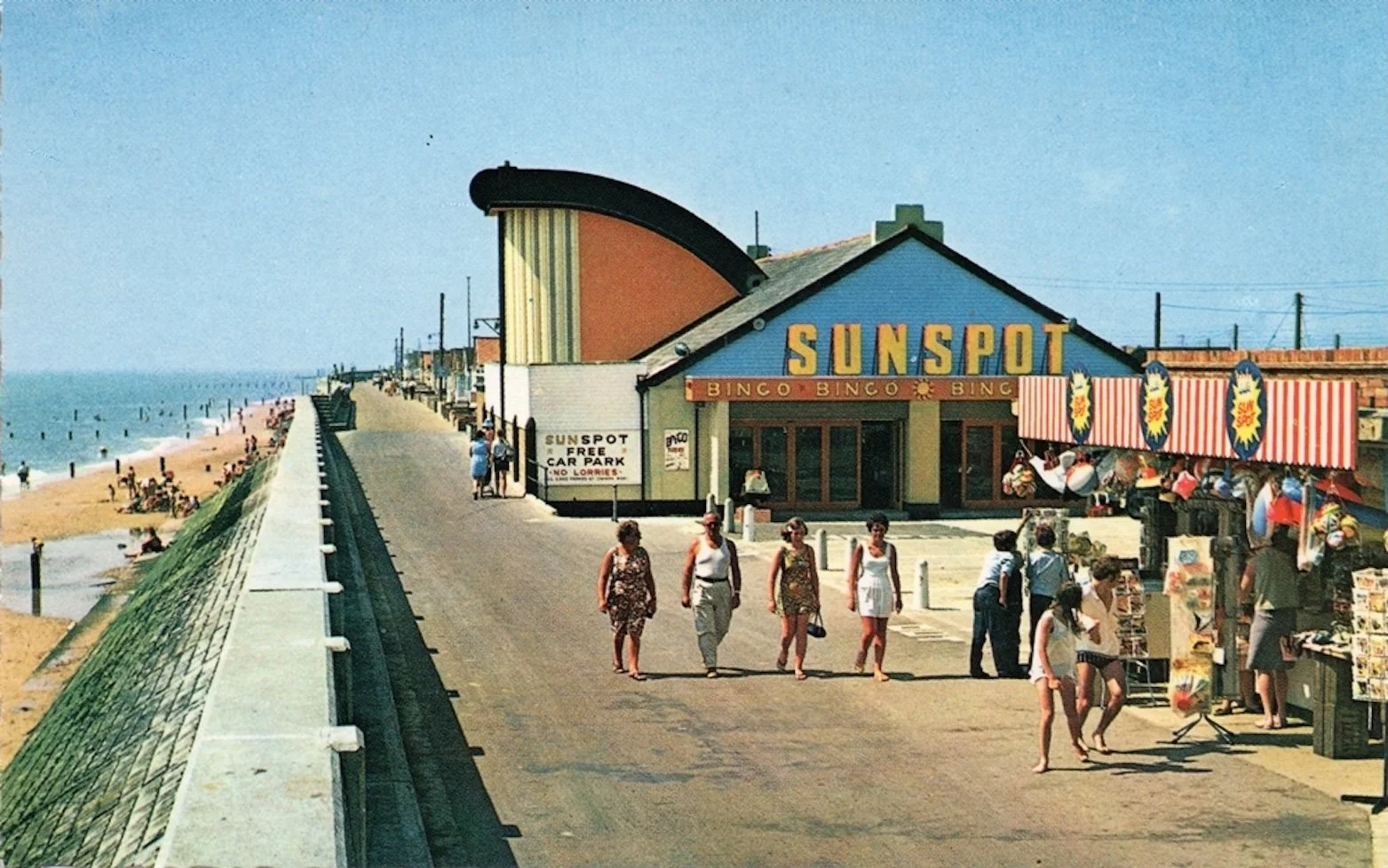
Historic 20th-century views of Jaywick Sands (image: courtesy of Jaywick Local History Society).
January 1928
Frank ‘Foff’ Stedman drives through the flat, endless Essex countryside, 90 minutes outside of London where the marshland slices into the North Sea. His headlights snake across the winding cart tracks until a handful of tumbledown farmhouses interrupt the flatlands, where a herd of dairy cows graze in the January frost. Jay Wick Farm is unassuming, uninspiring, inconspicuous, but he rolls down towards the shore and notices the waves, how they lap at the sand, how each one erases the memory of the previous, how the edge of such a solid immovable country is constantly changing. He sees the ocean, how it dances with the sky, and looks to the horizon, with designs on an affordable holiday resort for working-class Londoners. The bitter winter of January confirms that even in the harshest conditions, these sea-facing plains could captivate a holidaymaker. Nine months later, Stedman will buy all 320 acres. The future will come to life with grids of plots, £50 each, with each buyer building their own shack, bungalow or hut. Whenever August rolls around, the workers of the East End will migrate here, following the dashed lines of the A-roads out until they can’t go any farther, making the coast their home for the summer.
January 1953
The North Sea brims over from the Netherlands to the UK as an unprecedented tidal surge batters both coastlines. Water breaks through Jaywick’s 1880 sea wall at Colne Point and sweeps across the marshes overnight on the 31st. Rivers and fields swell and engulf the holiday huts that were never meant to be homes. Water surges across the marshes, half a mile inland to the Cottage Cafe, where locals flee as waves crash into living rooms, reaching up to the gutters of the low-lying shacks. Some cling to dining tables, floating like islands, others crouch on loft space joists, crawl onto roofs, scrambling for dry land. Thirty-five people die and the waters are never calm again.
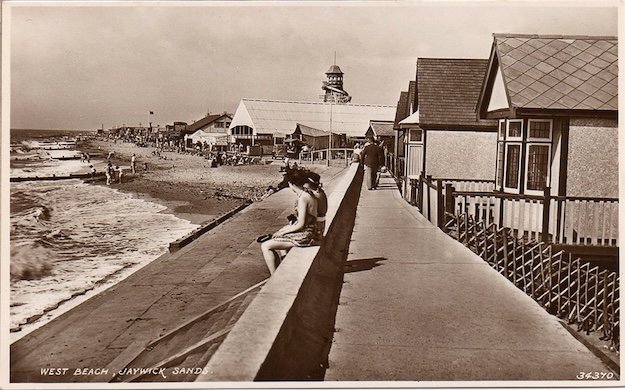
Image: courtesy of Jaywick Local History Society.
The gold and sandy beaches make life unpredictable in Jaywick. Much of the town is below sea level, and though local and national government have spent millions on flood defences over the decades, rising sea levels quickly catch up. It is one of few remaining examples of plotlands developments in the country: areas of unprofitable agricultural land that were divided into small pieces of land in the 20s and 30s, before being sold off cheaply for self-build houses and holiday chalets. They feel uniquely British, tied to the aspiration to own one’s own land, however small and wherever tolerated. Despite this, plotlands have been largely ignored by local authorities, existing outside planning systems, with roads unadopted by the council, and without heating, running water and proper drainage. Often maligned by those in power, most were demolished by local authorities in the postwar period, but Jaywick, having managed to survive the floods of 1953, resisted. The temporary accommodation became permanent after the second world war, when East Enders escaped the bombed-out city and made Jaywick their home. Now it has some 4,800 permanent residents.
Jaywick became popular with mechanics from the Ford factory in Dagenham, who built their chalets with the company’s packing crates. Brooklands, one of the two original estates, has streets named after car manufacturers – Bentley, Morris, Austin, Humber – each lined up next to the other in the shape of a car radiator grille. The other, Grasslands, uses the names of wildflowers that were there long before the cars arrived – rosemary, cornflower and willow. Stedman imagined the wild climes that could be brought closer to the worker thanks to car ownership. Today, however, the roads, mostly ignored by the local council, are not publicly maintained and therefore suffer from potholes and shoddy repairs. The permanent threat of floods means that, even in the swells of summer, residents’ palms are always turned up to the sky, hoping the rain won’t come.
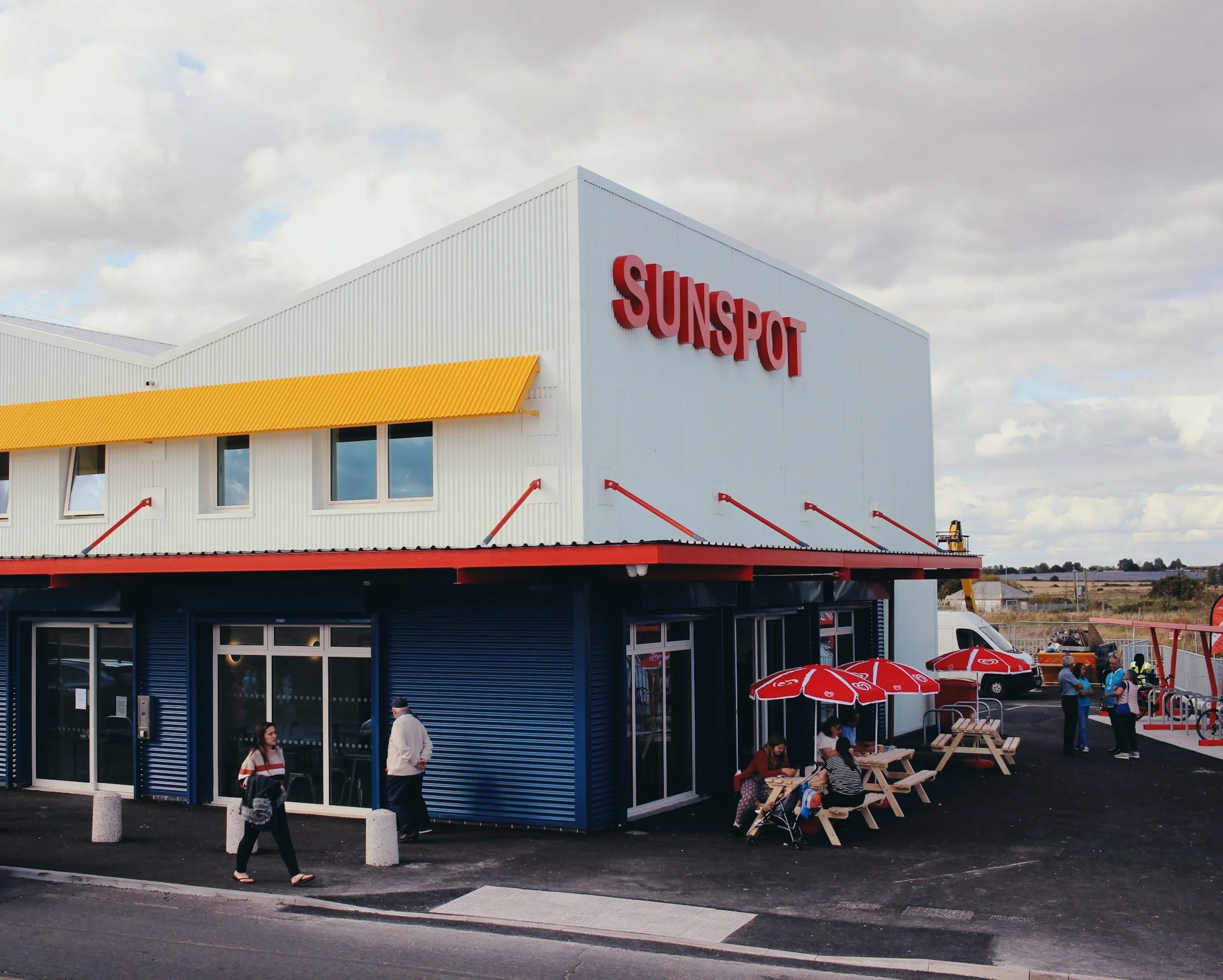
Image: Jim Stephenson.
The result is a place unlike anywhere else in the UK. In their 1984 book Arcadia for All, architect and anarchist writer Colin Ward and academic Dennis Hardy describe how plotlands developments enthralled architectural theorists, representing “not the horrors of uncontrolled development, but the charm of an indigenous vernacular of makeshift design”. Jaywick was an escape from the polluted city, where the workers from London’s grimy East End could feel the freedom and health of the eastern sea air. Now, Jaywick knows isolation much more intimately.
All of the factors that have led to widespread deprivation at the British seaside elsewhere, Jaywick has in multiples. It is poorly connected to nearby Clacton, which itself sits at the end of a slow train line. Property is cheap in the town, but its fragile socioeconomic and geographic position means it has received little-to-no investment. Private landlords, however, rent out the smallest and most rundown houses to people on housing benefit, bringing new residents to the town but promising limited employment opportunities in return. Tourism has dwindled and there are few other industries. Those who can typically leave the area to find employment, leaving behind a rapidly ageing population. Portrayals in the national media have highlighted narratives of precarity, exclusion and dependence, and, as such, there is little trust left between Jaywick residents and outsiders who say they might help.
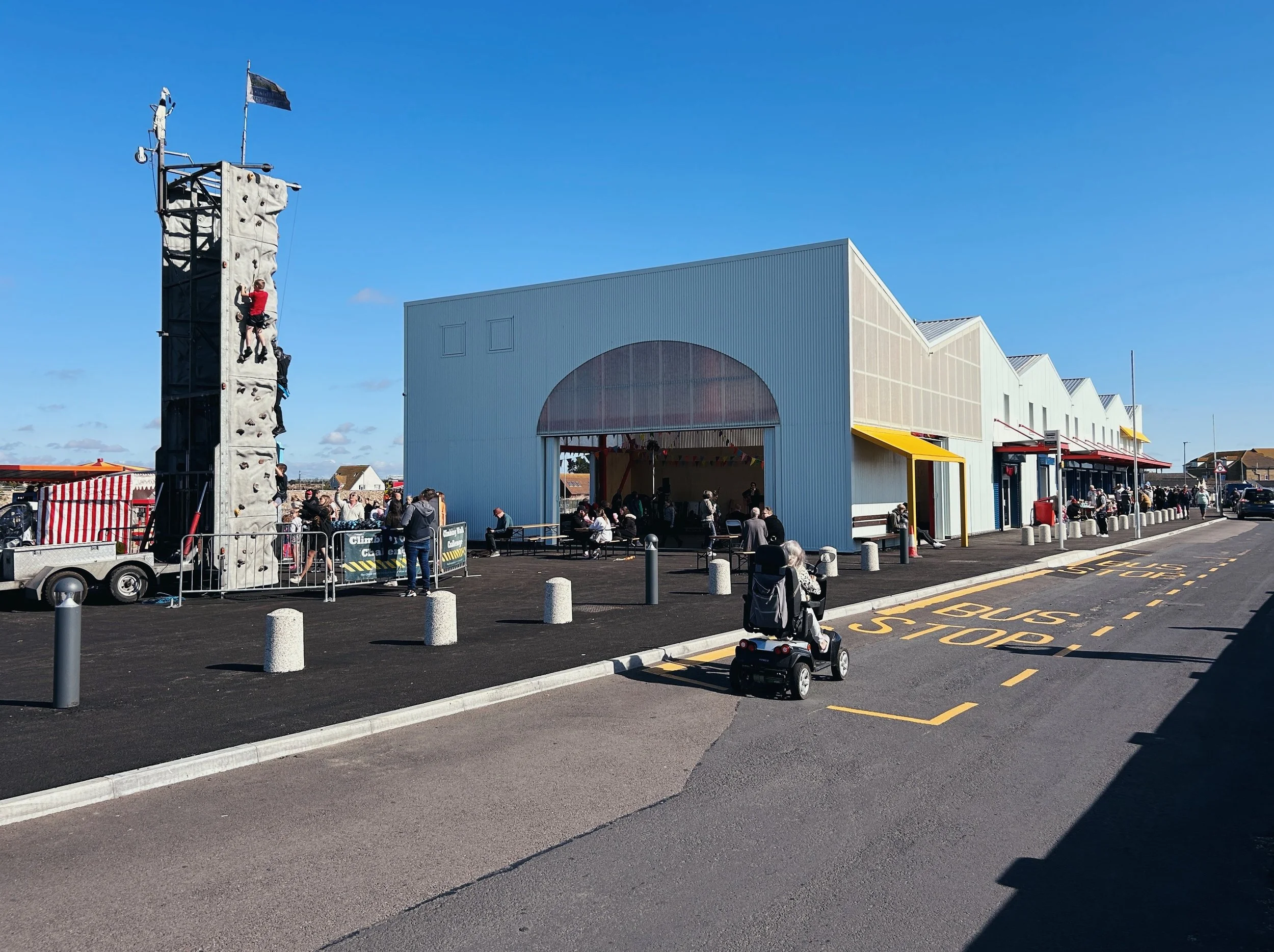
Image: Jim Stephenson.
The British government’s multiple deprivation indices have consistently ranked one of the Jaywick wards as the poorest in the country – in 2010, and again in 2015 and 2019 – and resultantly Jaywick has become a shorthand for the Broken Britain narrative. Those who have fallen on hard times, in a part of the country systematically and consciously left behind by successive national and local governments, are not met with compassion, but with Daily Mail headlines bemoaning so-called seaside scroungers. A Channel 5 documentary, Benefits by the Sea, painted the residents as the problem, and an image of one of the Brooklands’ streets was used in a 2018 US midterm election political advert to warn American voters of what their country could look like if they did not vote for Donald Trump. An area of the country that is knowingly forgotten about is only remembered as an excuse to gawk at poverty.
The stories we tell about an area matter, because they shape and disturb the imagination of a place until they become part of its fabric. Jaywick today stands as a febrile mix of hope and desperation. The community – as befitting the DIY spirit on which it was built – is proudly resilient. In 1970, residents won a high court order, preventing the entire place from being demolished, and they continue to resist insensitive redevelopment by private developers and to lobby for better infrastructure. Jaywick has survived constant flooding threats, a hostile 1978 directive requiring full planning permission for even minor alterations and improvements, and compulsory purchase orders that have obliterated most other plotlands developments in the country. But these existential threats have not deterred Jaywick from fighting for its future.
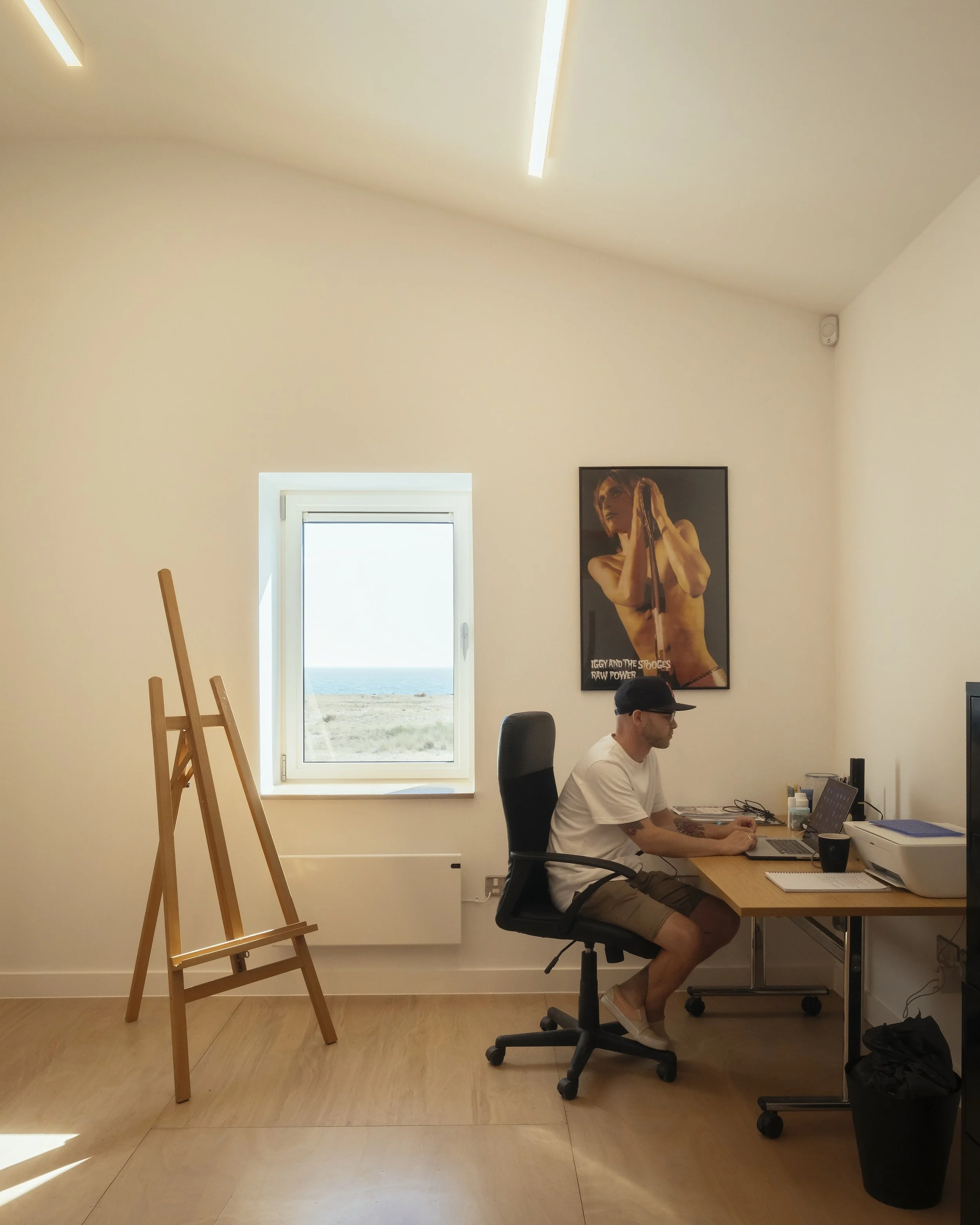
The new Sunspot houses a number of affordable business units (image: Jim Stephenson).
September 1939
Neville Chamberlain declares war on Germany. Three days later, 100 mothers and young children are evacuated to Jaywick, and Stedman’s son Jack is placed in charge of assigning the evacuees other people’s holiday chalets. Holidaymakers leave and army personnel arrive, ripping up the miniature railway track to pillage the scrap iron, and making Jaywick a restricted zone due to the invasion risk of its coastal location. On the seafront, Frank Ernest Bromige, the architect of entertainment, has only recently brought his designs to Jaywick. His art deco cinemas are now dotted across the south of England – Dalston’s Rio, Harrow’s Dominion, Hitchin’s Regal – their concrete sculpted around bold graphics and lighting that signal modern leisure and escape. And now, between Brooklands and Grasslands, Bromige’s Playdium amusement arcade and casino rises from Jaywick’s promenade, a low-lying pitch-roofed shed that blends into much of Jaywick’s seafront huts. But its swooshing tower lights up the sky for just a few months before war breaks out: P-L-A-Y-D-I-U-M. Somewhere to get away from it all, the seaside escape – all of the aphorism, the metaphors, the clichés becomes true – this is the last resort, the end of the line. The seas are still.
September 2023
A new café is serving old desserts. Tray-bake vanilla sponge with a stratum of sturdy white icing, a coating of sprinkles with just the right ratio of white to rainbow, and thick, yellow, molten custard drizzled over the slab so that the icing dances with the buttery goo, a rainbow of ink bleeding into sponge and sugar and syrup, served with tea, strong enough to stand a spoon in. Sunspot is the old and the new Jaywick. The name is borrowed from a later incarnation of Bromige’s Playdium, and it exists in a long lineage of Jaywick histories, so many swept away and replaced with headlines: Jaywick doesn’t work, doesn’t want to work, never has. Work and play are one at today’s opening party: kids wail from the teacups as they are spun faster, faster; The Smart Choice proudly opens the doors of its new uniform shop; Seaside Explorers shows Jaywick the crafts possible using found items on the beach; and the barbecue, the candy floss machine and the popcorn maker are never cold.
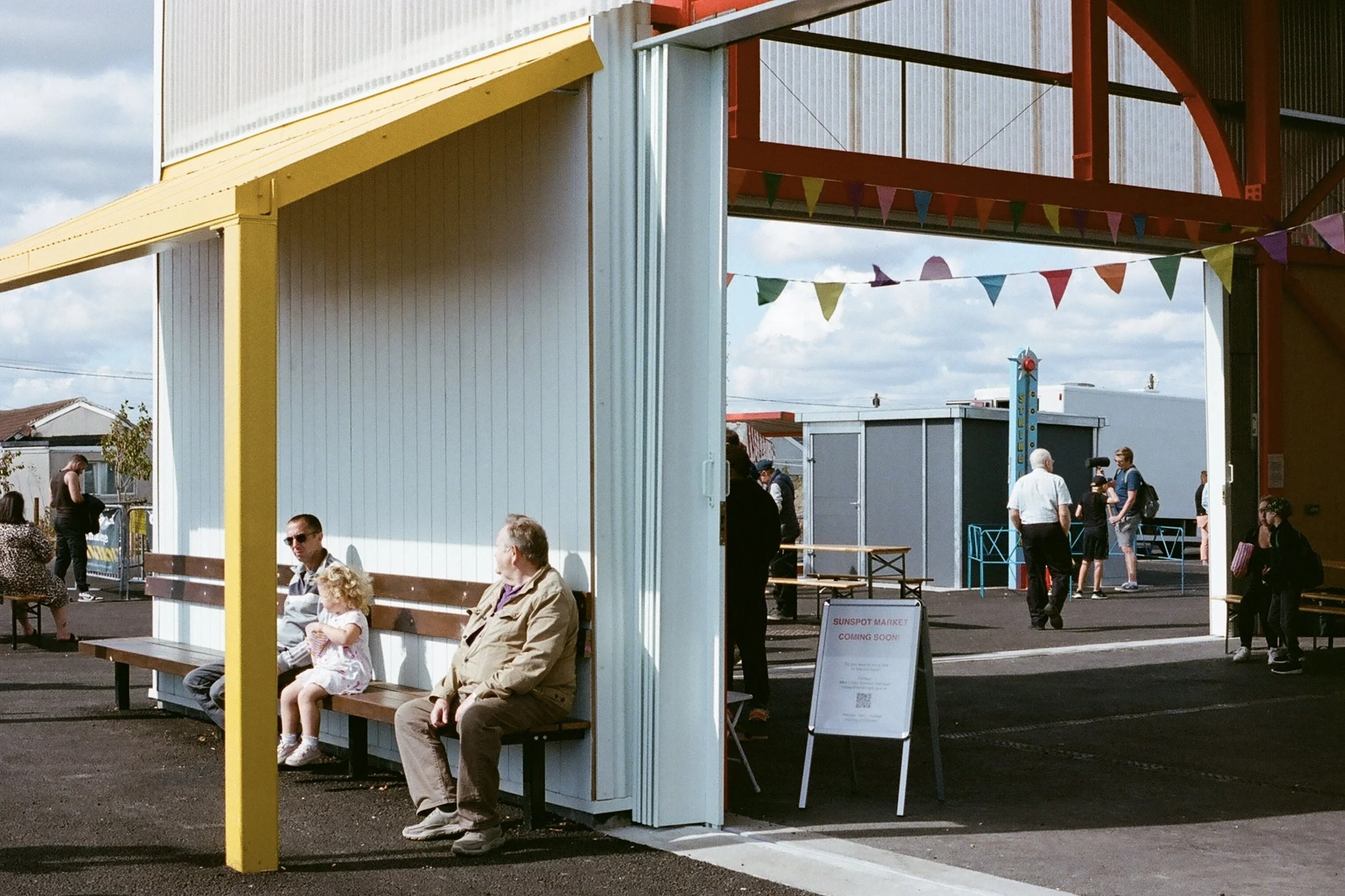
Image: Jim Stephenson.
The new Sunspot business centre is in cheery contrast to Jaywick’s complicated past. Jaywick is isolated and peripheral to the communities it has relied upon for its primary industry of tourism. Regeneration efforts often speak to the need to create spaces for communities to thrive, but Jaywick didn’t need help with this. After decades of being let down and ignored by local and national powers, residents look after each other.
Building something from nothing is in Jaywick’s history. Karen Guthrie and Nina Pope’s 2012 film Jaywick Escapes, for example, explores the dichotomy between those who saw the village as a refuge, retiring to Jaywick with memories of happy holidays there in their youth, and those who arrived in Jaywick with nowhere else to go, variously fleeing from poverty, substance abuse and dysfunction elsewhere. The poignant stories tell of a difficult existence in Jaywick, but one in which the people love where they are.
“In Jaywick, you can’t walk 10 yards without coming across a community centre,” Mick Lister, manager at Sunspot, says. “And we don’t need any more. What it needed was commerce.” Sunspot brings much needed and diverse employment opportunities – cafés and gift shops to draw more visitors to the town, essential shops and services to provide for residents, and offices for arts and creative industries to provide employment and allow people to thrive. “If there’s going to be a driver for the economy in Jaywick, it’s going to be the beach, it’s an amazing place to be, but you couldn’t even buy a coffee or an ice-cream,” explains Hana Loftus of HAT Projects, architect of Sunspot.
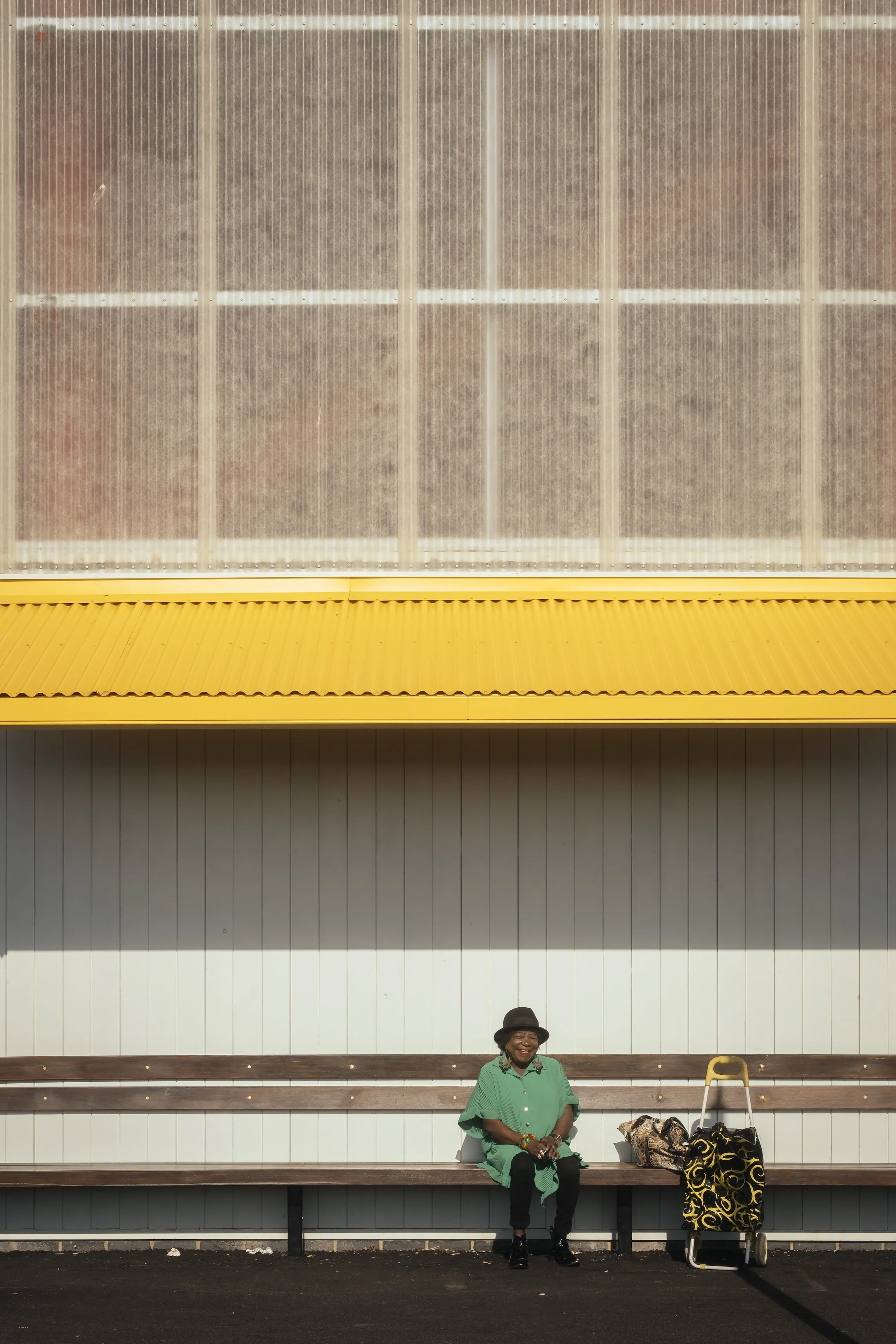
Public seating beneath a sunshine yellow canopy (image: Jim Stephenson).
The two-storey shed towers above the predominantly one-storey landscape, with an angular multi-pitch roof undulating in reflection of the typical Jaywick chalet. It is bold and civic – Loftus describes it as “a piece of graphic design as much as a building” – with an interplay of corrugated aluminium and polycarbonate sheets sitting on a bright red steel frame, vivid yellow awnings stretched over deep blue shopfronts, the building saturated with seaside whimsy. It sits on the divide between Brooklands and Grasslands – previously the beating centre of the town, where visitors could find a casino, amusement arcades and a roller-skating rink. Twenty years ago, Bromige’s Playdium was demolished, and the site was empty, severing the two sides of Jaywick. Sociologist Léo Moulin once wrote that “we eat our most reassuring memories, seasoned with tenderness and ritual, which marked our childhood,” and it is important – or, for some, essential – that a trip to the British seaside offers an opportunity to buy a 99 flake and a scampi and chips on the way home.
Sunspot has been designed through Jaywick’s improvisational spirit. It is considered as a “long meanwhile” use by the council, and its steel and facade connections are designed to be undone and rebuilt elsewhere. It treads a line of being affordable in an area where money is needed across sectors, and being joyful and dignified such that it might raise the aspirations of what is possible. And this it has done – were the council to have put together a traditional business case for Sunspot by assessing demand for commercial space in Jaywick based on local estate agent inquiries, it would not have been built. Instead, they created the demand in reverse. “We asked local businesses directly what their issues were in finding space,” Loftus explains. “Would they consider Jaywick as a location? What would be the deciding factor? What sort of space would they need? We found enough demand to give comfort to the council that this could be feasible and did a business and financial model around it.”
It may not be a community use building, but Sunspot is playing its part in stitching the community together. It incorporates essential public toilets to serve the waterfront, and generously gives a pavement back to the promenade so that street life can thrive. Sea defences are essential to such a community, but often consist of harsh concrete walls that sever the beach from the town, which Jaywick had previously found itself an unwilling victim of. Sunspot cannot break down this solid and essential wall, but by creating new public space on the pavement behind it, it feels like life can spill over on to the beach.
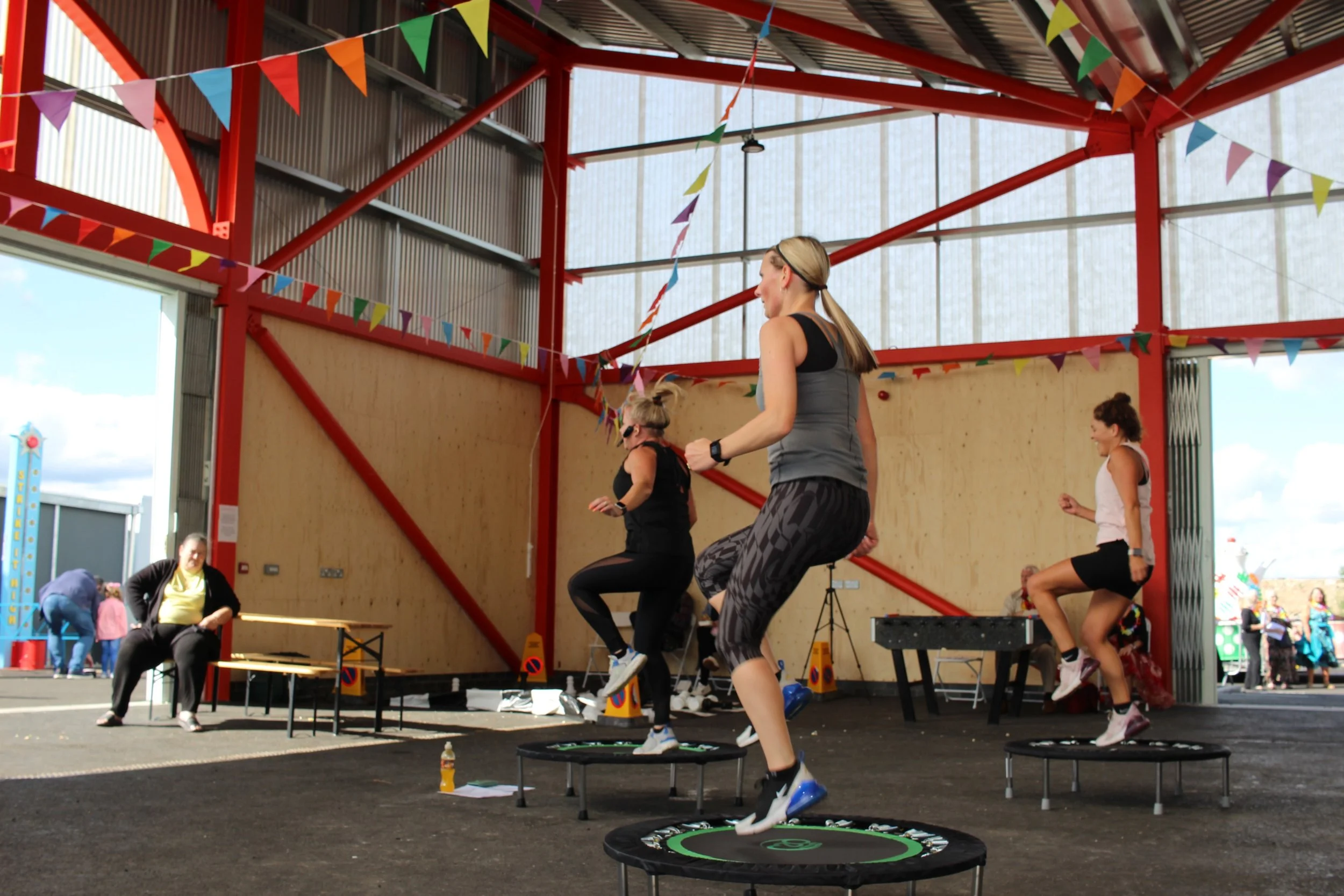
Image: Jim Stephenson.
July 2024
The earliest summer days in Jaywick are some of the happiest of the year. New wildflowers are blooming on the promenade and the air is sweet again. The days are long and soft, a lifetime stretching out before school kids combing the beaches, adding shells to their pockets. The new Sunspot business centre enjoys its first days in the sun, as café tables, market stalls and new companies roll out of it. The first gasps of summer announce change, and today, Nigel Farage strikes into Jaywick – his far-right, populist, anti immigration Reform UK political project in tow – with his head emerging out the top of a khaki Land Rover, ready for battle as it traverses potholes and cracks in streets systematically, historically, incessantly left behind. Farage promises change, reform, and in the early hours of the next day, Jaywick will elect him as its MP.
July 1812
Napoleon is waging war across Europe, and a chain of 103 Martello towers have come to jewel the east and south coasts of Britain, from Aldeburgh to Seaford. At Jaywick, tower D is tall and squat on the low, flat landscape. Walls up to 3m-thick are made of 750,000 London clay bricks, transported downstream from Grays. The circular, tapered walls will resist artillery fire. Their defensive strength is yet to be tested, but they fortify the coast and turn the country inwards.
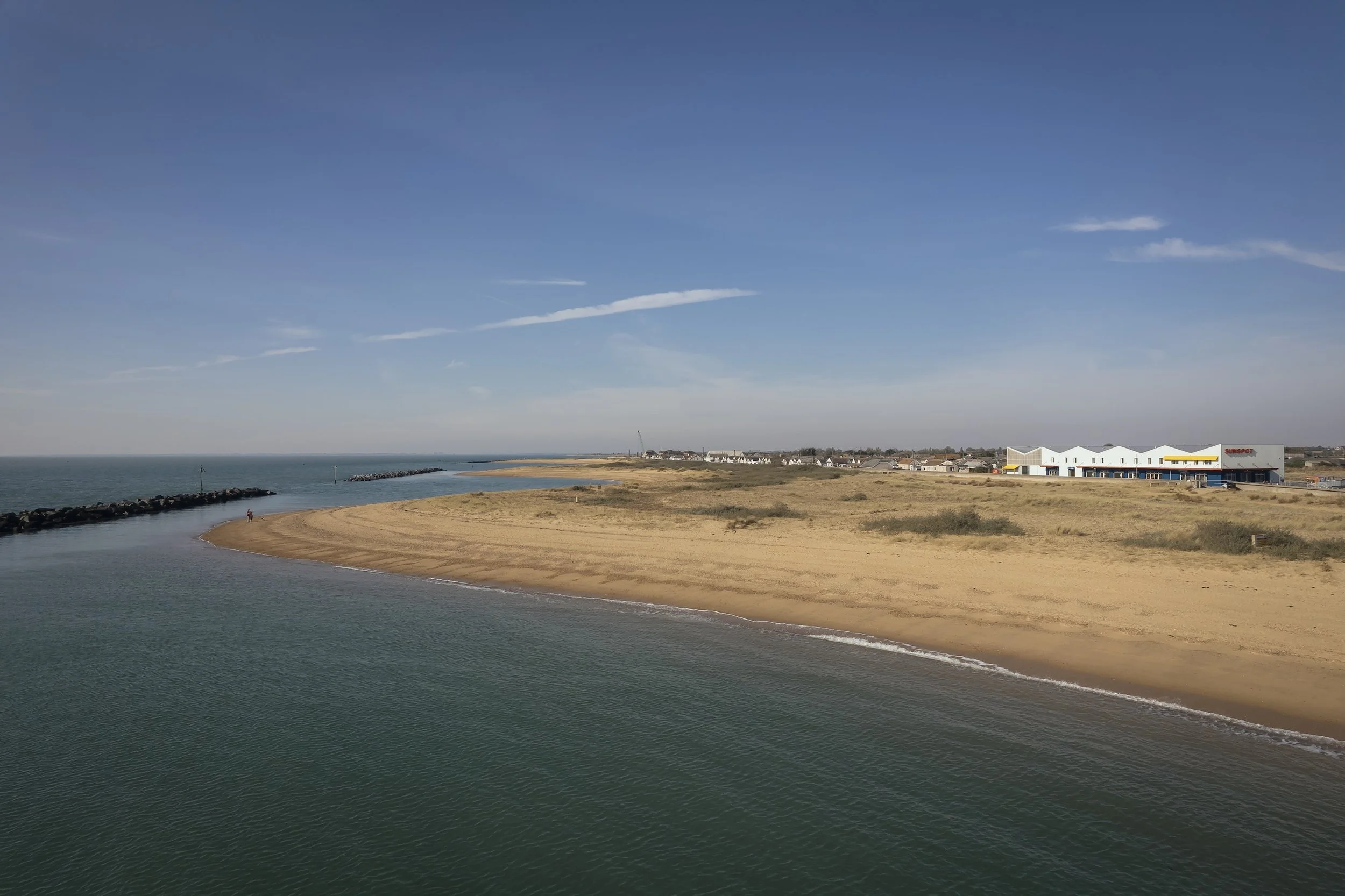
Image: Jim Stephenson.
Seaside towns uneasily occupy the edge of the UK, peripheral to the various economic, social and political structures that govern the country. There are permanent threats at these thresholds and – whether perceived or apparent – they permeate the towns. They hold a history of wartime invasions and victories, with memorials in abundance that serve to both commemorate the dead and to keep fresh the threats of invasion, an anxiety that the far right are quick to exploit. Meanwhile, an unfit housing market is gradually pushing society’s most vulnerable citizens into its most vulnerable areas. For decades, we have allowed places such as Jaywick to become the last resort for so many, letting the most precarious end up there, and then looking away as they are unable to cope. Towns such as these have an otherworldliness to them – the still beaches that stretch out for days, with retro seaside memorabilia glittering along their edge – but it can’t be ignored that their failings hold up a mirror to the rest of the country.
Reform, and Farage’s previous political party, UKIP, target these seaside locations. There is a deep-seated British nostalgia that longs for a supposed heyday, a mythical pre-immigration time when things must have been better than they are now. These are the conditions of what cultural and social theorist Paul Gilroy has described as a “postcolonial melancholia”, an attachment to a doctored version of Britain’s colonial past. Seaside constituencies have become a battleground for violent anti-immigration rhetoric because they were left as a relic of their former selves. Racist rhetoric can be constructed by the powerful, and presented to working-class communities as a way to explain their adversity. Simplistic othering of outsiders is alluring to those in power because it absolves them of past, present and future responsibility, while one dimensional political outlooks also play well at the ballot box.
But the knotty web of histories that has led to Jaywick as it is today does not fit well into a political campaign slogan: somewhere that has its troubles, has been let down, but is still strong in spirit and community. Farage’s populist politics may appear to give Jaywick a voice, but is more likely obscuring the compound reasons for its steep economic decline, thereby playing into metaphors of being “left behind”, entrenching and ratifying perceptions of a lack of pride in the area and thereby whipping up bigoted, hateful conversation. Without investment, opportunities and hope, populism can take root, feeding off the idea that the imagined good old days are better than today.
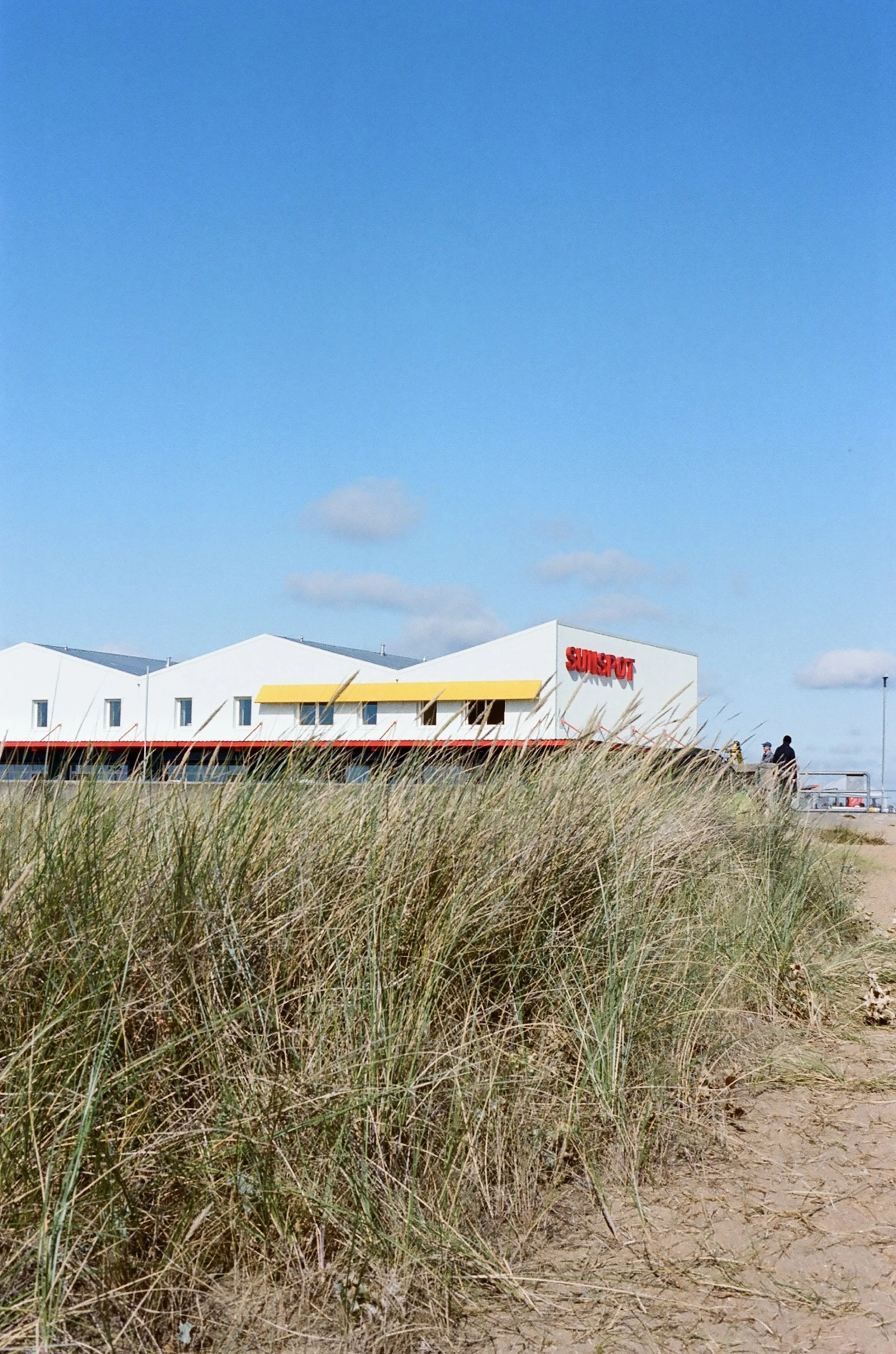
Image: Jim Stephenson.
“One of the things about the community in Jaywick is that if they don’t want something to happen, they will lie on the street and stop it,” explains Loftus. “They will absolutely make their feelings really, really clear.” The community eventually welcomed Sunspot, but the scars left behind by previous supposed regeneration schemes run deep.
“Nothing disappears completely[…] In space, what came earlier continues to underpin what follows,” wrote French philosopher and sociologist Henri Lefebvre in The Production of Space (1974). Historical events are written into a place and live in its memory. Sunspot is now fully let and many businesses are thriving – cake shop Rainy Bakes has already upgraded to a bigger ground-floor unit – but the seas have never been calm in Jaywick. Places must change and evolve, go on without us long after we leave them.
In Travis Elborough’s 2010 wistful account of the English seaside, Wish You Were Here, he writes that “perhaps, in a sense, every trip to the beach as an adult is an attempt to recapture lost innocence or at least to feel as carefree as a child”. But a national obsession with the cheap glamour of these childhood memories, tacky souvenirs, sticky fingers, gaudy colours and seaside kitsch has asked that the more we change, the more these places stay the same. Our relationship with our coastline is complex, but these messy, nuanced thoughts are not new. Barely a weekend goes by without a national newspaper editorial bemoaning the sentimentality that limits and propels regeneration efforts at the seaside, while simultaneously iconifying their faded charm.
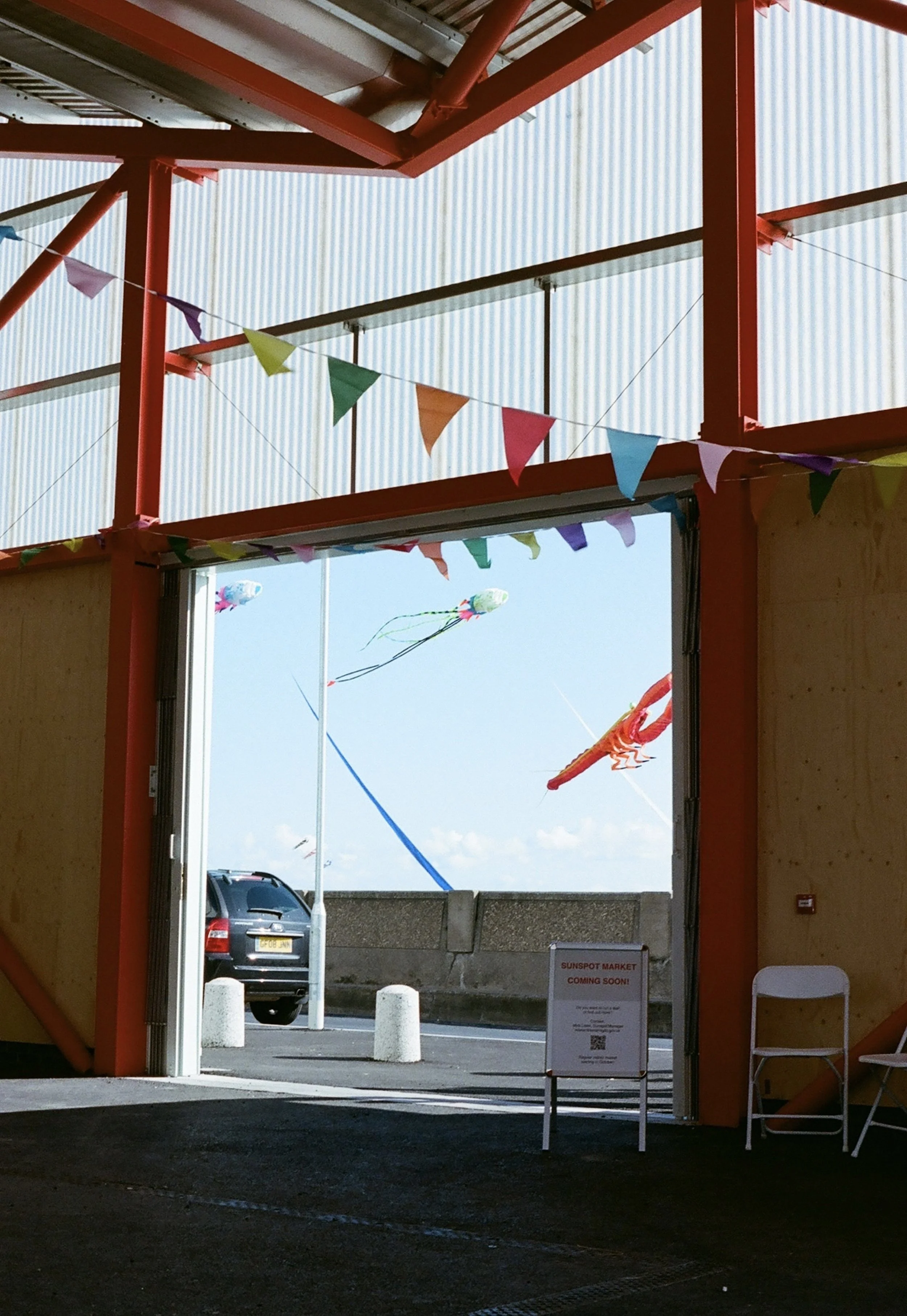
Image: Jim Stephenson.
I want to conclude differently, to offer empirical answers, but my own melancholy gets the better of me. I was new to Jaywick when I visited Sunspot, but the landscape was familiar. I habitually floated to buy a packet of chips drenched in vinegar, my hands, sticky from ice-cream, inadvertently combing the beach for shells and sea glass, curiosities I thought I’d long lost interest in. In spite of myself, I still buy into the rose-tinted sentimentality that holds the seaside back.
Nostalgia can be dangerous, nationalistic even when expressed politically, but it’s also human nature and it needn’t be paired with complacency. Memories are messy – sticky blobs of associations and incomplete descriptions. The future of Jaywick is in this spirit: creating new narratives that are underpinned and built from all that came before.
Words Ellen Peirson
Images Jim Stephenson