
Incomplete
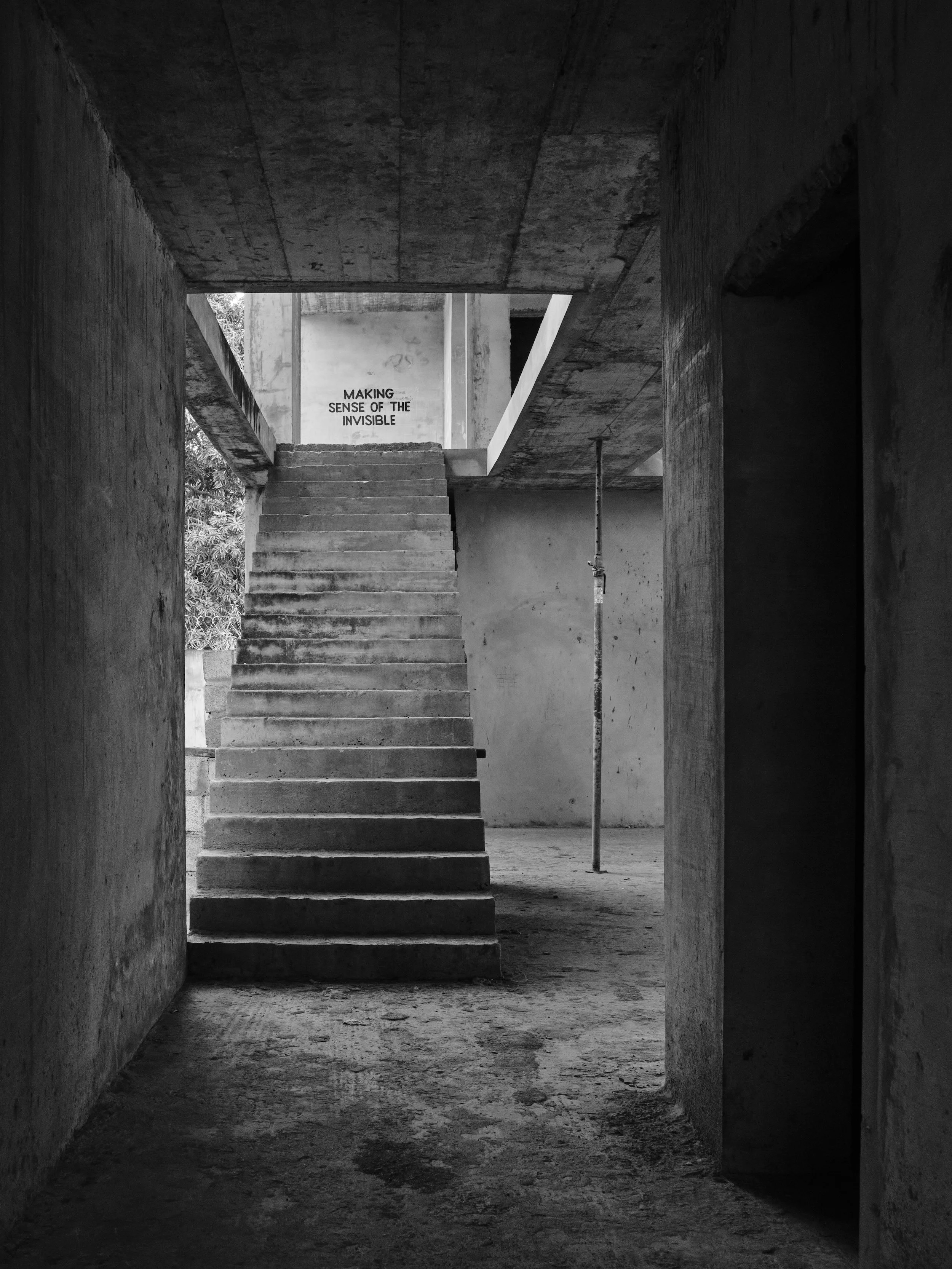
The Limbo Museum is a new cultural hub in Accra based inside of an incomplete building (image: Alfred Quartey).
At least once a week I work from a community library 1.7km away from where I live in the Adenta-Frafraha area of Accra. The commute there is 4 minutes by car and 22 minutes on foot – at least according to Google Maps. The main road is under construction and, as progress has slowed, the road is dustier than it was before the work started. These days, on my 29-minute leisurely walk to the library, I count more than 12 uncompleted structures on both sides of the road.
At various stages of incompletion, these buildings are intended to be a combination of apartments, shops, and who-knows-what-else once they are finished. Uncompleted and/or abandoned buildings are not a strange phenomenon in Accra. Like churches, they are nearly everywhere in Ghana; there are even churches that gather in buildings undergoing construction, with the congregation periodically raising money for their construction, the pace dictated by the flow of funds. For various economic, geological and sociopolitical reasons, some of these unfinished structures have been left untouched for more than a decade. A prime example is La Beach Towers, a 17-storey building that was intended as a luxury beachfront residential project on Accra’s Atlantic coastline. The project halted abruptly about a decade ago. Since then, the building has remained unfinished, and there are currently no plans for its further development. Bright Bessa-Simons, the Ghanaian sociopolitical commentator, researcher, and vice president of the IMANI Centre for Policy and Education thinktank, cites spatial decisions and financing strategies and their attendant problems as reasons why the project has stalled: the project, he concluded in January 2025 is “long moribund”, and any hopes for its completion “felt now like a distant memory”.
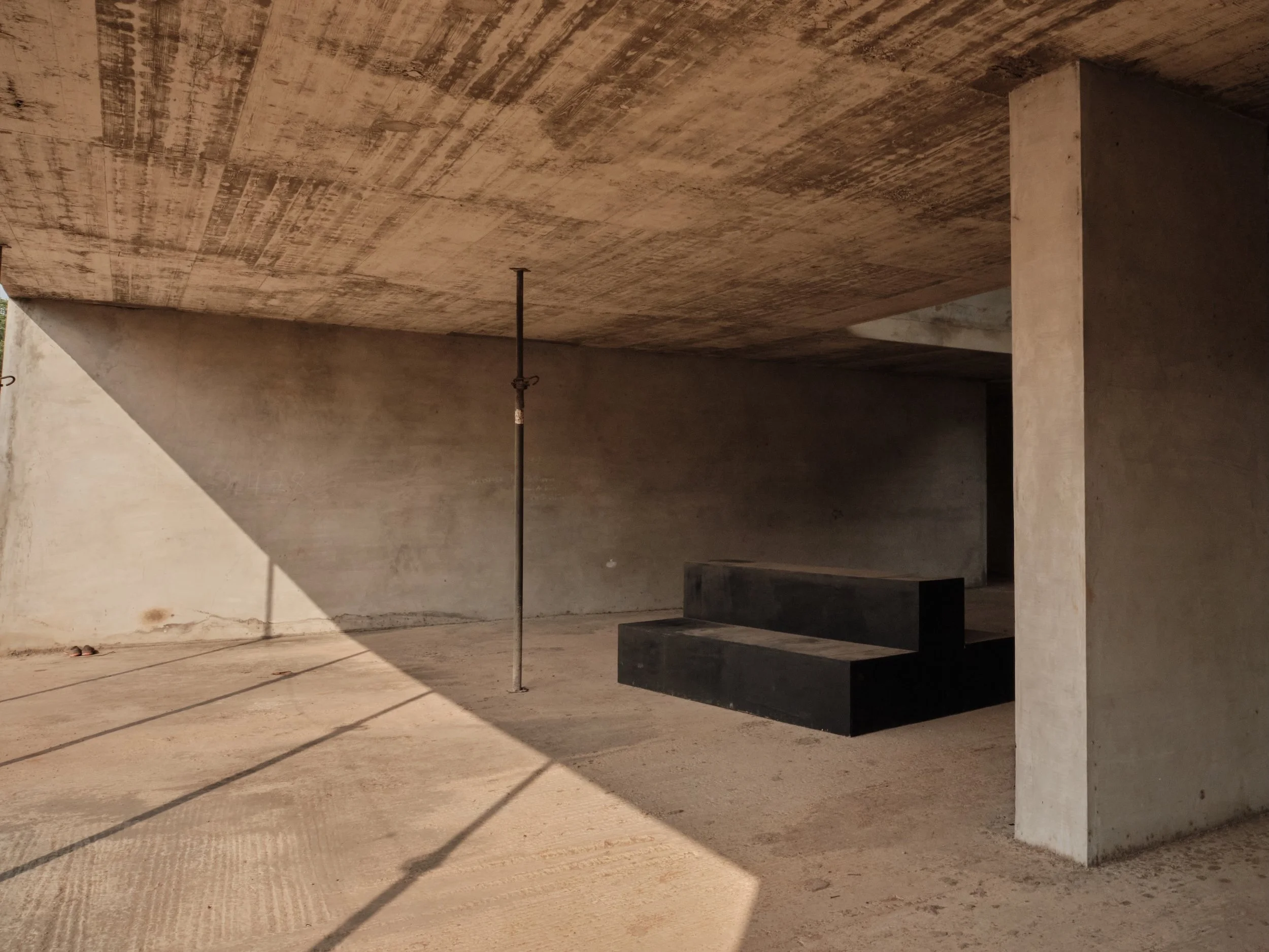
Image: Alfred Quartey.
While such structures are common in the makeup of cities around the world, there are variations in the ways they are perceived and hence interacted with. I grew up watching Ghanaian and Nigerian TV shows and movies that portrayed unfinished structures as places where young lovers would secretly meet and spend time together, away from the prying eyes of their parents and other community members. They were also often depicted as being spots for scheming, receiving bounty, or sharing loot from robberies. And if the communities illustrated in these films and TV shows had so-called bad boys who indulged in illegal substances, the uncompleted buildings were presented as safe and secure spaces for their indulgence. As a teenager, I had a healthy fear of unfinished buildings, especially ones in quiet areas away from home. My fear was rooted in the idea that abandoned buildings were hideouts for thieves and, at any point in time, they might attack me too, just like the characters in the movies and TV shows I watched. These fears are not unfounded. Unfinished buildings are typically unlit, sport thick overgrown weeds that seem impenetrable, and cast petrifying shadows when night falls.
In sharp contrast, uncompleted structures are home for some people – that is, until the buildings’ owners secure enough funds or eliminate whatever other obstacles might stand in the way of finishing construction. In exchange for accommodation, these occupants are trusted to mind the space in the interim, maintain the cleanliness of the surroundings, and prevent any unauthorised entry and use of the space. There might be no electricity or running water, important amenities, but the occupants make it work nevertheless. Growing up, one of my friends lived in an uncompleted building with their family. I remember spending a good number of Saturday afternoons with them in parts of the building where we could not be seen (and, most importantly, heard) chatting about boys, school and everything in between. In some communities, unfinished and abandoned structures become sites for recreation and play. My friend, the lecturer and DJ Kobby Ankomah Graham tells me that in the late 1980s, when he lived with his grandmother in the Ayifua estate, down the hill from the Wesley Girls’ School in Oguaa/Cape Coast, he, his brother and cousins found enough room to play chase and hide and seek in an unfinished building that sat across the street from their home. The elders and other community members who cared for them had no concern with them playing there – if the surroundings were weeded, and if they could be seen and heard, there was no problem.
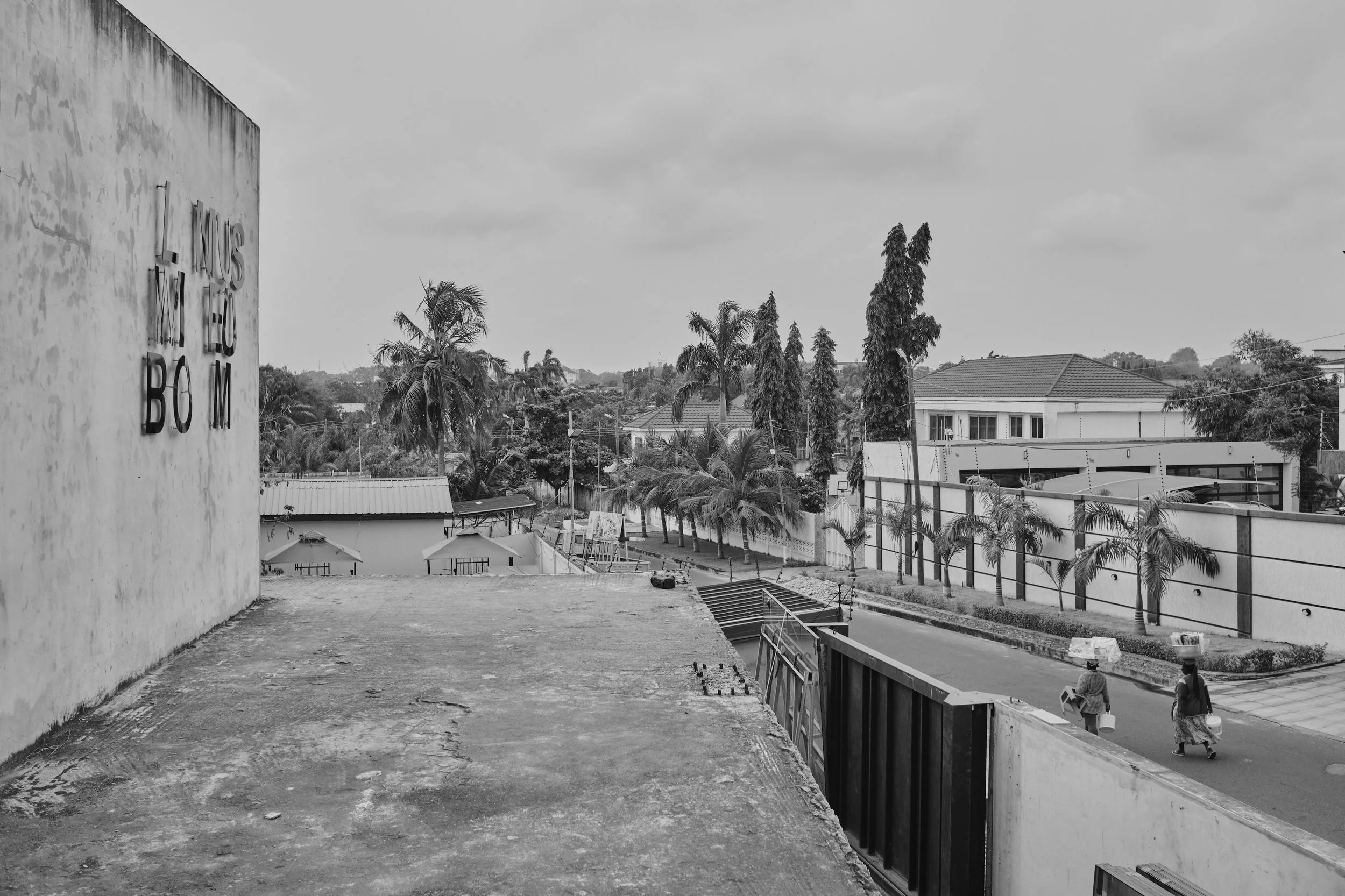
Image: Alfred Quartey.
The first time it dawned on me that unfinished and abandoned spaces could take on uses beyond makeshift housing and recreational grounds was in 2016. I was in the final year of my undergraduate studies at the Kwame Nkrumah University of Science and Technology (KNUST) and visited the group show if you love me… (2016), staged at the Loco Shed at Adum in Kumase. Curated by Robin Riskin, Selorm Kudjie and Nii Okanta Ankrah, the exhibition managed to transform a defunct and abandoned railway station into a working art gallery. It shifted my perspective on exhibition design, space in general and unfinished or abandoned structures. Economist Erich Zimmerman’s famous assertion that “resources are not, they become,” became clearer to me then. Two years later, I visited another group exhibition in an uncompleted house in Adjiriganor, an affluent suburb of Accra. This exhibition, Adjiringanor Activation, was curated by Dominique Petit-Frère and Emil Grip, the founders of spatial design and research studio Limbo Accra. The show opened during the day with artworks such as Nana Osei Kwadwo’s video installation inside of a trotro, a mid-sized van that transports people and goods from one place to another within cities in Ghana, and closed late in the evening with a small party. By nighttime, after a full day of seeing Accra’s young and old waltz in and out of the unfinished building, listening to readings by artist and writer Adjoa Armah, and trading stories (some horrifying) about navigating the trotro system and its Nigerian equivalent, the danfo, I was convinced that beyond contributing to the expansion of ideas of exhibition making and sharing, interventions like Limbo Accra’s could also become non-transactional gathering points in a city that is fast losing its free shared spaces.
In November 2024, six years after their debut project in Accra, Limbo Accra launched their latest venture, the Limbo Museum, with a three-day event. The museum was founded by Petit-Frère and Grip, along with curator Diallo Simon-Ponte and architect Lennart Wolff, and currently lives in an uncompleted house in Labone, which is one of the oldest and fastest redeveloping neighbourhoods in Accra. Like many others in the city, it is a contemporary residential building influenced by Western architecture, whose owner and caretakers have graciously granted Limbo permission to use it. In its unfinished state, its shape and bare concrete walls present as brutalist. Sandwiched between two finished and occupied properties and surrounded by the same, the museum has no physical collections and may remain as such as it evolves over time. “There is no art work, there is nothing,” Petit-Frère tells me. “It is purely just a skeletal space, a raw canvas.”
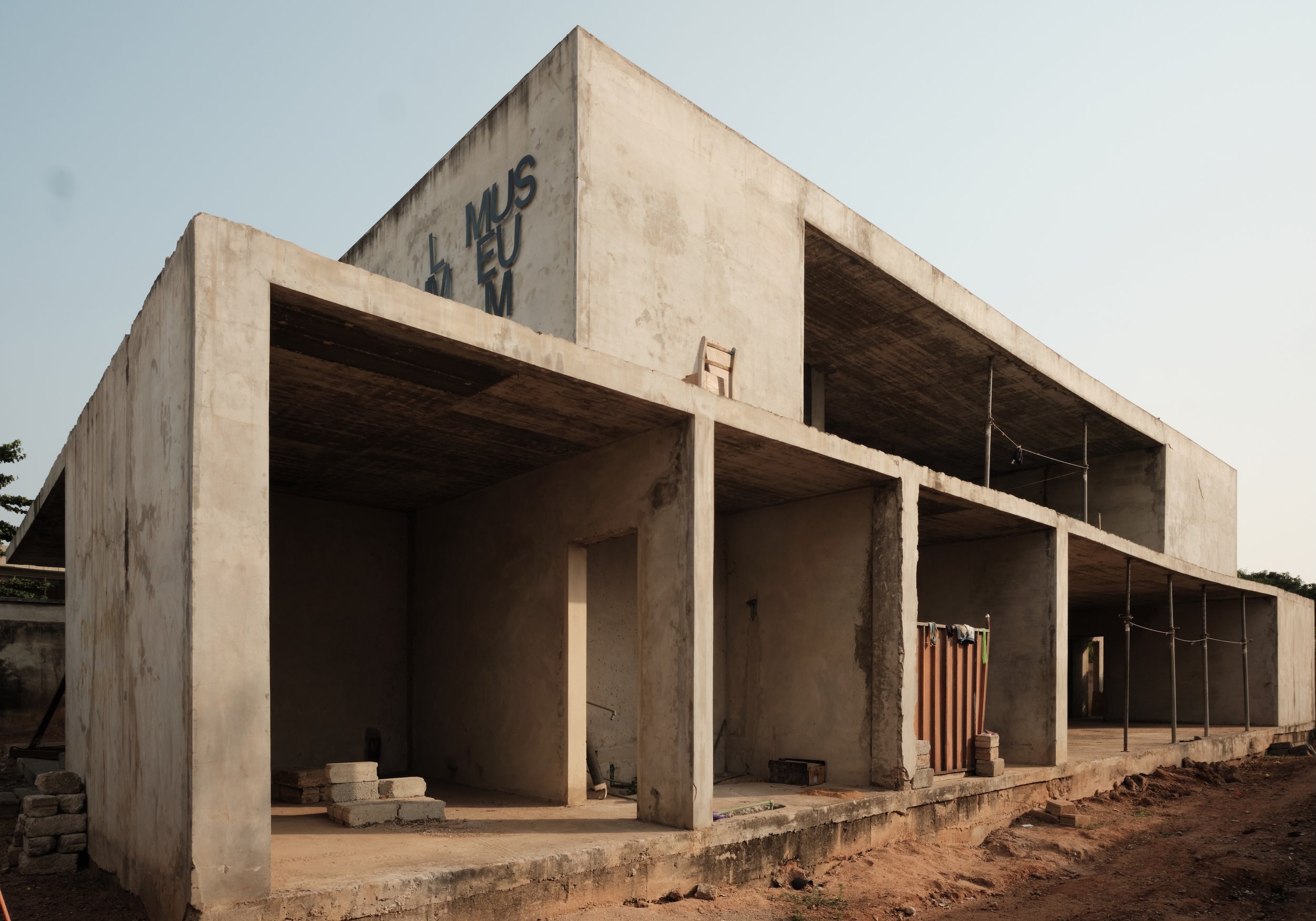
Image: Alfred Quartey.
The Limbo Museum is not a separate venture to the studio’s previous work, but simply the institutionalisation of Petit-Frère and Grip’s long running efforts to reimagine and recontextualise the existence of uncompleted and abandoned spaces in Ghana and beyond. Their ongoing Liminal Archive, for instance, is a digital repository of incomplete building projects and modernist ruins from across West Africa, using photogrammetry to scan the structures and create models of their skeletal frames. Similarly, their Super Limbo installation during the 2023 Sharjah Architecture Triennale explored the vast, unfinished Sharjah Mall, while their Duho Pavilion (2024) is embedded in the overgrown landscape surrounding a ruin on Grand Cayman in the Caribbean. Slowly and subtly, the studio is exposing the possibilities of such unfinished structures to others. “Most people, when they see uncompleted buildings, first and foremost, they see it as a point of failure,” Petit-Frère tells me. “If you speak to any Ghanaian person, they will not even turn their eyes on an uncompleted building. They will even ask you, ‘What are you doing there? What business do you even have there?’” She notes that the situation means that “it is a huge process in terms of having to re-educate people, having to bring an awareness that these sites are not failures but an opportunity for us to progress in more sustainable and equitable ways.” She considers her practice legacy work and is not looking for overnight success.
The museum has numerous programmes in its future. Later this year, the Limbo Architecture Lab, one such programme, will create opportunities for researching, exchanging ideas, and constructing new viable and just futures for the built environment in Ghana and elsewhere. This iteration of the programme is being conducted in collaboration with London’s Architecture Association Visiting School and KNUST, and its canvas will be an unfinished structure on the latter’s Kumase campus. “The future of [the] Limbo Museum is decentralised,” Petit-Frère says, adding that “there are so many uncompleted buildings in Ghana. There are so many uncompleted buildings around the world, and the idea is to activate them all simultaneously to showcase that the uncompleted buildings can be museums wherever they are in the world.” Petit-Frère and Grip hope that as their work continues to spark conversations about spaces in limbo, others will be encouraged to respond to the call to make alternative uses for them. Their goal, she says, is for the practice to become “a laboratory for not just locals, but also for people on the African continent, and internationally, to engage with these spaces.”
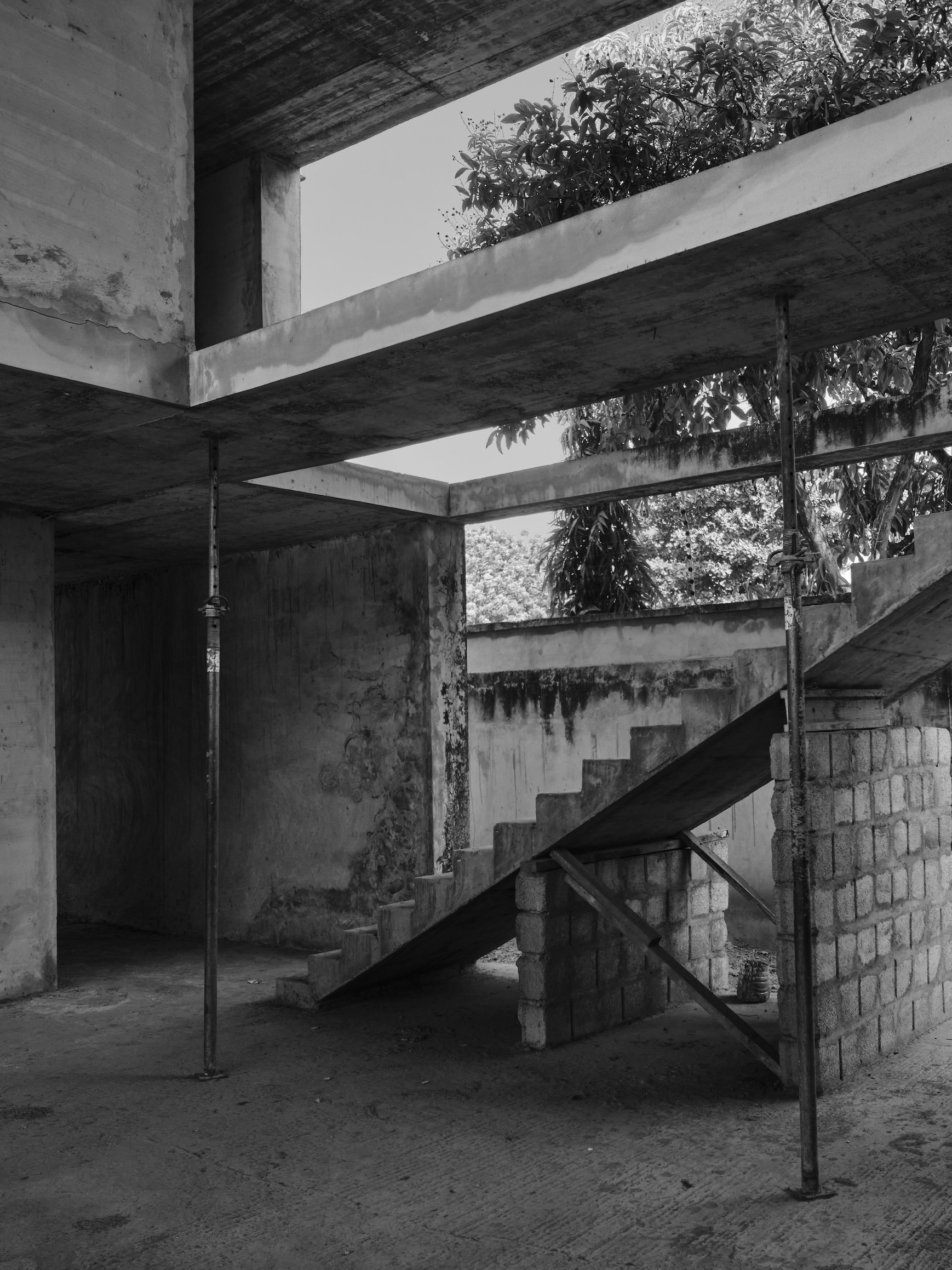
Image: Alfred Quartey.
I am struck by the Limbo Museum’s invitation to everyone to dream. I get flashes of privately and state-owned uncompleted and abandoned structures, like the silos and factories I have encountered across the country. But my mind specifically transports me to the street in Oguaa/Cape Coast that is home to the abandoned John Evans Atta Mills library. The facility sits across from the Cape Coast Castle and was inaugurated in July 2016 by then-president, John Dramani Mahama. The library has not been used much since the end of the Mahama-Amissah-Arthur administration in 2017, and there were reports that the developer of the facility had refused to formally hand over the building due to non-payment of fees. In 2023, however, the Ghana News Agency reported that the issue had been resolved – the developer had handed over the facility and the Ghana Tourism Authority, Ghana Museums and Monuments Board, and the Ghana Library Authority were going to work together with other stakeholders to renovate and put the facility to use.
I imagine the library reopened. Apart from its everyday function as a place where individuals can go to read, borrow books and learn about John Evans Atta Mills (d. 2012), the former president of Ghana, the library could also hold book readings and fairs, as well as after-school and weekend programs that offer civic education to young and old indigenes of and visitors to the city. In that same vicinity is a massive abandoned tropical modern structure. Erected on stilts, it is popularly said to be the old post office building. When I think of that concrete building, I see children and adults playing and resting in and around it while it remains in limbo. I also see the building playing host to teach-ins on the history of Oguaa/Cape Coast and some of its notable people. Considering its proximity to the sea, it could very well be the starting point for conversations about geography, building design and construction.
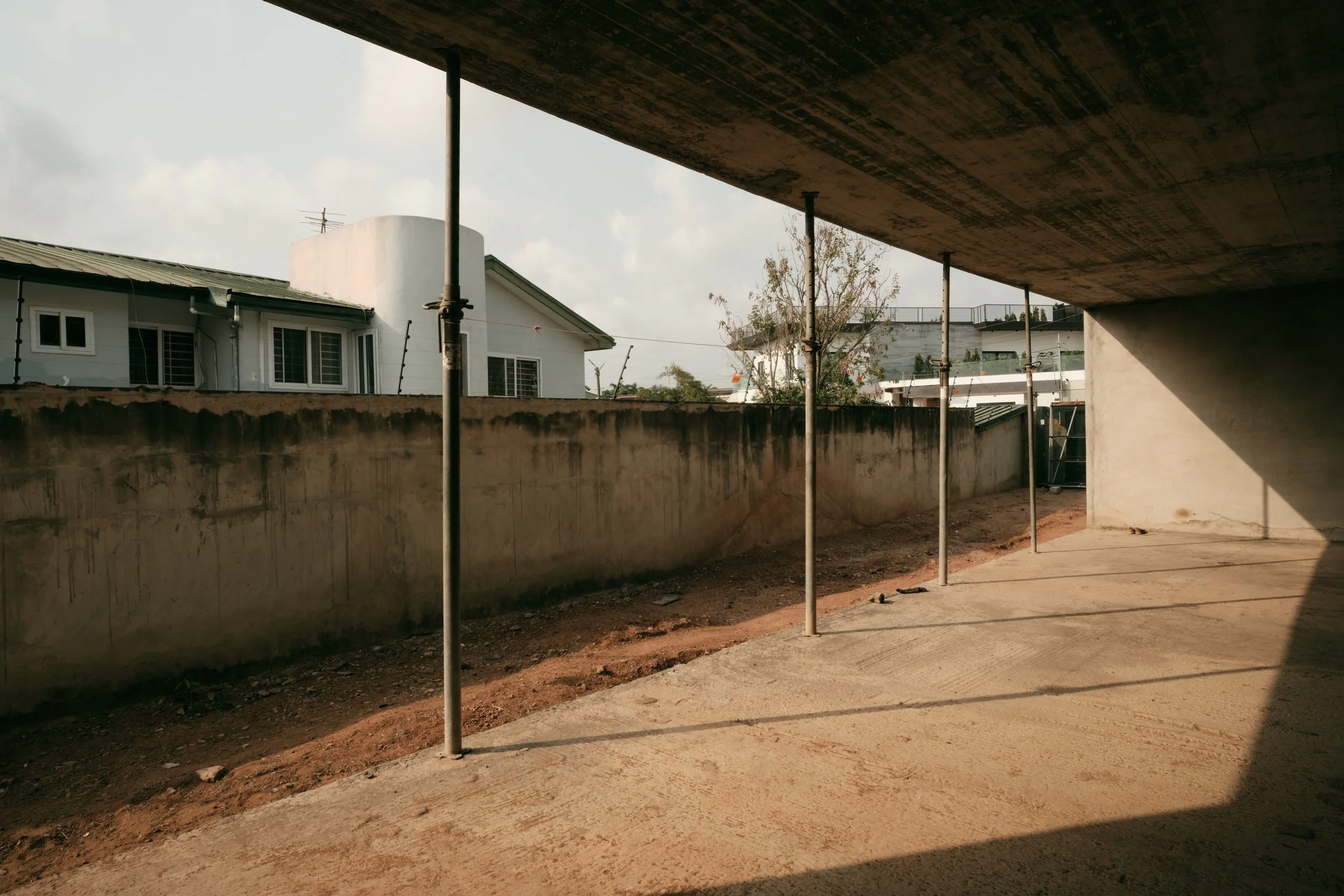
Image: Alfred Quartey.
Economic conditions around the world will continue to contribute to the capital freezes that stall building construction projects. But Limbo Accra’s successes in exploring unfinished structures as sites for imagining and crafting new possibilities around the world is an indication that their vision is not unattainable. On my walk back from the library the other evening, I stopped in front of one of the unfinished apartment buildings and imagined chatting about media I have enjoyed over a period with others in the neighbourhood in one of its rooms. I saw in my mind’s eye an intimate cross-generational gathering where people could share their thoughts and feelings about music, films, books, and other phenomena they have experienced. As I looked up at the terrace of the same building, I imagined learning to dance to afrobeats with others in the community, in a class led by one of the teenagers I have chanced upon a few times recording videos for TikTok. I thought about how wonderful it would be to gather up there on weekends to do nothing but catch our breath, and watch the sky change colours as the sun sets. I think about the other buildings that will become shops and offices once they are finished. I consider their endless prospects as community gathering places while they wait to be finished, and a smile spreads across my face.
Words Ama Benewaa Tawiah
Images Alfred Quartey