
Evolving Craft
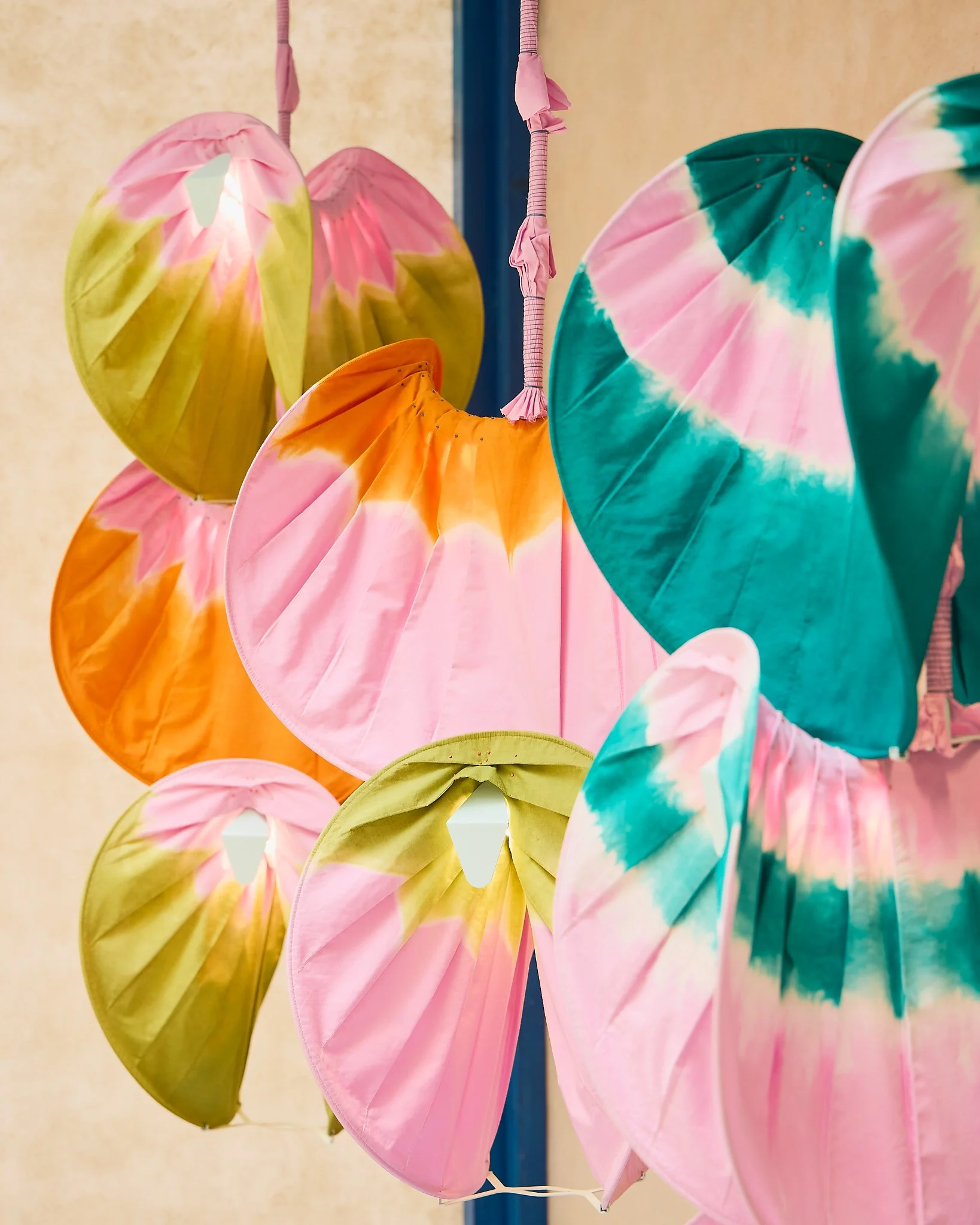
Kataginu by Arimatsu Narumi Shibori and Bethan Laura Wood (image: Ed Reeve).
Traditional crafts are used in unexpected ways in this year’s edition of Craft x Tech, an exhibition exploring possible futures for Japanese craft. Whether it be Japanese artist Eugene Kangawa, who has blanketed his everyday studio chairs in a tapestry of deep indigo porcelain tiles, or South African designer Atang Tshikare’s volcanic light piece, constructed from hundreds of braided cords, each object tells a different story steeped in tradition and culture.
This year’s edition of Craft x Tech brings contemporary designers from around the world to the region of Tokai, Japan, to collaborate with local craftspeople. One of the most industrialised regions of Japan, Tokai’s history has been shaped by its abundant natural resources, skilled production and trade. Through six collaborations, Craft x Tech is seeking to explore the dialogue between the years of inherited knowledge that the region’s traditional crafts hold and the globally influenced design practices of today. With designers ranging from Bethan Laura Wood to David Caon, Craft x Tech seeks to bring a new vibrancy and energy to the artisans of Tokai.
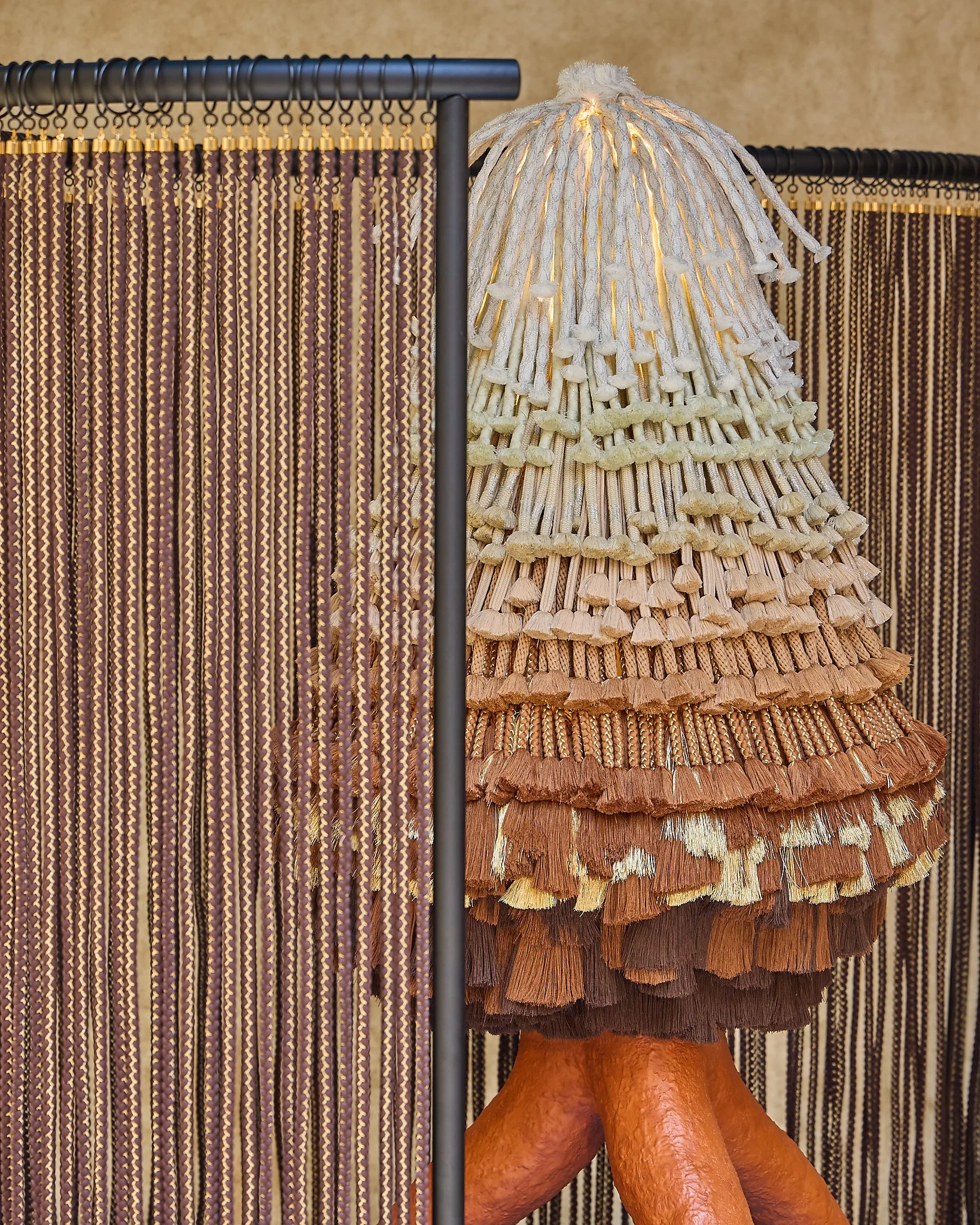
Yamollo by Iga Kumihimo and Atang Tshikare (image: Ed Reeve).
For Italian curator Maria Cristina Didero – the curatorial director of the project, who works in concert with founder Hideki Yoshimoto of Tangent – Lanzavecchia + Wai’s screen perfectly encapsulates what Craft x Tech is about. Crafted from washi paper, a 1,300-year tradition inherited by producer Takanori Senda, the screen puts a focus on the material and its origins. The traditional shoji screen has been gently adapted, softening the form’s rigid geometry as well as introducing LED backlighting that highlights the natural patterns and textures within the paper. “This is one of the most explanatory projects: LED technology is combined with one of the most traditional materials, washi paper, “ Didero explains. Showing off washi in a new light, Lanzavecchia + Wai explore the paper’s deep rooted history, while injecting different perspectives on its use. While many of the pieces from the Craft x Tech collection implement lighting, such as Bethan Laura Wood’s lighting fixture and Atang Tshikare’s giant Lamp, the “Tech” half of its title doesn’t refer to technology in just the electrical sense, but rather the implementation of new styles, processes and methods from across contemporary design.
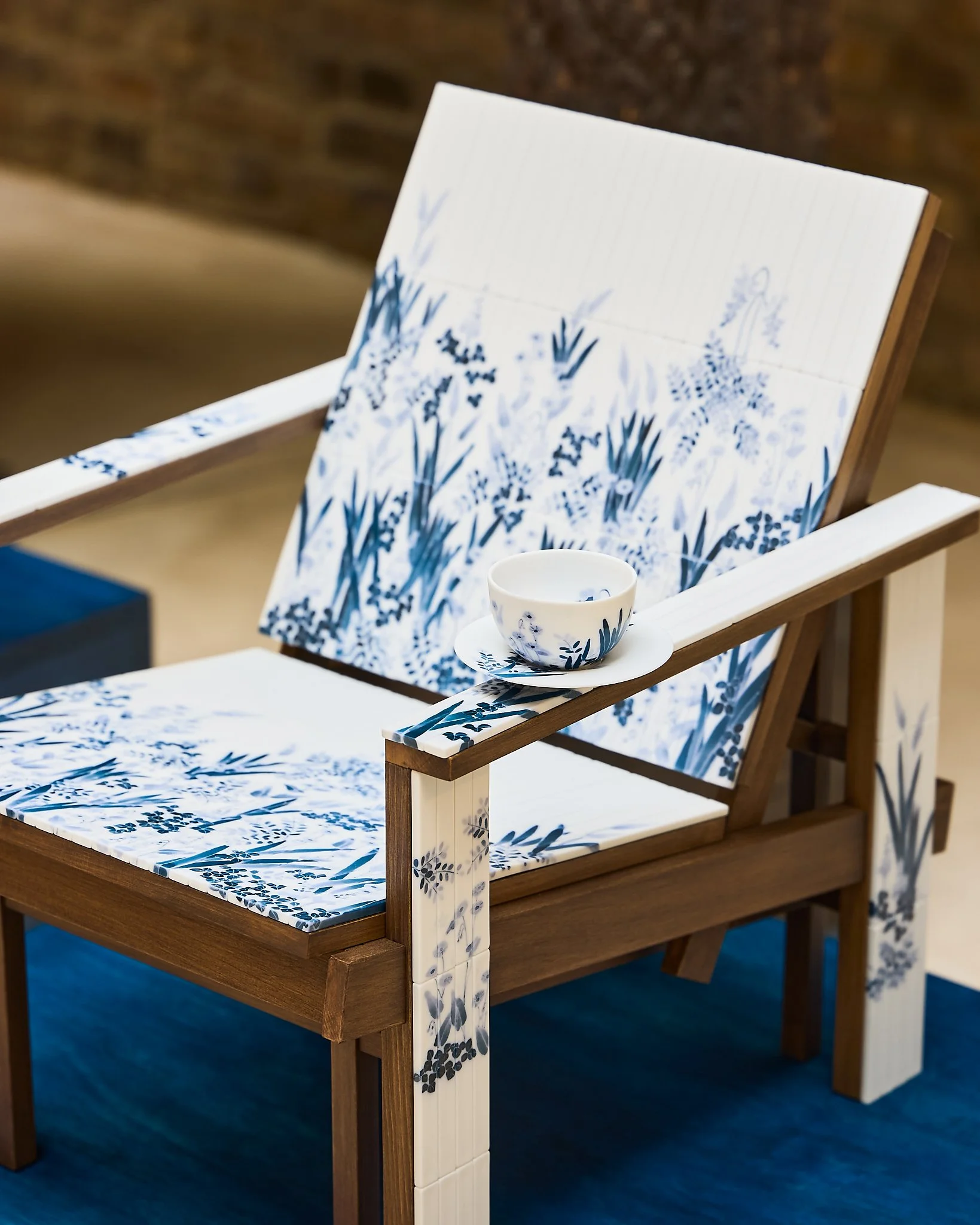
Chair in Japanese Nuki and Dami style, The Everyday at the Atelier (Standard / Child Scale) by Seto Sometsuke Yaki and Eugene Kangawa (image: Ed Reeve).
Even if occasional similarities appear between Craft x Tech’s objects, Didero clarifies that they didn’t instruct the designers and artisans to do anything specific – there was no interference and they were given full freedom to see where their ideas might take them. With an obvious language barrier between most of the pairs, alternative methods of communication have to be found. “Most of them don't speak the language,” Didero says, “and so it is very nice to see that greater professional relationships and greater friendships can be born out of these meetings. The artisans try to show the designer how they mastered their craft, and the designer tries to pass their ideas to the artisan. It's really about human exchange.” It is in this exchange that new things are learnt – through finding ways to communicate, unexpected methods and processes arise that wouldn’t appear without collaboration.
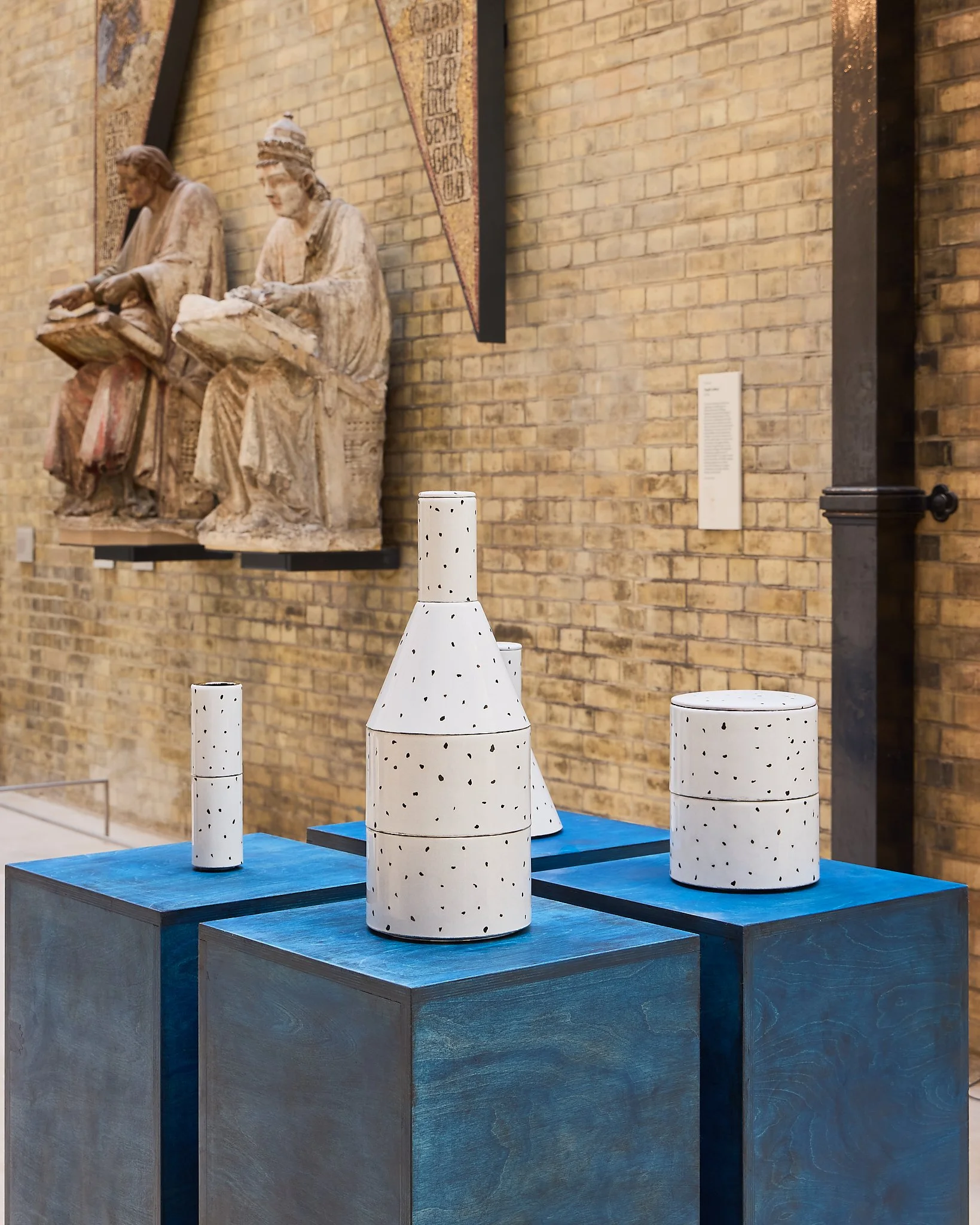
Kasane by Owari Shippo and Philippe Malouin (image: Ed Reeve).
This learning takes time, however, and it was this that became a differentiator for the second edition of the programme, which debuted in 2025. “In the first edition they were spending one week together,” Didero explains. “Now it’s much more, and several designers like Philippe Malouin and Atang Tshikare visited the artisan more than once.” This close contact, she suggests, is what allowed these relationships to flourish and hopefully become longstanding, building a greater network of artisans and contemporary designers.
British-Canadian designer Malouin’s relationship with Shigeyuki Ando produced particularly unexpected results. With a design practice rooted in industrial design, Malouin has rarely employed explicit ornamentation within his vocabulary. Partnering with Ando, however, Malouin was forced to confront unknown territory and find his own way of using Owari Shippo, a traditional hand-painted enamel technique. Kasane, a quiet and delicate collection of stackable boxes speckled with hand-applied motifs, was the eventual outcome. Malouin subverts Tokai’s tradition with minimal mark making that isolates and highlights the textures produced by the technique, in doing so steering away from the traditional paintings that tend to adorn its vases. Aiming to produce forms larger than Ando's kiln would allow, Malouin developed the collection as a set of modular cylinders and cones that can be assembled into constellations, thereby composing forms beyond what is traditionally possible.
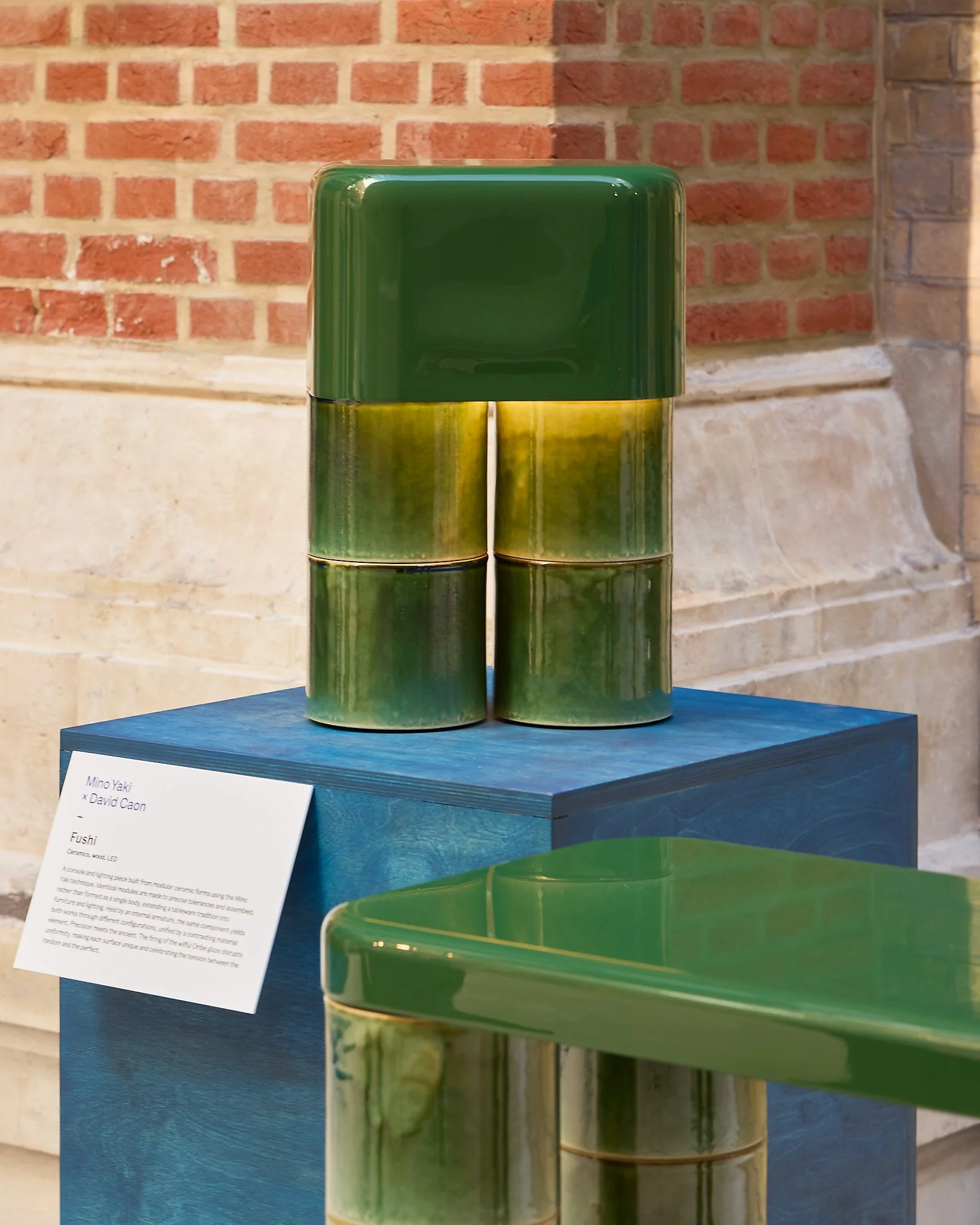
Fushi by Mino Yaki and David Caon (image: Ed Reeve).
Didero describes her pairing of designers and artisans as being, at times, “a little bit mean on our side” – not always opting for an obvious match was part of the experiment of Craft X Tech, as seen in Malouin’s interpretation of a craft technique outside of his own design references. With such polarising approaches to design encompassed within the programme, seeing how both the designer and artisan would adapt, learn and evolve through their preconceived ideas of design became a point of examination. This was beneficial not only for the designer’s practice but the artisan too. Malouin provided fresh perspectives and “overturned assumptions” about Owari Shippo, Ando explains, providing new use cases beyond decoration, with Ando hoping it can, in future, be “embraced as something more familiar and closer to everyday life.”
“I believe that traditional craftsmanship should not only be preserved as a heritage, but it has to evolve in order to keep up with the times.” Didero says. If traditional crafts are to avoid obsolescence, Didero explains, there is a need for continual evolution and the introduction of new ideas from designers across the world hopes to work towards this. “The designers arrived in Japan not to copy or emulate some sort of specific Japanese aesthetic, but they wanted to bring their own idea, their own way of conceiving an object and understand how they could be transformed or realised via Japanese craftmanship,” Didero explains. Tshikare’s Yamolo, a colossal lamp featuring braided Kumihimo cords produced by Tomoyuki Matsuda, reflects his South African heritage through embedded myths and stories that shaped the design and form of the lamp. Tshikare opted for traditional round braids, which are less used in contemporary Kumihimo and normally reserved for formal kimonos. While the braids are standard in shape, Tshikare wanted to produce them in sizes far wider and thicker than is conventional. “It’s really an exchange,” Didero reiterates. The artisans get an opportunity to push their understanding of their own crafts which can be refreshing when they are typically tied to a menu of production, and the designers get a chance to confront their own practice, while exploring new mediums they are unfamiliar with.
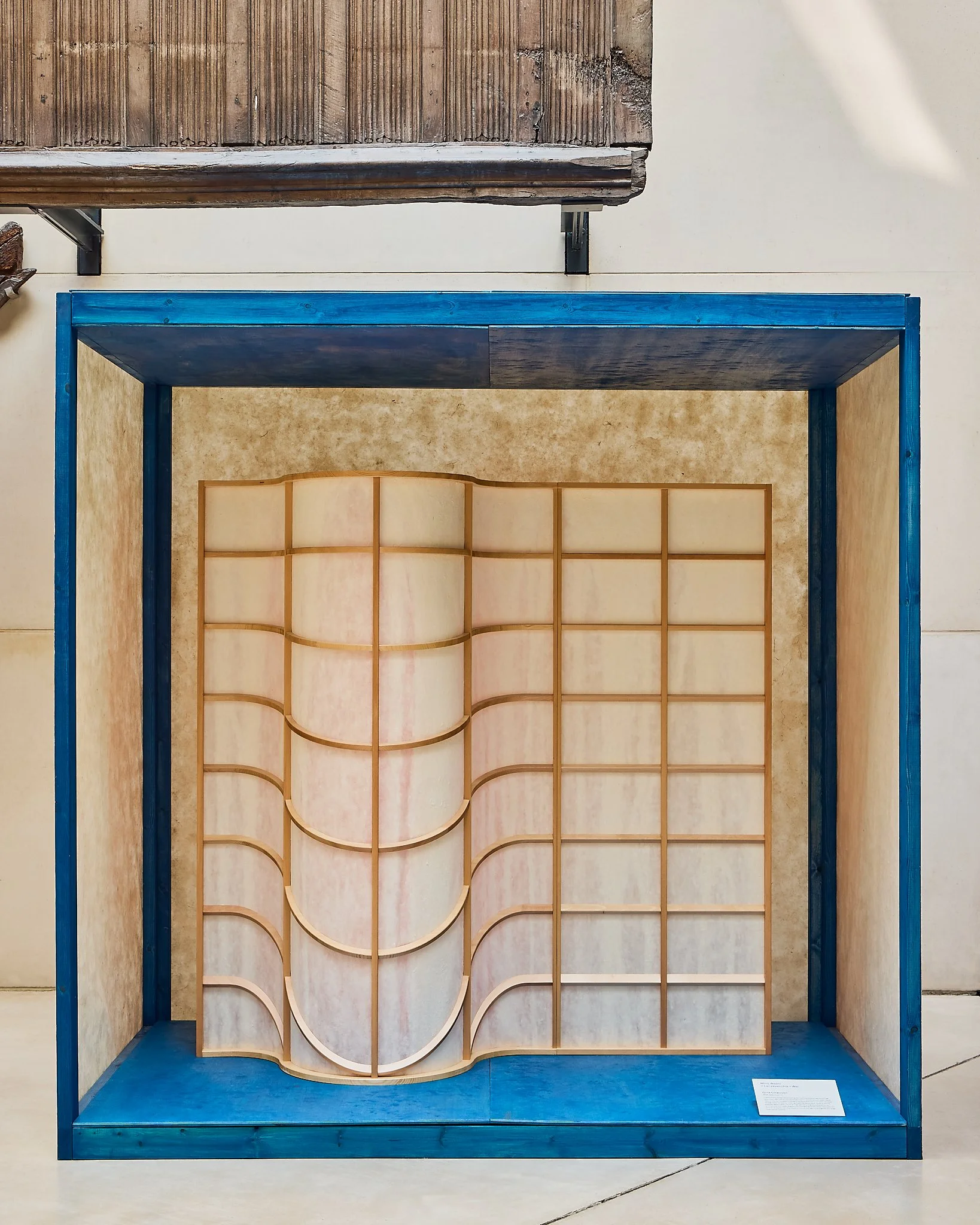
Grid Unwoven by Mino Washi and Lanzavecchia + Wai (image: Ed Reeve).
Although this is an exhibition about the evolution of craft, Didero’s curatorial approach follows her love for “daydreaming and storytelling”. She describes the original brief sent to designers as seeing what can be made with “four hands”. With such an open, unrestricted brief, the result is a set of objects that are excitingly unconventional, with each object telling the story of the two pairs of hands behind it. Didero hopes to continue the project for years to come, with more than ten regions in Japan to cover. “The idea is to cover the whole country,” she says, “and by doing that, refreshing, rejuvenating, giving another light to the ancient craftsmanship, and at the same time bringing interesting people to experience what they can do with it”
Words Matys Mazzoleni Tebb
Craft X Tech is on display in The Daylit Gallery, V&A, from 12 September to 18 October 2026.