
Digital Spectacle
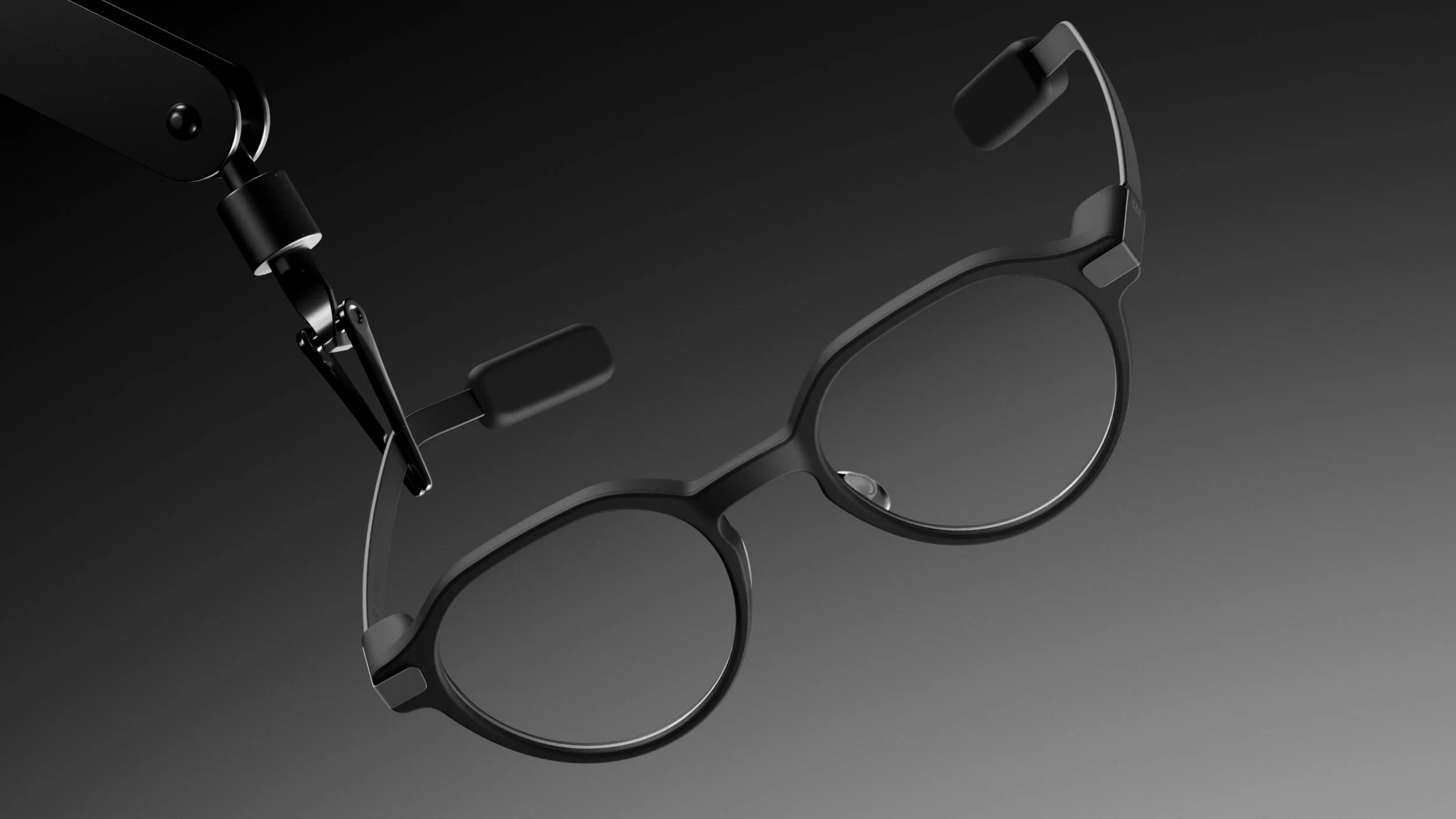
The G2 smart glasses, designed by Even Realities (image: courtesy of Even Realities).
“Everybody is designing things to be human-centred and [focused] around human behaviour, which for most types of technology is the right approach,” says Dan Hu, chief design officer of Even Realities, the optical company founded in 2023 by former Apple engineer Will Wang, and whose staff include previous employees of Samsung, Philips, Mykita and Lindberg. “But in terms of smart glasses,” Hu says, adjusting the grey spectacles seated on the bridge of his nose, “the technology needs to serve people at any time in their day.” Human-centric design, he suggests, can be too monolithic a term, and one that risks neglecting the diverse spread of experiences that people enjoy. “So actually, within the Even Realities team,” Hu explains, “we have worked with another principle – ‘life-centric design’.”
Over the past year, Hu has led the design team developing Even Realities’ G2 smart glasses, the company's follow up to its debut G1 glasses, which launched in 2024. The new spectacles are intended to carry the aesthetics of traditional eyewear, rather than ape the more explicitly technological offering of others within their category, relegating the bulk of their hardware to small modules that tuck behind the ears in order to leave the frames themselves visually light. This discretion, however, is paired with a series of digital display features that the company believes users will find useful (message notifications, news alerts and navigation directions, for instance), characterising Hu’s design emphasis on everyday experience. To demonstrate this, he quickly reels off a list of the activities that might form a part of any given 24 hours – breakfast with your family, a meeting with colleagues, seeing friends in the evening. “Human-centred design is not enough to support all those different scenarios,” he concludes, arguing that glasses are not only used in a greater range of scenarios than most products, but also tie more closely to personal identity than many other forms of designed object. “When you choose a glasses, you also choose a part of yourself,” he says.
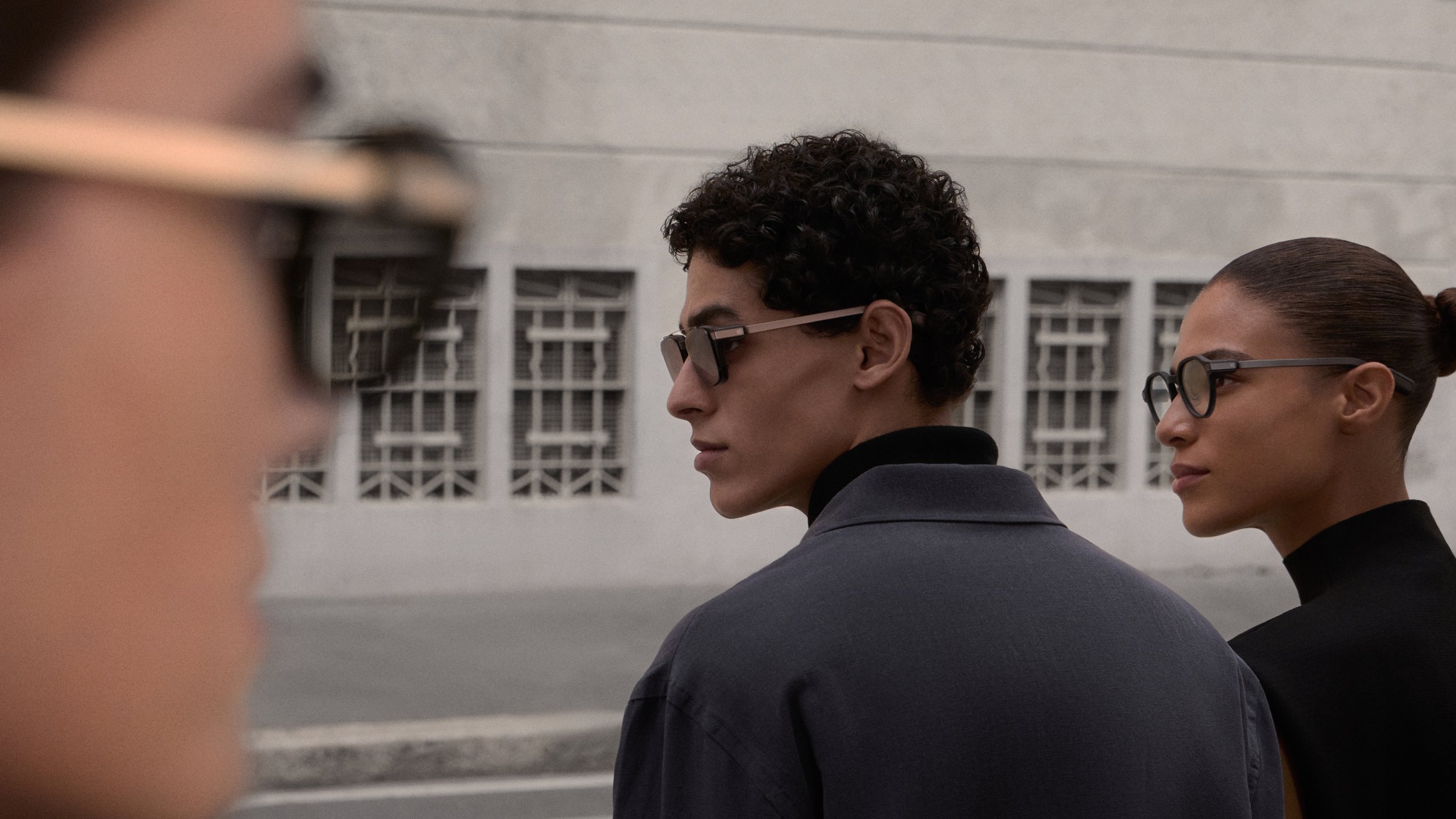
In contrast to many entires in the category, the G2s are designed to wear their technology discretely, and instead connect to the wider world of luxury eyewear (image: courtesy of Even Realities).
A central tenet of Even Realities’ work to date has been the need for smart glasses to focus on meeting the aesthetic and functional demands of conventional spectacles, rather than tipping over into the realm of technology for technology’s sake. “I think smart glasses design should never become gadget design,” Hu says, with the company instead focusing efforts on creating forms that fit within a broader landscape of luxury eyewear. The brand currently offers two frame styles, a panto and a rectangle, which are intended to offer relatively classic shapes that will appeal to a broad audience. “It’s true that everybody wants a variety of frame styles, which is normal in the traditional eyewear industry,” Hu says, “but that’s because traditional eyewear manufacturing is not that complicated compared to smart glasses.” In balancing technological elements with the physical requirements of the frames – which feature flexible titanium legs, combined with more rigid magnesium frames in order to provide greater stability for the glasses’ lenses – Hu’s team has purposefully pared down the number of styles that it offers, and instead designed forms that will provide the best fit for as many wearers as possible. “All the proportions are very precise and we tested thousands during the development,” Hu explains. “I cannot say that we can 100 per cent fit everyone’s face, but we can at least cover 80 to 90 per cent of faces.” The decision to work with magnesium, which provides the requisite rigidity for the enclosure of precise technology, but which requires more advanced manufacturing than more familiar optical materials, has also shaped the team’s approach. “We are trying to help the industry shift from semi hand craftsmanship to a purely modern manufacturing process with fully digital control and a lot of CNC,” says Hu.
In contrast to many of their competitors, such as Meta’s collaboration with Ray-Ban, Even Realities’ smart glasses are comparatively restrained in their technological offering. The glasses make a point of including neither cameras nor external speakers in a bid to address the discomfort that features of this kind prompt in many people (“They can be pretty invasive of other people's lives,” Hu explains, “and how frequently are you actually going to need a camera during the day?”) and instead pair with a user’s smartphone to offer a selection of their phone’s functionalities that can be more readily integrated into day-to-day wear. The glasses use micro-LED projectors that are built into the frame to direct light into their waveguide lenses, which then bend and direct this light to create text and graphics that are displayed, seemingly floating in front of the wearer’s eyes. This information can be controlled and scrolled through by swiping on the glasses’ ear modules, or else on the side of a companion smart ring worn on the finger, the RI. “Glasses are a very essential type of product,” Hu explains, arguing that any digital functionality needs to complement the pre-established purpose and aesthetics of the typology. “It’s nice to have [different features], but we want to balance things,” he adds, noting the need to consider the impact on the frame’s weight of any additional technology. “We need to respect the must-haves first.”
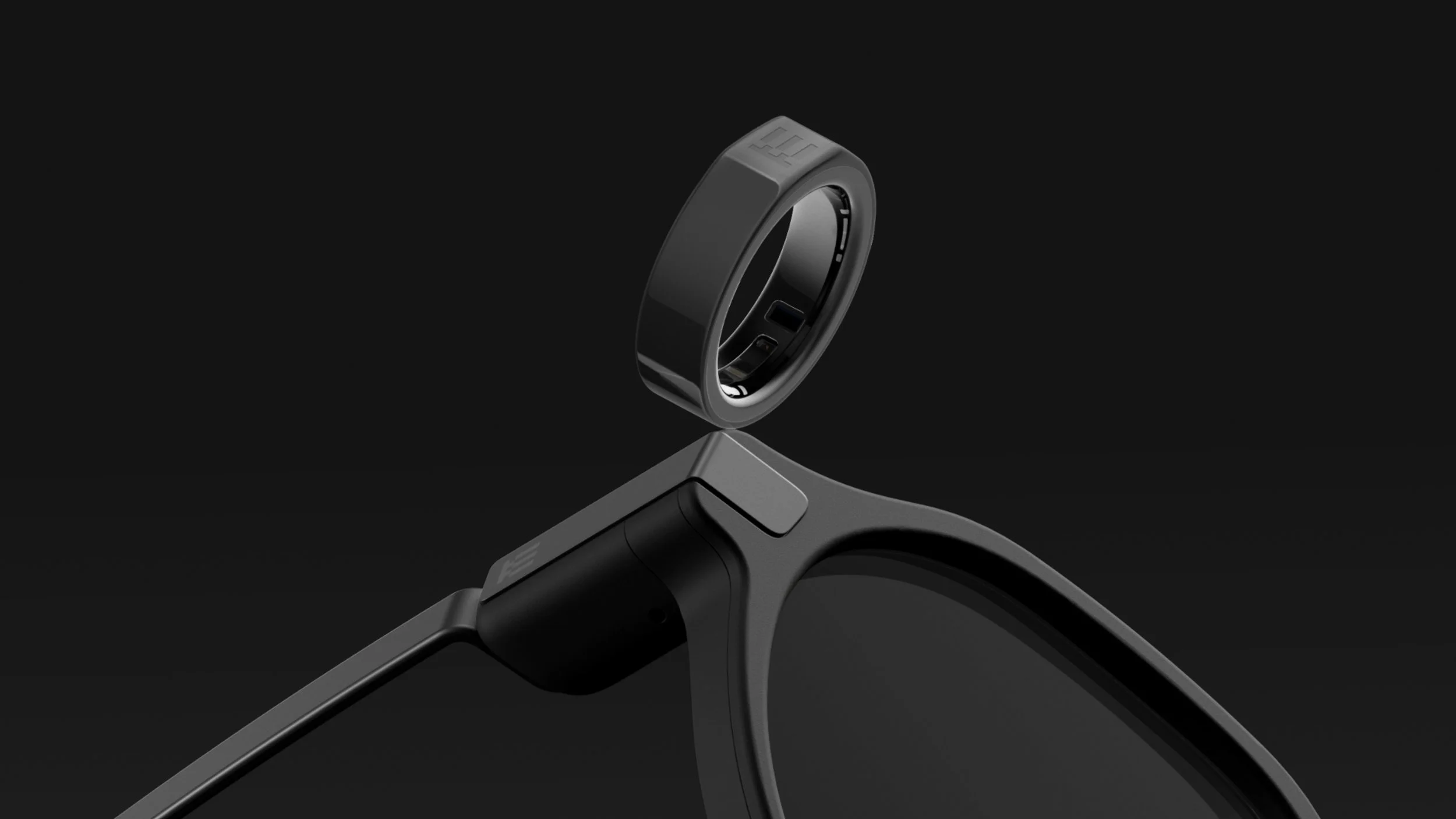
The glasses can be controlled by swiping on a companion ring, the R1 (image: courtesy of Even Realities).
In the development of smart devices, Hu argues, spectacles present both opportunities and constraints that may not be present in other typologies that also integrate digital services into wearables. Primarily, he argues, the idea that glasses serve as an interface between the wearer and the outside world is widely socially acceptable. “There’s an 800-year history of eyewear development and eyewear is one of the only artificial devices that people wear on the face,” Hu says, arguing that this familiarity provides a certain freedom for designers to supplement the form with new technologies. “We need to keep the essential benefit which glasses can bring to the user, but try to add more value if people are going to accept it,” he argues, caveating this with the admission that any changes to traditional spectacle design can also be met with resistance or suspicion. “The starting point to think about smart glasses is not to create something new, but to evolve [existing] glasses and inherit the most important things from them,” he says. “They need to be wearable, comfortable, and have a good aesthetic – then the technology can be a good tool.” If smart glasses are to become a regular alternative to traditional spectacles, Hu suggests, they need to “really help you to enjoy life”.
Within the design of the G2, Hu’s team have interpreted this idea in terms of a series of additional services offered by the device. The spectacles use a built-in AI assistant to provide a suite of digital functions, including a teleprompter for public speaking (which detects your current place in a script and scrolls accordingly), automatic translation services, and an option to provide summaries of any conversations that the wearer may have while wearing the spectacles (in addition to subtitles or on-screen definitions of unfamiliar terminology). More advanced technologies such as this provide the raison d’être for Even Realities’ product, but also represent an area in which greater unfamiliarity is introduced into the design, as well as opening up the door to wider social concerns over technology’s intrusion into day-to-day life. On issues such as these, Hu acknowledges that the category still has further work to do if smart glasses are to garner greater social acceptability, conceding that the widespread adoption of smart glasses as optical wear is “close, but not that close”. If this is to change, he says, “the main barrier is how people can really feel the benefit from the digital”.
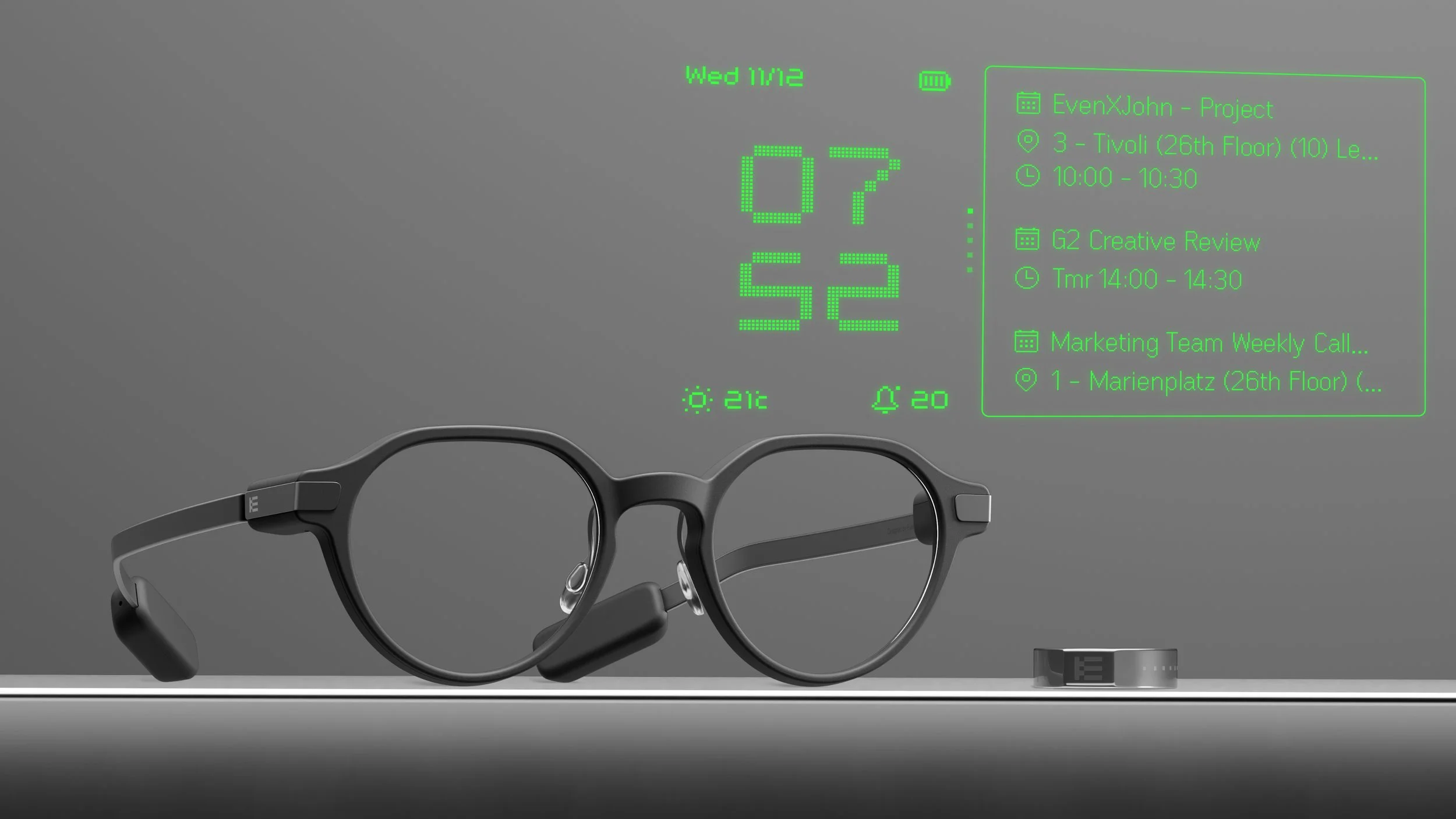
The green monochrome monitor that the G2 glasses project before the wearer’s eyes (image: courtesy of Even Realities).
To attempt to ease this decision, he explains, the design team made purposeful choices around how the G2 would display digital information to wearers. In place of contemporary full-colour displays with advanced graphics, Even Realities have designed the G2 to feature a monochrome monitor, with all text and graphics displayed as green pixels in a manner redolent of the early days of computing. This decision, Hu says, not only reduces power consumption in comparison to a full colour display, but is also a clear decision to demarcate digital display from physical experience. “In the future we hope that we can combine the physical world with the digital world seamlessly,” he says, “but for now, I think it's better to let the user easily recognise physical word information [as distinct from] digital word information. People still need time to get used to this new way of interaction, which is why we’ve gone with this very classic form of expression.” In this respect, the display is indicative of the project as a whole: an exercise in introducing new functionalities into day to day life, while employing design to balance and address the challenges and complexities that this inevitably brings.