
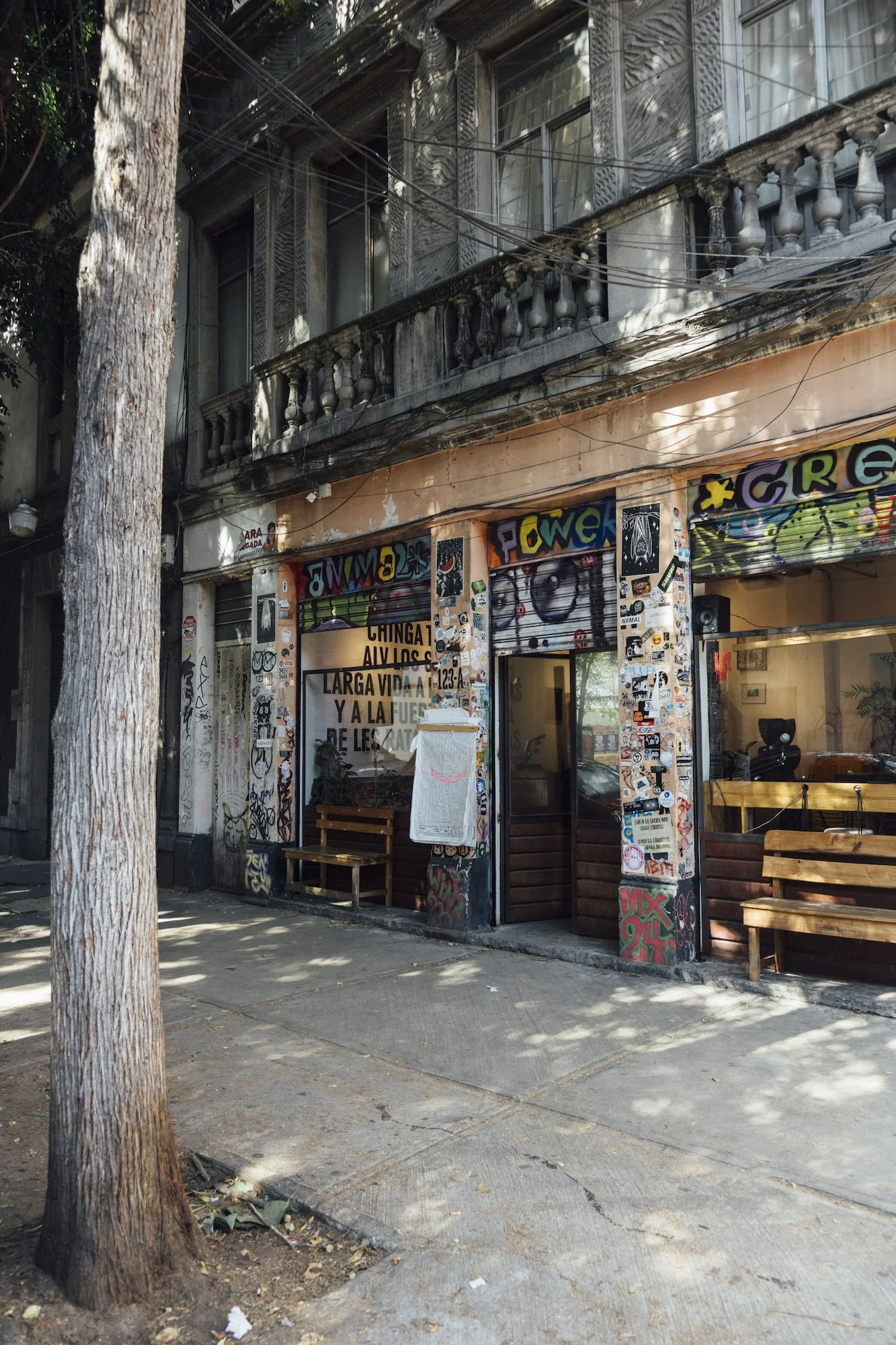
The Radio Nopal studio in San Rafael, Mexico City (image: Paulina Fi Garduño).
On a warm evening in May, walking through the vibrant streets of Colonia Juárez in Mexico City, I stop to catch the end of a football game, a long, heated rivalry dubbed “Clásico Joven” between Club América and Cruz Azul, two teams from the city. I didn’t catch the game in a bar; I hadn’t planned to. Instead, I watch along as eight men gather around a small screen mounted to the wall of a garage, sitting on propped up tyres or worn-out plastic chairs. Cruz Azul are winning against América as they enter the final 15 minutes of the game, and although almost all of the men watching are in the blue jerseys of Cruz Azul, their faces are calm. Two or three of them drag slowly on their cigarettes with quiet patience, waiting to embrace the referee’s final whistle. The kit’s royal blue and accents of white and red, a colour palette drawn from the flag of Great Britain, offer a subtle reminder of home.
None of these men had sought this out, I thought to myself, as I carried on walking. The game had begun and the men, already working in the garage, assembled naturally, creating this space of communal gathering. The following day, I go to meet a man who has spent his career trying to consciously build this very same communal sensation. I make my way to San Rafael, a neighbouring colonia to Juárez, to the studio of Radio Nopal, an independent and self-managed internet radio station. Sunlight breaks through the clouds and into the room, and the sounds of Cumbia ring through the studio. I’m here to meet Diego Aguirre Fernández, a designer and founder of Radio Nopal, who has been working in Mexico City’s independent radio scene since 2002.
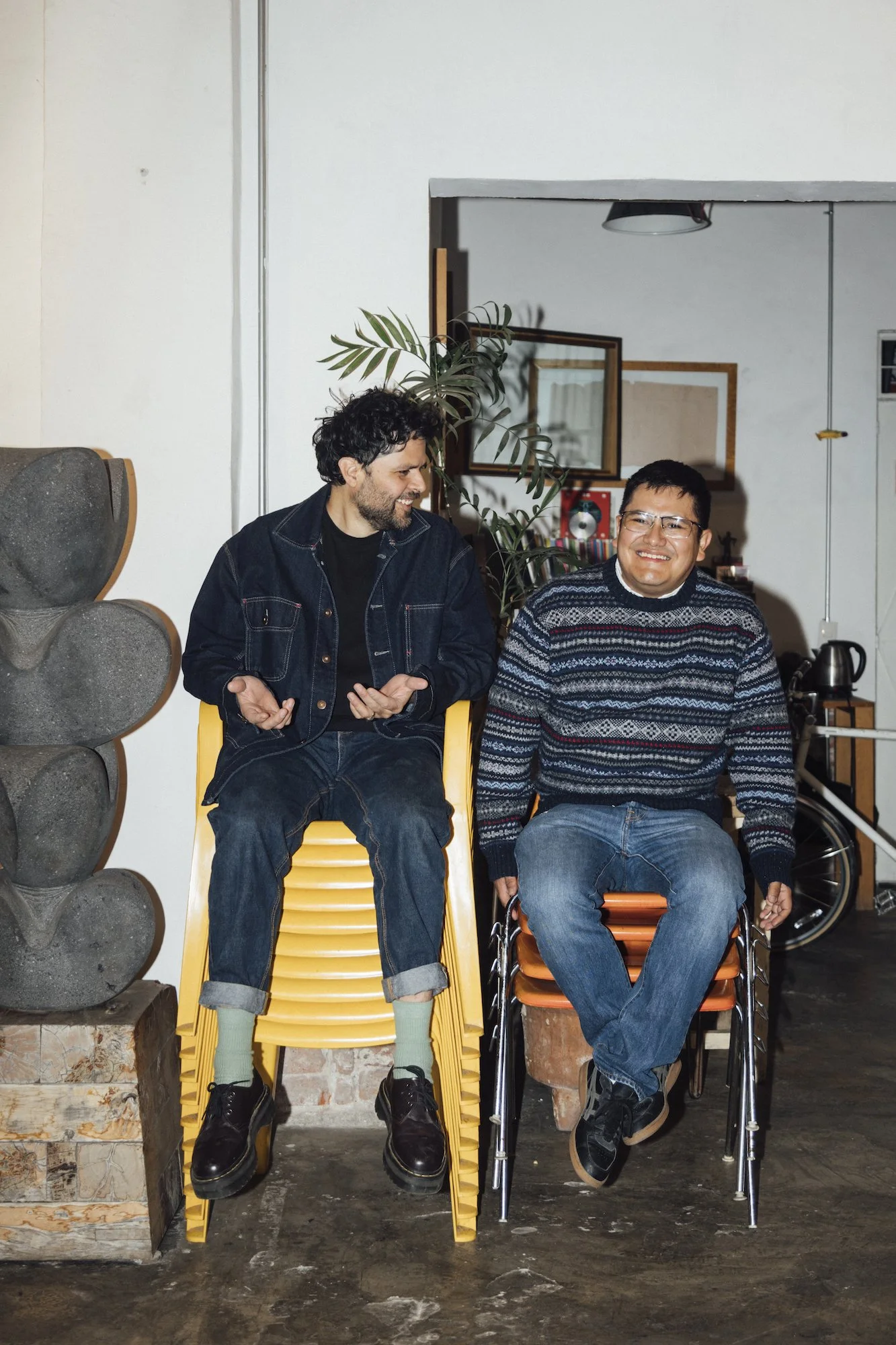
Diego Aguirre Fernández (left) and Antonio Salinas (right) (image: Paulina Fi Garduño).
Aguirre Fernández can be described as being on “bring-your-child-to-work” duty: Lux, his one-and-a- half-year-old son, makes use of Radio Nopal’s physical space as if his own personal playground. Aguirre Fernández’s colleagues don’t seem to mind, or are perhaps used to it, as Lux runs around. He picks up a blue watering can from the floor, a blue not dissimilar to Cruz Azul’s jersey, and shows it to me with great pride. I compliment his watering can, and he runs off, looking for something else to curiously inspect and show to the rest of the studio. Moments later, Lux darts back across the room, this time carrying a small, modest box. I crouch down and he holds the device up to my eyes with his usual unbridled enthusiasm.
This small device is Mensajito.mx: a slick, compact acrylic case housing a Raspberry Pi, with a touchscreen mounted to its exterior. Aguirre Fernández smiles and takes it back gently. In Spanish, a text message is a mensaje, but, as he tells me, nobody really says that: “We would just say mensajito.” Both the name and the device grew from the same seed. In 2017, when Trump’s inauguration stirred communities on both sides of the border, Aguirre Fernández found his phone filling with messages from friends in the US, pinged across the divide. The device’s logo, visible on the bottom right corner of its touchscreen, captures this precisely: a double-pointed arrow jumping over a line. It references the crossing of borders through this abstract geometry of connection.
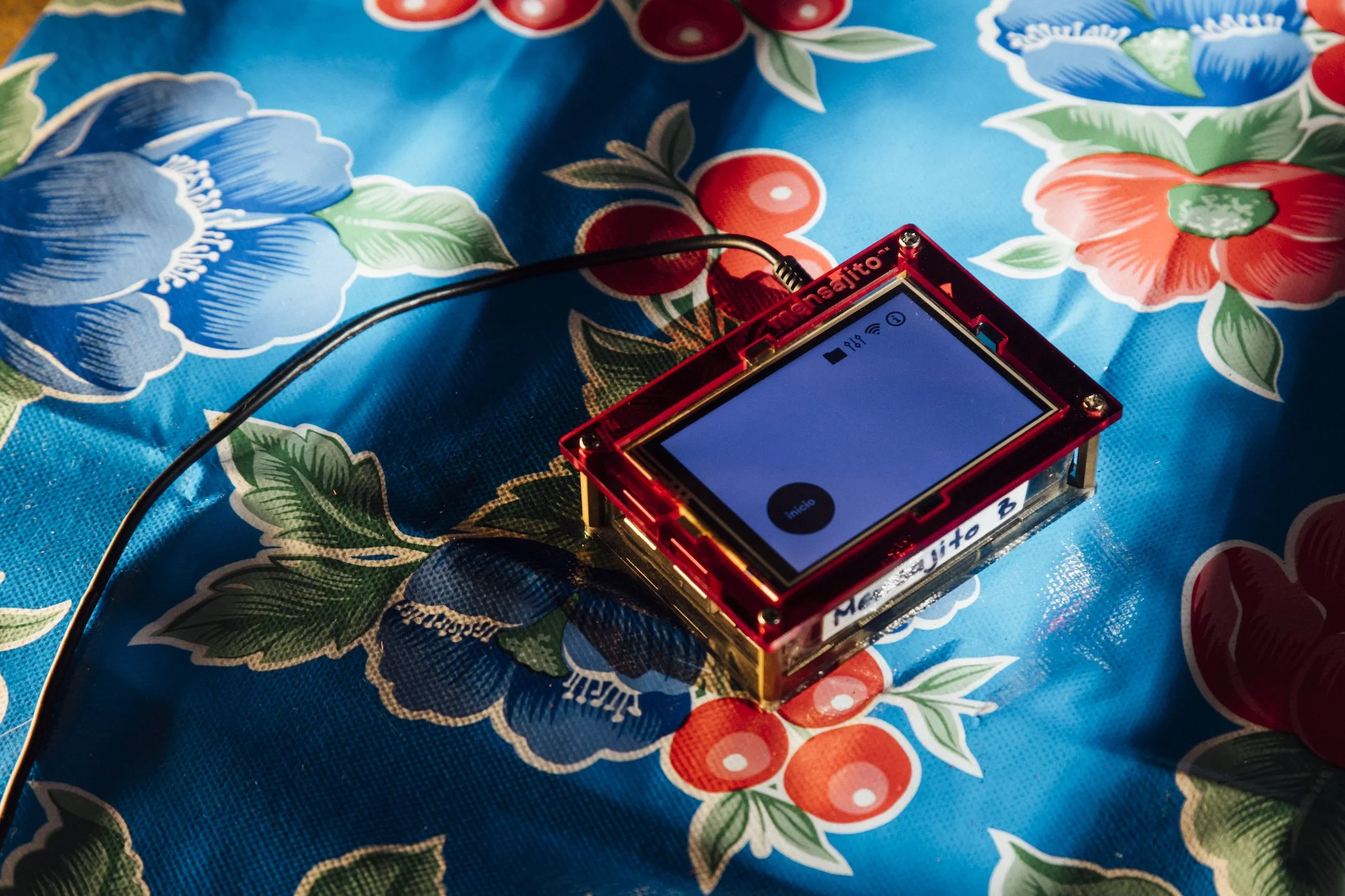
The Mensajito.mx device (image: Paulina Fi Garduño).
It was in 2016, after hosting an introductory radio session in a neighbourhood in Tijuana, near the American border of Mexico, that Aguirre Fernández was prompted to look at designing something new within radio. This session was one of many he has hosted in Zona Norte, an area in Tijuana that Aguirre Fernández describes as being shaped by “drug problems, violence problems and economic problems,” and where access to the equipment required for radio is rare, practically speaking. “The power of radio made itself clear to me in that room,” Aguirre Fernández explains, even in spite of the obvious technical limitations.
The workshop was broadcast online and focused on the ritualistic routines of a group of local residents who had shown interest in independent radio. One person opened up about their sexuality, while a listener from Madrid asked another participant about their experience working in a tortillería. “For him it was just his job, something very normal, but someone far away was genuinely interested in listening to something that is important to our culture,” Aguirre Fernández recalls. These interactions made clear that the desire to speak, and to be heard, was profoundly alive and universal. But when Aguirre Fernández later listed the materials needed to keep a station running, enthusiasm was silenced by the price and complexity of the equipment, which quickly discouraged the group. At the time, Aguirre Fernández was working with just a MacBook and an iPhone, and the price of radio equipment remained stubbornly out of reach for many of the communities he wanted to support.
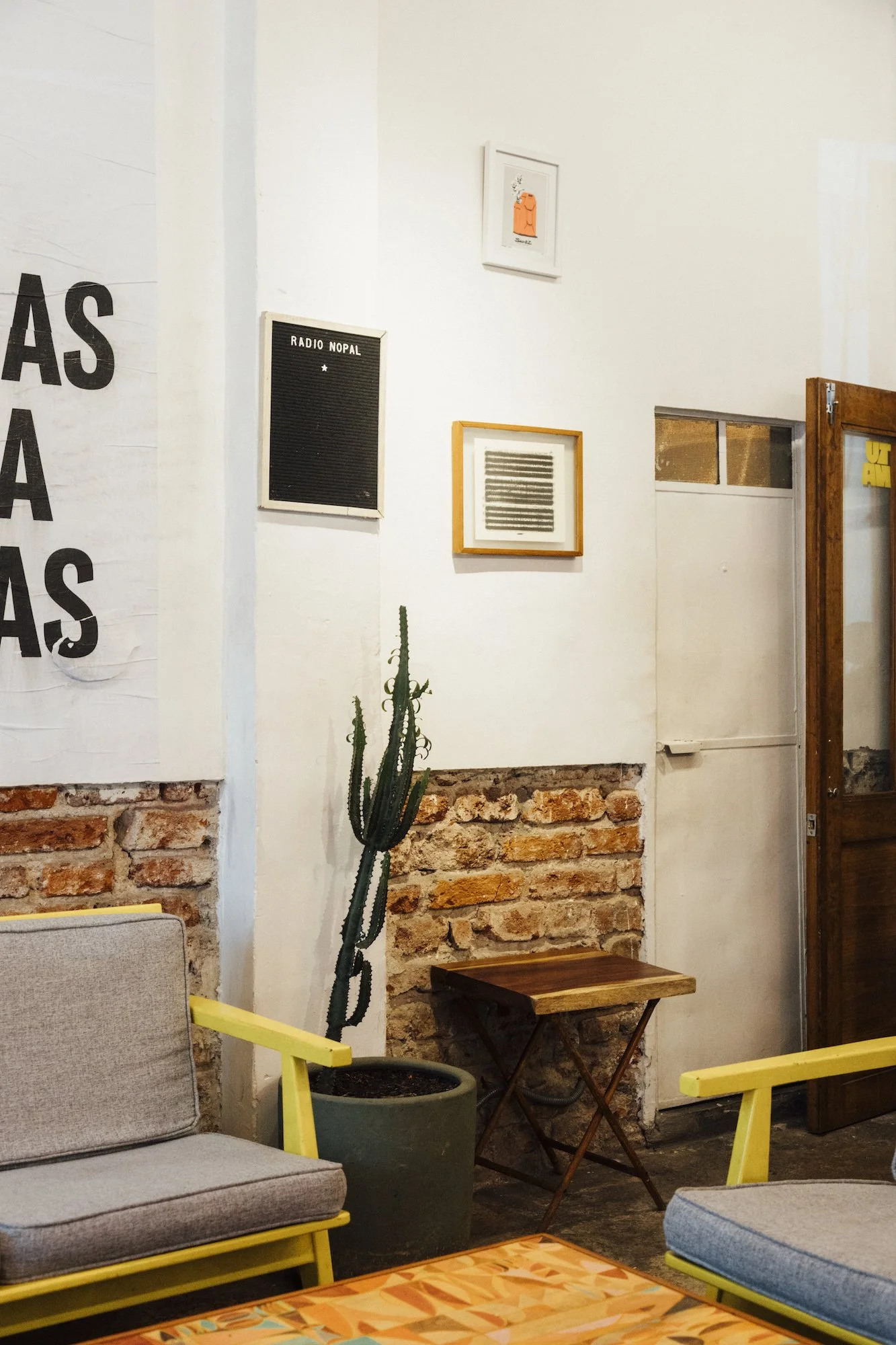
Image: Paulina Fi Garduño.
Radio Nopal was born in 2018, after Aguirre Fernández had met Antonio Salinas, now programmer for many of Radio Nopal’s operations, and discovered that the pair shared a unique desire to build tools specifically for independent radio. Their collaboration formed out of the idea that connecting communities through music, communication, workshops and cultural discussion is important and could be a way of addressing many of the challenges faced by the neighbourhoods they were working in. Fundamentally, Aguirre Fernández explains, “Radio Nopal came about out of an interest in listening to the multiple voices and stories that make up Mexican and, more broadly, Latin American communal and cultural experiences.” Mensajito.mx, meanwhile, is the technology that the station developed to ensure that transmission can be achieved with limited budgets or equipment. The device uses open-source technology to transmit sounds over the internet: physical audio from a microphone and mixer is converted into digital audio, pushed to a custom-built server, and finally distributed to a live webpage. Once on the webpage, these recordings are stored as audio packages, creating what Aguirre Fernández likes to refer to as an “anti-archive” of cultural discussion.
Where a conventional archive is often defined by order and intention, an “anti-archive” accumulates and catalogues communal experiences organically, representing a wave of new possibilities for independent media. Mensajito.mx was developed by Radio Nopal to power its own station, yet has since been used by several grassroots radio stations across Latin America, and the organisation regularly hosts workshops to teach people how to use Mensajito.mx for specific communal projects. “We want to show people how we can facilitate conversation through radio and music, spreading the message of radio as collective imagination,” says Aguirre Fernández.
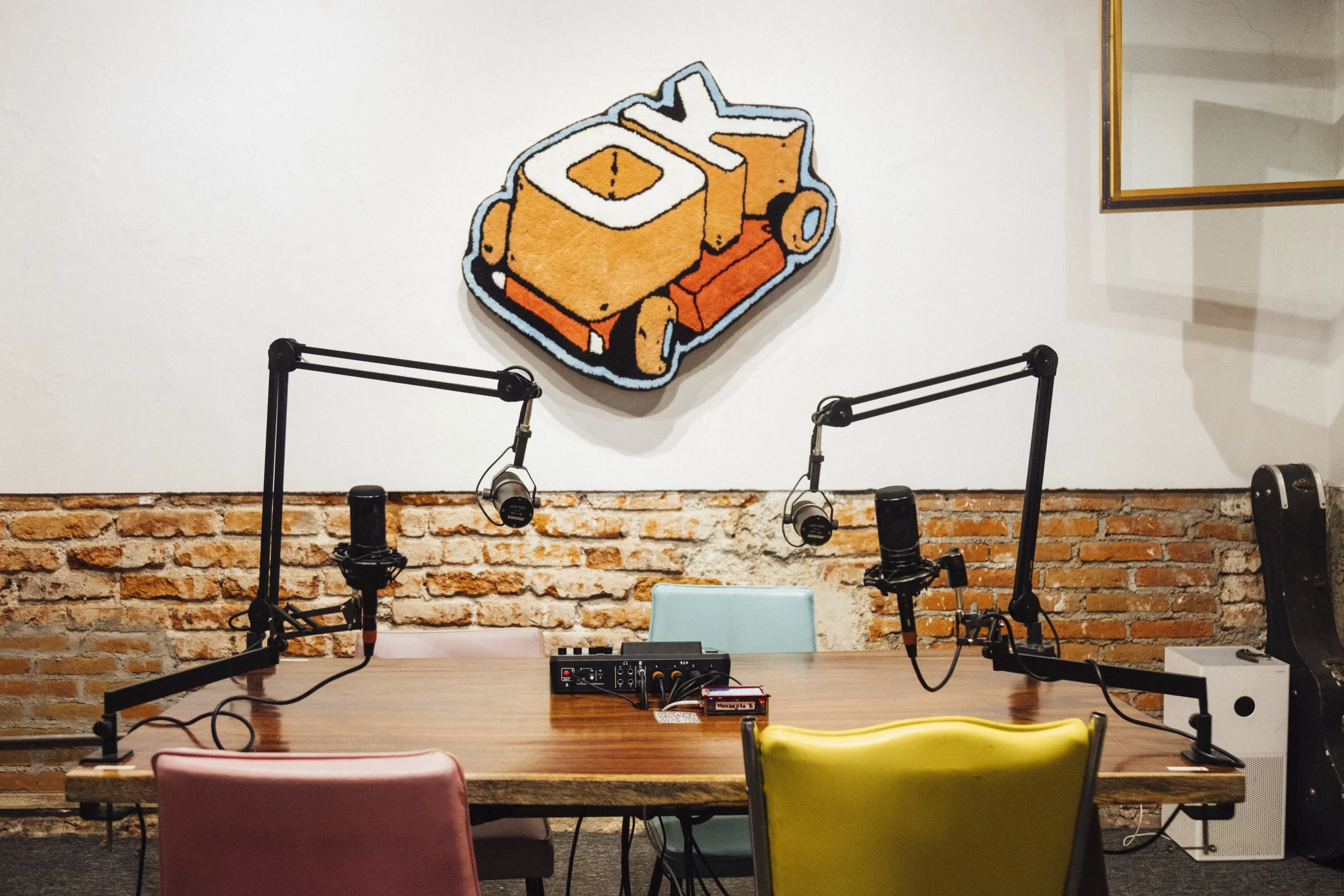
Image: Paulina Fi Garduño.
The Radio Nopal building itself is also interested in community dialogue, and, as such, carries a sense of continuity from its previous uses. Before Radio Nopal moved in, the space was a printing workshop and, before that, a mechanic’s garage – the same kind of place where I caught the end of the football match the day prior. Aguirre Fernández is attentive to these historical and cultural synapses. They have left much of the space as they found it, he says, with oil and paint marks from the old press still lingering on the smooth concrete floor. “We try to honour what came before, to stay in dialogue with the growth of the neighbourhood,” he explains.
A friend of Aguirre Fernández’s waltzes in through the radio station’s double doors and greets him with a toothy grin. He shakes my hand firmly, and waves emphatically at Lux, who imitates the flapping arms he sees before him with excitement. Aguirre Fernández tells me that this kind of permeability is entirely the point of Radio Nopal. The station remains firmly at street level, open to whomever happens to drift past, with the boundary between interior and exterior kept deliberately thin. “While it is exciting to build digital communities – and I do not see this as a separate life, since we are also what happens online – I believe Radio Nopal’s search is to create alternative spaces for gathering and creation,” Aguirre Fernández explains. “A third space that is yours and shared with others, yet is neither your home nor a space of consumption.”
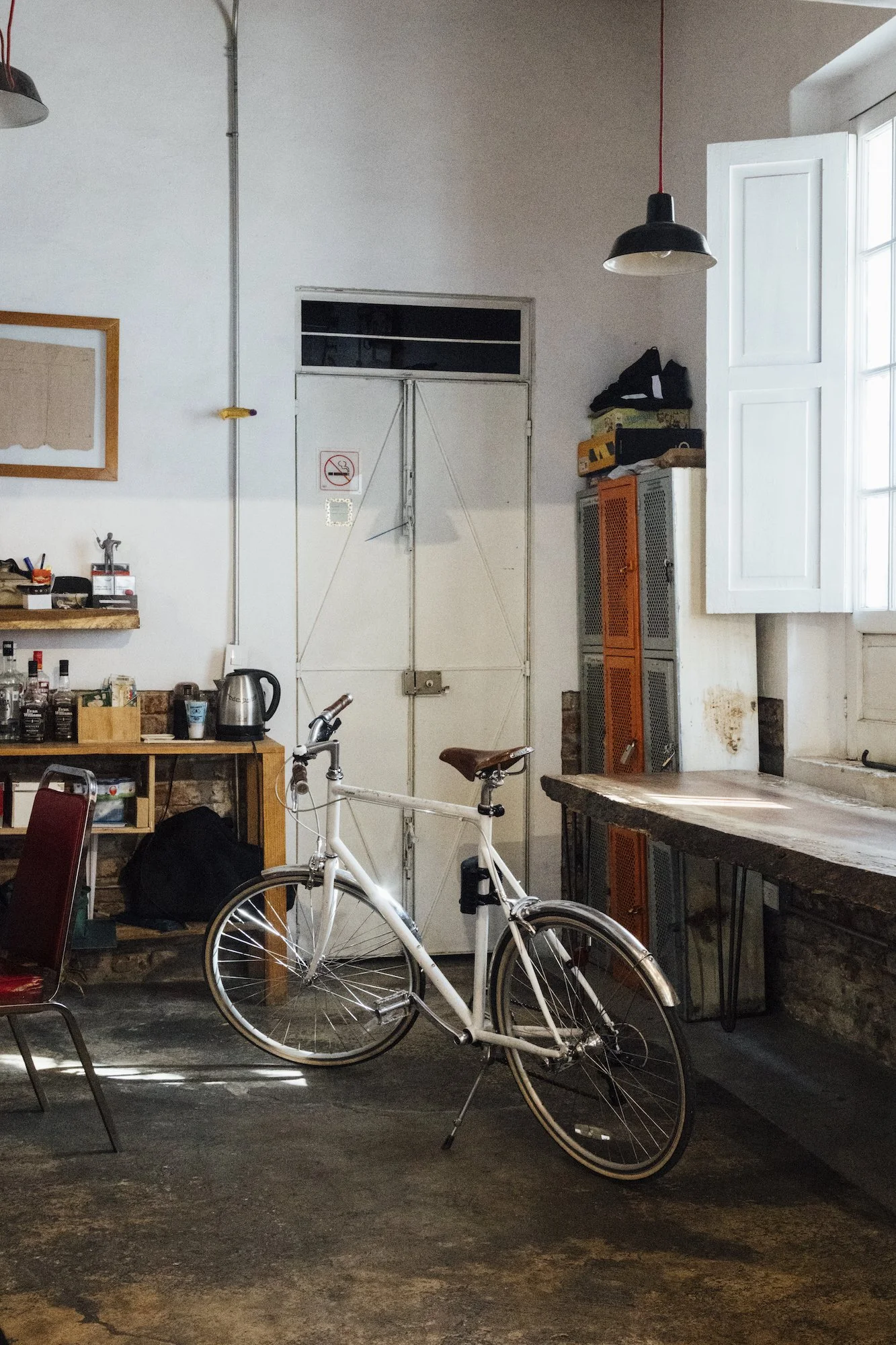
Image: Paulina Fi Garduño.
Salinas begins to tell me about a workshop in Marcala, Honduras, hosted in 2018, in which Nopal helped to amplify the voices of indigenous youths defending their land against Canadian mining interests. “Some of these young guys were even lying down in front of tractors to protest their situation,” he says. Mensajito.mx, at this point, was still in its earliest form. In the middle of this remote town, Salinas and Aguirre Fernández lacked the specific chemicals needed to etch the circuit boards for their early prototypes. “We looked at different ways of doing things, and we were continually changing the project,” Salinas adds. Components that were relatively easy to find in Mexico City, such as cheap touchscreens from the markets in Centro, proved difficult to access in the Honduran mountains. As such, the Radio Nopal team returned home and planned another visit. Aguirre Fernández and Salinas laugh together as they recall their eventual return. “I remember we were staying in the hotel and there were literally cables everywhere, with us trying to get the idea better,” Salinas says. By the end of the trip, the group in Marcala had a working tool to broadcast their own programmes and use their voice emphatically.
Mensajito.mx has since changed, and possesses the opportunity to be changed again and used in different ways by different communities. It seems that with each project that it aims to serve, the potential of the small device increases. I ask the Nopal team about the significance of being involved in projects like this – community design initiatives that can grow organically and remain under the control of the communities that they serve. “What capitalism has sold to us is that if you work for a big company you are going to be super successful,” Aguirre Fernández explains, “but actually smaller projects can be an inspiration for much bigger communities.” As Salinas adds, “the idea was to keep the structure as clear as possible, so the technology doesn’t feel too distant or closed, but something people can understand and modify.”
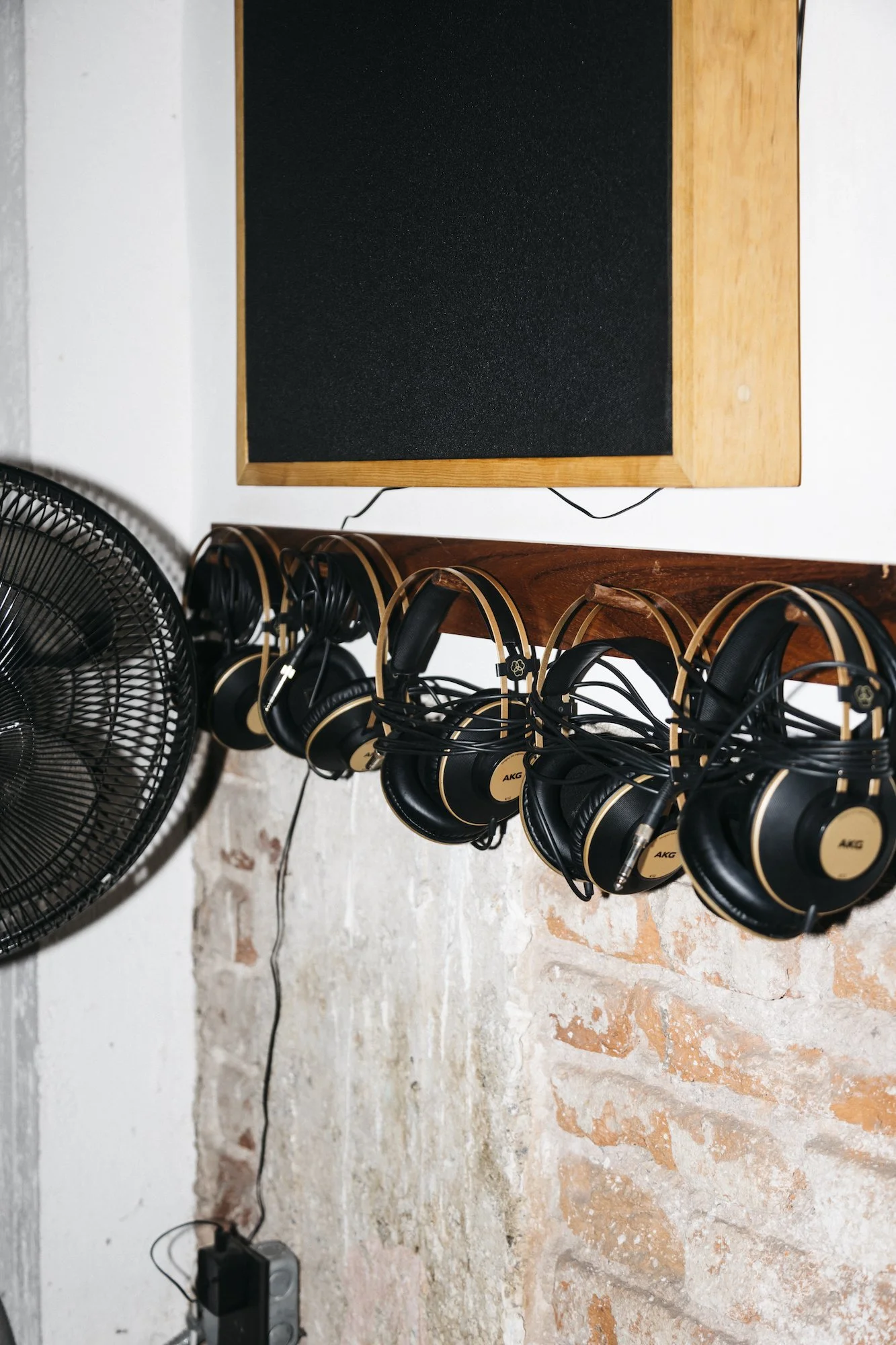
Image: Paulina Fi Garduño.
The politics of radio is important in Mexico, and is inseparable from the processes of Mensajito.mx and Radio Nopal. “Being a journalist in Mexico is one of the riskier jobs you can have,” Aguirre Fernández tells me. “You can get killed by narco-cartels, or police, so when doing research you have to be very careful about where you go digging.” But the medium of radio, as much as individual broadcasters, is also negotiating its own crisis: more widely, corporate streaming services and their algorithms now exert overwhelming influence over whose voices are heard. What Mensajito.mx offers, in this context, is a decentralised network built on what Aguirre Fernández describes as “digital sovereignty” – distancing itself from the algorithms and moderation of commercial online platforms, and operating beneath the radar of both authorities and criminal organisations. The station and its tool serve to support communities attempting to construct their own channels, shape their own narratives and use their own voices. “Everything we do is political,” he emphasises. “Sharing food, pop music or whatever, every action is political in the Mexican or Latin American context. You have to be aware of that all the time, but not take yourself too seriously either.”
Aguirre Fernández, realising Lux is beginning to run out of items of furniture within Radio Nopal’s studio to clamber on, decides it is time to take a walk over to the nearby Jardín del Arte Sullivan, which operates as an art market every Sunday. On Fridays, however, it’s simply any other park, and exuberant chaos meets us head-on as we walk to the playground. The last sunlight of the day slips through the palm trees that line the park’s perimeter as a cluster of clouds emerge overhead. The rainy season, which usually doesn’t arrive until June, prematurely looms large on the horizon.
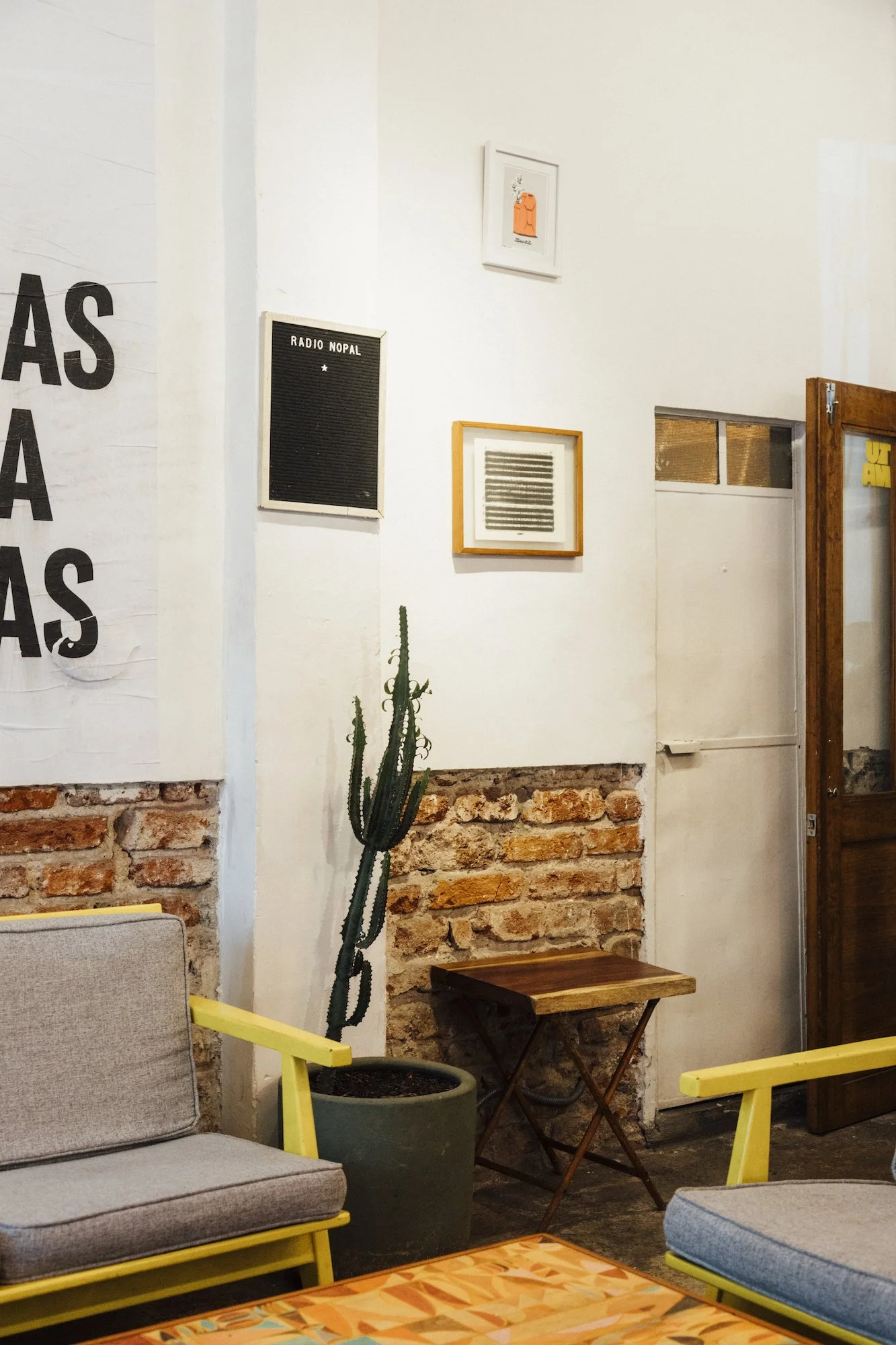
Image: Paulina Fi Garduño.
Water in Mexico City and the nation more generally is scarce, and the city is always in negotiation with the resource. Spread across a high-altitude lakebed and slowly sinking into its clay-rich soil, the capital sits in a state of permanent environmental tension, prone to earthquakes, drought and the mounting pressures of climate change. Long before this fragility, the Mexica people built Mexico City’s predecessor, Tenochtitlan, in around 1325 as a city that would work with water rather than exploiting it, extending a series of islands through canals and creating floating farms known as chinampas. The subsequent colonial project, however, reversed that logic, draining lakes and burying waterways in favour of hard urban ground. In recent years, as drought has stretched the city’s water supply toward historic lows, water has returned to public consciousness as a political and cultural question.
In April 2024, for instance, during a five-day gathering under the name Sembrando Humedad, which translates to “Sowing Humidity”, organised by the arts collective Ruta del Castor, Radio Nopal was invited to take its experimentation onto the ancient canal systems of Xochimilco, now a borough of Mexico City. Using solar panels to power mensajito.mx directly from traditional trajinera boats, the station broadcast a live stream of poetic perspectives on the water, and about water, for six hours straight. It amounted to a mix of performances by artists, musicians, and insights from local chinampa farmers and biologists, exploring the hydrological memory of the city and its significance. Elsewhere, Radio Nopal’s involvement in initiatives such as Lumbung Radio, a network of online community stations that was developed in the orbit of the international contemporary art exhibition Documenta Fifteen in 2022, has since placed it within a wider group of independent broadcasters working through shared tools and mutual support rather than competition. “Lumbung” is an Indonesian word for a container used to store shared rice in the form of a house on stilts, but is mostly used to refer to shared resources. I tell Aguirre Fernández that this is a beautiful concept and ask if there is any significance behind nopales, the edible cacti of Mexico, and the name of the radio station. “We had originally decided on Radio Cactus,” he chuckles, “but my partner was like, ‘No, that sounds bad, why not Radio Nopal?’”
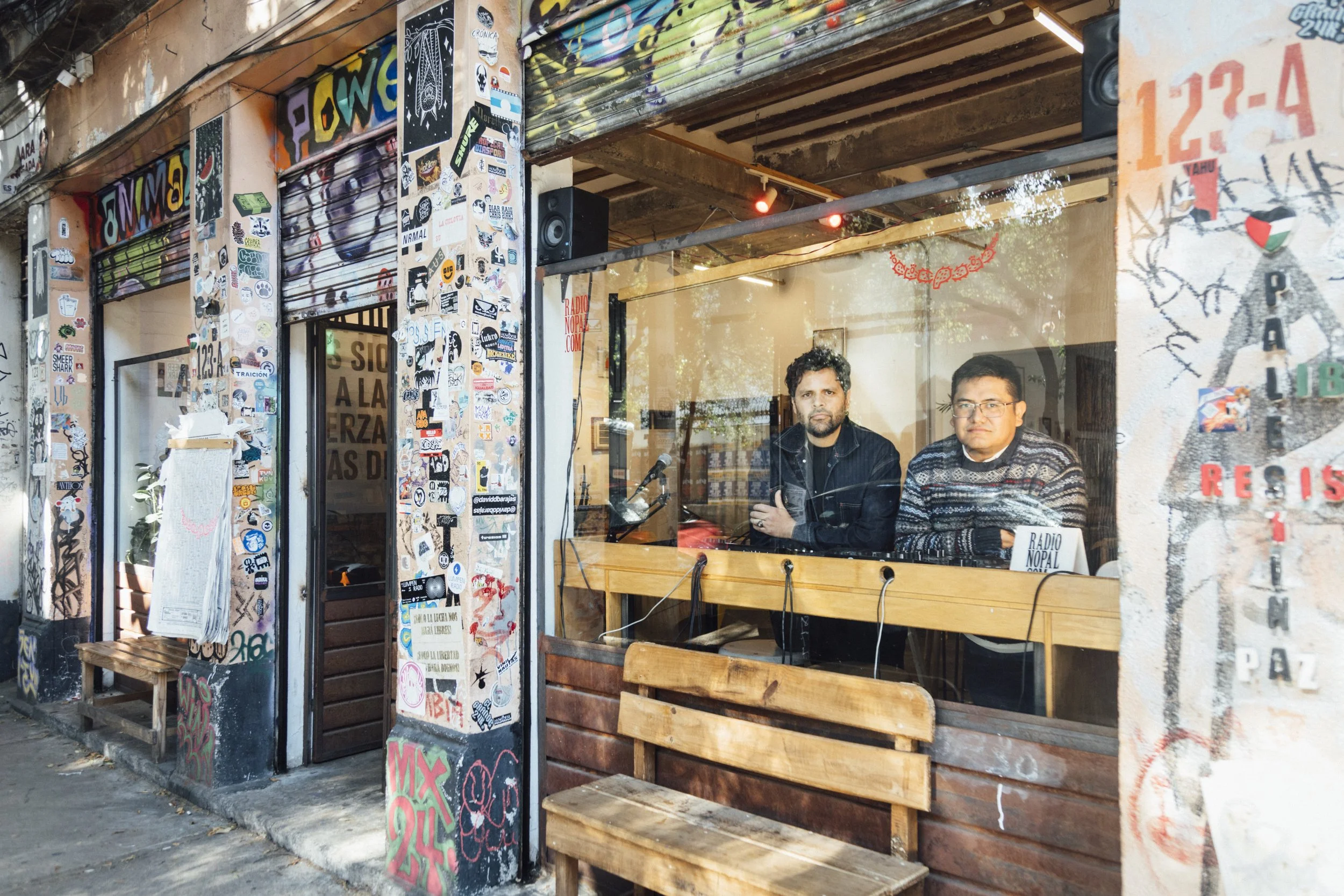
Image: Paulina Fi Garduño.
We say our goodbyes once we return to the radio station. Aguirre Fernández promises me tlacoyos when I’m next in town and, whilst the sun is beginning to drop, food stalls position themselves strategically along the street parallel. A light drizzle falls as I pass the same mechanic in Juárez where I caught the end of the football match two nights prior. It’s Sunday now and the garage is shut. Bold zig-zagging graffiti runs across the adorning metal grate in thick blues and whites.
Words Albie Fay
Photographs Paulina Fi Garduño
This article was originally published in Disegno #41. To buy the issue, please visit the online shop.