
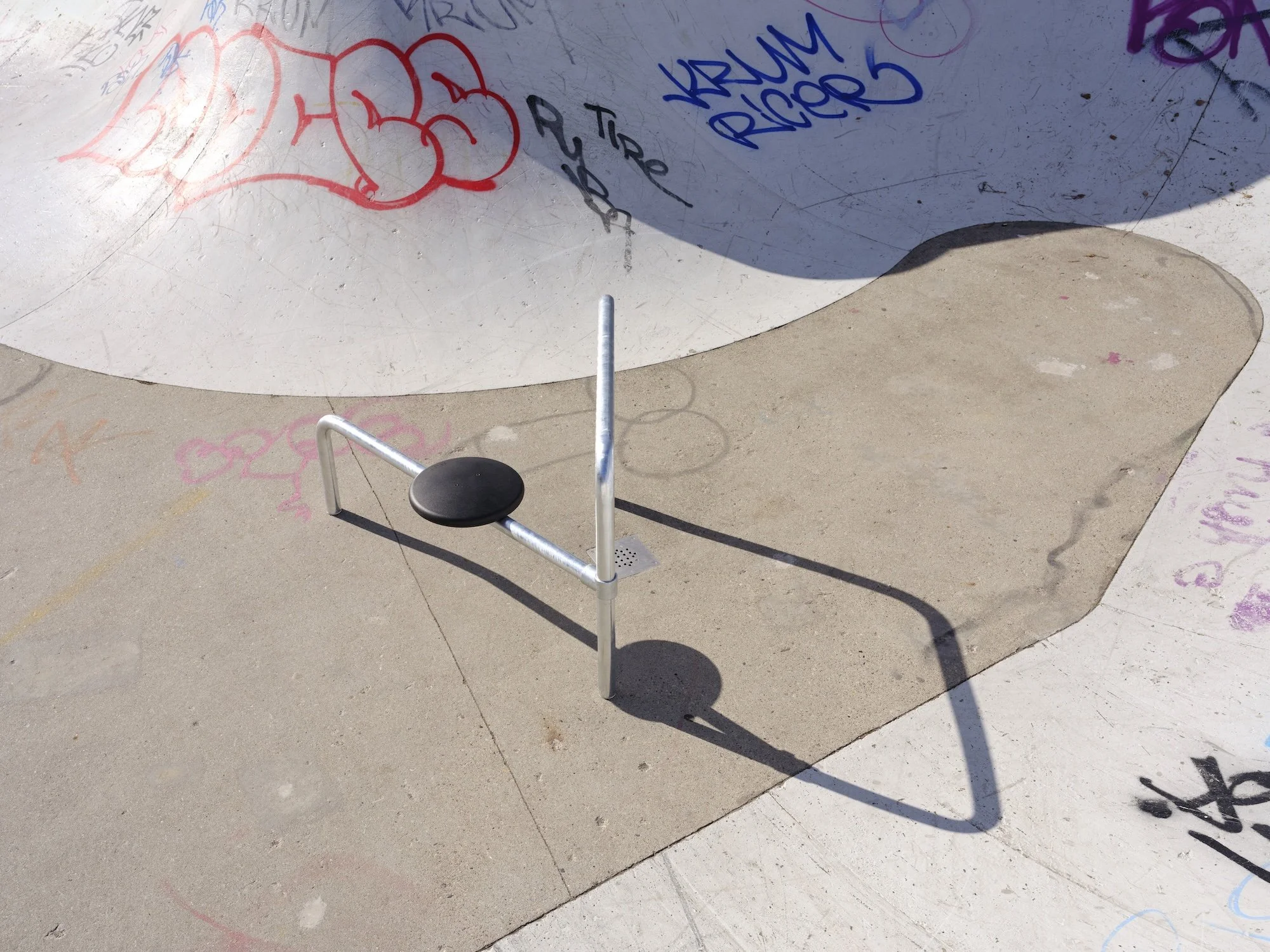
Thing_04, designed by Konstantin Grcic for 25KG, installed on a custom-built scaffolding frame (image: Roman Häbler).
Konstantin Grcic has enjoyed an enviable education. The German industrial designer completed an apprenticeship in furniture restoration in the 1980s, then moved to England to study cabinet making in Dorset with John Makepeace, before landing on a product design course at the Royal College of Arts under Vico Magistretti and Jasper Morrison. This trajectory shaped and smoothed his approach to design before he founded his own studio in 1991.
Grcic remembers these years with a sense of wonder. Today, he is well known for his work for brands such as Flos, Vitra, Magis and Muji. But Grcic built his reputation in the early 1990s, when he initially worked with Morrison after finishing his Masters, while also developing his own products. When he reflects on this time of his life, he sees a purity in the work he produced. “I didn’t think much; I just did it,” he says. “Everything came from a sense of urgency, and trying to do the most with very little.”
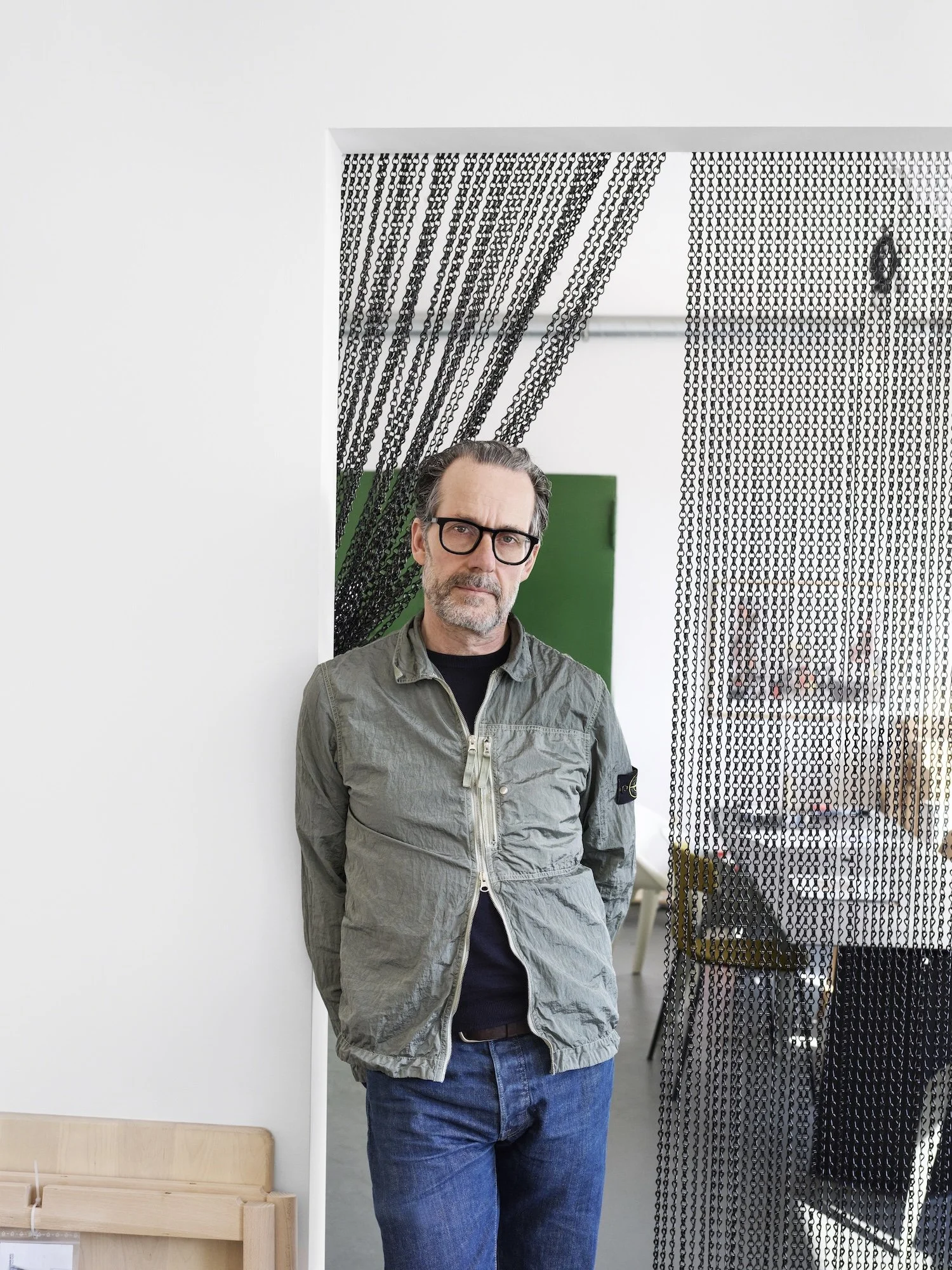
Konstantin Grcic, the founder of 25kg (image: Roman Häbler).
Grcic is now finding his way back to this urgency. In 2025, he launched 25kg, a self-described “platform for play” based out of his Berlin studio. The platform’s first provocation is the “Things”, a commercial line of abstract objects designed in-house, and sold through the 25kg brand. These objects – no, Things – feel foreign, or distant. They might even seem naive. But if there’s a strangeness to them, it might be in the strangeness we once called home. With the Things, Grcic is looking at design from a radical point of view: the perspective we lose when we grow up.
As we grow older and as we learn, a profound sense of loss trails our trajectory. We might not name this loss, but it’s obvious in hindsight, as if marked in breadcrumbs: we trade our naiveté for experience, for example, just as we might relinquish our childlike joy for maturity when the time comes. Often, we disguise this loss as personal growth, like how our sense of self emerges from the wreckage of formless youthful freedom. We learn from our mistakes, though we’re not keen on reliving them.
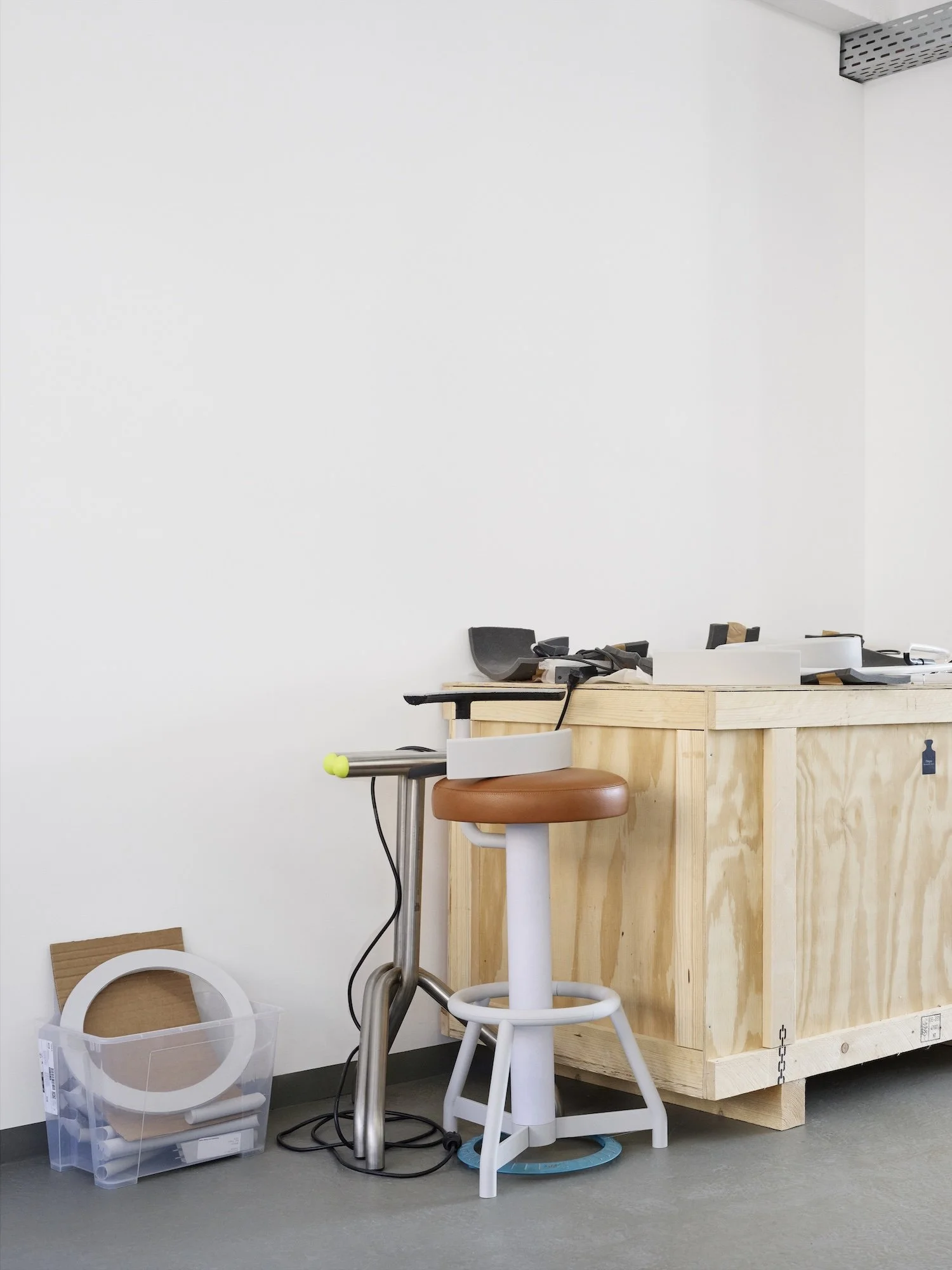
Two Thing_01s in Grcic’s studio (image: Roman Häbler).
In his 2021 book Losers, British psychoanalyst Josh Cohen describes this tendency as a paradox and an existential crisis: “Coming into the world helpless and consigned to mortality, human beings might be expected to find their ethical and emotional home in humility,” he writes. But as we outgrow our own helplessness, a tension arises. As Cohen notes, a return to humility seldom feels like home. Instead, it fills us with dread, as if we’ve betrayed what we left behind to mature, or improve. Often, to be humbled is to feel humiliated. Or as Cohen puts it: “We hate losers because we are born to lose.”
The Things live within this paradox. Through 25kg, Grcic wants to both understand the conditions of humility, and to construct them himself. It’s a contradiction in action. The series of objects are designed in his studio, produced industrially and available for public or private purchase, but there’s also a sense that they exist outside of the world of design in any conventional sense. They’re somewhere halfway between naive art and vernacular design. Thing_01, for example, is a three-legged standing stool made with a stainless steel tube where the seat should be; Thing_02 is an asymmetrical bench made from the same tubing and natural stone; and Thing_03 is a wall-mounted bracket with a single rail on which to hang Mayday, the portable lamp that Grcic designed for Flos in 1999.
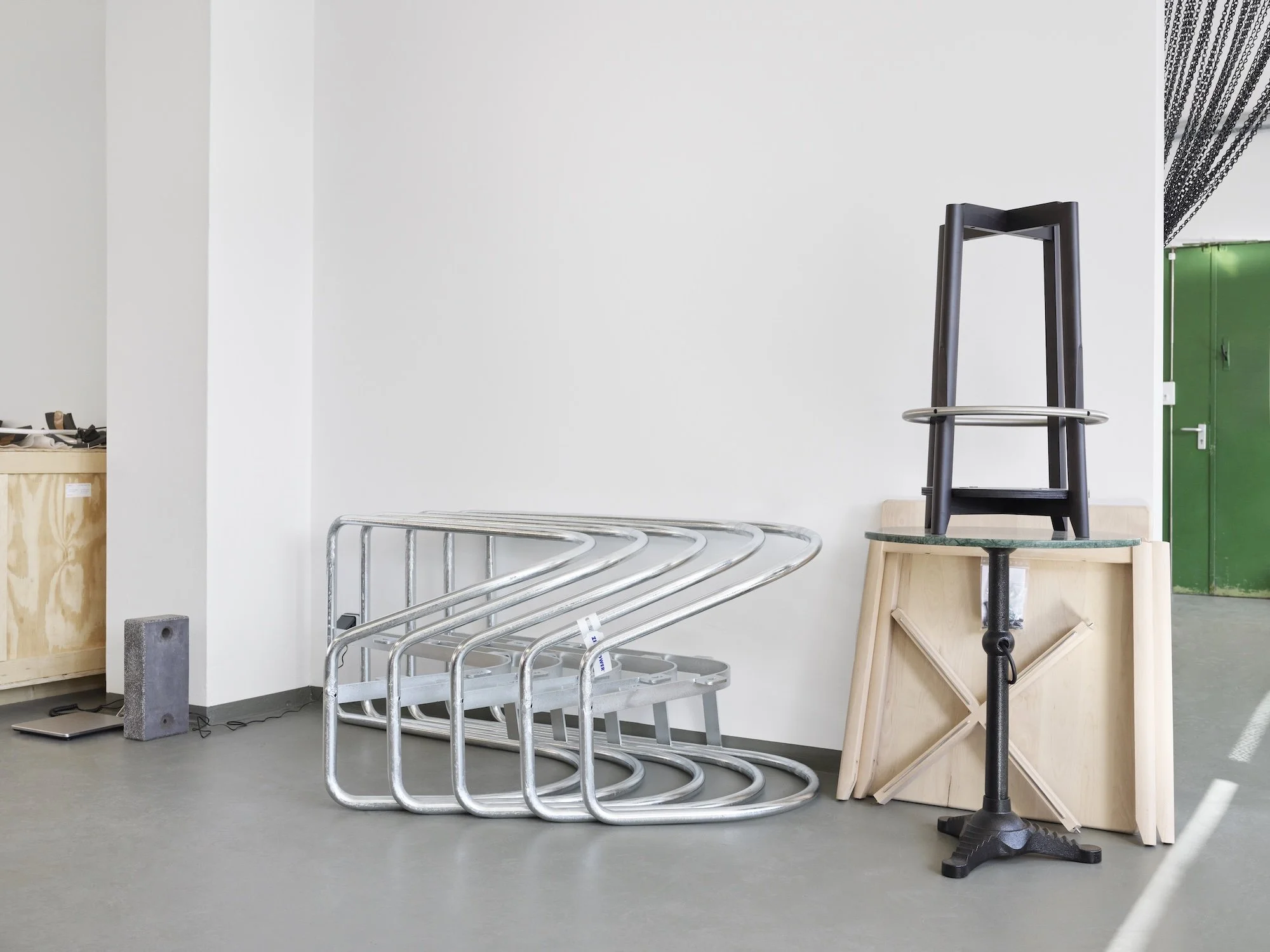
Galvanised frames of Thing_02 (image: Roman Häbler).
The Things are hard to describe, and strange to interact with, but that’s what Grcic has set out to do. He tells me that most products are designed to meet a set of criteria, as if filling out a checklist: make the object function, produce it with certain materials to be released at a specific price, ensure it meets energy consumption standards, design it to scale. “Doing pure checklist products doesn’t go anywhere: they’re neither radical nor really functional,” he says. “Yes, they work, but they’re missing something: the quality of the objects we live with, that we care for and maybe even repair to prolong. You know what that quality is? It’s a relationship.”
To Grcic, this relationship can elevate an object from a product to a part of your life: it’s why we get attached to objects, even those that seem strange or unwieldy at first, like the Things. “[There’s] a relationship that you and most people quite unconsciously build with things – objects, [which are] dead things,” he says. “These dead things become quite alive.”
“It’s quite subjective, it’s a feeling, and it’s also a form of magic that some designers have and some designers don’t have, or they might have less of it. Some designers sometimes have it, including myself.” Grcic pauses, then continues: “We always try; it doesn’t always happen.”
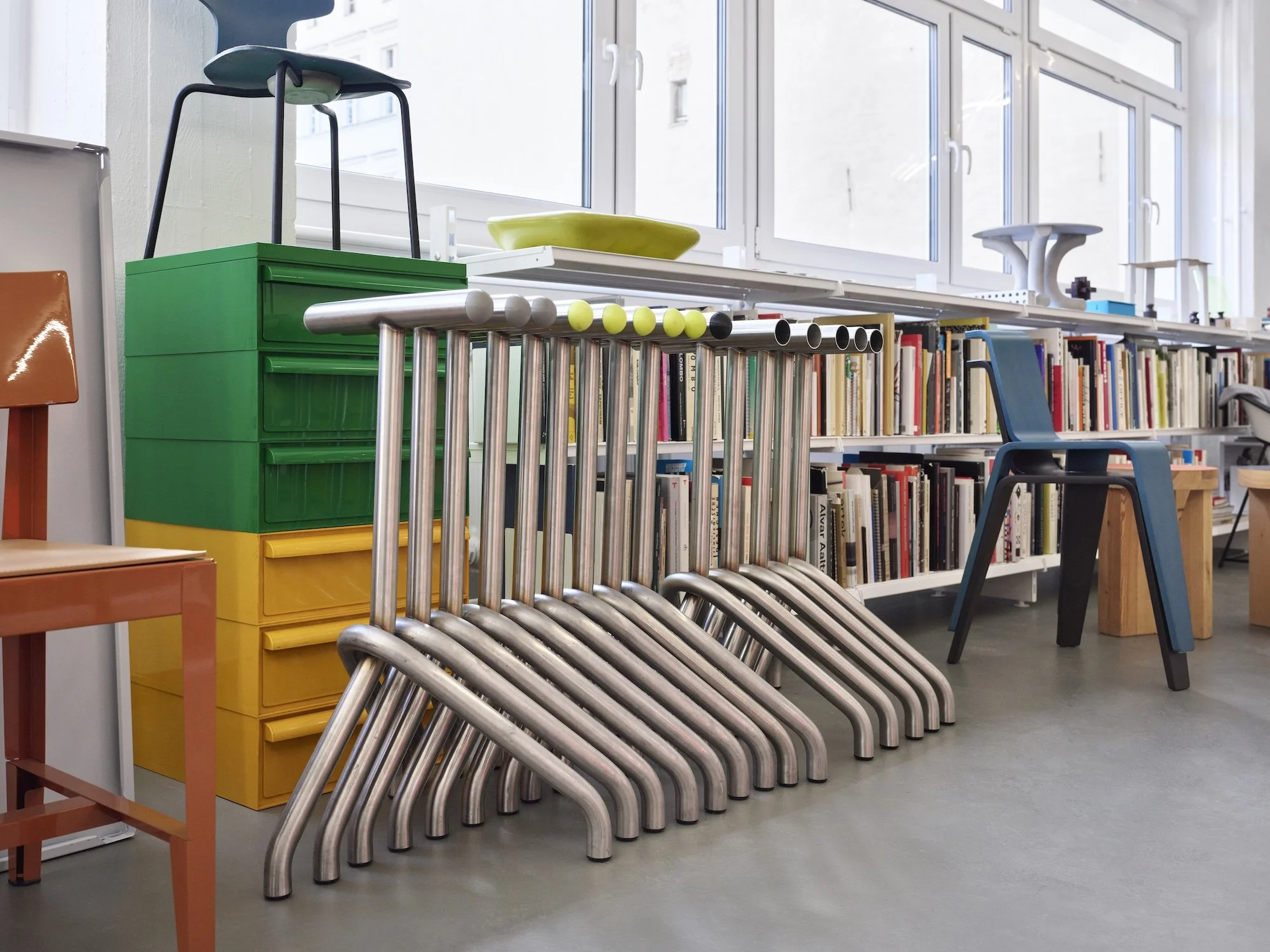
Multiple Thing_01s, lined up in the studio (image: Roman Häbler).
There are many words we might use to describe this feeling, that pureness that animates an object as it shapeshifts from a product to a part of our life: these designs may be naive, yes, but they are also honest and intuitive. As Grcic explains his vision for the Things, these latter two words hang just out of the discussion. I ask him why. “Sometimes when people speak about the honesty of the work they’re doing, it’s quite pretentious,” he says, before conceding: “We don’t call it that, but it is part of what we are striving to do”.
Perhaps it’s hard to describe the Things because they’re a moving target: they are not announcements, but rather questions. Grcic says that with each new Thing, the line evolves as conversation. He lays out the connections abstractly: Thing_01 was a statement, while Thing_02 opened a dialogue that shaped Thing_03. Thing_04, a portable seat that can be attached to rented scaffolding that Grcic will also provide, introduces a new theme around commerce: for Grcic, it might be the cornerstone that opens the portfolio up, working with the first Things to clear a path for Thing_05 and beyond.
“This project is quite challenging,” he says. “It asks what I feel are very elementary questions. It’s not that I don’t ask these questions when working for other brands, but I don’t ask them in such an absolute way.”
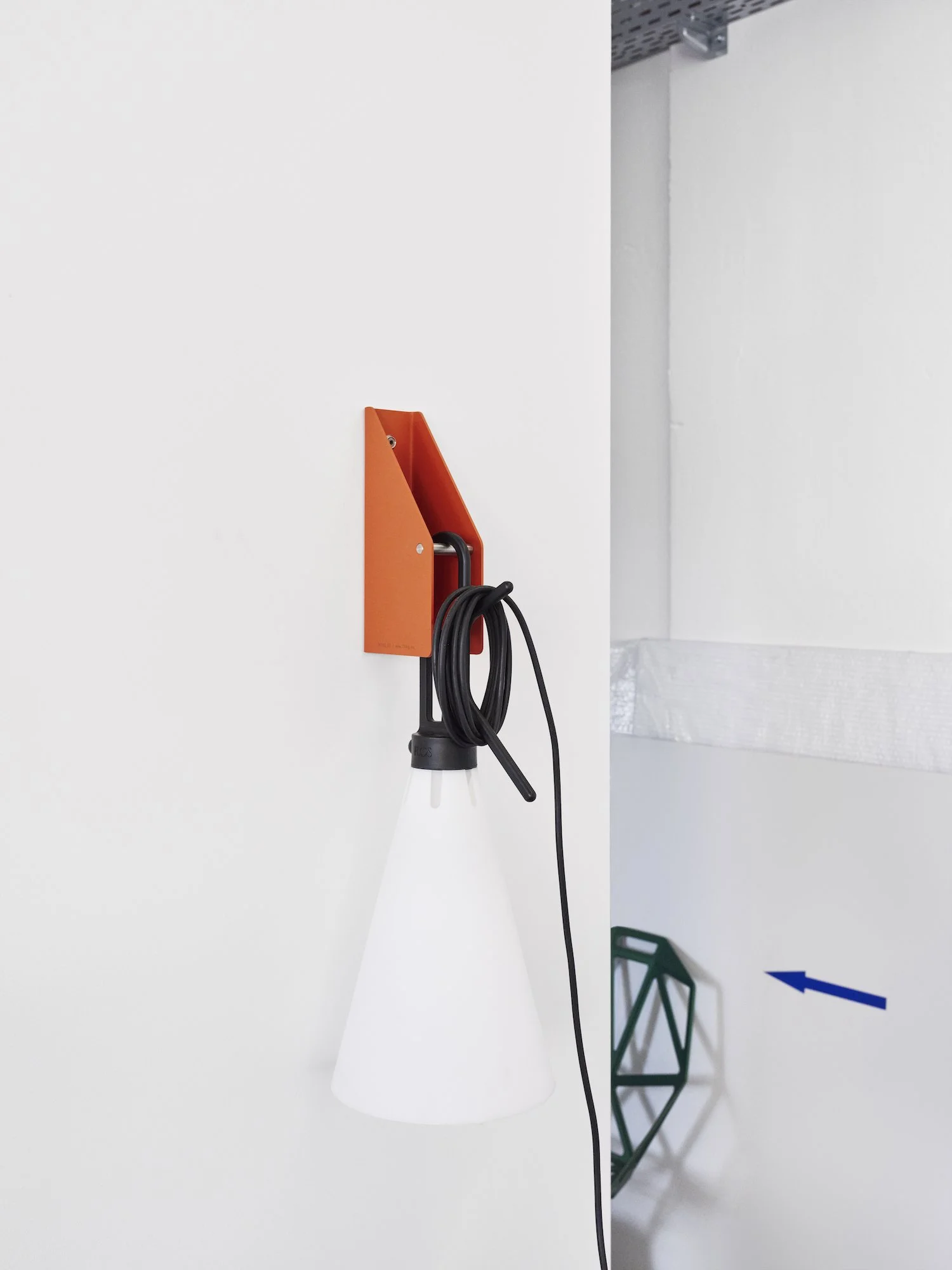
Mayday suspended on Thing_03 (image: Roman Häbler).
The Things get to the core of what it means to be a designer. This is one of the great contradictions of Grcic’s Things: by his own admission, he intends for these objects to exist outside of the standard rules of product design. He uses the Things as an outlet for some impulse, some instinct that he sees as being most common in young designers. The Things tap into what Grcic treasures from his early designs from the 90s, but these are not revisions of that time. He does not want to refine this earliest body of work through 25kg. If anything, it seems like he wants to isolate some quality of this work – this feeling, this pureness – then allow it to bloom, to develop, and to grow.
In this way, Grcic’s Things are an attempt to engineer not products, but conditions. We might describe the Things as a radical provocation in design. They inspire a discomfort and unease when we see them because we try to map our relationship with object categories onto their unfamiliar surfaces: that looks like a chair, that feels like a hanging rack. But Grcic’s Things are an invitation: they demand we reenter that natural humility that Cohen sees as an existential homecoming, and to trace our path back to a more honest time. They force us to confront our loss, and in some ways, to confront what design has lost as a whole.
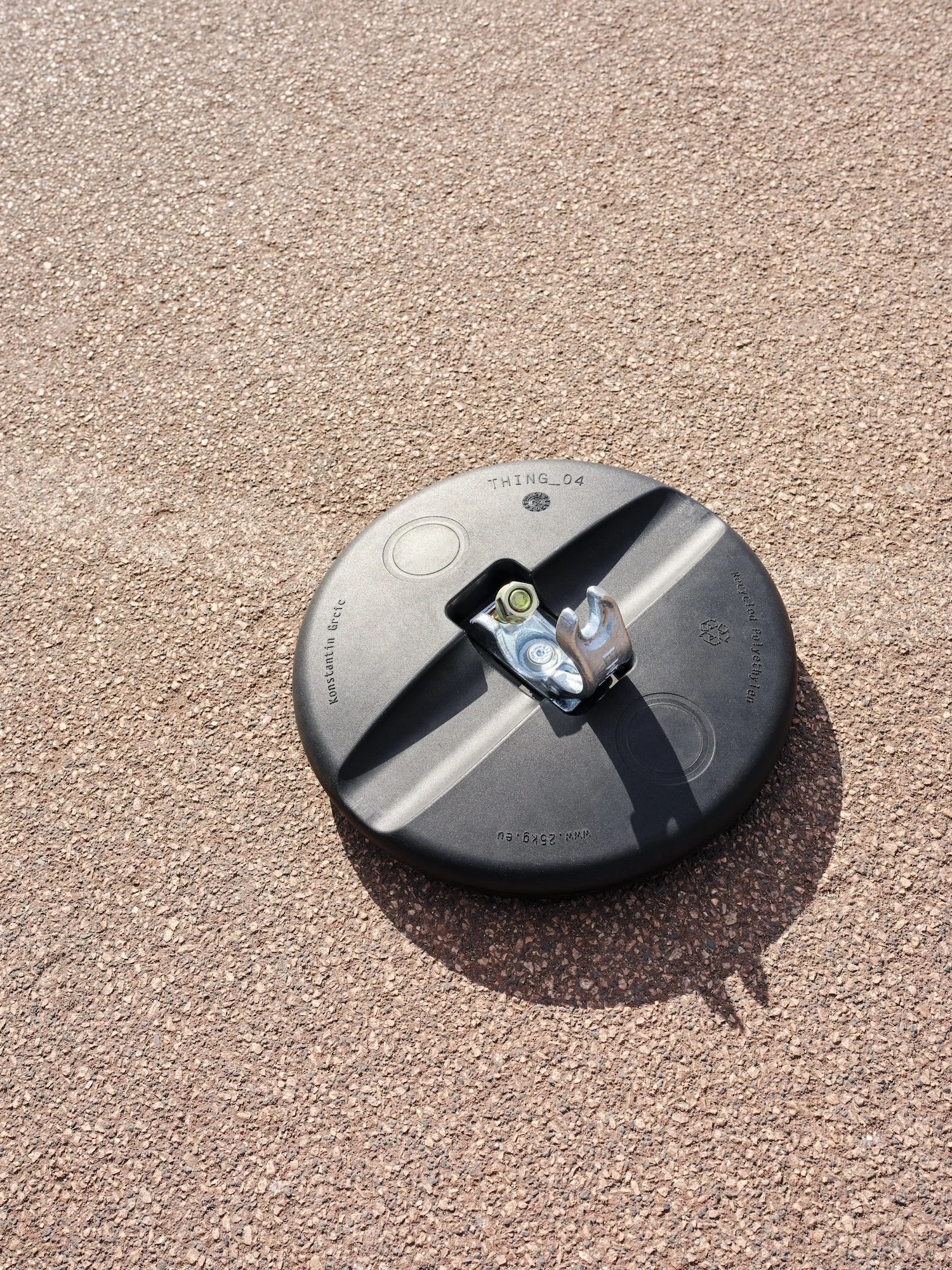
Thing_04 (image: Roman Häbler).
For his work on 25kg, Grcic draws from Dogme 95, the Danish avant-garde filmmaking movement led by Lars von Trier and Thomas Vinterberg from the 90s into the early 2000s. The collective’s ambition was to protect filmmaking from becoming a cosmetic discipline. They saw Hollywood magic as sensational and star-making, divorced from honesty and intuition, and they rejected the action-packed edits and otherworldly sound effects that defined films of the time.
The collective released a framework with which they would make their films – their “Vow of Chastity”. Filming must be done on location; sound must be captured on camera, not added in post; cameras should be handheld; the films must take place in the here and now. Directors would not be credited. The ambition of a film was not to create a work, but to surface something honest from within the characters, the setting and the process of filming.
In the same way, the Things surface something true and honest about Grcic’s own work. He strips away checklists of what a design should do and be to champion the raw materials and shapes with which he works. This often leads back to lessons that he learned early in his education. It’s no surprise that he’s interested in designing objects with which we can build longer relationships: as an apprentice furniture restorer, the question of longevity haunted him as he tried to understand which designs were worth saving, and which would be left behind. Likewise, Grcic’s work in cabinetry left a lasting love for materiality. These qualities form the foundations of his design philosophy; in the Things, they’re presented plainly and purely.
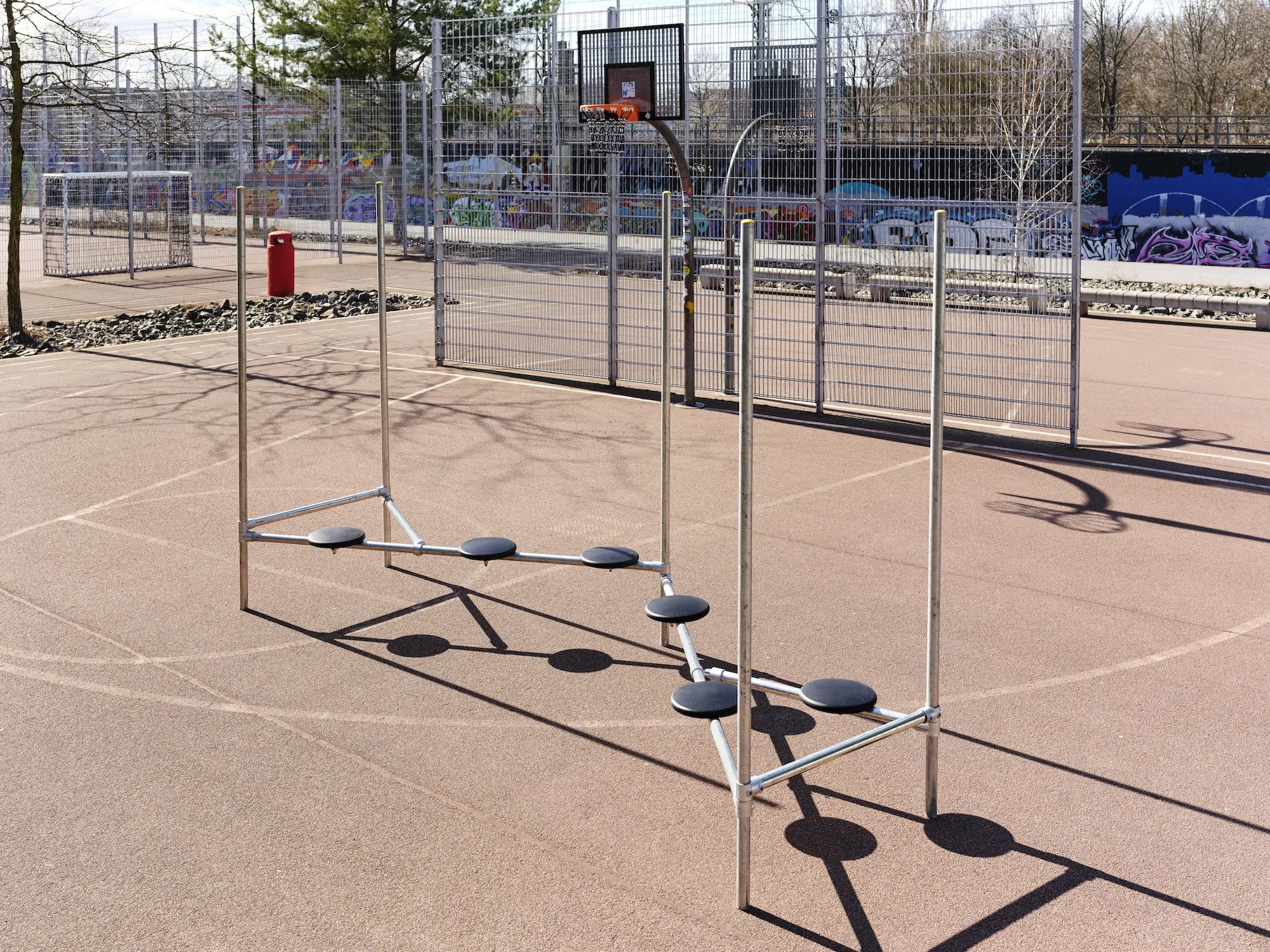
Thing_04, installed on scaffolding in a Berlin basketball court (image: Roman Häbler).
This means there’s no prescriptive end use, or end user: Thing_03, for example, was designed as a bracket to hang Grcic’s Mayday lamp from a wall, but he concedes that people might end up using it to organise cables, lift up a plant pot, or as a wall decoration. Function follows form here. “To the user, the objects are open-ended,” Grcic says. 25kg is not interested in the perfect stool; it’s interested in a stool you can use, and that you will use and use again. “The perfect Thing is limited: it provides you the structure to work with or use in different ways, to fit your needs.”
Materiality plays a central a role here. Take Thing_04, a hollow plastic seat that can be easily mounted on the type of steel scaffolding systems that dominate many urban environments. An early prototype of the Thing was made from wood, but Grcic preferred the hard moulded plastic, which resembles a child’s plaything more than a design object. “There’s this industrial design challenge in this for me, [more so] than in a wooden plate cut out by local craftsman,” he explains. “The fact that this is made from plastic moulding makes it more of a real product” – one that scales, one that grows, and one that might even be mass-produced.
When Grcic speaks of manufacturing, his voice lights up with a sense of wonder: “Of course, these are commercial products, and they’re produced industrially in multiplicity.” The Things aren’t selling en-masse, but that’s not the point: “If there are 10 people who really like this Thing, that’s great. That means more to me than if a hundred people think it’s alright.”
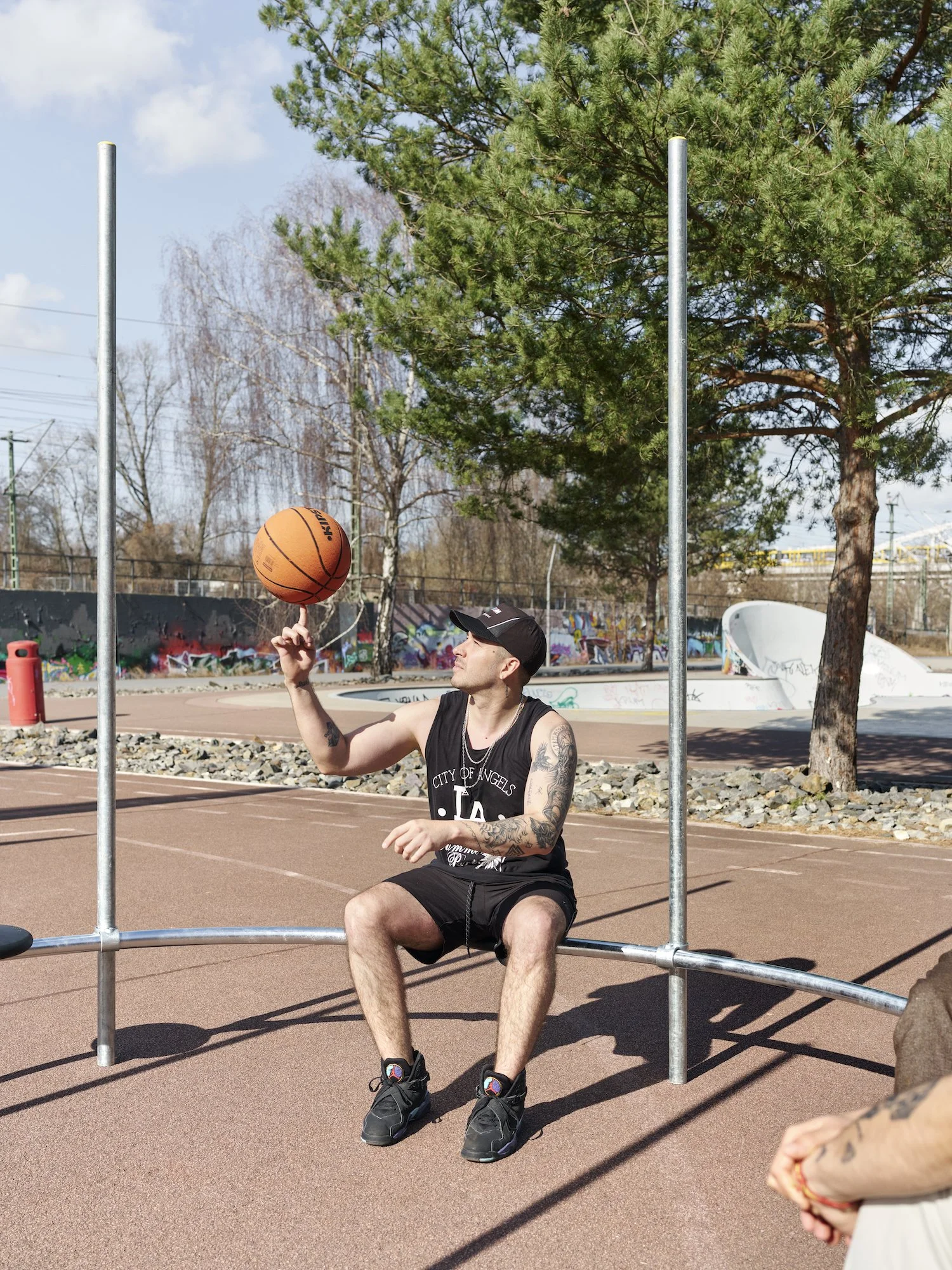
Image: Roman Häbler.
Because 25kg is not designed for mass consumption, Grcic can also use the Things to explore new models of design, like designing objects to be rented. He’s happy, for example, to pair Thing_04 with rented scaffolding for larger-scale temporary seating that can be built up and taken down in hours, not days. It’s not the kind of service that scales ad infinitum, and it’s hard to imagine that many brands outside of 25kg would invest the portfolio space to such site-specific productions.
But for Grcic, this is exciting. It means he has designed outside of the pure checklist products that dominate today’s design landscape. “When I created this brand, it was not to stand against the companies I work with,” he says. “I like to work with these companies, and I have a close and nice relationship with them. I know that there are certain products that they cannot do, and I understand why they cannot do them.”
“That doesn’t mean that this type of product will never see the light of day,” he says. In fact, he finds these constraints inspiring: “I think there are niche markets, and there is space in the market and certainly in the debate that don’t conform to the specific aspects or criteria a product must meet.”
“There’s a free space: people see the value in these Things. We put them out and talk about them: we believe in this, we believe it’s relevant, there’s a price tag, you can buy it. That makes it part of the debate.”
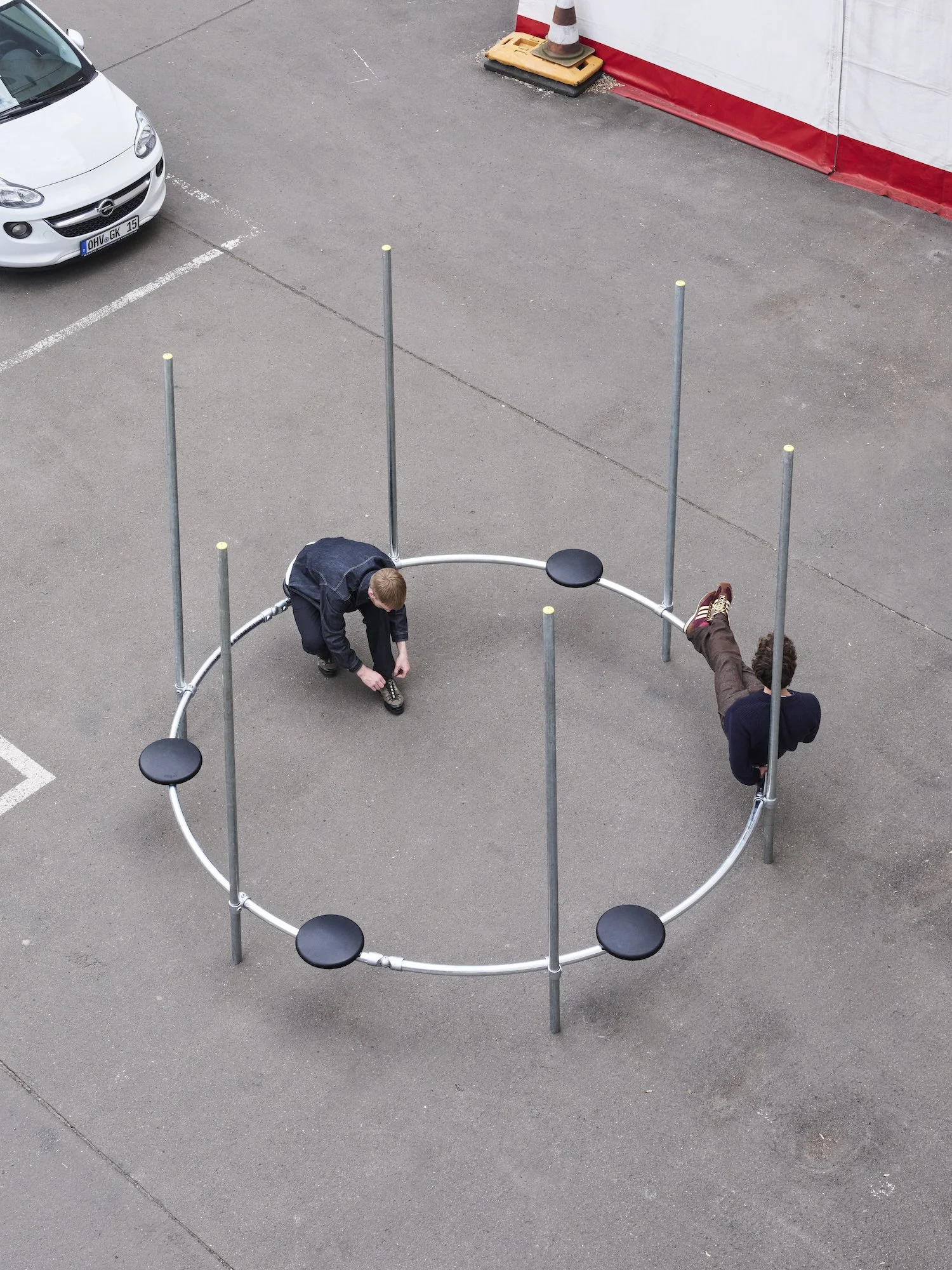
Image: Roman Häbler.
This, in Grcic’s view, is what design has long lost: the sense of debate, and philosophical table stakes that amounted to more than margins and P&L statements. “In the 70s and the 80s, there was an urgency. People were battling over ideas, and now everything is nice, it’s good, it’s very discreet,” he says. Politeness serves its purpose: it helps keep things communal, but at the cost of conflict, which we often forget is a generative practice that can build as much as it destroys.
In the Things, there is a sense of potential that challenges us to define them, or to interact with them. That these challenges can only be answered personally is part of the industry’s problem: when design is ruled by consensus, we lose our agency as users. In a certain light, the Things invite clashing perspectives. We see what we want from them, and what we cannot have.
With the Things, Grcic is forcing that conflict, and inviting the viewer to fight back: as he says, “Maybe people find what we’re doing totally ridiculous – and I want to hear that, too.”
Words Nathan Ma
Photographs Roman Häbler
This article was originally published in Disegno #41. To buy the issue, please visit the online shop.